Free tools Windows power users keep installed
One-click scans. No signup required.
Fix tearing first by matching the monitor and GPU with variable refresh rate (VRR), then control frame rate so it stays in a range your display can handle. Enable the monitor’s adaptive-sync feature, turn on the matching FreeSync or G-SYNC option in your graphics software, and use a game or driver frame cap when frames regularly exceed the monitor’s refresh rate. If conventional V-Sync makes motion uneven when frames drop, compare VRR with a sustainable cap and lower demanding graphics settings.
Tearing and stuttering are different problems. Tearing is a visible horizontal split caused by a new frame being presented while the monitor is still scanning the previous one. Stuttering is uneven frame delivery: motion pauses or arrives in irregular bursts even when there is no obvious split. The right setting depends on your monitor model, GPU, connection, operating system, game and actual frame-rate range.
As an Amazon Associate I earn from qualifying purchases.
First, identify whether you have tearing, stutter or both
What screen tearing looks like
Tearing appears as a discontinuity across the image, often most obvious during a fast camera pan. The upper part of the screen shows one moment while the lower part shows another. It is most likely when the game produces frames faster than the display can refresh. NVIDIA’s example is 120 frames per second on a 60 Hz display: with synchronization disabled, the extra frames can be shown mid-refresh and create a tear.
What’s actually slowing this PC down?
Pick the symptom - the matching free tool is one click away.
What stutter looks like
Stutter is uneven motion rather than a split. The camera may move smoothly, pause briefly, then jump forward. It can happen when frame times vary, when the game falls below a synchronization cap, or when background activity and graphics settings create inconsistent delivery. Conventional V-Sync can expose this behavior when the frame rate drops below its cap.
#1 Best Overall

- 32 Inch curved 1500R gaming monitor, 240Hz high refresh rate for gameplay
- Performance: 240Hz refresh rate, Full HD 1920*1080P resolution, 1ms MPRT response time, Built-in FreeSync technology, Anti-flicker, Low blue light
- Interfaces: HDMI up to 240Hz, DP 1.4 up to 240Hz, Earphone Jack, No speakers built-in. One DP cable comes with the package
- Display Colors: 125% sRGB color gamut, 16.7M display colors, 300 Nits brightness, HDR technology, 3500:1 contrast
- Ergonomic Design: 1500R curved, Tilt: -5°~15°, VESA Compatible (100 x 100mm), 178° Wide Viewing Angle.Recommended distance of playing games in this monitor is about 1.2 meters.
| What you see | What to check first | Likely direction |
|---|---|---|
| A horizontal split during movement | Whether FPS is above the monitor’s refresh rate | Enable VRR, or test V-Sync or a frame cap |
| Regular pauses or uneven camera motion | FPS dips and changing frame times | Use a sustainable cap, reduce demanding settings, and test VRR |
| Both a split and uneven motion | How synchronization behaves as FPS rises and falls | Start with VRR, then tune the cap and graphics settings |
One setting can reduce one symptom while making the other easier to notice. For example, disabling V-Sync may reduce synchronization delay but expose tearing, while conventional V-Sync can remove tearing yet feel uneven when the game cannot maintain its cap.
Record your setup before changing anything
Write down the information that determines compatibility and gives you a baseline. Do this for the game in which the problem is easiest to reproduce.
- Exact monitor model and its advertised refresh rate.
- GPU model and whether the system uses integrated, discrete or switchable graphics.
- Connection and port path between GPU and monitor.
- Operating system and current graphics-driver version.
- Game name, display mode (fullscreen, borderless or windowed) and graphics preset.
- Approximate FPS range, not just the average. Note the refresh rate shown in the monitor menu and when tearing or stutter appears.
Use the game’s frame counter or a trusted overlay to observe the range while reproducing the issue. Ask two separate questions: does tearing appear mainly when FPS is above refresh, and does stutter coincide with FPS dips? Those answers determine whether synchronization or frame-time stability deserves priority.
Enable variable refresh rate correctly
VRR lets a compatible monitor change its refresh timing to follow the GPU’s delivered frame rate within the display’s supported range. It is not a software-only fix: the display, GPU, driver and connection must support the same feature, and the feature must be enabled in both the monitor and the GPU software.
Rank #2

- 27” 240Hz 1500R Curved FHD 1080P Gaming Monitor for Game Play.
- Prioritizes Gaming Performance: Up to 240Hz high refresh rate, more immersive 1500R Curvature, FreeSync, MPRT 1ms Response Time, Black Level adjustment(shadow booster), Game Modes Preset, Crosshair.
- Cinematic Color Accuracy: 130% sRGB & DCI-P3 95% color gamut, 4000:1 contrast ratio, 300nits brightness, HDR, Anti-flicker; Anti-Glare.
- Plug & Play Design: HDMI & DP1.4 & Audio Jack(No built-in speakers), durable metal stand, tilt -5°~15, VESA 100*100mm compatible.
- Warranty: Money-back and free replacement within 30 days, 1-year quality warranty and lifetime technical support. Pls contact SANSUI service support first if any product problem.
Turn on adaptive sync in the monitor
- Open the monitor’s on-screen display with its joystick or buttons.
- Find the gaming, display or synchronization section and enable the option named Adaptive-Sync, FreeSync or a similar variable-refresh setting.
- Apply the setting, exit the menu and confirm the monitor is still running at its intended refresh rate in the operating system.
Menu names and supported ports differ by model. If the option is missing, greyed out or limited to a particular input, consult that monitor’s manual rather than assuming every port supports VRR.
Set up FreeSync with AMD hardware
AMD states that FreeSync requires a compatible display and graphics hardware combination and a current driver. After enabling the monitor option, open AMD Software and locate the display settings for the intended monitor. Turn on the FreeSync control, make sure the correct display is selected, and apply the change. Recheck after a driver update or when connecting a second monitor, because the active display can change.
Set up G-SYNC with NVIDIA hardware
NVIDIA requires a G-SYNC display or a display validated as G-SYNC Compatible. Enable the monitor’s adaptive-sync option first, then open NVIDIA Control Panel’s G-SYNC setup page, select the intended display and enable G-SYNC for the display mode you use. If the display is not listed, verify the exact model, port, driver and mode against the monitor and GPU documentation; do not assume that any adaptive-sync monitor will expose every G-SYNC option.
Do these 3 things before closing this tab:
1Repair Windows errors before they cause bigger problems2Scan for outdated or missing drivers - takes under a minute3Clear out junk files and repair common Windows errorsAfter enabling VRR, test the same camera movement that showed tearing. VRR only operates while the delivered FPS remains inside the display’s supported range. Outside that range, the driver or monitor may fall back to another synchronization behavior, so a frame cap or less demanding settings can still be necessary.
Rank #3

- Samsung’s 27” Odyssey G5 QHD Gaming Monitor delivers brilliant visuals for exhilarating gameplay that’s more immersive than ever before.
- QHD resolution (2560 x 1440) boasts incredibly detailed, pin-sharp images.
- With a wide 178° viewing angle, the IPS panel consistently delivers crisp, clear hues from various viewpoints.
- 180Hz Refresh Rate and 1ms response time (GtG) allow fast reactions for ultra-smooth gaming, plus G-Sync compatibility syncs the GPU and panel to reduce choppiness, screen lag, and image tearing.
- HDR10 provides brighter highlights and nuanced shadows for added depth.
Compare the available synchronization choices
| Approach | Tearing reduction | When FPS falls | Latency and compatibility | Best use |
|---|---|---|---|---|
| VRR (FreeSync or G-SYNC) | Usually suppresses tearing while operating inside its supported range | Refresh follows GPU output, so motion can remain consistent through normal fluctuations | Requires a compatible monitor, GPU, driver and connection; latency depends on the configuration | Primary choice for a compatible system with variable FPS |
| Conventional V-Sync | Suppresses tearing by aligning presentation to refresh | Can feel stuttery when FPS drops below the cap, as NVIDIA explains | Broad game support, but synchronization can add waiting and perceived delay | When tearing is unacceptable and the game can hold the cap reliably |
| Game or driver frame cap | Can prevent FPS from running above refresh when paired with suitable synchronization | A cap set too high or too low can produce uneven motion; choose it from observed performance | Usually simple and works without a VRR monitor; exact cap depends on the display and game | Keeping output inside a stable range, especially with VRR |
| Uncapped output with synchronization disabled | Does not prevent tearing when FPS exceeds refresh | May show smooth high-FPS motion when delivery is stable, but tears remain possible | Can minimize synchronization waiting, at the cost of visible tearing | Players who accept tearing to favor responsiveness |
| Adaptive V-Sync | Changes synchronization behavior around the refresh cap | Vendor-specific behavior; it may avoid traditional V-Sync behavior when FPS falls | Implementation and controls vary by driver | A setting to test when using NVIDIA hardware, not a universal solution |
No row is automatically best. Judge each option on tearing, smoothness during FPS drops, input latency, hardware and game compatibility, and setup effort.
What to do when FPS is higher than the monitor’s refresh rate
When FPS regularly exceeds refresh, AMD recommends enabling V-Sync or applying a frame cap. Start with the least disruptive option for your game:
- Enable VRR if the monitor and GPU support it.
- If FPS still spends substantial time above refresh, enable the game’s V-Sync option or set a frame cap in the game or driver.
- Choose the cap from the actual display and game rather than copying a universal number. A cap should leave enough headroom for ordinary frame-time variation while keeping output in the display’s supported behavior.
- Repeat the same movement test and watch both tearing and frame-time consistency.
A cap that is technically close to the refresh rate can still be unsuitable if the game frequently misses it. If motion becomes uneven, lower the settings that cause the largest frame-time spikes or choose a sustainable cap, then compare again with VRR enabled.
Windows Errors? Fix Them Before They Spread
Repair common Windows errors and clear accumulated junk for a smoother, more stable PC - no reinstall needed.Free scan · no reinstallCrashes, No Sound, or Screen Glitches?
Random freezes, missing sound and display glitches usually trace back to one bad driver. Find and replace yours safely.Free scan · under a minuteWhy V-Sync can stutter and how to improve it
Conventional V-Sync waits for an appropriate refresh boundary. When the game cannot deliver frames at the required rate, that waiting can make motion appear to repeat or pause. This is why turning on V-Sync may remove the tear but reveal stutter.
Rank #4
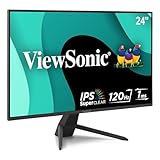
- High-Speed 120Hz Full HD IPS Display: Elevate your gaming experience with this 24 Inch 1080p (1920 x 1080) IPS monitor; featuring a smooth 120Hz refresh rate and 1ms (MPRT) response time, this display delivers the speed and clarity needed for competitive play
- Ultra-Smooth FreeSync Performance: Achieve tear-free and fluid gameplay with AMD FreeSync technology; this feature synchronizes your monitor's refresh rate with your GPU to eliminate screen tearing and stuttering for a more immersive and seamless gaming experience
- Enhanced Viewing Comfort: Minimize eye fatigue during intensive gaming sessions with integrated Flicker-Free technology and a Blue Light Filter; these eye care features provide a more comfortable viewing experience, allowing you to stay in the game for longer
- Customizable Game Mode Presets: Dominate the competition with an arsenal of pre-set visual modes tailored for FPS, RTS, and MOBA games; quickly optimize your screen settings to gain a competitive edge and enjoy the ideal contrast and color for any gaming genre
- Flexible Connectivity Options: Seamlessly connect your gaming console, PC, and laptop with versatile input options; this monitor features HDMI, DisplayPort, and VGA inputs, providing the reliable compatibility needed for all your favorite gaming and home devices
Stabilize the frame rate
- Reduce the graphics settings that produce the largest FPS dips, such as heavy effects, view distance or resolution scaling.
- Use a frame cap at a level the game can sustain in demanding scenes, not merely its menu or average FPS.
- Close or limit background tasks that cause intermittent frame-time spikes, then retest in the same scene.
Compare VRR with V-Sync
If the display supports VRR, enable it at both ends and compare the same scene with V-Sync off, then with the driver or game option on. Keep the setting that gives the smoother result without unacceptable latency. VRR is especially useful when FPS moves up and down, but it cannot compensate for a game whose frame times are unstable for reasons unrelated to refresh synchronization.
Use vendor-specific adaptive behavior carefully
NVIDIA describes Adaptive V-Sync as dynamically changing synchronization behavior around the refresh cap. Treat it as an NVIDIA-specific option to test, not as a setting that behaves identically on every GPU or game. Record which mode is active before comparing results so a driver change does not invalidate your baseline.
Independent reader supportYour contribution helps us test, update, and keep practical guides available for everyone.Check compatibility when VRR does not work
Inconsistent results usually require a compatibility check rather than more random toggling.
The Tool Desk
Outbyte PC Repair FREERepair Windows errors before they cause bigger problemsFix Now →Outbyte Driver Updater FREEFix the driver behind crashes, sound loss and screen glitchesFind Drivers →- Confirm the exact monitor model is listed as supporting the feature you selected. NVIDIA distinguishes G-SYNC displays from validated G-SYNC Compatible displays.
- Confirm that the GPU and its current driver support the feature. AMD specifically calls for compatible graphics hardware and a current driver for FreeSync.
- Verify that the intended monitor is selected in the graphics software, particularly in a multi-monitor setup.
- Check the monitor’s supported refresh range and whether the chosen input or display mode permits VRR.
- Retest in the game mode you actually use. A setting that works in exclusive fullscreen may behave differently in borderless or windowed mode.
- Consult the exact monitor and GPU manuals for port, cable and operating-system requirements. Generic advice cannot establish model-specific compatibility.
NVIDIA’s latency guidance also contains G-SYNC-specific advice about combining V-Sync with Reflex, with caveats for windowed mode and some laptops. Apply that guidance only when your laptop or desktop, display mode and supported game match its conditions; do not treat it as a universal requirement.
Best Value

- 【INTEGRATED SPEAKERS】Whether you're at work or in the midst of an intense gaming session, our built-in speakers provide rich and seamless audio, all while keeping your desk clutter-free.
- 【EASY ON THE EYES】 Protect your eyes and enhance your comfort with Blue-Light Shift technology. This feature reduces harmful blue light emissions from your screen, helping to alleviate eye strain during long hours of use and promoting healthier viewing habits.
- 【WIDEN YOUR PERSPECTIVE】Our sleek minimal bezel design ensures undivided attention. The nearly bezel-free display seamlessly connects in a dual monitor arrangement, delivering an unobstructed view that lets you focus on more at once, completely distraction-free.
Use a repeatable troubleshooting sequence
Follow this order so each change answers a specific question.
- Capture the baseline. Record monitor, GPU, connection, operating system, game, refresh rate and FPS range. Reproduce the symptom in a repeatable scene.
- Enable monitor sync. Turn on Adaptive-Sync or FreeSync in the monitor menu, if available.
- Enable the matching driver feature. Use AMD Software for FreeSync or NVIDIA Control Panel for G-SYNC, select the intended display and apply the setting.
- Test without changing graphics quality. Check whether the tear disappears and whether motion remains even as FPS changes.
- Control excessive FPS. If FPS regularly exceeds refresh, use the game’s V-Sync or a frame cap, following AMD’s recommendation.
- Stabilize dips. If V-Sync creates uneven motion, lower demanding settings or move the cap to a level the system can sustain, then compare with VRR.
- Verify compatibility. Update the driver when appropriate and check the exact display, GPU, port, operating-system and application requirements in their manuals.
- Change one variable at a time. Keep notes on the setting, FPS range and symptom so you can return to the last configuration that worked.
When buying a monitor is the appropriate fix
A variable-refresh-rate gaming monitor is a reasonable upgrade when the current display lacks the VRR feature your GPU supports or has a refresh range that does not cover the game’s normal FPS. Before buying, confirm the exact GPU compatibility, the monitor’s supported VRR range, the required input and the operating-system or driver conditions.
A new monitor will not repair a GPU bottleneck, unstable game frame times, background-task interruptions or a game that cannot sustain its target FPS. Resolve those causes first; otherwise the same stutter can follow you to the new display even though tearing is reduced.
Quick Recap
Practical decision guide
- Tearing only, FPS above refresh: enable compatible VRR, then try V-Sync or a frame cap if output remains above refresh.
- Stutter only, FPS dips: measure frame-time consistency, reduce demanding settings and choose a sustainable cap; test VRR if supported.
- Tearing plus stutter: enable VRR on both monitor and GPU, cap output based on observed performance, and retest during the worst scene.
- No VRR option: use V-Sync or a frame cap, accepting their latency and low-FPS trade-offs, or verify whether a compatible monitor upgrade is justified.
- Settings have no effect: stop changing toggles and verify the exact model, driver, selected display, mode, port and documented compatibility requirements.
Product prices and availability are accurate as of the date/time indicated and are subject to change. Any price and availability information displayed on Amazon at the time of purchase will apply.

