Stop the swings when they cause lower-back pain. Do not finish the set, add weight, or try to numb the symptom so you can keep training. Pain during an exercise is a reason to stop that exercise, not a form test to push through. Cleveland Clinic summarizes the principle as: “Exercise should challenge you, not hurt you,” quoting Dr. Hewett.
Lower-back pain during a swing can reflect a technique problem, excessive load, fatigue, or a condition unrelated to the movement. The symptom alone cannot identify the cause, and no single cue is a guaranteed fix. First screen for urgent warning signs. If none are present and symptoms settle, rebuild the hip hinge with no weight, then consider a gradual return only when the movement is comfortable and you can control it. A healthcare professional or qualified coach can assess you when the cause or next step is unclear.
As an Amazon Associate I earn from qualifying purchases.
What to do the moment your back hurts
- End the set. Put the kettlebell down safely and stop swinging. Do not complete the planned repetitions or test a heavier bell.
- Check how you feel away from the exercise. Note whether the pain eases when you stand or walk, whether it is getting worse quickly, and whether you have symptoms in the legs, bladder, bowel, chest, or genital area.
- Choose tolerable movement instead of the painful lift. If ordinary walking or another gentle daily activity feels comfortable, you can usually continue that activity as able. NHS guidance advises staying active while stopping exercises that worsen back pain; this does not mean continuing swings.
- Use urgent-care guidance when appropriate. The warning signs below require emergency or urgent medical help rather than a technique experiment.
A short-lived ache after stopping does not prove that the swing caused an injury, and feeling better does not prove that it is safe to resume immediately. Treat the pain response as information: the current combination of movement, load, speed, or fatigue was not acceptable at that moment.
Recommended Free Tools
Emergency warning signs and when to seek care
Seek emergency care now if back pain is accompanied by any of the following NHS warning signs:
#1 Best Overall

- SELF-LOCKING SECURITY: The full metal self-locking buckle engages automatically under load to ensure your belt never fails during heavy squats, deadlifts, and cleans; quick-release roller allows instant removal and fast repositioning between sets
- FUNCTIONALLY DESIGNED: Engineered to create consistent intra-abdominal pressure with plyable premium Nylon that conforms to your core for maximum spinal stability; Infinitely Adjustable design allows precise pressure control for optimal intra-abdominal pressure during every lift, ensuring customized support for various exercises and body positions
- BUILT FOR PERFORMANCE: Made from 100% premium nylon, full metal self-locking buckle, and double reinforced stitching at all major points, this belt can withstand your heaviest lifts and last for many years to come; The nylon material is breathable and does not retain sweat like other materials; Easily hand wash with soap and water and let it air dry
- COMPETITION APPROVED: Meets requirements for sanctioned Olympic lifting competitions and functional fitness events; uniform 4-inch design suitable for powerlifting training, weightlifting meets, and heavy workouts; Folds up easily to fit in your gym bag to ensure you always have it when you need it
- DOCTOR OF PHYSICAL THERAPY ENGINEERED: Developed by Element 26's cofounder Dr. Phil (DPT, CSCS); the straight 4-inch profile and plyable nylon construction conforms to your body to ensure consistent pressure across your midsection for intra-abdominal stability during squats, deadlifts, cleans, snatches, and jerks; no break-in period required
- Weakness, tingling, or numbness in both legs.
- Loss of feeling around the genitals or anus.
- Difficulty urinating, loss of bladder control, loss of bowel control, or other new bladder or bowel changes.
- Chest pain.
- Back pain after a serious accident.
The NHS also advises urgent help for sudden severe pain, pain that is rapidly worsening, or pain with feeling hot, cold, shivery, or generally unwell. The NHS route is specific to the United Kingdom: readers elsewhere should use their local emergency number, emergency department, or urgent medical service.
Contact a clinician if the pain has not improved after a few weeks, interferes with daily activities, or worries you even without those emergency features. Persistent or recurrent pain deserves an assessment rather than repeated attempts to adjust the swing by trial and error.
Why a kettlebell swing can stress the lower back
A two-handed kettlebell swing is intended to be a hip-hinge. The hips move back, the torso inclines because of that hip movement, the knees stay slightly bent, and the shins remain relatively vertical in the hinge described by the American Council on Exercise (ACE). The hips then extend to propel the bell. The arms guide the bell; they are not supposed to perform a slow front raise.
Free tools Windows power users keep installed
One-click scans. No signup required.
If the hips do not create most of the movement, the lower back may move too much or take over the work. Examples include squatting the bell up, rounding the spine while reaching down, snapping into a back bend at the top, or lifting with the shoulders and arms. These are form possibilities, not diagnoses. ACE’s technique description does not show that one fault explains every case of swing-related back pain.
Load and fatigue also matter. A bell that is manageable for a few repetitions can become difficult when speed, volume, or concentration changes. Cleveland Clinic’s beginner guidance recommends learning and checking form before adding weight, starting lighter, and increasing gradually. Those are general safety steps, not a rehabilitation prescription or a guarantee that a lighter bell will solve your pain.
Finally, the source of back pain may not be the swing itself. A pre-existing back problem, a recent accident, or another medical issue can become noticeable during training. Because pain has many possible causes, do not label it as “just bad form” without an assessment.
Rebuild the hip hinge before touching a kettlebell
Once symptoms have settled enough that ordinary movement is comfortable, use an unloaded rehearsal to check the pattern. This is an instructional screen, not an individualized treatment plan.
- Set your stance. Stand in a stable position with the feet arranged so you can balance without shifting. Keep the kettlebell out of the way for this rehearsal.
- Send the hips back. Imagine your hips moving toward a wall behind you. Let the torso incline as the hips travel back instead of folding by rounding the spine.
- Keep a long, straight spine. Maintain the alignment you can control without forcing a rigid pose. Keep the knees slightly bent and avoid letting the shins travel far forward during the hinge.
- Stand by extending the hips. Return to standing by driving the hips forward. Do not finish by leaning backward or thrusting the ribs upward.
- Stop if the rehearsal reproduces pain. If an unloaded hinge still causes the same back pain, do not add a kettlebell. Arrange individualized guidance from a healthcare professional or qualified coach.
Use a mirror only as a limited visual check; a view that looks acceptable does not rule out a problem. A coach can observe timing and control, while a clinician can consider symptoms that technique coaching cannot explain.
Technique checks when you eventually resume
When you are ready to test the movement, use these cues as form checks rather than as proof of what caused your earlier pain:
Rank #2
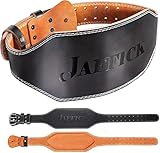
- ✅【DO NOT TRUST YOUR PANT SIZE】-- S (21"-25"), M (25.5" -29.5"), L (30" -36 "), XL (37" -41 "), XXL (42"-47.5"). The product description states to order based on "TRUE WAIST SIZE NOT PANT SIZE." You are supposed to measure around your lower back and over your belly button to determine the size you need.
- ✅Our leather weightlifting belt has received a lot of praise from fitness enthusiasts. The widened structure design can break your personal record more easily during training. For daily training, this is the perfect belt. A tight belt can hurt the spine and back muscles. Our suede pads keep you away from any sports injuries!
- ✅ Double-sided leather. Strength upgrade. More comfortable, stronger and more durable. Fit thickness and width. The weight lifting belt can provide extra power, strength and support for the back and abdomen. This gym belt is very suitable for cross training, weightlifting and daily fitness, preventing back injuries effectively.
- ✅Improved comfort suede lining-in order to ensure the comfort of sports. Line the inner layer of the belt with suede leather, and provide additional padding to protect your skin and provide firm back support when lifting.
- ✅This men's weightlifting belt is reinforced with top stitches to enhance its strength and flexibility, ensuring that it can withstand high-strength use in the next few years. Exquisite stitching expertise, elegant appearance of the product.
- Hinge, do not squat. The hips travel back and forward; the knees bend enough to support that action but do not turn the movement into a deep squat.
- Keep the spine long. Avoid rounding at the bottom and avoid arching into a back bend at the top.
- Let the hips create the speed. The bell should rise from hip extension. The arms connect you to the bell and guide its path rather than muscling it upward.
- Keep the bell close to the body. A bell that drifts far forward increases the leverage demand; if you cannot control its path, stop the set.
- Use a load you can control. Start lighter than the bell associated with symptoms and increase only gradually when the movement remains comfortable and consistent.
No reviewed source establishes a universal “correct” kettlebell weight, repetition target, or return date. Do not treat a particular number of repetitions or days without pain as medical clearance.
A cautious return-to-training decision path
There is no validated timetable for returning to swings after lower-back pain. Instead, make each step conditional on your symptoms, control, and ability to stop.
What’s actually slowing this PC down?
Pick the symptom - the matching free tool is one click away.
| Stage | What you do | Move forward only when | Stop or seek help when |
|---|---|---|---|
| Daily movement | Continue comfortable walking and ordinary activities as able. | Movement does not cause a worsening pattern. | Daily activity is increasingly limited, pain is severe, or you feel unwell. |
| Unloaded hinge | Practice the hip-hinge pattern without a bell. | You can keep a long spine, slightly bent knees, and controlled hip movement without reproducing pain. | The hinge itself causes pain, weakness, numbness, or loss of control. |
| Light technical practice | Use a lighter bell for a small, controlled test; keep the focus on the hinge, not conditioning. | Every repetition remains comfortable and technically consistent, with no worsening afterward. | Pain returns, the bell pulls you out of position, or you need to compensate to finish. |
| Gradual training increase | Increase difficulty in small steps, changing only one factor at a time when appropriate. | You can maintain the same mechanics and tolerate the current load. | Symptoms recur or escalate; return to the last comfortable step and obtain professional advice. |
| Professional assessment | Have a clinician assess persistent symptoms or a coach review technique. | You understand the plan and can follow it without guessing. | Symptoms affect daily life, fail to improve, or do not fit a simple training issue. |
The table is a practical decision framework, not a set of diagnostic thresholds. A pain-free hinge is encouraging but cannot exclude a medical condition, and a technically sound swing may still be inappropriate for a particular person.
How to review the session that triggered pain
Before attempting another workout, write down the details while they are fresh. Record the bell’s weight, whether you used one or two hands, how many repetitions or sets you completed, and whether the pain appeared on the way down, at the bottom, or during hip extension. Note whether you were already fatigued, had changed your normal workout, or had recently increased load or volume. This record does not diagnose the problem, but it gives a clinician or coach useful context and helps you avoid repeating the same combination accidentally.
Also observe what happens after stopping. Does ordinary walking remain comfortable, does the pain spread into a leg, or do weakness, numbness, or balance changes appear? A symptom that persists outside training deserves more attention than a brief sensation that resolves immediately, but neither pattern should be used to self-diagnose. If the episode followed a serious accident or is rapidly worsening, use the urgent-care guidance rather than monitoring it at home.
Comparing your practical next-step options
There is no validated ranking of swing variations or substitute exercises for this situation. You can, however, compare options by four sensible questions: Does the activity remain comfortable while you do it? Can you keep the hip-driven pattern and long spine? Can you control the load without compensating? And is professional assessment indicated because symptoms persist or include warning signs?
- Pause swings and keep ordinary movement: appropriate when the lift hurts but comfortable daily activity is possible. This respects NHS advice to stay active as able while stopping exercises that worsen pain.
- Rehearse an unloaded hinge: useful for checking whether the basic pattern is comfortable before adding a bell. It is not a prescribed rehabilitation program.
- Return with a lighter bell: a later technique-practice option only when daily movement and the unloaded hinge are comfortable. A lighter bell may reduce demand, but it cannot make an unsafe movement safe or explain persistent symptoms.
- See a clinician: the better option for persistent, recurrent, activity-limiting, or worrying symptoms, and for anyone unsure whether kettlebells are appropriate.
- Work with a qualified coach: helpful for observing hinge timing, bell path, and control once medical concerns have been addressed. Coaching is not diagnosis.
Do not buy equipment as a treatment. If you later need a lighter kettlebell for controlled practice, choose it because it matches a gradual training plan, not because a product can repair the source of back pain.
Common mistakes that make the situation worse
Trying to finish the set
Stopping at the first meaningful pain response is safer than bargaining with it. “Only five more repetitions” can turn a warning into a more persistent problem and makes it harder to tell what movement you tolerate.
Adding weight to fix the motion
A heavier bell does not automatically improve a hinge. Cleveland Clinic recommends testing form before adding weight and beginning lighter. Treat loading as a progression after control, not as a corrective device.
Rank #3

- DO NOT TRUST YOUR PANT SIZE – S (19”-23”), M (23”-28”), L (28”-32”), XL (32”-37”), 2XL (37”-43”), 3XL (43”-48”). Please ensure that you measure your size ACCORDING TO THE SIZE CHART AND THE MEASURING INSTRUCTIONS provided in the size chart. Measure around your lower back and across your belly button to find your TRUE BELT SIZE. Measurements taken at pant size would result in WRONG BELT SIZE. If your waist size falls between two sizes, please CHOOSE THE UPPER SIZE for maximum utility.
- DURABILITY AND RESILIENCE – Genuine cowhide leather is used to make the 7 mm thick weightlifting belt for men and women which maximizes pressure absorption and management. By helping the users harness their inner power, the powerlifting belt becomes useful for training, deadlifting, squatting, Olympic lifting, and cross-training among other work out routines of fitness and exercise.
- BETTER LUMBAR SUPPORT – RDX cares for its champions' needs. That's why we offer this belt in 4-inch and 6-inch variations each with a wide padded back for superior lumbar support and to help you brace effectively before lifting. This unisex weight lifting belt is ideal for heavy workouts with various gym equipment. We have released this belt in a range of different colors and sizes for you to choose according to your style and preference.
- REINFORCED RELIABILITY – High-quality industrial-grade steel is used in the adjustable roller buckle with twin prongs which helps prevent slipping and riding of the strength training gym belt. The reinforced rivets work in conjunction with the roller buckle to maximize support.
- ENHANCED ADJUSTABILITY – The dual-pronged buckle can be adjusted on any of the 10 precision-drilled holes for the optimal fitting of the gym training belt, while the additional leather flap prevents direct contact of the buckle with the body to minimize discomfort.
Stretching or resting without checking the trigger
Gentle movement may feel useful, but neither stretching nor complete rest identifies why a swing hurts. Keep tolerable daily activity, avoid the painful lift, and get an assessment if symptoms persist or concern you.
Forcing a rigid “flat back”
A long spine is a useful general cue, but trying to hold an exaggerated arch can create a different compensation. The goal is controlled alignment while the hips move, not an extreme posture.
Assuming pain proves a disc, muscle, or form fault
Back-pain symptoms overlap across many conditions. Do not self-diagnose from location, timing, or a video of one repetition.
When a clinician or coach is the right next step
Ask a healthcare provider whether kettlebells are appropriate if you are uncertain, have a history of back problems, or cannot return to comfortable movement. A clinician can consider your symptoms, medical history, and neurological signs; a qualified coach can help you practice the hinge and manage technique. These roles are complementary: coaching cannot diagnose, and a clinical assessment does not replace learning a controlled movement pattern.
Arrange an assessment when pain keeps returning each time you try the swing, remains present outside training, limits work or sleep, or has not improved after a few weeks. Bring useful observations: which part of the swing hurts, whether the pain travels into a leg, what load and volume you used, and what happens after stopping.
Do these 3 things before closing this tab:
1Repair Windows errors before they cause bigger problems2Fix the driver behind crashes, sound loss and screen glitches3Clear out junk files and repair common Windows errorsWhat general low-back-pain guidance does—and does not—say about swings
The 2021 clinical practice guideline from the Academy of Orthopaedic Physical Therapy of the American Physical Therapy Association and the Journal of Orthopaedic & Sports Physical Therapy recommends exercise-training interventions for acute and chronic low-back pain. That broad recommendation supports staying engaged with an appropriate exercise plan, but it does not establish kettlebell swings as a universal treatment, nor does it show that one exercise-training approach is clearly superior to every other approach.
Therefore, do not use a general “exercise is good for back pain” message to justify continuing a lift that hurts. The appropriate exercise depends on the individual, the symptoms, and the assessment. A swing can be a later training option for some people, while being unsuitable during a painful episode or for a particular condition.
How to decide whether to test the swing again
- Do not test yet if the unloaded hinge hurts, symptoms are worsening, or you have any emergency warning sign.
- Ask for individualized advice if pain persists, recurs repeatedly, affects daily life, or you are unsure whether kettlebells are safe for you.
- Consider a controlled, light test only after comfortable daily movement and an unloaded hinge, using the technique checks above and stopping immediately if pain returns.
- Progress slowly only while the same hip-driven mechanics remain comfortable. There is no evidence-based universal schedule to follow.
You do not need to buy a new kettlebell to treat current pain. If you later return to training, a lighter bell can make gradual technique practice possible, but equipment is not a substitute for medical assessment or coaching when either is indicated.
The safest answer to lower-back pain during kettlebell swings is not a magic cue. Stop the painful lift, screen for urgent symptoms, rebuild the hinge without load, and return only when movement is comfortable and controlled—or obtain professional guidance instead of guessing.
Rank #4

- BUILT FOR LIFE: Our leather weight lifting belt doesn't rip, break, or tear like the cheap weight belts made from fake leather, plastic, nylon, or velcro on the market. Gymreapers premium weight belt is made of real reinforced leather and stitching.
- COMFORT LIKE YOU'VE NEVER FELT: Our premium leather provides comfort like you've never felt before. Doesn't feel bulky on your waist, and won't dig into your sides or hips. Made with a premium lightweight metal buckle that doesn't get in the way and numerous adjustment holds for the perfect fit.
- FORM FITTING & LIGHTWEIGHT: At only 1.5 pounds, this 4 Inch wide belt form fits to your body and feels weightless. Simply roll it up and store it in your gym bag post workout and take up a fraction of the space compared to other belts.
- TOTAL SUPPORT & STABILITY - Ensure back, spine, and core protection with the 4" width around the back of the belt. Through complete support and stabilization you will generate more power and strength to continue breaking PR's.
- GYMREAPERS TRAINING GEAR - Gymreapers designs and manufacturers high quality fitness equipment and apparel that merges durable products, aesthetic design, and high quality materials. We’ve developed a full line of training tools to assist you in pursuing and achieving all of your fitness goals.
Frequently Asked Questions
Should I finish the set if the pain is mild?
No. Stop the swings and put the bell down safely. Cleveland Clinic’s guidance is that exercise should challenge you, not hurt you; mild pain is not a reason to complete the planned repetitions.
Is lower-back pain during swings always a form problem?
No. Technique, load, fatigue, a pre-existing back issue, an accident, or another medical condition can all be relevant. Pain alone cannot identify the cause.
Can I keep walking after a painful swing?
If walking is comfortable and symptoms are not worsening, NHS guidance generally supports continuing tolerable daily activity. Stop any activity that increases pain, and do not interpret this advice as permission to continue swings.
How long should I wait before swinging again?
There is no universal, evidence-based return date. Wait until ordinary movement and an unloaded hinge are comfortable, then seek professional advice if symptoms persist, recur, or concern you.
PC Slower Than It Used to Be?
A free scan shows the junk files, broken settings and background clutter dragging Windows down - then fixes them in one click.Free scan · Windows 10 & 11Crashes, No Sound, or Screen Glitches?
Random freezes, missing sound and display glitches usually trace back to one bad driver. Find and replace yours safely.Free scan · under a minuteWhat kettlebell weight should I use when I return?
No reviewed source establishes a correct weight. Start lighter than the bell associated with symptoms and increase gradually only when you can maintain a controlled, comfortable hip hinge.
Can a coach diagnose my back pain?
No. A qualified coach can review technique and bell control, while a healthcare professional can assess symptoms and medical warning signs. Use the appropriate professional, and remember that coaching does not replace clinical care.
Do I need to buy a lighter kettlebell to recover?
No. Equipment does not treat current pain. A lighter bell may be useful later for controlled practice, but it is not a substitute for assessment or a gradual plan.
When is back pain an emergency?
Seek emergency care for weakness, tingling, or numbness in both legs; numbness around the genitals or anus; new bladder or bowel problems; chest pain; or pain after a serious accident. Seek urgent help for sudden severe or rapidly worsening pain or feeling generally unwell.
Quick wins for a faster PC:
Scan for outdated or missing drivers - takes under a minuteDriver Scan →Repair Windows errors before they cause bigger problemsFix Now →The Bottom Line
Stop any kettlebell swing that causes lower-back pain. Check the NHS emergency warning signs, keep only comfortable daily movement, and rebuild the hip hinge without a bell once symptoms settle. Return with a lighter, controlled load only when movement is comfortable and consistent; persistent, recurrent, or worrying symptoms warrant a healthcare professional, while a qualified coach can help with technique.
Quick Recap
Product prices and availability are accurate as of the date/time indicated and are subject to change. Any price and availability information displayed on Amazon at the time of purchase will apply.

