The Tool Desk
Outbyte Driver Updater FREEFix the driver behind crashes, sound loss and screen glitchesFind Drivers →Outbyte PC Repair FREERepair Windows errors before they cause bigger problemsFix Now →First identify the symptom. A large pale-blue circle, a gray or missing blue dot, or a “GPS Signal Lost” warning indicates that Maps cannot determine your position reliably. A route that changes while the blue dot remains accurate may simply reflect live traffic or an alternate route, not a faulty GPS. Check location permissions and device settings, disable power-saving restrictions, restore Wi-Fi or mobile data, move into an open-sky area, calibrate the compass when the direction beam is wrong, and restart the phone if necessary.
Read the blue dot before changing settings
Google Maps uses the blue dot to show the device’s estimated current location. The light-blue circle around it represents uncertainty: the phone could be anywhere inside that circle. A smaller circle means Maps is more confident; a broad circle means the estimate is less precise.
As an Amazon Associate I earn from qualifying purchases.
- Dot in the wrong place or jumping: The location estimate is inaccurate or stale.
- Gray or missing dot: Maps cannot find the current location and may be displaying the last place the phone visited.
- Wide or misdirected blue beam: The location may be acceptable, but the compass heading is wrong. This calls for calibration rather than a GPS repair.
- “GPS Signal Lost” during turn-by-turn navigation: The phone does not currently have the GPS/GNSS fix that active navigation requires.
- Repeated rerouting with an accurate dot: Maps may be responding to traffic or offering another route; rerouting alone does not prove that positioning has failed.
Tall buildings, parking garages, indoor rooms and underground areas can block or reflect signals. Test the phone outside or in a place with a clear view of the sky before concluding that the handset is defective.
What’s actually slowing this PC down?
Pick the symptom - the matching free tool is one click away.
Before troubleshooting: separate location from routing
Start a short route only after checking where the blue dot is sitting. If it follows you correctly and the pale-blue circle is relatively small, the phone probably has a usable location estimate. Maps can still change the recommended path because traffic data changes or because it calculates an alternate route. In that case, changing permissions or calibrating the compass is unlikely to stop rerouting.
#1 Best Overall

- Bright, high-resolution 5” glass capacitive touchscreen display lets you easily view your route
- Get more situational awareness with alerts for school zones, speed changes, sharp curves and more
- View food, fuel and rest areas along your active route, and see upcoming cities and milestones
- View Tripadvisor traveler ratings for top-rated restaurants, hotels and attractions to help you make the most of road trips
- Directory of U.S. national parks simplifies navigation to entrances, visitor centers and landmarks within the parks
If the dot is several streets away, snaps between roads, stays gray, or is accompanied by a GPS warning, treat the problem as a location or signal issue. Note whether it happens everywhere or only in a tunnel, garage, canyon of tall buildings, or one particular car. That simple comparison helps distinguish an environmental obstruction from a phone setting or hardware problem.
Fastest troubleshooting sequence
- Tap the location button in Maps and read any low-accuracy notice. On some phones it includes a suggested fix or calibration option.
- Open the phone’s Location settings and confirm that location is enabled. Check both the device-wide accuracy setting and Maps’ permission.
- Give Maps precise location access where that option exists. An app’s precise-location permission is separate from Android’s device-level Location Accuracy setting.
- Disable Battery Saver on Android or Low Power Mode on iPhone and iPad.
- Turn on Wi-Fi or mobile data and turn off Airplane mode. Maps can use nearby Wi-Fi and cellular information to improve an estimate, but active navigation still needs a GPS/GNSS fix.
- Move outdoors, away from tall structures, metal roofs and underground spaces. Wait briefly for the circle to shrink.
- If only the direction beam is wrong, move the phone in a figure eight several times to calibrate its compass.
- Restart the phone if the position remains wrong. Then test navigation outside with a clear sky.
Change one group of settings at a time, then retest. That makes it easier to identify whether permission, power management, connectivity, or the surroundings caused the symptom. If a fully charged phone still cannot acquire GPS outdoors under a clear sky, Google’s guidance says the device may need repair.
Android: exact checks and fixes
1. Use Maps’ own accuracy prompt
Open Google Maps and tap the location button. If Maps reports low accuracy, follow its suggested fix. Depending on the phone and surroundings, Maps may offer compass calibration or camera-based calibration with Lens. Camera calibration is not available everywhere; Google says it depends on Street View availability.
2. Turn on device Location and Location Accuracy
Menu names vary by Android release and manufacturer. On Android 12 and later, Google documents this path:
Settings > Location > Location Services > Location Accuracy
Turn on Location Accuracy. On Android 11 and earlier, the documented path is:
Rank #2

- 6” high-resolution navigator includes map updates of North America
- Hands-free calling when paired with your compatible smartphone with BLUETOOTH technology and convenient Garmin voice assist lets you ask for directions to places you want to go
- Road trip–ready features include the HISTORY database of notable sites, a U.S. national parks directory, Tripadvisor traveler ratings and millions of Foursquare POIs
- Driver alerts for things such as school zones, sharp curves and speed changes help encourage safer driving and increase situational awareness
- Access live traffic, fuel prices, parking, weather and smart notifications when you pair this navigator with your compatible smartphone running the Garmin Drive app
Settings > Location > Advanced > Location Accuracy
Location Accuracy can combine GPS, nearby Wi-Fi access points, cellular towers and available sensor data such as the accelerometer, barometer and gyroscope on devices with Google Play services. Turning it off can make a precise Maps location harder to obtain. This is a device-level control, so enabling Maps permission alone does not replace it.
3. Allow precise permission for Maps
In Android’s app-permission screen, open Google Maps and allow location access. Where Android presents a Use precise location control, enable it. This app-level choice is different from the device-wide Location Accuracy switch, so check both. If the menu labels differ on your handset, look for Maps under the system’s Location or App permissions page rather than assuming the setting is unavailable.
4. Remove power and connectivity restrictions
- Turn off Battery Saver if the dot jumps, freezes or updates slowly.
- Turn on Wi-Fi or mobile data. Wi-Fi can help even when you are not connected to a network because nearby access points provide location clues.
- Turn off Airplane mode.
These changes address a stale or delayed estimate; they cannot create a GPS fix inside a location where satellite signals are blocked. Leave the phone with a clear sky view for a short period after changing them, then check whether the uncertainty circle contracts.
5. Calibrate the compass
A wide or incorrectly pointed beam indicates heading trouble, not necessarily a misplaced dot. Hold the phone and move it through a figure-eight motion several times. Recheck the beam while standing still and then while walking. Compass calibration improves direction; it does not replace GPS or correct a genuinely misplaced location.
6. Restart and retest
Restart the phone after the settings and signal checks. Test again outside rather than in a garage, tunnel or building. If the phone still shows no GPS fix when fully charged and exposed to a clear sky, arrange service according to Google’s troubleshooting guidance.
PC Slower Than It Used to Be?
A free scan shows the junk files, broken settings and background clutter dragging Windows down - then fixes them in one click.Free scan · Windows 10 & 11Crashes, No Sound, or Screen Glitches?
Random freezes, missing sound and display glitches usually trace back to one bad driver. Find and replace yours safely.Free scan · under a minuteiPhone and iPad: exact checks and fixes
1. Give Maps location access
Open:
Settings > Privacy & Security > Location Services
Make sure Location Services is on. Select Google Maps and choose While Using the App or Always. If the precise-location control is shown, leave it enabled so Maps receives the most detailed estimate available. If Maps was denied access previously, reopening the app will not fix the restriction until this system setting is changed.
Rank #3
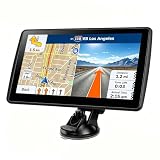
- 【Map Updates】 This car GPS comes pre-installed with the complete 2026 North America maps and supports free lifetime updates. If you need maps for Europe or other regions, please contact us to download.
- 【Smart Voice Alerts】 This GPS navigation system provides clear turn-by-turn voice guidance, and also alerts you to speed limits and school zones, helping you drive more safely.
- 【Custom Truck Routing】 Supports multiple modes including Car, Truck, Bus, RV, Bicycle, and Pedestrian. In Truck/RV mode, the system automatically avoids low bridges, weight-restricted roads, and narrow lanes.
2. Turn off Low Power Mode temporarily
If the dot jumps or stops updating, disable Low Power Mode. Turn on Wi-Fi or mobile data and turn off Airplane mode when the location is stale or accuracy is poor. These are diagnostic changes; once the route works normally, you can decide whether to restore your preferred power setting.
3. Improve reception and calibrate heading
Move outside or to another place with a clearer view of the sky. Tall buildings, parking structures and indoor spaces can reduce accuracy. If the blue beam is broad or points the wrong way, move the iPhone or iPad in a figure eight several times. This calibrates the compass only; it does not restore a missing GPS fix.
4. Restart and test again
Restart the device and try navigation outdoors. Maps may offer camera-based calibration with Lens on some devices and locations, subject to Street View availability. If the dot becomes accurate outdoors but fails repeatedly in one building or vehicle, the surroundings are the more likely explanation.
Recommended Free Tools
What to do when Google Maps says “GPS Signal Lost”
Browsing the map and seeing a blue dot does not guarantee that the phone has the GPS fix required for active navigation. Turn-by-turn navigation depends on GPS/GNSS, so a phone can appear roughly located while still reporting a lost navigation signal.
- Confirm that Location Services and Maps’ permission are enabled.
- Disable Battery Saver or Low Power Mode.
- Make sure Airplane mode is off and Wi-Fi or mobile data is available.
- Test outside with a clear sky, away from tall buildings and overhead obstructions.
- Restart the phone and start navigation again after it has had time to acquire satellites.
Inside a car, metallic-base glare-reducing window film can block GPS signals. A phone may therefore work on the sidewalk but lose its fix behind the vehicle’s glass. If the phone cannot acquire GPS while fully charged and outside in open sky, Google says hardware repair may be necessary.
Why Google Maps’ location can be inaccurate
Maps estimates position from several sources rather than from one sensor. GPS is usually the most precise of these under suitable conditions. Google’s explanatory guidance describes GPS accuracy of around 20 meters and mobile-tower accuracy of a few thousand meters. Those are approximate figures, not guarantees for a particular phone, building or moment.
Rank #4

- 8” navigator with high-resolution, dual-orientation display and map updates of North America .Special Feature:Large Display; Voice Assist; Hands-Free Calling; Live Traffic and Weather; Traffic Cams and Parking; Smart Notifications,Driver Alerts; Tripadvisor; National Parks Directory; Find Places by Name; Garmin Real Directions Feature.
- Hands-free calling when paired with your compatible smartphone with BLUETOOTH technology and convenient Garmin voice assist lets you ask for directions to places you want to go
- Road trip–ready features include the HISTORY database of notable sites, a U.S. national parks directory, Tripadvisor traveler ratings and millions of Foursquare POIs
- Driver alerts for things such as school zones, sharp curves and speed changes help encourage safer driving and increase situational awareness
- Access live traffic, fuel prices, weather, parking and smart notifications when you pair this navigator with your compatible smartphone running the Garmin Drive app
| Location source | What it contributes | Typical limitation |
|---|---|---|
| GPS/GNSS | Satellite-based position needed for active navigation | Can be weak indoors, underground, between tall buildings or behind signal-blocking materials |
| Nearby Wi-Fi | Helps refine a position, including when satellite reception is imperfect | Useful access points may be unavailable or their data may be stale |
| Mobile towers | Provides a broad fallback estimate | Google describes possible accuracy of a few thousand meters, far less precise than a good GPS fix |
| Motion and pressure sensors | On supported Android devices, accelerometer, barometer and gyroscope data can help Location Accuracy combine signals | Sensors improve an estimate but cannot substitute for a required GPS fix during navigation |
Indoors and underground, the phone may rely more heavily on Wi-Fi, towers and sensors, which explains a large uncertainty circle or a position that appears to jump. Moving to open air is both a remedy and a useful diagnostic: if accuracy quickly improves, the environment was probably the main obstruction. The roughly 20-meter GPS figure also explains why the dot may appear on a neighboring road or building even when the system is working normally.
Why Maps keeps rerouting
Google Maps uses real-time traffic information and can present alternate routes for you to choose. A route change therefore has two distinct explanations:
- Traffic or route optimization: The blue dot is where you expect, no GPS warning appears, and Maps changes the path as conditions or route calculations change.
- Positioning failure: The dot is misplaced or jumping, the uncertainty circle is broad, the dot is gray or absent, or navigation reports “GPS Signal Lost.”
Check the dot and warnings before troubleshooting location. If positioning looks normal, rerouting by itself is not evidence of a broken GPS. The available Google guidance does not establish one universal cause or a percentage for repeated reroutes, so the correct response depends on which of these symptom groups you see. Review the alternate route on the map and its traffic indicators before altering phone settings.
Symptom-based decision guide
| What you see | Most likely area to check | First action |
|---|---|---|
| Large pale-blue circle | Weak or obstructed location signals | Move outdoors, enable Location Accuracy, and restore Wi-Fi or mobile data |
| Gray or missing dot | Maps has no current fix | Check device Location and Maps permission, then test in open sky |
| Dot jumps while Battery Saver or Low Power Mode is on | Power-management restriction | Disable the mode and restart navigation |
| Dot is in the right place but beam is wide or points backward | Compass calibration | Move the phone in a figure eight |
| “GPS Signal Lost” in a car | Satellite blockage or missing permission | Check permissions, remove power restrictions, and test outside; inspect for metallic window film |
| Routes change while dot and beam are normal | Traffic or alternate-route calculation | Review the suggested route instead of changing GPS settings |
Common mistakes that do not solve the underlying problem
- Calibrating the compass for a missing GPS signal: Figure-eight motions fix heading information, not satellite reception or permission settings.
- Assuming every reroute is a bad location: Traffic-aware routing can change a valid route even when the blue dot is accurate.
- Testing only in a garage or downtown canyon: A blocked signal can make a healthy phone appear faulty.
- Checking only the app permission: Android’s device-level Location Accuracy setting and Maps’ precise permission are separate controls.
- Leaving power-saving mode enabled during diagnosis: Battery Saver and Low Power Mode can delay updates and make a dot appear to jump.
- Expecting a tower-based estimate to match GPS: A mobile-tower estimate may be off by a few thousand meters according to Google’s published explanation.
- Buying an accessory as a first response: A separate receiver, physical compass, mount or charger is not a documented fix for these symptoms. Check settings and signal conditions first.
When the phone may need service
After enabling location, granting precise permission, disabling power-saving restrictions, restoring connectivity, restarting and testing outdoors under a clear sky, a persistent inability to acquire GPS is no longer explained simply by a blocked indoor signal. Google’s navigation guidance says a fully charged phone that still cannot obtain GPS outside may need repair. Record whether the problem occurs everywhere or only in one garage, road corridor or building; that distinction helps separate a device problem from local signal obstruction. Also note whether the dot is wrong, the beam is wrong, or only the route changes, because each symptom points to a different diagnostic path.
Frequently Asked Questions
Why is my Google Maps location wrong?
Check the size of the pale-blue circle and whether the dot is gray or jumping. Enable device Location and Maps’ precise permission, turn on Android Location Accuracy where available, disable power-saving modes, restore Wi-Fi or mobile data, and test outdoors away from tall buildings or underground spaces.
Free tools Windows power users keep installed
One-click scans. No signup required.
Why does my blue dot keep jumping around?
Battery Saver or Low Power Mode, weak reception, or an obstructed environment can delay or degrade updates. Turn off the power-saving mode, enable connectivity, move into open sky, and restart the phone if necessary.
Best Value

- 7” high-resolution navigator includes map updates of North America .Special Feature:Easy-To-Read Display; Voice Assist; Hands-Free Calling; Live Traffic and Weather; Traffic Cams and Parking; Smart Notifications,Driver Alerts; Tripadvisor; National Parks Directory; Find Places by Name; Garmin Real Directions Feature.
- Hands-free calling when paired with your compatible smartphone with BLUETOOTH technology and convenient Garmin voice assist lets you ask for directions to places you want to go
- Road trip–ready features include the HISTORY database of notable sites, a U.S. national parks directory, Tripadvisor traveler ratings and millions of Foursquare POIs
- Driver alerts for things such as school zones, sharp curves and speed changes help encourage safer driving and increase situational awareness
- Access live traffic, fuel prices, parking, weather and smart notifications when you pair this navigator with your compatible smartphone running the Garmin Drive app
Why does Google Maps say GPS Signal Lost?
Active navigation requires a GPS/GNSS fix even if Maps can show a rough position while browsing. Check permissions, disable power restrictions and Airplane mode, then test outside with a clear sky. Metallic-based glare-reducing car-window film can also block the signal.
Will calibrating the compass fix an inaccurate location?
No. Figure-eight movements correct a wide or misdirected direction beam. They do not restore satellite reception or fix a blue dot that is in the wrong place.
Why does Google Maps keep rerouting?
If the blue dot is accurate and there is no GPS warning, Maps may be reacting to real-time traffic or offering an alternate route. Rerouting alone does not prove that GPS is failing.
Quick wins for a faster PC:
Clear out junk files and repair common Windows errorsFree Scan →Scan for outdated or missing drivers - takes under a minuteDriver Scan →Repair Windows errors before they cause bigger problemsFix Now →How accurate is Google Maps GPS?
Google describes GPS accuracy of around 20 meters under suitable conditions. Mobile-tower estimates can be accurate only to a few thousand meters. Both figures are approximate and vary with the phone and surroundings.
Why does Maps work outside but not in my car?
The vehicle may block satellite reception, especially if its windows use metallic-base glare-reducing film. Compare the phone outdoors with a clear sky and inside the car to identify the obstruction.
When should I have the phone repaired?
If a fully charged phone still cannot acquire GPS outdoors under a clear sky after permissions, accuracy settings, connectivity, power modes and a restart have been checked, Google’s guidance indicates that service may be needed.
The Bottom Line
Use the symptom to choose the fix: permissions, Location Accuracy, power and reception for a wrong or missing dot; figure-eight calibration for a wrong beam; and no GPS changes at all when only traffic-based rerouting is occurring. A fully charged phone that still cannot obtain GPS outside in open sky may need repair.
Quick Recap
Product prices and availability are accurate as of the date/time indicated and are subject to change. Any price and availability information displayed on Amazon at the time of purchase will apply.

