If Windows reports that clr.dll is missing, corrupted, or caused an application crash, repair the Windows component store first and then run System File Checker. Open an elevated Command Prompt and run DISM.exe /Online /Cleanup-image /Restorehealth, followed by sfc /scannow. Restart Windows after both commands finish and test the application again.
clr.dll is part of the Common Language Runtime used by .NET applications. The supported remedy is to repair the Windows or .NET Framework installation that provides the file, not to copy a replacement DLL from a download site.
As an Amazon Associate I earn from qualifying purchases.
What clr.dll does and why errors appear
clr.dll is a Windows/.NET runtime component. Applications built for the .NET Framework rely on the Common Language Runtime to load managed code and provide services such as memory management and exception handling. When the runtime files or the Windows component store are damaged, an application may fail during startup or Windows may display a message such as “clr.dll was not found,” “The procedure entry point could not be located,” or a generic .NET Framework initialization error.
What’s actually slowing this PC down?
Pick the symptom - the matching free tool is one click away.
The filename alone does not identify the cause. A damaged component store, an incomplete update, a corrupted .NET Framework installation, or a problem confined to one application can all produce similar symptoms. The repair sequence below starts with system-wide components and narrows the scope only when the broad repairs do not solve the failure.
#1 Best Overall

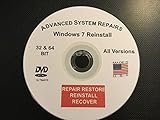
- Repair, Recover, Restore, and Reinstall any version of Windows. Professional, Home Premium, Ultimate, and Basic
- Disc will work on any type of computer (make or model). Some examples include Dell, HP, Samsung, Acer, Sony, and all others. Creates a new copy of Windows! DOES NOT INCLUDE product key
- Windows not starting up? NT Loader missing? Repair Windows Boot Manager (BOOTMGR), NTLDR, and so much more with this DVD
- Step by Step instructions on how to fix Windows 10 issues. Whether it be broken, viruses, running slow, or corrupted our disc will serve you well
- Please remember that this DVD does not come with a KEY CODE. You will need to obtain a Windows Key Code in order to use the reinstall option
Before you start
Confirm the scope of the failure
- If several unrelated .NET applications fail, treat the problem as a Windows or .NET installation issue and begin with DISM.
- If only one application fails while other .NET programs open normally, the application’s own files, configuration, or prerequisites may be responsible. Complete the system repairs, then use the publisher’s support and installation media for that application.
- Record the exact error text and the application name. Keep any error code shown by a command; it is useful if you need to escalate the problem.
Use an elevated Command Prompt
- Save your work and close the affected application.
- Open the Start menu and type
Command Prompt. - Right-click Command Prompt and choose Run as administrator. Approve the User Account Control prompt.
- Keep this window open until each scan reaches a final result. Do not close it because progress appears to pause.
DISM and SFC change protected Windows components, so an ordinary, non-administrator prompt may refuse to run them or may not be able to complete repairs.
Step 1: Repair the Windows component store with DISM
Microsoft advises running Deployment Image Servicing and Management before System File Checker. DISM repairs the component store that SFC uses as its source for replacement system files.
- In the elevated Command Prompt, enter
DISM.exe /Online /Cleanup-image /Restorehealthand press Enter. - Let the operation reach its final status. Depending on the condition of Windows and the speed of the computer, the scan can take a while.
- Read the final message. If DISM reports that the restore operation completed successfully, continue to SFC in the same administrator window.
For an online repair, DISM normally obtains replacement files through Windows Update. If Windows Update cannot provide the required files, Microsoft documents using a known-good Windows installation source instead. In that situation, use installation media that matches the installed Windows edition and servicing state, and follow Microsoft’s documented source procedure rather than downloading an individual DLL.
Do these 3 things before closing this tab:
1Repair Windows errors before they cause bigger problems2Fix the driver behind crashes, sound loss and screen glitches3Clear out junk files and repair common Windows errorsIf DISM cannot find source files
Do not bypass the failure by copying clr.dll from another computer. Note the complete DISM error and verify that Windows Update is available, that the device can reach it, and that the installation source is appropriate for the installed Windows build. Retry with a known-good source according to Microsoft’s DISM instructions. Once DISM completes, proceed to SFC; if it still cannot complete, preserve both error messages for further support.
Step 2: Run System File Checker
After DISM has finished, run the System File Checker scan. Running SFC first can leave it without a healthy source for repairs, which is why the order matters.
- In the same elevated Command Prompt, enter
sfc /scannowand press Enter. - Allow verification and repair to reach 100 percent. Interrupting the process can leave the repair unfinished.
- Read the final result. A message stating that corrupted files were repaired means Windows made changes; a message that no integrity violations were found means SFC did not detect protected-file corruption. If SFC says it could not repair some files, keep that result and continue with the .NET-specific repair steps below.
SFC checks protected Windows files, including files used by installed runtimes. It does not reinstall an individual third-party application, and it cannot correct an application’s own damaged data or an incompatible plug-in.
Step 3: Restart and test the application
Restart Windows after DISM and SFC have both completed. A restart allows repaired files and servicing changes to load instead of remaining in the current process.
Rank #2

- Repair, Recover, Restore, and Reinstall any version of Windows. Professional, Home Premium, Ultimate, and Basic
- Disc will work on any type of computer (make or model). Some examples include Dell, HP, Samsung, Acer, Sony, and all others. Creates a new copy of Windows DOES NOT INCLUDE product key
- Windows not starting up? NT Loader missing? Repair Windows Boot Manager (BOOTMGR), NTLDR, and so much more with this DVD
- Step by Step instructions on how to fix Windows 7 issues. Whether it be broken, viruses, running slow, or corrupted our disc will serve you well
- Please remember that this DVD does not come with a KEY CODE. You will need to obtain a Windows Key Code in order to use the reinstall option
- Choose Start, then Power, then Restart.
- After sign-in, launch the application that produced the clr.dll message.
- Repeat the action that previously triggered the failure. If it opens and performs that action normally, the system-file repair addressed the problem.
If the same error returns, continue with the .NET Framework repair rather than replacing the DLL manually.
Step 4: Repair the .NET Framework installation
A functioning Windows component store does not guarantee that the installed .NET Framework registration and installer state are healthy. Microsoft provides a .NET Framework Repair Tool for common setup and configuration problems, including an invalid Windows Installer state, folder-permission problems, and corrupted update registration.
Use Microsoft’s .NET Framework Repair Tool
- Obtain the current .NET Framework Repair Tool from Microsoft’s official documentation and download location. Avoid repackaged copies from third-party download sites.
- Close running .NET applications, then start the tool with the permissions it requests.
- Follow its diagnostic and repair prompts. The tool may reset or repair framework configuration and installer registration; allow it to complete rather than cancelling after the initial scan.
- Restart Windows if the tool requests it, then retry the affected application.
The repair tool targets common framework setup failures; it is not a replacement for repairing the Windows component store, and it cannot repair every application-specific crash. If the application still will not start, move to the installation-source repair and publisher-support steps.
Repair an existing framework installation from its original source
Microsoft also documents repairing an existing .NET Framework installation through Windows Installer using the original installation source. This is appropriate when the framework files or registration are damaged but the installed version is still present.
- Locate the original .NET Framework installer or installation media for the version required by the application. Use a source that matches the installed edition and release; do not substitute a random DLL or an unrelated framework package.
- Start the installer and choose its Repair option when offered. The exact wording and screens vary by framework release and Windows edition.
- Allow Windows Installer to restore the framework components and registration. If it asks for the original source again, point it to the same installation media or folder.
- Restart Windows when setup finishes, then test the application.
Do not remove a framework version simply because its folder contains a file named clr.dll. Applications can depend on a particular runtime release, and removing it can create additional startup failures. Repair the existing installation first.
When only one application still fails
If other .NET programs work after the Windows and framework repairs, the remaining fault is probably specific to the affected application or its deployment. Use the application publisher’s supported installer and troubleshooting guidance.
Reinstall or repair the application
- Use the application’s own installer or the Windows-installed Programs and Features entry, if it offers a Repair command.
- If repair is unavailable, uninstall and reinstall from the publisher’s official distribution source. Keep any required license information and back up application data first.
- Install the exact runtime or prerequisite version identified by the publisher. Do not assume that installing a different .NET release will satisfy the application.
- Test the application before restoring optional plug-ins or modifications. If the clean installation works, add those components back one at a time to identify a conflict.
Contact the application publisher
Persistent, application-specific startup failures should be escalated to the publisher after the Windows and .NET repairs. Provide the exact clr.dll message, the application version, Windows edition and build, the DISM and SFC final results, and whether the .NET Framework Repair Tool or framework repair completed. This information distinguishes a runtime problem from a defect in the application’s own loader or files.
Rank #3
Why downloading clr.dll is not a safe fix
Third-party DLL sites offer files with the same filename but cannot reliably match your Windows build, .NET Framework release, architecture, servicing level, or security state. Overwriting a file under a protected Windows or Microsoft.NET directory can create a version mismatch, break servicing, or introduce an untrusted binary. It can also hide the underlying component-store or framework problem, causing the error to return after the next update.
The Tool Desk
Outbyte PC Repair FREEClear out junk files and repair common Windows errorsFree Scan →Outbyte Driver Updater FREEScan for outdated or missing drivers - takes under a minuteDriver Scan →The supported path is to restore the component store with DISM, verify protected files with SFC, and repair the installed .NET Framework with Microsoft’s repair tooling or its original installation source. If those steps do not restore one application, use that application’s publisher rather than a generic DLL download.
Choose the right repair by scope
| Remedy | Primary scope | Repair source | Privileges | Next escalation |
|---|---|---|---|---|
DISM /Restorehealth |
Windows component store and system image | Windows Update by default; a known-good Windows source when required | Elevated Command Prompt | Resolve source or servicing errors, then run SFC |
sfc /scannow |
Protected Windows system files | Healthy component-store files supplied by DISM | Elevated Command Prompt | Record files that could not be repaired and continue to framework repair |
| .NET Framework Repair Tool | Common framework setup and registration problems | Microsoft’s repair utility | Use the permissions requested by the tool | Repair the existing framework from its original source |
| Windows Installer framework repair | One installed .NET Framework release | Original installation source or media | Installer may request administrator approval | Contact the application publisher if startup still fails |
| Application repair or reinstall | One application’s files and configuration | That application’s official installer | Depends on the installer | Publisher support with the recorded error details |
Troubleshooting branches after the standard sequence
DISM completes, but the error remains
Run SFC exactly after DISM, restart, and retest. If SFC reports no violations yet the same program fails, the Windows component store is less likely to be the remaining cause; use the .NET Framework repair and application-specific branches.
SFC reports unrepaired files
Record the complete result, restart only after the scan has finished, and proceed to the .NET Framework repair. If the application still fails, provide the SFC result to Microsoft or the application publisher rather than deleting protected files manually.
The .NET repair tool finishes without resolving startup
Repair the existing framework from its original installation source. If that does not help and other .NET applications work, concentrate on the affected application’s installer, prerequisites, and publisher support.
The failure began after an update or interrupted installation
Do not roll back by replacing individual files. DISM and SFC are designed to restore the supported Windows servicing state; the .NET repair tooling addresses framework installer and update-registration problems. Keep the update or setup error details when requesting support.
Quick Recap
Final verification checklist
- You ran DISM from an administrator Command Prompt before SFC.
- Both commands reached a final result and you saved any error codes.
- You restarted Windows before judging whether the repair worked.
- You used Microsoft’s .NET Framework Repair Tool or repaired the installed framework from its original source when system scans were insufficient.
- You did not overwrite a protected
clr.dllwith a download from an untrusted site. - You contacted the application publisher when the failure remained specific to one program.
As an optional shortcut after the manual steps, Outbyte PC Repair can address common Windows issues, including broken system elements and shared DLL problems, while also offering cleanup and diagnostics. It runs on Windows 11, 10, 8 and 7, includes a free trial, complements antivirus software rather than replacing it, and results vary; no tool repairs every crash.
Product prices and availability are accurate as of the date/time indicated and are subject to change. Any price and availability information displayed on Amazon at the time of purchase will apply.

