Fix Apple TV 4K problems in this order: restore the Siri Remote connection, then isolate Wi‑Fi, then isolate HDMI audio. Hold Back (or Menu) and Volume Up near the Apple TV to pair; if that fails, power-cycle the Apple TV and retry. For Wi‑Fi, forget and rejoin the network, restart the router and Apple TV, and use Ethernet temporarily when available. For silence, reseat or replace the HDMI cable, test Apple TV directly on the television, and adjust the audio format before troubleshooting ARC/eARC.
Use the symptom to choose the right fix
Apple TV 4K faults often look similar: a remote that does nothing can prevent you from reaching Network settings, while a network interruption can stop an update needed to complete recovery. Work through the matching branch instead of changing several variables at once.
As an Amazon Associate I earn from qualifying purchases.
| What you see | Start here | Next diagnostic |
|---|---|---|
| The Siri Remote is disconnected, replaced, or unresponsive | Charge and restart the remote, then pair it again | Check Bluetooth RSSI, distance, and obstructions; use an alternate remote if necessary |
| Apple TV cannot join Wi‑Fi or rejects the password | Forget the network and join it again | Restart modem, router, and Apple TV; compare Wi‑Fi with Ethernet when the model provides it |
| There is no sound or it cuts out | Reseat or replace HDMI and power-cycle every device | Connect Apple TV directly to the TV, then test audio format and bit depth |
| HomePod television audio will not work | Confirm Apple TV 4K generation, HomePod setup, and Play Television Audio | Enable the TV’s ARC/eARC and HDMI-CEC controls and check cable seating |
Menu labels can vary with tvOS and Apple TV generation. The paths below use the current labels documented for the relevant features.
Pair a Siri Remote or Apple TV Remote again
Pair a disconnected or replacement remote
- Turn on the Apple TV and hold the remote about 3 inches (8–10 cm) from the front of the Apple TV 4K.
- Point the remote at the Apple TV and hold Back (or Menu on an older Apple TV Remote) together with Volume Up for five seconds. The Apple TV User Guide describes the same action as a two-second hold; if the first attempt does not complete, keep the buttons held for the full five seconds used by Apple’s support procedure.
- Wait for the on-screen pairing notification before moving the remote away.
Pairing a remote automatically unpairs another remote. That is expected when you replace a lost or damaged unit; it does not indicate a second hardware failure.
#1 Best Overall

- 【Note】NOT Siri Remote, NO Voice Function! The power/volume/mute buttons could only works for samsung/LG/Vizio/Hisense/Sony/Amz Firre/Toshiba/Insignia Firre TVs. Please "UNLOCK" your old device with remote before using our remote, or our remote will not connect to your device!!!
- 【Compatible Models】 Replacement for Apple TV Remote: For Apple TV A1218(1st Gen), for Apple TV A1378(2nd Gen), for Apple TV A1427/A1469(3rd Gen). For Apple TV HD A1625(4th gen), for Apple TV HD MHY93LL/A(5th gen). For Apple TV 4K A1842(1st Gen), for Apple TV 4K A2169(2nd Gen), for Apple TV 4K A2737/A2843(3rd Gen)
- 【Remote Compatibility】Replacement IR remote compatible with Apple TV Remote (white) A1156 MA128LL/A, for Apple TV Remote (aluminum) MM4T2AM/A. For Siri Remote (1st Gen)/Apple TV Remote (1st Gen) MQGD2LL/A, for Siri Remote (2nd Gen)/Apple TV Remote (2nd Gen) MJFM3LL/A, for Siri Remote(3rd Gen) /Apple TV Remote (3rd Gen) MNC73AM/A
- 【Packing Included】Comes with user manual. NO more worry on pairing. Just need to insert 2*AAA remote and it's ready for use. (Package includes 1*Replacement and 1*User Manual. Batteries are NOT included)
- 【Note】If you TV brand is not what we listed in our detail page, please do not take this remote home, or it will not be compatible! Please "UNLOCK" your old device with remote before using our remote, or our remote will not connect to your device!!!
If pairing does not start
- Unplug the Apple TV from power.
- Wait six seconds.
- Reconnect power, allow the Apple TV to start, and repeat the close-range Back/Menu plus Volume Up sequence.
This power-cycle step resets the pairing state without erasing the Apple TV. Keep the remote close to the Apple TV while retrying.
Restart the remote itself
For a remote that is connected intermittently or has stopped responding, hold the TV/Control Center button and Volume Down for about five seconds. Release both buttons, wait 5–10 seconds, and press any button. This restarts the remote separately from the Apple TV.
Charge before diagnosing Bluetooth range
Connect the remote to a USB cable and wall charger for 30 minutes. A low battery can look like a failed pairing or poor wireless range, so charging is the first check when buttons respond inconsistently or not at all.
Check Bluetooth RSSI and the physical path
On tvOS 18 or later, open Settings > Remotes and Devices > Remote and inspect Bluetooth RSSI. If the reading is weak, move within about 20 feet (6 m) of the Apple TV and remove objects that block the path to the Apple TV, television, receiver, or soundbar. Metal equipment, cabinet walls, and a crowded equipment rack can all obstruct the radio path.
Do not judge range from a single room position. Test the remote close to the Apple TV first, then return it to the normal seating position. If it works nearby but not at the usual seat, the problem is placement or obstruction rather than the pairing sequence.
Separate pairing failure from control failure
A remote may be paired even when volume or power buttons do not control the television or receiver. Those functions use the equipment’s infrared or HDMI-CEC controls, while navigation communicates with Apple TV. First confirm that the Apple TV responds to navigation. If navigation works but volume does not, check the television or receiver control setup rather than repeatedly pairing the remote.
Conversely, if no button produces a response, stay with the charge, restart, close-range pairing, and Apple TV power-cycle sequence. Changing television audio settings cannot restore a Bluetooth connection.
Do these 3 things before closing this tab:
1Fix the driver behind crashes, sound loss and screen glitches2Clear out junk files and repair common Windows errors3Scan for outdated or missing drivers - takes under a minuteWhen the Siri Remote is unavailable
A supported television or receiver remote can control Apple TV through HDMI-CEC. A network-based home-control remote is another option. Apple TV can also learn a universal infrared remote: open Settings > Remotes and Devices > Learn Remote and follow the on-screen prompts.
The Apple TV Remote on an iPhone or iPad can navigate Apple TV and is particularly useful when you need to install an update or reach settings during recovery. It does not replace the physical pairing procedure for a remote that you want to use long term, but it can get you through the setup.
Restore Apple TV 4K Wi‑Fi
Forget the network and join it again
- Open Settings > Network > Wi‑Fi.
- Select the current network.
- Choose Forget Network.
- Return to the Wi‑Fi list, select the network again, and enter the password.
Use this path for an incorrect-password message, a connection error after a router change, or a network that appears in the list but will not complete the join. Rejoining creates a fresh connection without requiring a full Apple TV setup.
For a network that is not listed at all, first verify that the router is broadcasting and that another nearby device can see it. Move Apple TV and the router into the same room for a test before deciding that the Apple TV’s wireless hardware is at fault.
The Tool Desk
Outbyte Driver Updater FREEFix the driver behind crashes, sound loss and screen glitchesFind Drivers →Outbyte PC Repair FREEClear out junk files and repair common Windows errorsFree Scan →Rank #2

- Replacement Remote Control for All Apple TV Remote - 2 Year Warranty
Check the router, modem, and placement
- Confirm that the modem and router are powered and that the router has its upstream connection.
- Place Apple TV and the router in the same room for the first test when possible.
- Do not place Apple TV directly on or within 30 cm of the router.
- Move Apple TV away from metal obstructions and other equipment that can shield the wireless signal.
Once the close-range test succeeds, return the devices to their normal locations. If the connection fails only after relocation, improve the physical path before changing software settings.
Keep a simple comparison in mind: a network that appears in the Wi‑Fi list but rejects the join points toward credentials or connection state; a network that disappears as distance increases points toward range or obstruction; a wired connection that also fails points beyond Wi‑Fi radio conditions.
Restart Apple TV, then the network equipment
- On Apple TV, open Settings > System > Restart.
- If the problem remains, unplug the router and modem.
- Restart the modem and router, wait for the network to become available, and try Settings > Network > Wi‑Fi again.
Restarting the Apple TV first tests its network client; restarting the modem and router addresses a stalled connection or changed network state upstream. Allow the network equipment to finish coming back online before judging the Apple TV result.
Use Ethernet as a diagnostic path
If your Apple TV model has an Ethernet port, connect it directly to the router or modem. A wired connection lets you install software updates and separates a wireless-range problem from a broader internet or Apple TV problem. After the wired connection works:
Free tools Windows power users keep installed
One-click scans. No signup required.
- Open Settings > System > Software Updates and install any available update.
- Disconnect the Ethernet cable.
- Return to Settings > Network > Wi‑Fi and try the wireless network again.
Apple TV can switch between Ethernet and Wi‑Fi without repeating the entire initial setup. Ethernet is therefore both a temporary way to get online and a controlled comparison for Wi‑Fi troubleshooting. If Ethernet is stable but Wi‑Fi is not, concentrate on placement, obstructions, and the wireless join rather than replacing HDMI or audio equipment.
Complete a captive-network sign-in
Some networks require a web sign-in before allowing normal internet access. After updating Apple TV, join that network and choose Continue on iPhone or iPad when the option appears. Complete the network’s sign-in on the iPhone or iPad, then return to Apple TV and test connectivity.
A captive sign-in is different from an incorrect Wi‑Fi password. Forgetting and rejoining may be necessary first, but the browser-style approval still has to be completed on the paired iPhone or iPad.
Restore sound when Apple TV 4K is silent or unreliable
Start with the HDMI connection
- Turn off the television.
- Disconnect and firmly reseat both ends of the HDMI cable: the Apple TV end and the TV, receiver, or switch end.
- Turn the television back on and test audio.
- If the symptom remains, try another HDMI cable.
For HDMI 2.1 equipment, Apple specifies an Ultra High Speed HDMI cable. For 4K HDR setups, use a cable rated for HDMI 2.0 or later. A cable can carry a picture while still causing unstable or missing audio, so a different known-good cable is a meaningful test.
What’s actually slowing this PC down?
Pick the symptom - the matching free tool is one click away.
Power-cycle every component in the signal chain
- Power off the TV.
- Unplug Apple TV.
- Power-cycle any AV receiver, soundbar, or external speakers.
- Reconnect power and test again after all components have restarted.
CEC and audio handshakes can remain stuck after a sleep, input change, or device restart. Restarting only Apple TV leaves the other end of the HDMI negotiation untouched.
Bypass switches and receivers
If Apple TV passes through an HDMI switch or AV receiver, connect it directly to the television as a test. Direct connection removes intermediate devices from the chain. If direct-to-TV audio works, reconnect one intermediate device at a time to identify where the handshake or format negotiation fails.
If direct-to-TV audio is still silent, leave the switch or receiver disconnected while testing the Apple TV audio settings. This prevents an intermediate device from masking the result and gives you a known baseline using the television speakers.
Rank #3
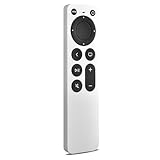
- 【Compatible Apple TV models】 Compatible with All Apple TV Remote, Replacement for Apple TV 4K/ Gen 1 2 3 4/ HD A2169 A1842 A1625 A1427 A1469 A1378 A1218 with TV Control Function, App Swich Function
- 【Easy Pairing】Press and hold the Back and Left button for 6 seconds,until the LED light flashes,Then it works!(Note: Battery not included)
- [IR remote (NOT BT/RF)]-line-of-sight required. NO Siri,NO Voice control,NO Touchpad function. Not for A-Pod/H-Pod. [For those you will need to use the original remote with BT]
- [with TV Control Function Buttons]- Power/Volume+/Volume-/Mute keys design for TV Brand:for Samsung,for LG,for Sony,for Westinghouse,for Insignia,for Vizio,for Toshiba,not for any ROKU TV
- [Slim Design]- Slim body design,for an elegant feel
Change Apple TV audio settings
- Open Settings > Video and Audio.
- Use Change Format and test a different audio format.
- Turn off Continuous Audio while diagnosing intermittent or missing sound.
- Set Audio Mode to 16 bit.
- Set Audio Output to Apple TV when the television speakers, soundbar, or receiver should play the sound.
Change one setting at a time and test a familiar program after each change. This makes it possible to identify the format or output choice that restores sound instead of leaving several unknown settings altered.
Use the same test clip after each change. If menus make sound but a program does not, or one program works while another does not, note the difference before changing more settings. The goal is to establish whether the failure is general output, a format negotiation, or a particular component in the chain.
Remove processing that can mask the result
Temporarily disable volume levelling and other audio processing on the television or receiver. Processing modes can alter how a component accepts or presents the signal. Re-enable them individually after basic audio is stable.
Navigation sounds are a separate check
If video audio works but menu clicks are missing, open Settings > Video and Audio and turn on Sound Effects and Music. This setting controls Apple TV interface sounds; it is not a substitute for fixing a silent movie or television program.
Set up ARC or eARC with Apple TV 4K and HomePod
Confirm the required equipment and software path
Apple’s ARC/eARC procedure applies to Apple TV 4K (2nd generation or later). You need a television with ARC or eARC support and a HomePod or HomePod mini configured as the default speaker. The HomePod can be a single unit or a stereo pair.
The Apple TV and HomePod must be assigned to the same room in the Home app. If they are in different rooms, correct that room assignment before testing television audio return.
Choose Play Television Audio
- On Apple TV, open Settings > Video and Audio > Audio Output.
- Under Audio Return Channel, choose Play Television Audio.
- Check the status. A working connection shows On (ARC) or On (eARC).
This setting lets the selected HomePod speaker play audio from the television, not only audio originating in Apple TV apps.
Enable the television’s return-channel controls
Open the television settings and enable ARC or eARC as applicable. HDMI-CEC may also need to be enabled because the devices use it to coordinate control and audio routing. Manufacturers use different names and menu locations for these controls, so look for the television’s ARC/eARC and HDMI-CEC options rather than assuming they are active by default.
Recover a failed ARC/eARC connection
- Verify that the Apple TV is a 2nd-generation-or-later Apple TV 4K and that the television supports ARC or eARC.
- Confirm the HomePod or HomePod mini is the default speaker and is in the same Home app room as Apple TV.
- Check that ARC/eARC and HDMI-CEC are enabled on the television.
- Reseat the HDMI cable at both ends.
- Return to Settings > Video and Audio > Audio Output and select Play Television Audio again.
If the status does not change to On (ARC) or On (eARC), the missing requirement is usually compatibility, television settings, room assignment, or the HDMI connection. Resolve those conditions before changing unrelated audio formats.
Quick wins for a faster PC:
Fix the driver behind crashes, sound loss and screen glitchesFind Drivers →Repair Windows errors before they cause bigger problemsFix Now →Do not use ARC/eARC as the first test for a silent Apple TV. Establish ordinary audio through the television, soundbar, or receiver first. Once that path works, enable television audio return and verify the status indicator. This order distinguishes a basic HDMI output problem from a return-channel compatibility problem.
Independent reader supportYour contribution helps us test, update, and keep practical guides available for everyone.A disciplined recovery order
When more than one symptom appears, use a fixed order so one fault does not hide another.
Rank #4

- Newest Universal Remote Control for All Apple TV Remote, Replacement Compatible with Apple TV/Apple TV HD/4K A1218 A1378 A1427 A1469 A1625 A1842 A2169 A2737 A2843 with TV Control Function, App Swich Function(not an original Apple remote control)
- This is an IR remote (NOT BT/RF), line-of-sight required. NOT Siri remote, NO Voice control, NO Touchpad function. Not for A-Pod/H-Pod. [For those you will need to use the original remote with BT, not IR remote!
- [Easy to Pair]- Just Press the Back and Left buttons at the same time for 6s,until the LED light flashes,If you still have problem, please read the user manual!(Battery not included)
- Power key works for TV Brand:for Samsung,for LG,for Sony,for Westinghouse,for Insignia,for Vizio,for Toshiba,not for any ROKU TV
- Compatible with Apple TV 4K (3rd generation), Apple TV 4K (2nd generation), Apple TV 4K (1st generation), and Apple TV HD
- Restore control: charge and restart the remote, pair it close to Apple TV, then power-cycle Apple TV if pairing fails.
- Restore connectivity: forget and rejoin Wi‑Fi, restart the network equipment, and use Ethernet to install updates or compare wired and wireless behavior.
- Restore basic audio: reseat or replace HDMI, power-cycle the complete chain, and test Apple TV directly on the TV.
- Adjust audio negotiation: test Change Format, Continuous Audio, 16-bit Audio Mode, and the intended Audio Output.
- Add television audio return: only after basic audio works, configure HomePod, Play Television Audio, ARC/eARC, and HDMI-CEC.
Stop at the first step that changes the symptom and retest the original scenario. That identifies the failing layer and avoids replacing working equipment unnecessarily.
Frequently Asked Questions
How do I pair my Apple TV remote again?
Hold Back (or Menu on an older remote) and Volume Up while the remote is about 3 inches from Apple TV. If it does not pair, unplug Apple TV for six seconds, reconnect it, and repeat the sequence.
Recommended Free Tools
Why is my Siri Remote responding only sometimes?
Charge it for 30 minutes, restart it with TV/Control Center plus Volume Down for about five seconds, then check Bluetooth RSSI under Settings > Remotes and Devices > Remote on tvOS 18 or later. Move within about 20 feet and clear obstructions.
Why will Apple TV not connect to Wi‑Fi?
Open Settings > Network > Wi‑Fi, select the network, choose Forget Network, and join again. Restart Apple TV, modem, and router. If available, use Ethernet to update software and compare wired with wireless behavior.
Can I use Apple TV without the Siri Remote?
Yes. A compatible TV or receiver remote can work through HDMI-CEC, a network home-control remote can navigate Apple TV, and a universal infrared remote can be learned under Settings > Remotes and Devices > Learn Remote. The iPhone or iPad Apple TV Remote is useful during recovery.
Why is there no sound from Apple TV 4K?
Reseat both HDMI ends, try another correctly rated cable, and power-cycle the TV, Apple TV, receiver, or soundbar. Then connect Apple TV directly to the TV and test Change Format, Continuous Audio, Audio Mode set to 16 bit, and Audio Output set to Apple TV.
Crashes, No Sound, or Screen Glitches?
Random freezes, missing sound and display glitches usually trace back to one bad driver. Find and replace yours safely.Free scan · under a minutePC Slower Than It Used to Be?
A free scan shows the junk files, broken settings and background clutter dragging Windows down - then fixes them in one click.Free scan · Windows 10 & 11What does direct-to-TV testing prove?
It removes an HDMI switch or receiver from the signal path. If sound returns, reconnect intermediate devices one at a time to find the component causing the handshake or format problem.
How do I get ARC or eARC working with Apple TV 4K?
You need Apple TV 4K (2nd generation or later), a compatible ARC/eARC television, and a HomePod or HomePod mini set as the default speaker in the same Home app room. Choose Settings > Video and Audio > Audio Output > Play Television Audio and enable ARC/eARC and HDMI-CEC on the TV.
Why are Apple TV menu clicks missing when program audio works?
Open Settings > Video and Audio and turn on Sound Effects and Music. Interface sounds are controlled separately from movie and television audio.
The Bottom Line
Use a controlled sequence: charge and re-pair the remote, forget and rejoin Wi‑Fi, compare wireless with Ethernet, then isolate HDMI audio with a direct-to-TV test. Only after ordinary sound works should you configure HomePod television audio, ARC/eARC, and HDMI-CEC. These checks identify the failing layer without changing several variables or replacing working equipment.
Quick Recap
Product prices and availability are accurate as of the date/time indicated and are subject to change. Any price and availability information displayed on Amazon at the time of purchase will apply.

