What’s actually slowing this PC down?
Pick the symptom - the matching free tool is one click away.
Repeated disconnects usually come from one of three places: the wireless path (Puck or Bluetooth), the Steam Machine’s USB host, or the controller itself. Identify the connection mode first, then update every relevant device, restart them, and test one variable at a time. A USB-C data-cable test is the quickest way to separate a wireless problem from a controller or host problem.
This guide applies primarily to the current Steam Controller covered by Steam’s “Steam Controller (2026)” support guide. A separate section explains the discontinued 2015 controller, because its pairing instructions and button combinations are not interchangeable with the current model.
As an Amazon Associate I earn from qualifying purchases.
Identify the controller generation and connection mode
Do not start by pressing reset combinations at random. Steam documents different procedures for the current Steam Controller and the discontinued 2015 Steam Controller. On the current model, open Settings > Controller > Details in Steam to see how the controller is connected and to view its live status.
Quick wins for a faster PC:
Clear out junk files and repair common Windows errorsFree Scan →Scan for outdated or missing drivers - takes under a minuteDriver Scan →Repair Windows errors before they cause bigger problemsFix Now →Current Steam Controller connection indicators
| LED state or mode | What it means | Where to troubleshoot |
|---|---|---|
| Solid white | Puck wireless connection is active. | Check Puck signal strength, placement, radio interference, and the Puck’s USB connection. |
| Slowly blinking white | The Puck wireless link has been lost. | Check line of sight, interference, Puck power, and the host USB port. |
| Solid blue | Bluetooth connection is active. | Check Bluetooth pairing, nearby Bluetooth activity, and Steam Machine Bluetooth settings. |
| Slowly blinking blue | The Bluetooth link has been lost. | Reconnect, then forget and pair the controller again if necessary. |
| Solid green | Direct USB-C connection is active. | Check the data cable, the selected USB port, and host USB contention. |
A solid LED indicates an established connection. A slowly blinking white or blue LED indicates that the corresponding wireless connection has been lost. If the LED color does not match what you expected, verify the mode in Controller Details before changing settings.
#1 Best Overall

- TMR Joysticks - Offering higher sensitivity, greater precision, and enhanced durability.
- 8BitDo Exclusive Wireless Technology - “8Speed”, it delivers an exceptionally stable 2.4G connection with ultra-low latency under 1ms. Engineered for rock-solid reliability, it features strong anti-interference and a 10m range with virtually no lag.
- Trigger Mode Switch - Easily switch between linear Hall Effect triggers and non-linear tactile triggers for optimal control across different gaming scenarios.
- 1000Hz Polling Rate (for 2.4G and wired connection). Customizable 6-Axis Motion Control. Turbo function. Rumble vibration. Support 8BitDo Ultimate Software V2.
- 2 Pro back paddle buttons, extra R4/L4 bumpers, and tactile bumpers & D-pad for enhanced control and faster response. Includes a multifunctional charging dock and USB-C adapter for seamless connectivity.
How the 2015 controller changes the diagnosis
Steam’s older guide identifies the 2015 Steam Controller as discontinued and documents it separately, including its Bluetooth Low Energy behavior. Treat that controller as a different generation: use the 2015-specific support instructions and do not apply the current controller’s procedures, or vice versa. In particular, avoid using 2015 button chords on the 2026 controller.
Install updates and restart every affected device
Out-of-date firmware can make a connection problem look like a radio or USB fault. Before changing hardware, install every update Steam offers for the components involved:
- Steam client and the Steam Machine operating system or SteamOS, as applicable.
- The Steam Controller firmware.
- The Puck firmware, if a Puck is being used.
- Steam Machine firmware.
After updating, restart the Steam Machine and power-cycle or restart the controller. If you use a Puck, disconnect it while the Machine is off, reconnect it after startup, and allow Steam to recognize it again. Restarting after firmware changes matters because the new software may not be active until the device and its radio or USB services have reinitialized.
Do these 3 things before closing this tab:
1Clear out junk files and repair common Windows errors2Scan for outdated or missing drivers - takes under a minute3Repair Windows errors before they cause bigger problemsSteam’s Steam Machine troubleshooting guidance also recommends disconnecting unnecessary USB and Bluetooth peripherals during diagnosis. Leave only the display, keyboard or other input you need, and the controller connection under test. This removes competing radios and USB devices from the experiment without assuming that any particular peripheral is defective.
If the controller uses the Puck
The Puck is Steam’s dedicated wireless receiver. Steam Support says, “For the fastest and most reliable connection, we generally recommend using this mode.” That recommendation describes the Puck wireless mode; it does not guarantee that every room or USB layout will produce the same result.
Read the live signal indicator
With the Puck connected, open Settings > Controller > Details and watch the signal-strength indicator while you use the controller. A signal that falls sharply when the controller is moved, or that fluctuates when nearby equipment is active, points to an environment or receiver-placement issue rather than a button or game setting.
Improve the radio path
- Place the controller and Puck where they have a clear line of sight when practical. Avoid enclosing the Puck behind the Machine, inside a cabinet, or beneath a dense cluster of cables.
- Move the Puck away from Wi-Fi access points and their cables. The goal is to increase physical separation, not to disable your network permanently.
- Keep the Puck away from SuperSpeed USB storage devices, USB network adapters, capture cards, and other high-speed USB equipment. These devices can create local radio noise near the receiver.
- Do not place the Puck behind metal or carbon-fiber panels. Those materials can block or reflect radio energy.
- After each move, return to Controller Details and check whether signal strength and disconnect frequency change.
These are controlled environment checks. Nearby Wi-Fi, a SuperSpeed device, a capture card, or a particular material may be unrelated to your failure; the test is useful because it changes one variable while you observe the result.
The Tool Desk
Outbyte Driver Updater FREEFix the driver behind crashes, sound loss and screen glitchesFind Drivers →Outbyte PC Repair FREEClear out junk files and repair common Windows errorsFree Scan →Rank #2

- Compatible with Windows and Android.
- 1000Hz Polling Rate (for 2.4G and wired connection)
- Hall Effect joysticks and Hall triggers. Wear-resistant metal joystick rings.
- Extra R4/L4 bumpers. Custom button mapping without using software. Turbo function.
- Refined bumpers and D-pad. Light but tactile.
Check the Puck’s USB connection
Connect the Puck directly to a Steam Machine USB port whenever possible instead of routing it through an adapter or hub. If the Puck drops out when other USB equipment is attached, continue with the USB contention checks below. A white LED that blinks only on one port is evidence that the host connection or that port’s bus deserves attention.
If the controller uses Bluetooth
Bluetooth has a different failure pattern from Puck wireless. The controller must be in pairing mode, Bluetooth must be enabled on the Steam Machine, and the Machine must retain a valid pairing record.
Refresh an existing Bluetooth link
- In Steam’s controller settings, disconnect the controller and start a fresh connection attempt.
- If a simple reconnect fails, restart the Steam Machine. This clears a stalled Bluetooth service without changing other controller settings.
- Put the controller into pairing mode and pair it from the Steam Machine’s Bluetooth controls.
- If the old entry repeatedly fails to reconnect, choose the option to forget or remove that device, then pair it again as a new device.
On a Steam Machine, a previously paired controller that will not reconnect should be forgotten and re-paired after the Machine has restarted. Keep the controller close to the Machine during pairing so that a weak initial signal is not mistaken for an authentication failure.
Reduce Bluetooth congestion
Temporarily turn off or move other nearby Bluetooth devices while testing. Multiple active devices can make a crowded radio environment harder to diagnose. If disconnects stop only when other Bluetooth activity is reduced, re-enable devices one at a time to find a practical arrangement. Do not infer from this test that a particular headset, keyboard, or phone is permanently incompatible; it only establishes that the local radio environment affects stability.
Check USB ports and host contention
A controller or Puck can disconnect even when its firmware and radio are functioning if the Steam Machine’s USB host is busy, unstable, or sharing resources with another device. Steam’s USB troubleshooting guidance lists intermittent disconnects, failed connections, and port-dependent responsiveness as symptoms of USB scheduling or contention issues.
Run a clean port test
- Shut down or exit the applications you do not need for testing.
- Move the Puck or wired controller to a different USB port on the Steam Machine.
- Where possible, connect directly rather than through a hub, dock, or adapter.
- Temporarily disconnect other USB devices, especially storage, network, capture, and other high-throughput hardware.
- Use the controller for long enough to reproduce the original workload. A connection that survives only an idle desktop is not a complete test.
- If stability improves, reconnect the removed devices one at a time. Stop when the intermittent behavior returns and note which combination was active.
The Machine’s USB ports do not all share the same internal bus. Consequently, moving a Puck or cable can change scheduling and contention even when both sockets look identical. A port-dependent result is useful evidence, but it does not by itself prove that a port is physically damaged.
Test on another computer when available
Connect the controller or Puck to another compatible computer and observe whether the behavior follows the device. If it disconnects in the same way on a second host, the controller, Puck, cable, or its radio environment becomes more likely. If it is stable elsewhere, focus on the Steam Machine’s ports, firmware, operating-system state, or local interference. This comparison narrows the fault domain; it is not a substitute for checking the original Machine’s configuration.
Rank #3
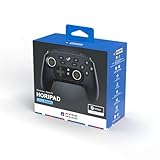
- Rechargeable wireless pro controller designed for Steam for Windows 11/10 & Steam Deck
- Dedicated buttons for quick access to Steam menus
- Capacitive Touch Thumbsticks, gyro sensor, programmable buttons, & more
- Also functions as an XInput controller for Windows 11/10 (wired mode only)
- Compatible with Steam and Steam Deck
Use a wired USB-C test to isolate the wireless path
The current Steam Controller supports direct USB-C operation. Use a USB-C data cable, not a charge-only cable, and connect it directly to the Steam Machine. A green LED and a stable entry in Controller Details confirm that Steam is seeing the wired mode.
- Disconnect the Puck or disable the Bluetooth connection so the test uses only USB-C.
- Plug the data cable directly into the controller and a different known-good Steam Machine USB port.
- Use the controller for the same game, menu navigation, or workload that produced the dropouts wirelessly.
- If the cable itself is suspect, repeat with another USB-C data cable.
Stable wired operation suggests that the failure lies somewhere in the wireless path: Puck placement, Bluetooth pairing, radio congestion, or the corresponding receiver. It does not identify a specific defective component. A wireless controller can be perfectly functional over USB-C while its Puck, Bluetooth radio, or surrounding environment still needs attention.
If the controller also disconnects over a direct wired connection, concentrate on the cable, USB port, host contention, firmware, and possible controller hardware. A wired failure that follows the controller to another computer is stronger evidence of a device-side problem than a failure seen only on one Steam Machine.
Interpret the results without guessing
| Observation | Most useful next interpretation | Next action |
|---|---|---|
| Puck mode drops, Bluetooth and USB-C remain stable | The wireless receiver path or its local environment is implicated. | Recheck Puck signal strength, placement, direct USB connection, and nearby interference sources. |
| Bluetooth drops, but Puck and USB-C are stable | The issue is limited to Bluetooth pairing or radio congestion. | Forget and re-pair, restart the Machine, and reduce nearby Bluetooth activity. |
| Both Puck and Bluetooth drop, USB-C is stable | The controller’s wireless environment or wireless hardware needs further isolation. | Test with fewer radios nearby, move the Machine or receiver, and compare with another host if possible. |
| USB-C drops on one port but not another | The original port, bus, adapter, or contention pattern is relevant. | Use the stable direct port and reconnect other USB devices one at a time. |
| USB-C drops on multiple ports and another computer | A cable or controller-side fault is more plausible. | Try a known-good data cable, then contact Steam Support if the failure remains. |
| The failure occurs only when a particular set of USB devices is attached | Host USB scheduling or contention is involved. | Change port assignments, remove the conflicting device while playing, or seek support for a persistent host issue. |
The table describes diagnostic direction, not a guarantee. For example, a stable wired test does not prove that the controller’s wireless hardware is defective; it only shows that the wired path can remain active under the same general workload.
When to contact Steam Support
Escalate to Steam Support after you have installed available updates, restarted the affected devices, checked the appropriate wireless mode, tested another port, and performed the USB-C comparison. Include the details that let support reproduce the problem:
- Whether the controller is the current model or the discontinued 2015 model.
- Whether the dropout occurs over Puck wireless, Bluetooth, USB-C, or more than one mode.
- The LED color and whether it is solid or slowly blinking when the failure occurs.
- The Steam Machine port used, whether the Puck was connected directly, and which other USB devices were attached.
- Whether Controller Details showed a weak or fluctuating Puck signal.
- Whether the controller remained stable on another computer or with a different USB-C data cable.
Contact support promptly if the controller shows physical damage, will not maintain a connection in any mode, or requires a service decision. A replacement controller is not the first troubleshooting step; establish whether the fault follows the controller and let Steam Support determine the appropriate service or replacement route.
Independent reader supportYour contribution helps us test, update, and keep practical guides available for everyone.Common mistakes that prolong the problem
Using the wrong generation’s instructions
The 2015 controller and the current controller have separate support documentation. A button sequence that belongs to the discontinued model can fail to do anything useful on the current model, and may change the diagnosis by putting the controller into an unexpected state.
Rank #4

- MODERNIZED DESIGN — Experience the modernized design of the XBOX Wireless Controller with sculpted surfaces and updated geometry that enhances comfort and control during long gaming sessions.
- PRECISION PERFORMANCE — Stay on target with a hybrid D-pad and textured grips on triggers, bumpers, and back case for improved accuracy and handling.
- SHARE BUTTON: Seamlessly capture and share content such as screenshots, recordings, and more with the new Share button.
- VERSATILE CONNECTIVITY — Connect via USB-C for plug-and-play on console and PC, or quickly pair and switch between supported devices with XBOX Wireless and Bluetooth support.
- BUILT-IN AUDIO SUPPORT — Plug in compatible headsets using the 3.5mm audio jack for direct voice chat and immersive in-game sound.
Changing several variables at once
Moving the Puck, replacing the cable, deleting Bluetooth pairings, and reconnecting every peripheral simultaneously may make the controller work but leaves no evidence about the cause. Change one item, reproduce the workload, and record the result.
Assuming a single interference source is guilty
Steam’s guidance names Wi-Fi access points, SuperSpeed USB equipment, network adapters, capture cards, metal, and carbon fiber as things to move away from or avoid. They are possible contributors, not confirmed causes of every dropout. Use the signal indicator and repeatable before-and-after tests rather than assuming that one device is responsible.
Testing only at the desktop
Games and streaming can create more USB and radio activity than an idle menu. Reproduce the conditions under which the controller normally disconnects so that a successful test reflects real use.
After the connection is stable
Keep the working arrangement documented: note the connection mode, Steam Machine port, Puck position, and nearby peripherals. Install future Steam, SteamOS, controller, Puck, and Machine firmware updates when offered. If you add a high-speed USB device or move the Machine, recheck the controller before assuming the new arrangement is harmless. Reconnect removed peripherals one at a time so a new conflict can be identified quickly.
For regular play, choose the mode that matches your needs. Puck wireless provides Steam’s recommended fast and reliable wireless path when the receiver has a clean placement. Bluetooth is convenient when pairing remains stable but is more dependent on the surrounding Bluetooth environment. USB-C removes the wireless link entirely and is the best diagnostic fallback when you need to determine whether a dropout is radio-related.
The practical decision
Start with Controller Details and the LED: white means investigate the Puck, blue means refresh Bluetooth pairing, and green means investigate the wired USB path. Update and restart before deeper changes. Then isolate one branch at a time—receiver placement and signal, Bluetooth pairing and congestion, USB port and contention, or a direct USB-C comparison. If the fault survives those tests or follows the controller across hosts and cables, provide the results to Steam Support instead of repeatedly re-pairing the same device.
Quick Recap
Product prices and availability are accurate as of the date/time indicated and are subject to change. Any price and availability information displayed on Amazon at the time of purchase will apply.

