Outdated Drivers Are Slowing You Down
One free scan finds every outdated or missing driver and matches the right update for your exact hardware.Free scan · exact hardware matchPC Slower Than It Used to Be?
A free scan shows the junk files, broken settings and background clutter dragging Windows down - then fixes them in one click.Free scan · Windows 10 & 11Start with the reversible checks: fit fresh batteries (or recharge the mouse), switch it off and on, confirm Bluetooth is enabled, then remove and pair the mouse again. If the lag continues, reduce wireless interference, run Windows 11’s Bluetooth troubleshooter, change Bluetooth power-saving settings, and update or reinstall the Bluetooth adapter driver. Testing the mouse on another PC tells you whether the fault follows the mouse or stays with your computer.
Identify the type of lag first
“Lagging” can describe several different behaviors. Matching the symptom to the likely cause prevents you from removing drivers when a battery is simply nearly empty.
As an Amazon Associate I earn from qualifying purchases.
| What you see | Most useful first checks | What the result suggests |
|---|---|---|
| The pointer pauses or stutters continuously | Battery level, distance, nearby wireless devices, USB 3.0 interference | A weak power source, radio interference, or a computer-side Bluetooth problem is more likely than normal idle behavior. |
| The mouse responds several seconds after sitting unused | Wake it with a click or movement, then check power-saving settings | Microsoft says Bluetooth devices can hibernate after 8–10 minutes of inactivity to extend battery life; reconnecting can take several seconds. |
| The mouse disconnects and reconnects | Re-pair it, turn off Energy Saver, and check the adapter’s power-management setting | Windows power management, an unstable driver, or interference may be interrupting the link. |
| The mouse will not pair or has disappeared | Fresh batteries or a charge, Bluetooth toggle, remove and add the device, Advanced Bluetooth discovery | The mouse may not be discoverable, may be out of range, or Windows may have a stale pairing record. |
| The mouse behaves the same way on another PC | Repeat the test with fresh power and a short range | The mouse itself may need replacement. |
1. Check power and perform a complete power cycle
Verify the battery installation
- Turn the mouse over and open the battery compartment.
- Confirm every battery matches the polarity marks inside the compartment. A battery inserted backwards can leave the indicator light on while providing unreliable operation.
- Replace disposable batteries with a new set. Do not mix old and new cells or different types.
- If your model has a rechargeable pack, connect the supplied USB cable and allow it to charge before testing again. The exact battery type varies by Microsoft mouse model; check whether yours uses AA, AAA, or a rechargeable pack.
Windows may report a battery level for the mouse in its Bluetooth device details, but that reading is not available for every model. Treat a low or missing reading as a reason to test with fresh power rather than proof that the mouse is defective.
Power-cycle the mouse and PC
- Move the mouse’s power switch to Off, wait at least 10 seconds, and switch it back On.
- Restart the PC from Start > Power > Restart. A restart clears a stuck Bluetooth process without changing your paired devices.
- Close unusually demanding applications before testing cursor movement again. Microsoft specifically recommends closing open apps when input is slow, because a busy system can delay pointer updates even when the radio connection is healthy.
Test on a plain desktop or in a simple text box. If the pointer is smooth there but slow only inside one application, the application rather than Bluetooth may be responsible.
#1 Best Overall

- COMPACT BLUETOOTH MOUSE: Designed by Microsoft, this sleek ambidextrous mouse fits comfortably in either hand for all-day use. A compact form slips easily into bags and cases for productive work at home, in the office, or on the go
- NAVIGATE WITH 4-WAY SCROLLING: Dedicated multi-directional center wheel facilitates fluid vertical and horizontal tracking. Integrated mechanical roller speeds through expansive web directories and wide spreadsheets, backed by a 1-year limited warranty
- PRECISION TRACKING ON VARIOUS SURFACES: Steady cursor response helps with browsing, spreadsheets, and creative editing. The optical sensor and low-friction base combine to maintain consistent movement across common desk textures and setups
- EXTENDED BATTERY ENDURANCE: Up to 12 months of battery life keeps the mouse working through long stretches without frequent battery changes. Efficient Bluetooth connectivity helps preserve power while maintaining responsive tracking for daily use
- SYNC ACROSS WINDOWS ECOSYSTEMS: Low-energy radio pairing links directly with supported PC operating systems. Clean wireless operation connects across desktop setups without messy dongles or tangled cords
2. Refresh Bluetooth and pair the mouse again
Toggle Bluetooth
- Open Settings > Bluetooth & devices and switch Bluetooth off.
- Wait about 10 seconds, then switch it on again.
- Check that the mouse’s own power switch is on before trying to connect.
Microsoft also recommends turning Airplane mode on for 10–15 seconds and then turning it off. This resets the PC’s wireless radios and can clear a transient Bluetooth state. Use Settings > Network & internet > Airplane mode.
Remove the old pairing
- Go to Settings > Bluetooth & devices > Devices.
- Find the Microsoft mouse, select the three-dot menu beside it, and choose Remove device.
- Turn the mouse off and on again after Windows removes it.
Pair it from scratch
- Press and hold the mouse’s pairing button for 5–7 seconds, until its indicator light blinks. The button location differs by model; it is commonly on the underside.
- In Windows, select Settings > Bluetooth & devices > Devices > Add device > Bluetooth.
- Select the Microsoft mouse when it appears and complete the on-screen pairing prompt.
- Move the pointer for a minute, then leave the mouse idle and test whether it wakes normally.
If the mouse does not appear, keep it close to the PC, confirm that it has fresh power, and use Windows’ Advanced Bluetooth discovery option when it is offered. Microsoft recommends removing and re-adding a missing device rather than repeatedly selecting an old, failed entry.
Reduce competing Bluetooth connections
Temporarily disconnect headphones, game controllers, keyboards, phones, and other Bluetooth devices that are not needed for the test. Microsoft recommends turning off other connected Bluetooth devices while troubleshooting. If the mouse becomes smooth, reconnect devices one at a time to identify a conflict or overloaded radio environment.
Do these 3 things before closing this tab:
1Scan for outdated or missing drivers - takes under a minute2Repair Windows errors before they cause bigger problems3Fix the driver behind crashes, sound loss and screen glitches3. Check range and radio interference
Use a short, clear path
For diagnosis, place the mouse close to the PC with no metal cabinet, docking station, or other computer hardware between them. A desktop tower under a desk can produce a worse signal path than a laptop sitting beside the mouse. If your PC is in a cabinet, move the mouse or the PC temporarily; the goal is to learn whether distance and obstructions change the symptom.
Rank #2

- Pair and Play: With fast, easy Bluetooth wireless technology, you’re connected in seconds to this quiet cordless mouse —no dongle or port required
- Less Noise, More Focus: Silent mouse with 90% reduced click sound and the same click feel, eliminating noise and distractions for you and others around you (1)
- Long-Lasting Battery Life: Up to 18-month battery life with an energy-efficient auto sleep feature, so you can go longer between battery changes (2)
- Comfortable, Travel-Friendly Design: Small enough to toss in a bag; this slim and ambidextrous portable compact mouse guides either your right or left hand into a natural position
- Long-Range: Reliable, long-range Bluetooth wireless mouse works up to 10m/33 feet away from your computer (3)
Test for USB 3.0 interference
Microsoft warns that an unshielded device plugged into a USB 3.0 port can interfere with Bluetooth. Disconnect nonessential USB 3.0 storage devices, hubs, and cables, then test the mouse. If the lag stops, reconnect those devices one at a time or move the interfering device and its cable to another port farther from the Bluetooth antenna or adapter.
Do not assume that every blue USB port is the cause. The useful test is physical separation: change one device or cable’s position, then retest under the same mouse distance and workload.
4. Run Windows’ Bluetooth troubleshooting tools
Use the automated troubleshooter in Windows 11
- Open the Get Help app from the Start menu.
- Search for Bluetooth troubleshooter or describe that a Bluetooth mouse is lagging.
- Allow the automated checks to run and apply the suggested repair.
- Restart the PC if Get Help requests it, then test the mouse before changing another setting.
Windows 11’s Get Help workflow can detect configuration and service problems that are not obvious in the Settings page. If it reports that no issue was found, continue with the power-management and driver steps below; a clean result does not rule out interference or a failing mouse.
5. Stop Windows from putting the Bluetooth link to sleep
Turn off Energy Saver for the test
- Open Settings > System > Power & battery.
- Expand Energy saver and switch it off temporarily.
- Use the mouse continuously and after an idle period to see whether wake-up delays or disconnects change.
Energy Saver is useful for extending battery life, so treat this as a diagnostic change. If disabling it fixes the lag, you can decide whether the longer battery life is worth restoring the setting after you have identified the pattern.
Rank #3
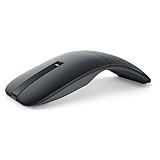
- SLIM AND LIGHT WEIGHT: Weighs only 56.9 grams so you can take the mouse wherever you go.
- SMOOTH TURNING, TWISTABLE DESIGN: Simply twist to turn off, stow, and then go.
- SEAMLESS CONNECTIVITY: Connect up to 3 devices to the mouse via Bluetooth 5.0 and easily switch between devices with the click of a button. Securely pair the mouse with your device with just one click with Dell Pair.
- ENHANCED SENSITIVITY AND PRECISION: An adjustable 4000 DPI (Dots per Inch) mouse sensitivity for a smoother, more precise control of the mouse pointer. Responsive and fast touch scrolling and quiet click buttons.
Change the Bluetooth adapter’s power-management option
- Right-click Start and open Device Manager.
- Expand Bluetooth, identify the PC’s Bluetooth adapter (not the mouse entry), right-click it, and choose Properties.
- Open the Power Management tab.
- Clear Allow the computer to turn off this device to save power, then select OK.
- Restart Windows and test both continuous movement and wake-from-idle behavior.
Some adapters or driver packages do not show a Power Management tab. If it is absent, do not alter unrelated Device Manager settings; continue with the service and driver checks.
Restart Bluetooth Support Service
- Press Windows key + R, type
services.msc, and press Enter. - Find Bluetooth Support Service in the list.
- Right-click it and choose Restart. If it is stopped, choose Start.
- Open its properties only if needed to confirm that the service is not disabled. Close the Services window and retest the mouse.
Restarting this service refreshes Windows’ Bluetooth management without removing your mouse pairing. If the service repeatedly stops, note the time and move to the adapter-driver section rather than repeatedly restarting it.
6. Update or reinstall the Bluetooth adapter driver
Microsoft identifies an outdated or incompatible driver as one of the most common causes of Bluetooth connection problems. The driver belongs to the PC’s Bluetooth adapter, not usually to the mouse itself, so update the adapter listed under Bluetooth in Device Manager.
Try Device Manager’s automatic update
- Right-click Start > Device Manager.
- Expand Bluetooth, right-click the adapter, and choose Update driver.
- Select Search automatically for drivers and follow the prompts.
- Restart Windows even if Device Manager says the best driver is already installed.
The installed driver may be current according to Windows Update while the PC manufacturer has a newer, model-specific package. Record the adapter name and your exact PC model before looking for another package.
Rank #4

- Comfortable ergonomic design, with soft easy-to-grip thumb rest, promotes natural hand and wrist position.
- Teflon base with precise tracking sensor glides smoothly over a variety of surfaces[4].
- Machined aluminum scroll wheel for precise navigation.
- Light, durable design with seamless finishes, in premium materials.
- 3 customizable buttons to add app-specific functions to be more productive[2].
Use the PC manufacturer’s driver package when Windows finds nothing
If Device Manager cannot find a driver, Microsoft directs users to the PC manufacturer’s support site. Search by the computer’s exact model and Windows edition, download the Bluetooth driver intended for that model, and follow the manufacturer’s installation instructions. Avoid substituting a package for a different PC model or Windows version; compatibility matters more than a newer-looking version number.
Reinstall the adapter
- In Device Manager > Bluetooth, right-click the adapter and choose Uninstall device.
- Confirm the removal only for the Bluetooth adapter you identified. Do not uninstall the mouse, Wi-Fi adapter, or unrelated entries.
- Restart the PC. Windows can detect the hardware and automatically reinstall the adapter driver during startup.
- If Bluetooth does not return, connect to the internet by another method and install the correct package from the PC manufacturer.
- Pair the mouse again if Windows removed its previous device record.
Driver removal is more disruptive than changing a battery or service, so do it only after the reversible checks. If the adapter disappears from Device Manager entirely after a restart, inspect the manufacturer’s support instructions or hardware diagnostics rather than repeatedly uninstalling it.
Independent reader supportYour contribution helps us test, update, and keep practical guides available for everyone.7. Use a second PC to isolate the fault
- Install fresh batteries or fully charge the mouse.
- Pair it with another Windows PC, keeping the mouse close to that computer and disconnecting unnecessary Bluetooth devices.
- Move the pointer continuously, leave it idle for several minutes, and check whether it reconnects normally.
- Lag follows the mouse: the mouse, its battery compartment, or its internal radio is the likely source. If it fails on the second PC as well, replacement may be necessary, as Microsoft notes.
- Lag stays with the original PC: focus on that computer’s Bluetooth adapter, driver, USB 3.0 placement, Energy Saver, service state, and Windows updates.
- It works on the second PC but cannot pair with the first: remove the old pairing on the first PC, use Advanced Bluetooth discovery, and reinstall or update the first PC’s adapter driver.
This comparison is more informative than trying random settings because it separates a mouse-specific fault from a Windows or adapter-specific fault.
Quick wins for a faster PC:
Fix the driver behind crashes, sound loss and screen glitchesFind Drivers →Clear out junk files and repair common Windows errorsFree Scan →Scan for outdated or missing drivers - takes under a minuteDriver Scan →Quick Recap
8. A practical order of operations
| Stage | Action | Why this order makes sense |
|---|---|---|
| 1 | Check polarity, install fresh batteries or recharge, and power-cycle | Fast, low-risk, and specific to the most common source of intermittent input. |
| 2 | Toggle Bluetooth and Airplane mode for 10–15 seconds; remove and re-pair | Refreshes the connection without changing drivers. |
| 3 | Disconnect other Bluetooth devices, shorten the distance, and move USB 3.0 equipment | Tests radio conditions and interference. |
| 4 | Run the Get Help Bluetooth troubleshooter | Lets Windows apply supported automated checks. |
| 5 | Turn off Energy Saver, clear the adapter’s power-off option, and restart Bluetooth Support Service | Addresses idle wake delays and unexpected disconnects. |
| 6 | Update or reinstall the adapter driver | More disruptive, but appropriate when configuration and radio checks fail. |
| 7 | Test another PC | Separates a defective mouse from a computer-side fault before you replace hardware. |
When the mouse still lags
- Write down whether the problem is continuous, occurs only after 8–10 minutes idle, or includes complete disconnects. That pattern helps a PC manufacturer support technician choose the right driver and hardware checks.
- Keep the exact Microsoft mouse model, battery type, Windows version, PC model, and Bluetooth adapter name available. Microsoft’s guidance is model-agnostic; firmware behavior and driver packages differ by model and computer.
- Restore any power-saving setting you changed if it did not affect the symptom. Leaving unrelated options disabled can reduce battery life without improving pointer response.
- If the mouse fails on multiple PCs with known-good power, replacement is the practical next step. If another mouse works normally on the original PC, the evidence also points toward the Microsoft mouse rather than Windows.
As an optional shortcut after the manual checks, Outbyte Driver Updater can scan more than 100 devices for outdated, corrupted, or missing drivers, install official drivers, show current and recommended versions, and provide driver backup and restore with scheduled scans. It runs on Windows 11, 10, 8, and 7 and offers a 2-day free trial without a credit card before subscription; results vary, and no utility repairs every Bluetooth problem.
Product prices and availability are accurate as of the date/time indicated and are subject to change. Any price and availability information displayed on Amazon at the time of purchase will apply.

