There is no dependable universal price per square foot for converting a commercial building from steam heat. The estimate depends on what “conversion” includes, the building’s existing equipment and piping, the required heating temperatures, and local labor and utility conditions. Start with a site survey and defined design scope, then price the installed work and compare operating costs separately.
What does “converting from steam heat” include?
Before estimating, define the intended outcome. A project might replace a failing steam plant while keeping steam distribution, change the building’s distribution from steam to hot water, disconnect from district or utility steam, or prepare the building for heat pumps and electrification. These are different scopes; a price for one cannot be treated as the price for another.
As an Amazon Associate I earn from qualifying purchases.
Record which spaces and systems are included, the operating schedule and required indoor conditions, available outage windows, future tenant plans, and whether cooling or domestic hot water is part of the work. Keep optional electrification, envelope improvements, and other upgrades in separate estimate lines so the cost of the conversion itself remains visible.
Quick wins for a faster PC:
Clear out junk files and repair common Windows errorsFree Scan →Scan for outdated or missing drivers - takes under a minuteDriver Scan →| Project route | What it may include | Important distinction |
|---|---|---|
| Steam-plant replacement | New boiler or other heat source and related plant equipment; existing steam distribution may remain. | This is not necessarily a steam-to-hot-water conversion. |
| Steam-to-hot-water conversion | A hot-water plant, pumps, supply and return distribution, and any needed terminal-unit or controls work. | Existing steam pipes and terminals must be evaluated for suitability; reuse should not be assumed. |
| Heat-pump or electrification project | Heat pumps and related plant, distribution, terminal, electrical, and possibly utility work. | Lower-temperature operation, electrical capacity, space, and cold-weather capacity can change the scope substantially. |
The U.S. Department of Energy’s April 2024 guidance discusses steam-to-hot-water conversion as a frequent prerequisite for lower-temperature air-to-water heat pumps, but that does not make electrification part of every steam conversion.
#1 Best Overall

- CERTIFIED ACiQ SELLERS: Everything you need for reliable HVAC solutions!
- HEATING & COOLING: This Packaged Heat Pump Unit combines efficient air conditioning and dependable heating in a single system, ideal for residential or commercial use applications.
- ENERGY EFFICIENT: 13.4 SEER2 rating and R32 refrigerant provide efficient heating and cooling while helping reduce energy consumption, delivering reliable year-round comfort with low sound operation.
- CONVENIENT CONTROLS: Non-programmable 2 Heat / 1 Cool thermostat with memory retention, compressor protection, and adjustable limits for simple and effective temperature management.
- DURABLE BUILD: Heavy-gauge galvanized steel cabinet, enhanced coil protection, and fully insulated blower compartment for reliable operation and easier maintenance.
What should an existing-conditions survey check?
Request available drawings and equipment records, then verify them in the building. An estimate based only on old plans or boiler nameplates can miss concealed conditions and work needed outside the boiler room.
- Plant: boiler or heat-exchanger capacity and condition, steam pressure and operating pattern, and any pumps, receivers, or condensate equipment.
- Distribution: steam mains, condensate returns, traps, risers, pipe condition, and the extent of concealed piping.
- Heat delivery: radiators, coils, fan-coil units, and VAV terminals, including their condition and ability to meet loads at the proposed water temperature.
- Controls: existing controls and building automation, their condition, and what integration or replacement is needed.
- Site constraints: mechanical-room and shaft space, access for equipment installation, electrical-service capacity, and potential utility-service work.
- Construction risks: shutdown requirements, tenant access, known hazardous materials, code issues, and finishes that may need repair.
Mark inaccessible or unverified items as allowances or contingencies tied to a stated uncertainty. Treating unknown pipe quantities or conditions as confirmed can make an early estimate look more certain than it is.
How do heating loads and water temperatures affect the estimate?
Establish the building’s heating loads from calculations or a defensible load study that accounts for the envelope, ventilation, occupancy, and local design weather. Do not size replacement equipment solely from the old boiler’s nameplate rating.
Rank #2
- CERTIFIED ACiQ SELLERS: Everything you need for reliable HVAC solutions!
- HEATING & COOLING: This Packaged Heat Pump Unit combines efficient air conditioning and dependable heating in a single system, ideal for residential or commercial use applications.
- ENERGY EFFICIENT: 13.4 SEER2 rating and R32 refrigerant provide efficient heating and cooling while helping reduce energy consumption, delivering reliable year-round comfort with low sound operation.
- CONVENIENT CONTROLS: Non-programmable 2 Heat / 1 Cool thermostat with memory retention, compressor protection, and adjustable limits for simple and effective temperature management.
- DURABLE BUILD: Heavy-gauge galvanized steel cabinet, enhanced coil protection, and fully insulated blower compartment for reliable operation and easier maintenance.
For a hot-water design, determine the supply and return temperatures and water flow required at peak and part load. Steam and hot water transfer heat differently: ASHRAE notes that, in the context it discusses, hot water must circulate about ten times more mass than steam to carry similar heat. Water systems also have greater pressure differences with elevation. These differences make pipe sizing, flow, pumping, pressure, and terminal-unit performance engineering questions, not simple substitutions.
Temperature can affect both equipment choice and retrofit scope. DOE’s April 2024 guidance says engineering analysis may find that some buildings can meet comfort needs below 180°F. It describes lowering water temperature incrementally and checking comfort as a way to establish what the building needs. Some fan coils or VAV boxes may need modification to provide adequate heat at lower temperatures.
Which equipment and building systems may need work?
Ask the engineer to assess which existing risers, mains, terminals, controls, and other equipment can safely and effectively be reused. Reuse is a potential scope reduction, not a default assumption. For a lower-temperature heat-pump option, the assessment also needs to consider outdoor equipment locations, plant and shaft space, electrical-service capacity, terminal performance at lower temperatures, and cold-weather capacity.
Rank #3

- CERTIFIED ACiQ SELLERS: Everything you need for reliable HVAC solutions!
- HEATING & COOLING: This Packaged Heat Pump Unit combines efficient air conditioning and dependable heating in a single system, ideal for residential or commercial use applications.
- ENERGY EFFICIENT: 13.4 SEER2 rating and R32 refrigerant provide efficient heating and cooling while helping reduce energy consumption, delivering reliable year-round comfort with low sound operation.
- INSTALLATION KIT: The unit includes a Non-programmable 2 Heat / 1 Cool Thermostat, a 3/4" X 4' 8 Gauge Electrical Whip, a non-fuse 60A Disconnect Switch, 2 Square to Round Adapters (14" & 16"), and a Backup Heat Kit of your choice.
- DURABLE BUILD: Heavy-gauge galvanized steel cabinet, enhanced coil protection, and fully insulated blower compartment for reliable operation and easier maintenance.
Price each feasible design against the same loads, comfort requirements, operating schedule, weather assumptions, and analysis period. ASHRAE guidance identifies equipment, piping, controls, capital costs, and operating costs as relevant considerations and recommends life-cycle cost analysis. DOE likewise notes that retrofit economics depend on location and applicable utility rates.
What belongs in an itemized installed-cost estimate?
Ask for a scope-based estimate that separates the major work packages. Whether an item is included matters as much as the headline total.
- Investigation and design: field survey, load analysis, engineering, drawings, permits, and commissioning design.
- Construction logistics: temporary heat, phasing, tenant protection, access, shutdowns, and coordination around occupied spaces.
- Removal: demolition and disposal of the boiler, steam connections, condensate equipment, and any piping or terminals being removed.
- Heating plant: the selected boiler, heat pump, heat exchanger, or other heat source; required redundancy; and associated equipment.
- Hydronic and plant components: pumps, expansion and air-management equipment, water treatment, separators, valves, strainers, meters, and plant controls.
- Distribution and finishes: new or altered supply and return piping, supports, insulation, risers, penetrations, fire stopping, and finish repairs.
- Heat-delivery equipment: replacement or modification of terminal units that cannot meet calculated loads at the selected water temperature.
- Controls and utilities: sensors, building-automation integration, electrical work, service or panel upgrades, and utility connection work.
- Startup and handover: testing, adjusting and balancing, functional testing, commissioning, operator training, as-built documents, and startup.
- Uncertainty and ownership costs: contingency tied to identified unknowns, applicable escalation and taxes, and operating energy, service, and maintenance costs for alternatives analysis.
A 2018 commercial-office retrofit case describes system redesign and construction alongside commissioning, testing and balancing, controls adjustment, operator training, and operations and maintenance planning. It illustrates the kinds of delivery tasks to account for; it is not a price benchmark.
Rank #4
- CERTIFIED ACiQ SELLERS: Everything you need for reliable HVAC solutions!
- HEATING & COOLING: This Packaged Heat Pump Unit combines efficient air conditioning and dependable heating in a single system, ideal for residential or commercial use applications.
- ENERGY EFFICIENT: 13.4 SEER2 rating and R32 refrigerant provide efficient heating and cooling while helping reduce energy consumption, delivering reliable year-round comfort with low sound operation.
- CONVENIENT CONTROLS: Non-programmable 2 Heat / 1 Cool thermostat with memory retention, compressor protection, and adjustable limits for simple and effective temperature management.
- DURABLE BUILD: Heavy-gauge galvanized steel cabinet, enhanced coil protection, and fully insulated blower compartment for reliable operation and easier maintenance.
Can a published cost-per-square-foot figure be used?
Only as a carefully qualified reference—not as a conversion budget. In its April 2024 guidance, DOE reports an unnamed stakeholder’s estimate of $20–$50 per square foot for upgrading to new technologies. DOE says no point of comparison was supplied for that figure, and it does not isolate steam-to-hot-water work.
DOE’s illustration applies the stakeholder range to a 50,000-square-foot building, giving $1 million–$2.5 million. That is an illustration in the guidance, not an independent project quote or a documented steam-conversion price. Neither figure establishes what a particular building will cost.
Outdated Drivers Are Slowing You Down
One free scan finds every outdated or missing driver and matches the right update for your exact hardware.Free scan · exact hardware matchWindows Errors? Fix Them Before They Spread
Repair common Windows errors and clear accumulated junk for a smoother, more stable PC - no reinstall needed.Free scan · no reinstallHow should alternatives be compared?
Keep first cost separate from the cost of operating and maintaining the system. Compare feasible designs using building-specific assumptions rather than a claimed generic energy saving.
Best Value
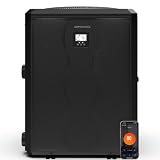
- Efficient Heating & Cooling for All Pools: 140000 BTU inverter system delivers fast heating and cooling for up to 42,000-gallon pools. Performs in 5°F temperatures—perfect for year-round residential or commercial use.
- Remote Control with Smart App: Connect via WiFi to adjust temperature, schedule run times, or turn the unit on/off remotely. Ideal for hands-free pool management anytime.
- Full Inverter for Energy Efficiency: Automatically adjusts output to reduce power use while keeping water at your desired temperature. Saves energy and lowers your electric bill.
- 3D Coil & Master Airflow Design: 330° 3D evaporator and high-efficiency airflow maximize heat transfer and extend service life. The pool heater for inground pool is designed for faster, more stable heating.
- Quiet 47dB Operation & IPX4 Shell: Operates at whisper-quiet 47dB for peaceful environments. UV-proof, waterproof housing stands up to sun, rain, and long-term outdoor use.
- Show installed first cost, annual fuel and electricity cost, maintenance, replacement reserve, and expected useful life separately.
- Use local fuel and electricity rates, and apply the same weather, schedules, comfort requirements, and analysis period to each option.
- Show the selected heating-water temperature and capacity, along with which distribution and terminal equipment is assumed to remain or be replaced.
- Identify space, electrical capacity, construction phasing and disruption, and operator capability constraints.
- Review assumptions with the owner and distinguish modeled energy costs from quoted project costs.
How precise can an early estimate be?
An estimate range is meaningful only when it is tied to a defined design and estimate basis. Present known quantities separately from allowances and unresolved site conditions, and state whether the total includes engineering, demolition, terminal units, hazardous-material abatement, electrical upgrades, temporary heat, tenant work, commissioning, and contingency.
Actual project pricing requires a building-specific scope and investigation, followed by an engineer’s estimate or contractor pricing based on the design, site conditions, and current local costs. The DOE and ASHRAE guidance described here can inform the method and technical questions, but it does not supply a price for an individual building.
Quick Recap
Product prices and availability are accurate as of the date/time indicated and are subject to change. Any price and availability information displayed on Amazon at the time of purchase will apply.
The Tool Desk
Outbyte PC Repair FREEClear out junk files and repair common Windows errorsFree Scan →Outbyte Driver Updater FREEScan for outdated or missing drivers - takes under a minuteDriver Scan →
