Windows Errors? Fix Them Before They Spread
Repair common Windows errors and clear accumulated junk for a smoother, more stable PC - no reinstall needed.Free scan · no reinstallCrashes, No Sound, or Screen Glitches?
Random freezes, missing sound and display glitches usually trace back to one bad driver. Find and replace yours safely.Free scan · under a minuteYou can free substantial phone storage without sacrificing irreplaceable photos or documents, but only if you separate three actions: finding what is full, confirming a usable backup, and removing reviewed local copies. Start with your phone’s storage screen, not a cleaner app. Verify the account and upload status for any cloud library, open several backed-up files on another device or in a browser, and make a second archive of truly irreplaceable material. Then delete in small batches, check the result, and empty trash only after you are satisfied.
The distinction matters because device storage, cloud-account storage, and an independent archive are different places. Removing a downloaded copy can create room on the phone while leaving cloud usage unchanged. Deleting an item from a synchronized cloud library can remove it from every device using that account.
As an Amazon Associate I earn from qualifying purchases.
First identify which storage is actually full
A phone that says it is nearly full may not have a photo problem. Applications, downloaded videos, offline music, browser data, message attachments, podcasts, maps, and operating-system files can consume more space than the camera roll. Deleting photos before checking the breakdown can create risk without solving the bottleneck.
Recommended Free Tools
iPhone: read the storage breakdown
Open Settings > General > iPhone Storage. Wait for the category list and recommendations to finish loading. Review the largest apps and the sections for Photos, Messages, iOS, media, downloads, and files. Tapping an app shows its app size and, where available, its documents and data. An app may be safely redownloadable, while its documents may contain work that is not.
#1 Best Overall
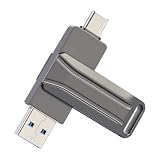
- 【Dual USB-A and Type-C 2-in-1 Design】This USB flash drive features both USB-A and USB Type-C connectors, making it easy to store, transfer, organize, and back up files across compatible Android phones, tablets, laptops, desktop computers, and other USB-C devices. Easily manage photos, videos, music, documents, presentations, and other digital files with one convenient external storage solution.
- 【Reliable Storage with High-Speed Performance】Designed for everyday digital storage, this USB thumb drive delivers reliable performance for storing, organizing, transferring, and backing up your important files. With read speeds of up to 150MB/s and write speeds of up to 70MB/s, it helps transfer photos, videos, music, documents, and other digital files quickly and efficiently. (Speed Disclaimer: Read and write speeds are based on internal testing conducted under controlled conditions. Actual performance may vary depending on the host device, operating system, file size, transfer settings, and other usage conditions.)
- 【Wide Compatibility and File Protection】Compatible with iOS 12.1 or later, supported iPhone and iPad devices, OTG-enabled Android smartphones, tablets, Windows PCs, Mac computers, and other compatible USB devices. Easily access, transfer, organize, back up, and manage photos, videos, music, documents, presentations, and other digital files across supported devices. Built-in file encryption helps lock selected files, providing an extra layer of security for your personal photos, videos, documents, and other important files.
- 【Premium Metal Housing】Crafted with a premium zinc alloy housing and a durable swivel protective design, this USB flash drive helps protect the connector from everyday wear while maintaining a sleek, compact appearance. Lightweight and portable, it fits easily into your pocket, backpack, laptop bag, or keychain, making it an ideal storage companion for work, school, travel, and everyday use.
- 【Multiple Capacity Options】Available in 128GB, 256GB, and 512GB capacities to meet different storage needs. Ideal for storing photos, videos, music, documents, presentations, and other everyday digital files across compatible devices. (Storage Capacity Disclaimer: Actual available storage is less than the labeled capacity due to formatting and differences in measurement standards. Storage manufacturers calculate 1GB as 1,000MB, while many operating systems calculate 1GB as 1,024MB. Displayed capacity may vary depending on the operating system and device.)
Recommendations can include removing unused apps or reviewing large attachments. Treat them as leads, not permission to delete. Open the relevant list and inspect each item before confirming an action. Apple’s Manage storage on iPhone guidance describes this review path and the separate controls for Photos and Files.
Android: inspect categories before selecting anything
On Android, open Settings > Storage. The exact wording and location vary by manufacturer and Android release, but the screen normally separates apps, images and videos, audio, documents, downloads, and system data. Select a category to see what is inside it. Google’s Android Help documentation notes that some automatic and manual cleanup controls are limited to Android 14 and later, so a phone running an earlier release may show fewer options.
If the category view points to an app, open that app’s own storage or download list. A large offline playlist, map region, or video cache can often be recreated; a folder of exported project files may not be. Do not infer importance from file type alone.
What’s actually slowing this PC down?
Pick the symptom - the matching free tool is one click away.
Know the three places your files may exist
| Location | What it means | What usually frees phone space | Deletion risk |
|---|---|---|---|
| Phone storage | The physical storage inside the handset, including local photo and video copies, apps, downloads, and caches. | Removing reviewed local copies, uninstalling or offloading apps, clearing reproducible downloads, or using an operating-system optimization feature. | A local-only deletion may be permanent if no verified copy exists. |
| Cloud-account storage | Space assigned to an online photo, file, or backup account. It is separate from the handset’s capacity. | Usually requires deleting cloud items, reducing backup content, or changing the account plan. Removing a local copy alone normally does not reduce this usage. | Deleting from a synchronized library can propagate to other devices and may eventually remove the only online copy. |
| Independent archive | A separate copy on a computer or compatible external drive that is not continuously synchronized with the phone library. | It does not itself create phone space; it provides a recovery path before local or cloud deletion. | An unverified or incomplete copy gives false confidence. Open sample files and check that the archive contains the intended originals. |
Decide which result you need before acting. Reclaiming handset capacity, reducing a cloud bill, and creating an archival copy are different projects. A step that solves one may do nothing for the others or may create unwanted synchronized deletion.
Make a retention plan before deleting
Write down what must remain available, what can be recreated, and what can be discarded. Include tax records, identity documents, family photos, work exports, voice recordings, downloaded tickets, and files stored inside messaging apps. Do not rely on a cleanup suggestion to understand personal value.
Confirm the account and backup destination
Open the photo or file service’s account settings and note the account address currently signed in. Phones often contain more than one Apple Account or Google Account, and a backup completed under a different account may be difficult to find later. Check that backup is enabled for the folders and file types you care about, not just the camera folder.
Wait for the service to report that uploads are complete. A thumbnail appearing in an app is not proof that the full-resolution original has uploaded. Check a selection of recent photos, older photos, long videos, edited images, and documents that matter to you.
Prove that the backup is usable
From a computer, tablet, or private browser window, sign in to the intended account and open representative files. Confirm that photos display at their expected quality, videos play beyond the first few seconds, and documents download or open. If you use an editing workflow, verify that the original file—not only a compressed preview or an edited copy—is present.
For irreplaceable material, make a second copy on a computer or an external drive before deleting anything from the phone. Apple’s iCloud guidance recommends making a copy or archive before removing iCloud content. A portable drive is optional; check that your phone supports the required port, adapter, file system, and available power, and confirm that the drive has enough free capacity. The guidance does not establish a universally safest drive or a particular capacity.
Separate keep, review, and remove groups
- Keep: originals, legal and financial records, active work, and anything with no replacement.
- Review: large videos, duplicate exports, screenshots, downloads, and message attachments whose value is uncertain.
- Remove: files that are confirmed backed up or reproducible and no longer needed locally.
Use descriptive folders or albums while reviewing so that a later cleanup does not require guessing. Do not treat a “duplicate” label as infallible: two visually similar images may have different edits, metadata, or resolutions.
Safest iPhone cleanup sequence
1. Start in iPhone Storage
Use Settings > General > iPhone Storage to choose the first target. If Photos is not the largest category, begin with a clearly reproducible download, an unused app, or a media cache. For an app containing important local documents, export or copy those documents first. Deleting an app can remove its locally stored data even when the app itself can be reinstalled.
Do these 3 things before closing this tab:
1Repair Windows errors before they cause bigger problems2Scan for outdated or missing drivers - takes under a minute3Clear out junk files and repair common Windows errors2. Use Optimize iPhone Storage for iCloud Photos
If Settings > [your name] > iCloud > Photos shows that iCloud Photos is active, choose Optimize iPhone Storage rather than manually deleting synced originals to make room. The phone keeps smaller, space-saving versions locally as needed while the full library remains in iCloud. The setting manages local capacity; it does not reduce the amount stored in iCloud.
Rank #2

- EXPAND YOUR STORAGE. Easily move files off your device, freeing up valuable space so you can store your favorite photos, movies, music, games, and more.
- Say goodbye to emailing photos between devices. Once they’re on your SanDisk Phone Drive, read speeds up to 100MB/s let you transfer files fast. (1 MB/s = 1 million bytes per second. Based on internal testing; performance may vary depending upon host device, usage conditions, drive capacity, and other factors. USB Type-C port with USB 3.2 Gen 1 support required.)
- AUTOMATIC BACKUP. Automatically back up your latest photos, videos, music, documents, and contacts with the SanDisk Memory Zone app. (Download and installation required. Set up automatic backup within app settings. See official SanDisk website for Memory Zone details.)
- DATA RECOVERY. Recover deleted files with the included RescuePRO Deluxe software.(Registration and download required; terms and conditions apply. See RescuePRO page on SanDisk site.)
- CONVENIENT DESIGN. Attach your drive to your keyring to help keep it secure so you can have storage wherever you are, whenever you need it.
Optimization needs time and a stable connection. The phone may not reclaim all possible space immediately, and it may retain local originals for items you recently viewed. Keep the device connected to power and Wi-Fi when practical, then recheck iPhone Storage.
3. Understand iCloud Photos deletion
Deleting a photo or video while using iCloud Photos deletes it from the iCloud library and synchronizes that deletion to other devices signed in to the same Apple Account. It is not a phone-only action. If your goal is only to reclaim handset space, use Optimize iPhone Storage or remove a separate local export instead of deleting the library item.
iCloud Photos has a Recently Deleted area, but treat it as a recovery window rather than permanent storage. Review the contents and your backup before emptying it. Once removed from that recovery area, the item may no longer be recoverable through the service.
4. Review Files and message attachments
Open the Files app and check On My iPhone, iCloud Drive, and any connected storage locations. Remove downloads that are clearly reproducible, but remember that deleting a file from iCloud Drive removes it from the user’s devices using that iCloud Drive location. Copy important files to an independent archive before deleting them.
In Messages, inspect conversations with large video and image attachments. Open an attachment before deleting it and determine whether the sender or another archive can provide it again. Keep a copy of records or media that cannot be recovered from the conversation.
5. Do not casually change iCloud Backup settings
In Settings > [your name] > iCloud > iCloud Backup, review what is included before changing an app’s backup switch. Apple states that turning off iCloud Backup for an app removes that app’s information from iCloud Backup. It is not a harmless way to clear phone storage, and it can remove a recovery option without deleting the app’s local data. Change it only after you understand what the app stores and have another copy if needed.
Safest Android and Google Photos cleanup sequence
1. Review Settings > Storage
Open Settings > Storage, select the largest category, and inspect the files or apps it lists. On some phones, a Free up space, Clean, or similar control appears. Available controls differ by manufacturer and Android version; read the item list and exclusions before confirming.
Free tools Windows power users keep installed
One-click scans. No signup required.
Begin with downloads, duplicate exports, old screenshots, and offline media that you can recreate. Inspect folders created by camera, editing, social, and messaging apps separately. A cleanup tool may identify size but cannot know whether a screenshot is a receipt or a disposable image.
2. Confirm Google Photos backup in the intended account
In Google Photos, open the account menu and check the backup status and the account shown there. Confirm that the folders you want are included and that recent and older examples are visible from another device or a browser. Google documents photo and video backup separately from account storage, so do not assume that seeing a thumbnail means every original has uploaded or that the account has unlimited capacity.
3. Use Free up space only for backed-up local copies
After backup is confirmed, Google Photos’ Free up space action removes photos and videos that have already been backed up from the phone’s local storage. The retained copies are viewed through Google Photos. The action is designed for local-space recovery, not for reducing the cloud library.
Read the items selected by the action before confirming. If a video is still uploading, excluded from backup, or stored in a folder Google Photos does not back up, it should not be treated as protected. After the action, open several older and recent items in Google Photos and verify that the phone’s storage reading has changed.
4. iPhone and iPad users must clear Apple’s Recently Deleted folder
When using Google Photos on an iPhone or iPad, Google’s instructions also require removing the same items from the Apple Photos app’s Recently Deleted area to reclaim the local space. The backed-up copies remain accessible through Google Photos. Review that folder carefully before emptying it because it may contain Apple Photos items that were not part of the Google Photos cleanup.
Rank #3

- 【MFi Certified Flash Drive, Wide Compatibility】This 256GB USB flash drive for iPhone is officially MFi certified, ensuring full support for all iOS devices (iOS 12.1 and above). NOTE: For iPhone users, please download the required app from the App Store before use, while Android only needs to open your OTG function.
- 【Large Storage Capacity, Backup Easily】With 256GB/512GB of additional storage, this iPhone flash drive perfectly addresses memory shortages on your phone or iPad. You can share your special moment with your friends and family on your social media with just one-click. Note: The displayed capacity may differ from 256GB/512GB due to different calculation methods between storage manufacturers (1GB=1000MB) and computers (1GB=1024MB).
- 【Multi Port Design, Plug and Play】Equipped with USB/Lightning/Micro USB/Type-C (with independent adapter), this usb storage flash drive supports a variety of devices for effortless plug and play operation. Quickly transfer data between different devices, significantly enhancing convenience. Please note: Type-C adapter is shipped randomly in black or silver.
- 【High Speed Transfer, Save Your Time】With read speeds up to 40MB/s and write speeds up to 25MB/s, this thumb drive is more efficient than traditional USB drive. Allowing you to quickly transfer files, photos, and videos, which help you save time and focus on the things you like. Note: Actual speeds may vary based on device and processor performance.
- 【Stylish, Portable, and Secure】With a compact and stylish design, this flash drive for iPhone is available in blue, pink, black and gold, making it easy to carry around. The built-in encryption option allows you to set a password via the APP to secure your personal files, photos and videos, ensuring you have peace of mind when storing and accessing your precious memories while traveling or for daily use.
5. Check Android trash and file-manager recycle bins
Gallery apps, file managers, and cloud services may each have their own trash. Emptying one does not necessarily empty the others. After reviewing a batch and confirming that important files open from the backup, use the relevant app’s trash control. Recovery periods and labels vary by app and Android release, so read the confirmation screen rather than assuming a fixed number of days.
Independent reader supportYour contribution helps us test, update, and keep practical guides available for everyone.Delete in small, reversible batches
A staged process limits the damage from a mistaken selection and makes it easier to see which action created space.
- Choose one category. Start with downloads, duplicate exports, or old screenshots instead of the entire photo library.
- Sort by size or date. Large videos and forgotten downloads are easier to evaluate when grouped, but inspect the content before selecting.
- Open uncertain items. Check the file, its location, and whether it is already available in the verified backup.
- Delete a small batch. Keep the first batch limited enough that you can identify an error quickly.
- Check phone storage. Return to iPhone Storage or Android Storage and note whether available capacity increased. Some systems recalculate after a delay.
- Test important access. Open a few backed-up photos, play a video, and download a document from the backup service.
- Continue or stop. If the result is sufficient, stop. More deletion adds risk without a useful benefit.
Do not empty Recently Deleted or trash until the batch has passed this check. A trash folder is not a substitute for a verified archive; it can be emptied automatically or manually, and its recovery behavior is app-specific.
The Tool Desk
Outbyte PC Repair FREERepair Windows errors before they cause bigger problemsFix Now →Outbyte Driver Updater FREEScan for outdated or missing drivers - takes under a minuteDriver Scan →When an independent computer or drive archive is worth the effort
A separate archive is most useful when files are irreplaceable, when you are changing cloud accounts, or when the cloud library is close to its capacity limit. Copy the originals—not merely screenshots or previews—then compare file counts and open samples from the destination. Keep the archive disconnected after copying if you want it to remain independent of synchronized deletion.
For a direct phone-to-drive workflow, verify the exact phone model’s port, adapter, operating-system support, drive format, power requirements, and free space. Some phones can browse a drive but cannot power a larger portable disk reliably. A computer intermediary is often simpler when compatibility is uncertain. The important property is a verified second copy, not a particular drive brand.
Phone space and cloud space: common scenarios
| What you do | Phone storage | Cloud-account storage | Effect on other devices |
|---|---|---|---|
| Enable iPhone Optimize Storage | Usually decreases over time as local originals are replaced by smaller versions. | Full iCloud Photos library remains stored. | Other devices continue to see the synchronized library. |
| Use Google Photos Free up space after verified backup | Backed-up local photo and video copies are removed. | Backed-up items remain in Google Photos and still count according to the account’s storage rules. | Devices using the same Google Photos library can still access the retained copies. |
| Delete an item from iCloud Photos | Local copy is removed or marked for deletion. | The iCloud Photos item is deleted. | Deletion synchronizes to devices signed in to that Apple Account. |
| Delete a file from iCloud Drive | The local synchronized copy is removed. | The iCloud Drive item is removed. | The deletion affects the user’s devices using that iCloud Drive location. |
| Copy files to an independent archive and remove only phone copies | Phone space increases. | Cloud usage is unchanged unless you separately delete cloud items. | The archive remains available outside the phone’s synchronization system. |
Troubleshoot the most common cleanup mistakes
The phone still says storage is full
Reopen the storage screen after a few minutes, restart if the system is still recalculating, and inspect the largest category again. Check app caches, offline media, message attachments, downloads, and Recently Deleted folders. Removing a local photo copy will not help if an app or downloaded video is the actual consumer.
Photos appear in the cloud but will not open
Stop deleting. Check the account identity, network connection, backup status, and whether the item is a complete original or only a preview. Test several files from a separate device or browser. Restore or copy the affected material to an independent archive before attempting further cleanup.
A file disappeared from another device
Determine whether it was in a synchronized iCloud Photos or iCloud Drive location, or another synced library. Synchronized deletion is expected behavior in those locations. Check the service’s Recently Deleted or trash area immediately, and restore the file if it is present. Then revise the plan so that phone-only space recovery uses optimization or local-copy removal rather than cloud-library deletion.
Google Photos Free up space removed items I still need offline
The action is intended to remove local copies. Re-download selected items for offline use, or keep a local export of files that must be available without a connection. Do not run the action again until you have identified which folders and items should remain on the phone.
An app’s size looks small, but storage is still missing
Inspect the app’s documents and data, downloaded content, and its own trash or cache controls. Some apps store files in shared folders that appear under Downloads, Images, or Documents rather than under the app category. Export important data before uninstalling or clearing storage.
Keep the phone decluttered without repeating the risk
- Review the storage screen monthly or when free capacity becomes low.
- Clear downloads and offline media soon after they stop being useful.
- Keep camera and document backup enabled for the folders you actually use, and periodically test opening files from the backup account.
- Move completed projects and irreplaceable records to a labeled independent archive.
- Before a trip, update offline maps, playlists, and documents deliberately; after the trip, remove those downloads in a separate review.
- When changing phones or accounts, verify restoration on the new device before wiping the old one.
Apple’s storage guidance, Google’s Android Help instructions, and Google Photos’ backup documentation all point to the same safe principle: inspect first, verify the destination, and treat deletion as a deliberate final step. The exact menu labels and available cleanup controls can change with the operating-system version, phone manufacturer, app, and account settings, so read each confirmation screen on your device.
Quick Recap
Product prices and availability are accurate as of the date/time indicated and are subject to change. Any price and availability information displayed on Amazon at the time of purchase will apply.

