The Tool Desk
Outbyte PC Repair FREEClear out junk files and repair common Windows errorsFree Scan →Outbyte Driver Updater FREEFix the driver behind crashes, sound loss and screen glitchesFind Drivers →Mouse wheel speed can make Windows feel smooth and precise—or jumpy and frustrating. If each notch scrolls too little, too much, or behaves differently across apps, adjusting the scroll settings can help you match the wheel movement to the way you browse, read, edit documents, or work with spreadsheets.
Windows offers built-in controls for changing how many lines scroll at a time, while the classic Control Panel still provides additional mouse options. Some browsers, apps, and mouse manufacturer utilities also include their own scrolling controls, which can override or refine the system-wide behavior.
After changing mouse behavior, Outbyte Driver Updater can check the mouse driver and suggest an official update as an optional step.
As an Amazon Associate I earn from qualifying purchases.
When scroll speed changes do not seem to apply, the cause is often app-specific settings, outdated drivers, conflicting mouse software, or hardware issues with the wheel itself. Checking these areas can help you get consistent scrolling across Windows and your most-used programs.
Check Your Current Mouse Scroll Behavior
Before changing any Windows setting, spend a minute testing how your mouse wheel behaves in a few everyday places. Scroll speed can feel different depending on the app, the page layout, the mouse hardware, and whether the window uses smooth scrolling. A quick baseline helps you decide whether you need a small adjustment, a larger system-wide change, or an app-specific setting.
#1 Best Overall

- Logitech MX Master 3S Bluetooth Edition is a Bluetooth only mouse, and does not come with any USB receiver / adapter or charging cable
- 8K DPI Any-surface tracking: Use MX Master 3S cordless computer mouse to work on any surface - even glass (1) - with an 8000 DPI sensor with customizable sensitivity
- Quiet Clicks: MX Master 3S Bluetooth mouse with Quiet Clicks - offering the same satisfying feel but with 90% less click noise (2)
- Magspeed scrolling: A computer mouse with remarkable speed, precision, and near silence - MagSpeed scrolling is 90% faster (3), 87% more precise (4), and ultra quiet.
- Ergonomic design: Work comfortably with a precision mouse featuring a silhouette crafted for a more natural wrist posture and optimally placed thumb controls
Open a long page in a browser, such as an article or search results page, then roll the wheel one notch at a time. Watch how far the page moves with each wheel “click.” In Windows, the common default is to scroll mulle lines per wheel notch, but some mice and touch-enabled devices may feel faster because they use high-resolution wheels or software acceleration. Next, test the same wheel movement in File Explorer, a Microsoft Word document, Notepad, or another app with vertical scrolling. If scrolling feels normal in one place but too fast or too slow in another, the issue may be tied to that specific app rather than the main Windows mouse setting.
What to look for while testing
- Lines per wheel notch: If one small wheel movement jumps too far down the page, the scroll speed is probably set too high.
- Slow or barely moving pages: If several wheel turns are needed to move through a document, the scroll setting may be too low.
- Uneven scrolling: If the page sometimes jumps, skips, or reverses direction, the wheel sensor may be dirty, worn, or affected by mouse software.
- Different behavior across apps: Browsers, PDF readers, spreadsheets, and design tools often apply their own scrolling rules.
- Horizontal scrolling: Some mice allow side-to-side wheel tilt. Check whether horizontal scrolling is also too fast or too slow if you use wide spreadsheets or timelines.
It also helps to check whether your mouse has a physical mode switch. Some productivity mice include a ratcheted wheel mode, where each notch is distinct, and a free-spin mode, where the wheel moves rapidly with very little resistance. Free-spin mode can make pages fly by even when Windows settings are reasonable. Gaming mice may also include onboard profiles that change wheel behavior along with pointer sensitivity or button assignments.
Recommended Free Tools
If you use more than one pointing device, test each one separately. A USB mouse, Bluetooth mouse, laptop touchpad, and external trackpad can all have different scroll behavior. Windows mouse wheel settings mostly apply to traditional mouse wheels, while touchpads often have separate scrolling controls under touchpad settings. Once you know whether the problem is system-wide, app-specific, or limited to one device, you can choose the right method for adjusting scroll speed.
Change Mouse Scroll Speed in Windows Settings
The fastest way to change mouse wheel behavior in Windows is through the Settings app. This is the best place to start if your mouse scrolls too slowly through long documents, jumps too far with each wheel notch, or feels inconsistent compared with how you prefer to browse pages and folders. Windows lets you control how many lines move with each wheel step, and in newer versions it also includes a setting for scrolling inactive windows when you hover over them.
Windows 11
- Right-click the Start button and select Settings, or press Windows + I.
- Select Bluetooth & devices from the left sidebar.
- Click Mouse.
- Under Scrolling, open the menu for Roll the mouse wheel to scroll.
- Choose Multiple lines at a time for normal wheel scrolling, or One screen at a time if you want each wheel movement to jump by a full page.
- If you select Multiple lines at a time, use the Lines to scroll at a time slider to increase or decrease the scroll amount.
For most users, a value between 3 and 6 lines feels comfortable. Lower values give you more precise control when reading text, editing spreadsheets, or moving through file lists. Higher values are useful if you frequently scroll through long webpages, PDFs, or code files and want to cover more distance with less wheel movement. If the wheel feels too sensitive, move the slider left; if scrolling feels sluggish, move it right and test again in a webpage or document.
Windows 10
- Open Settings with Windows + I.
- Go to Devices.
- Select Mouse in the left menu.
- Under Roll the mouse wheel to scroll, choose Multiple lines at a time or One screen at a time.
- Adjust the Choose how many lines to scroll each time slider.
Windows also includes the option Scroll inactive windows when I hover over them. When enabled, you can place the pointer over a background window and use the wheel without clicking into that window first. This can make multitasking much smoother, especially when comparing two documents or scrolling a browser while another app remains active. If scrolling seems to happen in the wrong window, try turning this setting off and test whether the behavior becomes more predictable.
Outdated Drivers Are Slowing You Down
One free scan finds every outdated or missing driver and matches the right update for your exact hardware.Free scan · exact hardware matchPC Slower Than It Used to Be?
A free scan shows the junk files, broken settings and background clutter dragging Windows down - then fixes them in one click.Free scan · Windows 10 & 11After changing the setting, test it in more than one place, such as File Explorer, a browser, and a text document. Some programs apply their own scrolling rules, so a change that feels correct in Windows Settings may still feel different in a web browser, photo editor, game, or remote desktop session. If the setting appears to reset after a restart, check whether mouse software from Logitech, Razer, Microsoft, Corsair, or another manufacturer is overriding the Windows value.
Rank #2

- Precision you can feel with the Haptic Sense Panel; customizable (1) haptic feedback on specific actions, shortcuts, notifications enhancing productivity on this wireless Bluetooth mouse
- Effortlessly access favorite tools with Actions Ring (2) on this MX Series mouse—a dynamic, customizable overlay adapts to each app, placing most used filters, adjustments, and shortcuts at your cursor
- Scroll 1,000 lines per second and stop on a pixel with the MagSpeed scroll wheel—Logitech’s fastest (3), quietest, and most precise (4) scrolling experience
- Enjoy 2X more powerful connectivity (7) with a USB-C dongle, advanced radio chip, and optimized antenna for faster, stronger, reliable performance—or use Bluetooth for more versatility
- Ergonomic mouse designed for comfort, MX Master 4 keeps you in flow with a natural tilt, intuitive buttons, and a thumb scroll wheel that reduces hand stress for fluid navigation
Adjust Scroll Wheel Settings in Control Panel
If the Settings app does not give you enough control, the classic Control Panel still includes the older Mouse Properties dialog. This is useful on Windows 10 and Windows 11 because it exposes the same wheel options in a compact panel, and it may work better with some older mouse drivers or enterprise-managed PCs.
To open it, press Windows + R, type control mouse, and press Enter. You can also open Control Panel, choose Hardware and Sound, then select Mouse under Devices and Printers. In the Mouse Properties window, switch to the Wheel tab.
Under Vertical Scrolling, choose how far Windows should scroll each time you move the mouse wheel one notch. The most common option is The following number of lines at a time. Increase the number if scrolling feels too slow, or lower it if pages jump too far. A value of 3 is the usual default, while 5 to 7 may feel better on long documents or large monitors. You can also select One screen at a time, which makes each wheel step behave more like pressing Page Down or Page Up.
If your mouse has a wheel that tilts left and right, check the Horizontal Scrolling setting on the same tab. This controls how many characters Windows scrolls sideways when you tilt the wheel. It matters most in wide spreadsheets, timelines, design tools, and database tables. Set it to a smaller number for precise movement in Excel or similar apps, or raise it if you often move across very wide content.
- Open Mouse Properties using control mouse.
- Select the Wheel tab.
- Adjust Vertical Scrolling to the number of lines you want per wheel notch.
- Adjust Horizontal Scrolling if your mouse supports tilt-wheel input.
- Click Apply, then OK.
After applying the change, test it in a few different places, such as File Explorer, pad, Microsoft Word, and a web browser. Some apps follow the Windows wheel setting closely, while others apply their own smoothing, acceleration, or page-based scrolling behavior. If the Control Panel value changes scrolling in File Explorer but not in your browser or a specific program, the app is probably overriding the Windows setting.
If the setting does not seem to do anything, disconnect and reconnect the mouse, then reopen the Mouse Properties window to confirm the value was saved. For wireless mice, check the battery level and try another USB port for the receiver. If you use Logitech Options, Razer Synapse, Corsair iCUE, Microsoft Mouse and Keyboard Center, or similar software, that utility may be replacing the standard Windows wheel behavior. In that case, adjust the wheel speed in the manufacturer’s app or temporarily close it and test the Control Panel setting again.
Customize Scrolling in Browsers and Apps
Windows scroll settings apply broadly, but many browsers and apps add their own scrolling behavior on top. If the wheel feels comfortable in File Explorer but too fast in a web page, spreadsheet, PDF viewer, or code editor, check the app’s settings before changing the system-wide mouse speed again. App-level options often control smooth scrolling, page-at-a-time movement, touchpad-style momentum, zoom shortcuts, and the number of lines moved inside that specific program.
What’s actually slowing this PC down?
Pick the symptom - the matching free tool is one click away.
Rank #3

- Ideal For: IT departments that need secure wireless connections and easy deployment. Also analysts, creators and coders and others with specialized workflow needs
- Enterprise Secure: Logi Bolt is designed to meet enterprise security concerns with fully encrypted, Secured Connections Only mode wireless security
- Built For Scale: Certified in over 100 countries with support for IT pros and business users. Centralized Management for DFUs and mass deployment with Logi Options+
- Works On Any Surface: Hit the right pixel every time with the Darkfield 8000 DPI laser sensor. Track with incredible precisionâ??even on glass
- MagSpeed Scrolling: Zip down 1000 lines of code or spreadsheet cells in just a second. Or get line-by-line pixel-by-pixel precision
Adjust scrolling in web browsers
Modern browsers usually follow the Windows mouse wheel setting, but browser flags, extensions, and site behavior can change the result. In Microsoft Edge and Google Chrome, type edge://flags or chrome://flags in the address bar and search for smooth scrolling. You can enable or disable that feature to change how the page glides after each wheel movement. This does not usually change the number of lines per notch, but it can make scrolling feel faster, slower, heavier, or more controlled.
Firefox offers more direct scrolling controls. Type about:config in the address bar, accept the warning, and search for settings such as mousewheel.min_line_scroll_amount, general.smoothScroll, and mousewheel.default.delta_mullier_y. Increasing the vertical delta multiplier makes each wheel movement travel farther; lowering it makes scrolling more precise. Make small changes, test on a long page, and record the original values so you can restore them if the browser becomes difficult to control.
Check app-specific scroll preferences
Some desktop apps include their own wheel speed or navigation settings. Adobe Acrobat and other PDF readers may have options for single-page scrolling, continuous scrolling, or page-by-page movement. Microsoft Excel can feel jumpy because the wheel moves through rows rather than free-scrolling like a web page; adjusting zoom level, freeze panes, or the mouse’s horizontal wheel behavior may help. In apps such as Visual Studio Code, Photoshop, AutoCAD, and certain games, look under Settings, Preferences, Accessibility, Mouse, or Navigation for scroll speed, smooth scrolling, or wheel acceleration controls.
- For browsers: test with smooth scrolling on and off, then disable scroll-related extensions if the behavior still feels unusual.
- For PDF readers: switch between continuous scrolling and single-page mode to change how the wheel moves through documents.
- For spreadsheets: check whether the wheel is moving rows, pages, or zooming because the Ctrl key is being held or stuck.
- For creative and CAD apps: confirm whether the wheel is assigned to scrolling, zooming, panning, or brush-size changes.
If an app ignores your Windows scroll speed setting, close and reopen it after making changes. Some programs read mouse settings only at launch. Also check whether the app is running with elevated permissions; occasionally, mouse utilities and app windows do not interact consistently when one is running as administrator and the other is not. If only one browser profile or one app workspace has the issue, create a fresh profile or reset that app’s preferences to compare behavior without extensions, plug-ins, or custom shortcuts.
Use Mouse Manufacturer Software for Advanced Control
If the Windows Settings app and Control Panel do not give you enough precision, install the software made for your mouse. Manufacturer utilities often expose scrolling features that Windows treats as basic hardware input, including wheel acceleration, smooth scrolling, free-spin behavior, horizontal scrolling, and per-application profiles. This is especially useful for gaming mice, productivity mice, and models with magnetic or dual-mode scroll wheels.
Start by identifying the exact mouse model. You can usually find it printed on the underside of the mouse, on the box, in the receipt, or in Settings > Bluetooth & devices > Devices. Then download the correct utility directly from the manufacturer’s website or the Microsoft Store. Common examples include Logitech Options+ or Logitech G HUB, Razer Synapse, Corsair iCUE, SteelSeries GG, Microsoft Mouse and Keyboard Center, and Lenovo, Dell, or HP peripheral tools for bundled office mice.
Advanced scroll settings to look for
- Wheel sensitivity: Adjusts how many lines or how much distance a single wheel notch scrolls.
- Smooth scrolling: Makes page movement less jumpy, which can feel better in documents and browsers.
- Scroll acceleration: Increases scroll distance when you spin the wheel quickly and reduces it when you move slowly.
- Ratchet or free-spin mode: Switches between stepped scrolling and fast continuous scrolling on supported mice.
- Horizontal scrolling: Configures side tilt or a thumb wheel for spreadsheets, timelines, and wide design canvases.
- Per-app profiles: Lets you use slow precise scrolling in Excel, faster scrolling in a browser, and different behavior in games.
After installing the utility, connect the mouse directly to the PC if possible, especially when applying firmware updates or saving onboard profiles. Open the software, select your mouse, and look for sections named Scrolling, Wheel, Point and Scroll, Assignments, or Device Settings. Make one change at a time, then test it in a long web page, a PDF, File Explorer, and any app where scrolling previously felt too fast or too slow.
Rank #4
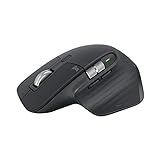
- Wireless Connectivity: The mouse connects wirelessly for convenient use.
- Long Battery Life: The mouse has an average battery life of 18 months.
- Ambidextrous Design: The mouse has a design that works equally well for both left and right-handed users.
- High-Precision Tracking: The mouse has a laser sensor that provides precise tracking and control.
- Ergonomic Design: The mouse has a contoured shape that is comfortable to use for extended periods.
Some utilities can override Windows scroll settings, while others work alongside them. If the manufacturer software has a per-application profile enabled, your browser or office app may scroll differently from the desktop even though the Windows setting is unchanged. Check whether the utility is using global settings, app-specific settings, or onboard memory. For shared computers, also confirm that the software starts with Windows; otherwise, the mouse may fall back to its default scroll behavior after a restart.
Do these 3 things before closing this tab:
1Clear out junk files and repair common Windows errors2Fix the driver behind crashes, sound loss and screen glitches3Repair Windows errors before they cause bigger problemsWhen manufacturer software helps most
| Situation | Setting to check |
|---|---|
| Scrolling feels too sensitive in games but fine elsewhere | Per-game profile or wheel assignment |
| Large documents take too long to move through | Scroll acceleration or free-spin mode |
| Spreadsheets are awkward to navigate | Horizontal wheel or tilt-wheel mapping |
| Settings reset after reboot | Startup service, cloud profile, or onboard memory |
If changes in the manufacturer app do not seem to apply, update the software and mouse firmware, unplug and reconnect the receiver or cable, and remove duplicate mouse utilities that may be competing for control. For Bluetooth mice, re-pairing the device can also refresh the driver configuration. Once the advanced tool is working correctly, it often provides the most consistent way to fine-tune scrolling beyond the basic Windows options.
Independent reader supportYour contribution helps us test, update, and keep practical guides available for everyone.Troubleshoot Scroll Speed Problems
If changing the mouse wheel setting in Windows does not affect scrolling, start by confirming where the problem appears. Test the wheel in several places: File Explorer, the Windows Settings app, a web browser, a long PDF, and a spreadsheet. If only one app scrolls too quickly or too slowly, the issue is probably controlled by that app’s own scrolling behavior. If every app behaves the same way, focus on Windows, the mouse driver, or the mouse hardware.
Check for conflicting mouse software
Many gaming and productivity mice use their own software, such as Logitech G HUB, Logitech Options+, Razer Synapse, Corsair iCUE, SteelSeries GG, or Microsoft Mouse and Keyboard Center. These tools can override Windows scroll settings with per-device or per-app profiles. Open the mouse software and look for wheel, scroll, or profile settings. If you use app-specific profiles, make sure the profile for your browser, editor, or game is not setting a different scroll speed. You can also temporarily close the software from the system tray and test scrolling again.
Update, roll back, or reinstall the mouse driver
A driver problem can cause the wheel to ignore Windows settings, scroll unevenly, or jump mulle lines at once. Right-click the Start button, open Device Manager, expand Mice and other pointing devices, right-click your mouse, and choose Update driver. If the issue began after a recent update, open the device’s Properties, go to the Driver tab, and use Roll Back Driver if it is available. For stubborn issues, choose Uninstall device, disconnect the mouse, restart Windows, and reconnect it so Windows can reinstall the driver.
Quick wins for a faster PC:
Repair Windows errors before they cause bigger problemsFix Now →Fix the driver behind crashes, sound loss and screen glitchesFind Drivers →- Try a different USB port: Plug wired mice or wireless receivers directly into the PC instead of a hub or dock.
- Replace or recharge batteries: Low power can make wireless scrolling inconsistent.
- Test another mouse: If a second mouse scrolls correctly, the original mouse may have a worn or dirty wheel encoder.
- Clean the wheel: Blow compressed air around the wheel and remove lint or debris that may interfere with the sensor.
Review Windows accessibility and touchpad settings
Some devices combine mouse, touchpad, and precision scrolling features. On laptops, open Settings > Bluetooth & devices > Touchpad and check whether touchpad scrolling feels different from mouse wheel scrolling. If the touchpad is the problem, adjust its scrolling direction, sensitivity, and gestures separately. Also review Settings > Accessibility for options that may affect input behavior, especially if you use assistive software or custom pointer tools.
Reset app and browser scrolling behavior
If Windows scroll speed works in File Explorer but not in a browser or document app, check that app’s settings and extensions. Browser extensions for smooth scrolling, productivity, reading modes, or mouse gestures can change wheel behavior. Disable those extensions temporarily, restart the browser, and test again. In apps such as Excel, design software, code editors, and PDF readers, look for options related to smooth scrolling, zoom with wheel, horizontal scrolling, or page-by-page scrolling.
Best Value

- 8K DPI Any-surface tracking: Use MX Master 3S cordless computer mouse to work on any surface - even glass (1) - with an 8000 DPI sensor with customizable sensitivity
- Quiet Clicks: MX Master 3S Bluetooth mouse with Quiet Clicks - offering the same satisfying feel but with 90% less click noise (2)
- Magspeed scrolling: A computer mouse with remarkable speed, precision, and near silence - MagSpeed scrolling is 90% faster (3), 87% more precise (4), and ultra quiet.
- Ergonomic design: Work comfortably with a precision mouse featuring a silhouette crafted for a more natural wrist posture and optimally placed thumb controls
- Countless Customizations: Customize buttons and optimize your workflow with App specific profiles in the Logi Options+ app (5)
When nothing seems to help, apply changes in a controlled order: set Windows wheel scrolling to a moderate value, close manufacturer software, restart the PC, test in File Explorer, then test in your main apps one by one. This makes it easier to identify whether the setting is being overridden by hardware software, a browser extension, a specific app, or a failing mouse wheel.
Frequently Asked Questions
How many lines should I set the mouse wheel to scroll at a time?
Most people are comfortable with 3 to 5 lines per wheel notch, which is also close to the Windows default. If scrolling feels too jumpy, lower it to 1 or 2 lines; if long pages feel slow, try 6 to 10 lines. Avoid setting it too high unless you mainly read long documents or web pages.
What should I do if changing scroll speed in Windows Settings has no effect?
Check whether your mouse has its own software, such as Logitech Options, Razer Synapse, Corsair iCUE, or Microsoft Mouse and Keyboard Center, because it may override Windows settings. You should also test the mouse in another app, restart the computer, and reconnect the mouse or try a different USB port. If the problem only happens in one program, adjust that app’s own scrolling settings instead.
Can I set different scroll speeds for different apps or browsers?
Windows does not offer a built-in per-app mouse scroll speed setting. Some browsers, games, design apps, and mouse manufacturer tools let you create app-specific profiles or adjust scrolling behavior separately. For example, a browser extension or mouse utility may let you use faster scrolling in Chrome while keeping slower scrolling in Excel.
How do I make scrolling smoother instead of faster?
Increasing scroll speed changes how far the page moves per wheel notch, but it may not make motion feel smoother. For smoother scrolling, check settings inside your browser or app, such as smooth scrolling in Chrome, Edge, or Firefox. Updating your mouse driver, cleaning the scroll wheel, and disabling conflicting mouse utilities can also help reduce stutter.
Is it better to use Windows Settings or Control Panel for mouse wheel scrolling?
Windows Settings is the easiest place to change basic scroll speed, especially on Windows 10 and Windows 11. Control Panel can still be useful because it exposes the classic Wheel tab and may work better with some older mice or drivers. If both are available, change the setting in one place, test it, then check the other only if the result does not match what you expect.
Free tools Windows power users keep installed
One-click scans. No signup required.
Bottom Line
Customizing your mouse scroll speed in Windows is usually as simple as adjusting the wheel settings in Settings or Control Panel, but browser options, app-specific behavior, and mouse software can also affect how scrolling feels. If changes do not apply, checking drivers, disabling conflicting utilities, testing another mouse, or resetting relevant settings can help narrow down the cause.
Start with the built-in Windows scroll options, then fine-tune individual browsers or advanced mouse tools if you need more precision. Once scrolling feels consistent across your apps, everyday browsing, reading, and document work should feel much smoother.
Quick Recap
Product prices and availability are accurate as of the date/time indicated and are subject to change. Any price and availability information displayed on Amazon at the time of purchase will apply.

