To create nesting habitat for native bees, keep or add several undisturbed features: patches of accessible bare soil for ground nesters, standing pithy stems and dead wood for cavity nesters, and sheltered places such as brush, leaf litter, bunch grasses and protected cavities. Arrange these features near pesticide-free flowering plants suited to your region. A bee house can help a limited group of cavity-nesting species, but it is optional and must be cleaned or replaced on a schedule.
The most effective approach is usually habitat retention rather than adding a single product. Look first at what your yard already offers, reduce barriers such as dense bark mulch and paving, and make small changes that can remain in place through the seasons.
As an Amazon Associate I earn from qualifying purchases.
Why nesting habitat belongs in a bee garden
Flowers provide nectar and pollen, but a bee population also needs a safe place to lay eggs, provision larvae and survive periods when adults are inactive. Nesting sites can be in soil, hollow or pithy stems, dead branches, logs, tree cavities, rock crevices or sheltered spaces on the ground. Different bees use different structures, so a yard with only flowers or only a bee house serves a narrow slice of the local community.
Free tools Windows power users keep installed
One-click scans. No signup required.
The Xerces Society describes nesting and overwintering habitat as “one of the most important factors influencing populations of native bees and other beneficial insects.” In the United States, its current materials describe about 3,600 native bee species. The organization estimates that about 70% of North American native bee species nest in the ground and about 30% nest in cavities in wood or stems. Those are rounded organizational estimates, not a precise count for every region, but they explain why bare soil deserves at least as much attention as artificial bee shelters.
#1 Best Overall

- Durable Bee House: Our Mason Bee House is a beautifully crafted, wax-coated bee hotel designed to provide a suitable habitat for peaceful pollinators in your garden. This durable bee house is ready to use straight out of the box
- Long-lasting Design: The natural wooden construction of this Mason Bee Box features a wax coating that boosts its longevity, supporting steady use in outdoor surroundings while attracting mason bees effectively
- Optimal Habitat: Each tube in our bee hotel is made from kraft paper with a diameter of 5/16 inches and a length of 6 inches, providing an ideal space for mason bees to nest and thrive in their new insect hotel
- Easy Installation: The back of the bee house includes a sturdy metal wall hook for easy mounting on walls or garden stakes. For hanging in trees, we also provide a special rope, ensuring versatile placement options in any outdoor setting
- Enhance Pollination Efficiency: Attracting mason bees to your garden not only beautifies your surroundings but also significantly improves pollination efficiency for flowers and fruit trees, making our Habitat Home Hotel an essential addition for any gardener
Match habitat to the way bees nest
Before changing a bed, identify which structures your property can provide. The table shows the main categories and the conditions that make each useful.
| Nesting type | Natural features | What to provide | Disturbance to avoid |
|---|---|---|---|
| Ground nests | Exposed or lightly covered soil, banks and gentle slopes | A small patch of friable, well-drained soil with open access | Compaction, frequent digging, thick mulch, paving, lawn irrigation and pesticide treatment |
| Stem and wood cavities | Pithy perennial stems, dead branches, logs, tree cavities and old beetle tunnels | Standing stems through winter, retained wood where safe, and varied stem diameters | Removing every dead stem, chipping all fallen wood, or sealing cavities with plastic |
| Sheltered colony sites | Abandoned rodent holes, dense grass bases, brush and protected cavities | Quiet, dry cover that is not flooded or routinely cleared | Frequent mowing, flooding, burning or moving a colony after it has settled |
| Overwintering cover | Leaf litter, hollow stems, plant crowns and undisturbed soil | Leaves and stems left in place until spring has warmed | Early spring cleanup that removes dormant adults, larvae or pupae |
Survey your yard before adding anything
A short survey prevents you from building an artificial feature where a natural nest already exists.
- Mark existing bare soil. Look under eaves, beside sheds, along sunny banks and at the edges of paths. Note whether the soil is loose enough to dig, drains after rain and remains free of routine foot traffic.
- Inventory vertical material. Record pithy perennial stems, hollow canes, dead branches, standing snags and logs. Keep anything that is stable and does not create a hazard.
- Find sheltered pockets. Check brush edges, bunch-grass bases, leaf piles and cavities that stay dry. Bumble bees and other species may use protected spaces rather than purpose-built tubes.
- Map disturbance. Identify areas that are mowed, irrigated, tilled, treated with pesticides or covered with bark mulch. A site can look natural while still being unavailable to nesting bees if it is repeatedly disturbed.
- Choose a protected zone. Prioritize locations that are not compacted, flooded or exposed to routine chemical applications. Keep public paths, play areas and equipment access separate from nesting patches.
Create usable ground-nesting habitat
Expose a modest patch of soil
Ground nesters do not need an entire lawn removed. Start with one or more small patches where soil is visible and accessible. Remove enough vegetation and surface debris to expose the soil, then leave it alone. A patch beside a sunny garden edge, under a fence line or on a gently sloping bank can work when it is not walked on.
The Tool Desk
Outbyte PC Repair FREEClear out junk files and repair common Windows errorsFree Scan →Outbyte Driver Updater FREEFix the driver behind crashes, sound loss and screen glitchesFind Drivers →Do not deliberately create a dust bowl. Retain nearby plants for shade, forage and wind protection, while keeping the actual entrance area open. Avoid sites that stay saturated, erode after every storm or receive concentrated roof runoff.
Reduce barriers from mulch and paving
Continuous bark mulch, dense turf and paving can prevent bees from reaching suitable soil. You do not have to remove every mulched area; instead, break up uninterrupted coverage and connect open patches to flowering vegetation. Where a covered surface is necessary, the Xerces Society recommends compost as an alternative to bark mulch. Compost can retain some soil-cover functions while leaving a more workable surface than a thick layer of woody mulch.
Protect the surface once it is available
- Keep feet, carts and pets from repeatedly crossing the patch.
- Do not till or turn the soil each season; nesting tunnels can extend below the visible entrance.
- Avoid routine irrigation directly onto the entrances. Water adjacent plants at their root zones instead.
- Do not apply pesticides or other treatments to the nesting surface.
- Let small leaves and plant fragments accumulate naturally, but do not bury the entrances under a deep, compacted layer.
Some bees prefer level ground, while others use banks or vertical faces. Providing more than one shape is more useful than trying to engineer a single “perfect” soil mix.
Rank #2
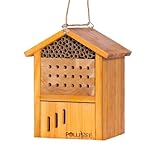
- Beeswax Coating: The exterior of our mason bee house is covered in beeswax, helping prolong the service life for long-term outdoor use
- Assembled Wooden Bee House: The handmade wooden mason bee hotel you receive is assembled and ready to use. With stainless steel screw clasp on the back of the bee house, you can hang it on a tree or wall
- Practical Design: The mason bee house has two types of mason habitat.Removable paper tube and wood block ,and the diameter of the tube is 5/16" and the length of the paper tube is 6"
- Mason Bee House-Effectively attract mason bees through our bee house to help increase pollination efficiency in gardens and orchards, promoting plant growth and fruit production
- Customer Support: If you encounter any problems while using the mason bee house, please feel free to let us know. We will do our best to resolve the issue and ensure your satisfaction.
Retain stems, branches and logs for cavity nesters
Leave pithy stems standing
Many cavity-nesting bees use the hollow center or soft pith of perennial stems. Leave suitable stems upright through fall and winter instead of cutting every plant to the ground. This also keeps overwintering stages in place. Once spring has warmed, cut old stems back if they interfere with new growth or access, and leave some cut material in a quiet corner rather than removing everything at once.
Stems vary in diameter, length and internal structure. A mixed stand is more inclusive than a uniform bundle. Avoid painting, sealing or drilling stems that are already functioning naturally; moisture and natural decay are part of the habitat.
Keep dead wood where it is safe
Dead branches, logs and old wood contain tunnels made by beetles and other organisms that cavity-nesting bees may reuse. Retain stable pieces on the ground or in a brush edge when they cannot fall, block drainage or create a trip hazard. A log partly shaded by vegetation can provide a different temperature and humidity profile from a sun-baked branch, so keeping several conditions is worthwhile.
Remove or secure wood that threatens people, buildings, vehicles or utility lines. Habitat value does not override structural safety. If a tree must be removed, leaving an appropriately sized section of trunk or a few sound logs in a safe location can preserve some cavity resources.
Build a small brush refuge
A contained brush pile can supply protected spaces near the ground and shelter for insects between active seasons. Place it where it is acceptable in your landscape, away from doors and dry combustible materials. Keep the pile stable rather than tall and precarious, and follow your local fire, property and neighborhood rules; those requirements differ by jurisdiction.
Crashes, No Sound, or Screen Glitches?
Random freezes, missing sound and display glitches usually trace back to one bad driver. Find and replace yours safely.Free scan · under a minutePC Slower Than It Used to Be?
A free scan shows the junk files, broken settings and background clutter dragging Windows down - then fixes them in one click.Free scan · Windows 10 & 11Keep leaf litter and plant bases through winter
Leaf litter insulates the soil surface and provides cover for pollinators and other beneficial insects. Instead of raking every bed bare, leave leaves under shrubs, along the back of borders and around bunch grasses where they will not smother crowns or block drainage. If a path or lawn must be cleared, move the leaves to a designated habitat area rather than disposing of all of them.
Rank #3
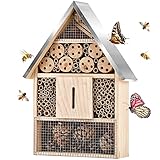
- Dimensions: 9 x 16 x 3 Inch,More capacity, More uses.
- The mason bee house has more holes to accommodate for more Butterflys, bees and ladybugs to habitat, hatcheries or shelter from rain.
- Made of natural materials, such as pine wood, bamboo and pine cone, and not painted. The different filling materials attract a variety of different bugs.
- The metal roof will help protect it from the weather.Waterproof to protect the hotel from erosion,and help stop rain from soaking the bits and pieces that are supposed to keep the ladybirds and lacewings dry.
- Suspension design (via hooks on the back),You can hang it on garden walls, fences, trees, or anywhere else you can hang it.Keep it as dry as possible
Delay major cleanup until spring has warmed. Early cleanup can remove bees or other insects that are still dormant in soil, stems or plant crowns. Remove only material that is diseased, unsafe or obstructing necessary access, and do the work in stages so some cover remains.
Provide sheltered sites for bumble bees and other species
Bumble bees often use protected cavities, including abandoned rodent holes, dense vegetation at ground level and spaces beneath layers of plant material. You can support these sites without digging artificial chambers:
- Leave a quiet strip of bunch grasses or dense perennial growth.
- Keep a brush or leaf-litter edge where it stays dry enough to avoid flooding.
- Avoid mowing all vegetation at the same height and on the same day.
- Do not inspect or relocate a suspected colony unless there is an immediate safety issue.
Because the exact nest location is usually hidden, low disturbance is more reliable than trying to identify and construct a cavity for every species.
Choose plants by region, not by a universal list
Nesting habitat works best when forage is close by, but there is no single native seed mix that fits every yard. Plant choices should reflect your region, soil, moisture, sun exposure and the bees that occur locally. Use regional native-plant lists, public garden resources, extension guidance and reputable local suppliers to select species. A plant sold as native somewhere else may be unsuitable or non-native in your area.
Design for a succession of bloom periods so adult bees can find food when they are active. Include varied flower shapes and heights, and group several plants of the same species so bees can forage efficiently. Keep the nesting patch itself relatively undisturbed even if adjacent beds receive normal gardening care.
When buying plants or seed, verify the stated region and avoid material treated with systemic insecticides unless you have clear information about its safety for pollinators. If the supplier does not identify the plant’s native range or treatment status, choose a source that does.
Rank #4
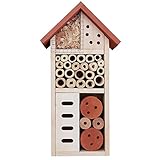
- Shelter for Insect: Lulu Home wooden insect house attracts insects to your garden, and provides them with a safe environment to live, lay eggs, pass the winter or just take shelter from the rain.
- Beneficial for Plants: Some insects are really useful that, when they living in the bug house in your garden, they help to recycle decaying vegetation, pollinate plants, and in some cases even prey on more harmful insects.
- Diverse Rooms in One: To settle more species of insects, each gird of the insect hotel is filled with different material and designed differently. Lulu Home garden bug hotel serves to provide habitat for bees, butterflies, ladybirds, lacewings, etc.
- Premium, Sturdy and Weatherproof: Made of high quality fir wood with exquisite workmanship, it is sturdy and nice-looking. And non-toxic and odorless paint on the proof makes it weather resistant. The materials filled in each grid, such as bamboo, wood shavings, small stakes, are all natural and premium.
- Interesting Decoration: A wonderful ornament to be placed at your garden, balcony, patio, yard, or any place you want. And there is a loop on back for hanging. The bug hotel also provides a great chance for you to find and observe these little creatures in your garden.
Bee houses are optional, targeted tools
A bee house, sometimes called a bee hotel, mainly serves cavity-nesting species. It cannot substitute for soil, stems, dead wood and sheltered ground, which support many more kinds of native bees. The effectiveness of an artificial structure varies with placement, design, local species and upkeep.
Recommended Free Tools
When an artificial house makes sense
- You already provide natural habitat and want to support cavity nesters specifically.
- You can place the structure where it remains dry and stable without creating a hazard.
- You are willing to inspect it and replace or clean nesting material on schedule.
- You can identify a design that allows the nesting material to be removed rather than permanently sealed inside.
Plan maintenance before installation
Occupied tubes and blocks can accumulate pathogens and mites when they are left in place year after year. The Xerces Society advises replacing old nesting material after bees have emerged. Follow the maintenance instructions for the particular structure and local species; there is no single commercial design standard that guarantees safe, low-maintenance use.
Do not open active nests to “check” progress. Observe from outside, keep the structure dry and protected, and schedule replacement only after emergence has finished. If you cannot commit to that care, natural stems and dead wood are the better choice.
Natural features versus a bee house
| Option | Bee groups served | Maintenance and disturbance | Main limitation |
|---|---|---|---|
| Bare soil patch | Ground-nesting majority | Low maintenance; protect from compaction and chemicals | Requires suitable drainage and a location that can remain undisturbed |
| Standing stems | Stem- and cavity-nesting bees | Leave through winter; cut back after spring warmth | Needs living plants that produce suitable stems |
| Dead branches and logs | Wood-cavity nesters and shelter-seeking insects | Low maintenance once safely placed | Safety, fire and property constraints may limit where wood can remain |
| Leaf litter and brush | Overwintering insects and bees using sheltered cavities | Leave in place; contain and manage only when necessary | May conflict with tidiness, drainage or local fire rules |
| Artificial bee house | Selected cavity-nesting species | Regular inspection and replacement or cleaning of nesting material | Does not serve ground nesters and can concentrate disease if neglected |
Natural features often better mimic the dispersed nest density found in a landscape and break down over time, which can limit long-term pathogen and parasite buildup. An artificial house is most defensible as a focused supplement, not as the centerpiece of a bee garden.
Independent reader supportYour contribution helps us test, update, and keep practical guides available for everyone.Use a seasonal maintenance calendar
| Season | Useful work | Work to postpone or avoid |
|---|---|---|
| Late summer and fall | Mark nesting areas, reduce unnecessary mulch, leave healthy stems, and move acceptable logs or brush into safe positions. | Do not clear every stem or rake every leaf from habitat areas. |
| Winter | Leave soil, stems, leaf litter and sheltered piles largely undisturbed; check that retained wood remains stable. | Do not dismantle suspected nests or repeatedly walk across soil patches. |
| Spring after the weather has warmed | Cut back selected old stems, remove only unsafe material and make space for new growth. If using a bee house, wait until emergence is complete before replacing material. | Avoid early, wholesale cleanup while dormant insects may still be present. |
| Summer | Keep nesting surfaces free of routine pesticide applications and maintain nearby flowering plants through dry periods. | Do not flood entrances with irrigation or disturb active colonies. |
Adapt the plan to the size of your space
Small urban yard or balcony
Reserve one container or narrow ground-level strip for regional native plants, and keep a small undisturbed soil edge if the site has access to real ground. In a balcony setting, you cannot reproduce all ground conditions, so focus on flowering plants and avoid claiming that a decorative hotel replaces soil habitat. If you add stems, use untreated natural material and remove it after the active season according to reliable maintenance guidance.
Quick wins for a faster PC:
Clear out junk files and repair common Windows errorsFree Scan →Scan for outdated or missing drivers - takes under a minuteDriver Scan →Suburban garden
Convert a few lawn or mulch edges into connected soil patches. Leave stems in perennial borders, place a stable log at the back of a bed and retain a leaf-litter zone under shrubs. This combination usually provides more nesting diversity than one conspicuous bee house.
Best Value

- An indispensable garden helper: Mason bee house provides a comfortable space for mason bees to nest, attracts and maintains mason bees to live in your garden, helps sustain pollinating bees and preserve biodiversity in your area, ensuring a thriving environment for both wildlife and your garden
- Easy to install: Package includes 1pc mason bee House with a top hook and 1pc metal ground stake (Includes 4 screws for installation); Bee House Size: 8.6x8.4x3.9 inches; 3 installation ways: you can stand the bee house among the flowers, place it on the grass, or hang it under the trees according to the garden layout; the three-piece base can stand firmly in the soil without worrying about being affected by bad weather
- Durable materials: Constructed with durable and natural wood, the bee house features a surface covered with a clear varnish coating, which is not easily eroded by rainwater; exquisite workmanship, no sawdust, bamboo pipes are securely fitted and resist falling out, naturally dry bamboo tubes will not be moldy and are consistent with the lifestyle habits of mason bees compared to synthetic materials like plastics; environmentally friendly materials help maintain the stability of ecosystems
- Superb design and construction Inside: The bee house is bamboo tubes of different diameters between 0.2-0.6 inches all grouped together for the mason bees to pick one according to their body size, then to lay their eggs, ensuring that pollinators can live comfortably
- Thoughtful Present: This unique hexagonal bee house is not only a perfect habitat for bees, but also a beautiful garden decoration; It's the perfect present for gardeners who appreciate both style and function
Larger property or community landscape
Distribute habitat rather than concentrating it in one block. Connect several bare-soil patches to flowering areas, retain dead wood in safe zones and vary mowing dates. Post simple signs or maintenance notes so other people do not “tidy” the habitat during winter.
Troubleshoot common problems
The soil patch disappears under mulch
Pull back bark mulch gradually and mark the area so maintenance crews recognize it. Substitute compost where cover is necessary, while preserving an open surface at the nest entrances.
Nothing appears to be using the patch
Bees may enter tiny holes that are difficult to see, and many species are active for only part of the year. Check whether the site is compacted, wet, shaded, frequently walked on or treated with pesticides. Improve those conditions before adding an artificial structure.
A bee house shows mold, debris or many dead occupants
Stop treating the structure as a permanent fixture. Follow its maintenance guidance, replace old nesting material after emergence and reconsider whether a natural stem or wood habitat would be easier to manage. Do not redistribute used tubes to another yard.
Dead wood is considered untidy
Place it behind a hedge, along a property edge or in a contained bed while keeping it visible enough for maintenance staff to leave alone. Remove only pieces that are unstable or violate a local safety requirement.
Local rules restrict brush or burning
Do not burn or pile material in a prohibited location. Check municipal fire and property rules, then use permitted alternatives such as leaving stems in plant beds, retaining a small log in a managed area or maintaining leaf litter under shrubs.
A practical minimum habitat plan
If you can make only a few changes, use this order:
Do these 3 things before closing this tab:
1Clear out junk files and repair common Windows errors2Fix the driver behind crashes, sound loss and screen glitches3Repair Windows errors before they cause bigger problems- Protect one accessible, pesticide-free patch of soil from compaction.
- Leave pithy perennial stems standing through fall and winter.
- Retain a safe log, dead branch or small brush edge.
- Keep leaf litter in at least one sheltered area until spring has warmed.
- Plant regionally appropriate native flowers nearby and stagger bloom times.
- Add a bee house only if you specifically want to manage cavity-nesting habitat and can replace its nesting material after emergence.
This layered approach supports the broadest range of nesting strategies while keeping maintenance realistic. It also lets the yard’s existing ecological features do most of the work: soil remains soil, stems remain stems, and seasonal shelter remains available when bees need it.
Quick Recap
Product prices and availability are accurate as of the date/time indicated and are subject to change. Any price and availability information displayed on Amazon at the time of purchase will apply.

