Quick wins for a faster PC:
Repair Windows errors before they cause bigger problemsFix Now →Scan for outdated or missing drivers - takes under a minuteDriver Scan →The supported way to connect a Google Pixel phone to a Chromebook is through ChromeOS phone integration, not Bluetooth pairing. Sign in to the same Google Account on both devices, then open the Chromebook’s Android-phone or Phone Hub setup. Google lists ChromeOS 71 or later and Android 6 or later as the baseline; individual features, especially app streaming, need newer software and supported Pixel models. For one-off file transfers, use Quick Share.
What connecting a Pixel to a Chromebook actually does
Google uses several related features, and choosing the right one prevents most setup confusion. The standard Android-phone connection creates an ongoing relationship between the Chromebook and phone. Depending on support, settings, and permissions, it can expose phone notifications, recent tabs, messages, photos, phone-network controls, hotspot controls, and Chromebook unlocking. Google documents the setup in Connect your Android phone to your Chromebook and the feature controls in Set up and use Phone Hub on your Chromebook.
As an Amazon Associate I earn from qualifying purchases.
Phone Hub is the Chromebook interface for supported phone information and quick actions. Quick Share is separate: it is designed to send individual photos, videos, documents, or other files over a nearby connection. App streaming is another separate capability that lets an eligible Pixel display and control supported phone apps on the Chromebook.
Check compatibility before you start
| What you want to do | Minimum requirements stated by Google | Other conditions |
|---|---|---|
| Standard Android-phone connection and Phone Hub basics | Chromebook running ChromeOS 71 or later; Android phone running Android 6 or later | Same Google Account on both devices; available features vary by device, operating system, settings, and administrator policy |
| Stream Pixel apps to the Chromebook | Pixel 4a or later with Android 13 or later; Chromebook with ChromeOS M115 or later | Bluetooth on, devices close together, normally on the same Wi-Fi network, required permissions, and a compatible network |
| Quick Share file transfer | Android 6 or later and a Chromebook | Bluetooth on, receiver made available, correct visibility setting, and short distance between devices |
| Work or school Chromebook | The same technical requirements as above | An administrator can disable or restrict phone features, notifications, sharing, or account connections |
The baseline versions do not guarantee every Phone Hub control. For example, app streaming has the stricter Pixel 4a, Android 13, and ChromeOS M115 requirements shown in the table. If a feature is missing even though the basic connection works, check that feature’s requirements rather than assuming the entire connection failed.
#1 Best Overall

- Durable Design: Reinforced nylon exterior and a robust core ensure this cable withstands up to 5,000 bends, outlasting other brands
- Fast Charging: Supports Power Delivery for up to 60W high-speed charging when paired with a USB-C charger
- Versatile Compatibility: Works with virtually all USB-C devices, including phones, tablets, and laptops
- High-Speed Data Transfer: Transfer files quickly with 480Mbps data transfer speeds
- Included Accessories: Comes with a hook-and-loop cable tie for easy organization and a welcome guide for hassle-free setup
Connect the Pixel with the Chromebook’s Android-phone setup
- Use the same Google Account. Sign in to the Chromebook and the Pixel with the account you intend to use for the connection. A different account on either device is the most common reason the phone does not appear in setup.
- Confirm the software versions. On the Chromebook, open Settings and check the ChromeOS version. On the Pixel, open Settings, then System and Software update, to see the Android version. The standard connection requires ChromeOS 71 or later and Android 6 or later.
- Open the connected-device controls. On the Chromebook, open Settings and look for the Android phone, Phone Hub, or Connected devices section. During Chromebook’s initial setup, Google may offer the phone-connection step there; on an already configured Chromebook, start it from these settings.
- Select the Pixel and choose the setup action. Follow the on-screen prompts to select the phone associated with your Google Account and continue. ChromeOS may ask you to confirm the account or approve the connection on the phone. The exact labels can differ by ChromeOS release.
- Approve only the permissions for features you want. Notifications, photos, messaging, hotspot, and unlocking can require separate permission or security approvals. Read each prompt on the Pixel and allow the permissions needed for the controls you plan to use.
- Open Phone Hub to verify the result. Use the Chromebook’s Phone Hub or connected-device controls to check whether the Pixel is listed and whether the selected phone features are available. If the phone is listed but a particular control is absent, troubleshoot that feature’s requirements rather than repeating the entire setup.
This software connection does not require pairing the Pixel as a conventional Bluetooth accessory. Bluetooth can be part of nearby workflows and some Phone Hub functions, but the account-based Android-phone setup is the supported way to establish the relationship.
Choose and configure Phone Hub features
Phone Hub is an integration layer, not a single switch. The controls visible to you depend on the Pixel model, Android and ChromeOS versions, permissions, and whether an administrator has limited the Chromebook.
Notifications
When notification sharing is supported and enabled, alerts from the Pixel can appear in the Chromebook’s phone controls. If nothing arrives, check notification permission on the phone and the Chromebook’s Phone Hub settings. A phone can be connected successfully while notification sharing remains disabled.
The Tool Desk
Outbyte PC Repair FREERepair Windows errors before they cause bigger problemsFix Now →Outbyte Driver Updater FREEFix the driver behind crashes, sound loss and screen glitchesFind Drivers →Messages and texting
Some configurations expose Chromebook texting or messaging controls. Complete any messaging permission requested during setup, and keep the phone connected as directed by ChromeOS. Availability is feature- and account-dependent, so the absence of a messaging option does not mean the basic phone connection is broken.
Rank #2
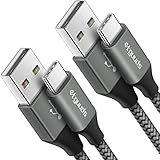
- Fast Charging and Data Sync: etguuds USB A to USB C cable supports charging speed up to 3 A fast charging for quick usb-c port device charging and data transfer speeds up to 480 Mb/s, usbc cable support USB 2.0 data transfer
- Long-Lasting: The usb c charger cord uses integral seamless stretch process, high pressure resistance and nylon braided adding tangle-free, can bear 20000+ bending lifespan
- Wide Compatibility: USB Type C cable fast charging for most C -port devices, for Samsung Galaxy S26 S26+ S26 Ultra S25 S25+ S25 Ultra S24 S24+ S24 Ultra S23 S22 S21 S20 A53 A14, for LG, for Moto, for Pixel, for iPhone 18 17 16 15 Pro Max. Not compatible with iPhone older models before iPhone 15
- Friendly Tips: The USB A to C cable is not support video and media display. Not compatible with webcams, some gaming devices, laptops. Fast charging requires that your device supports fast charging and wall charger supports fast charging
- What You Get: You will get 2 pack 3 ft etguuds Gray usb-a to usb-c nylon braided charging cable
Recent photos and phone content
Supported setups can provide access to recent phone photos or photo synchronization. Grant the requested photos and media permission on the Pixel. If you decline it, other Phone Hub functions can continue working while photo access remains unavailable.
Phone-network and hotspot controls
Phone Hub can expose a phone-network connection or a command to enable the Pixel’s hotspot when supported. The phone must have an active mobile plan and hotspot capability for tethering to work; ChromeOS cannot create mobile service that the Pixel itself does not provide.
Unlocking and quick commands
Google lists controls such as silencing the phone, locating it, and unlocking the Chromebook with the phone on supported devices and configurations. Security settings can require a lock screen or other verification. Look for these commands in Phone Hub rather than in the Chromebook’s generic Bluetooth menu.
Recent tabs
Phone Hub can show recent tabs from the connected phone when the account, browser synchronization, and device support permit it. If recent tabs are missing, verify that both devices use the same account and that the relevant sync and permission settings are enabled.
Rank #3

- 5 Pack 6FT Charging Cords: Includes five 6-foot cords for home, office, car, travel, bedside, and backup use.
- 3A Fast Charging and Sync: Supports up to 3A charging and 480Mbps data transfer with compatible devices and USB A adapters.
- Braided for Daily Use: Nylon braided material helps resist bending, pulling, and tangling for everyday charging needs.
- Wide Type C Compatibility: Compatible with iPhone 17 16 15 series, Samsung Galaxy S10 S9 S8, Note 10 9 8, LG V50 V40 G8 G7, and other Type C devices.
- USB A to Type C Connection: Works with standard USB A wall chargers, car chargers, power banks, laptops, and charging stations.
Stream Pixel apps on the Chromebook
App streaming is more demanding than ordinary Phone Hub integration. Google’s requirements are a Pixel 4a or later running Android 13 or later and a Chromebook running ChromeOS M115 or later. The feature is documented in Stream apps from your Pixel phone to a Chromebook with Phone Hub.
Prepare both devices
- Update the Pixel to Android 13 or later and confirm that it is a Pixel 4a or newer model.
- Update the Chromebook to ChromeOS M115 or later.
- Turn on Bluetooth on both devices.
- Keep the phone and Chromebook close together.
- Connect both to the same Wi-Fi network when possible. Some public and private networks do not support streaming.
- Keep a lock screen enabled if ChromeOS or the Pixel requests one for the feature.
Enable streaming
- On the Chromebook, open Settings and enter the Phone or Connected devices controls.
- Select the connected Pixel and start the setup for recent photos, notifications, and messaging apps if ChromeOS presents that combined setup.
- On the Pixel, grant the requested notification, photos and media, and app permissions.
- Back on the Chromebook, enable the Notifications and Apps options associated with the phone connection.
- Use the Phone Hub app or app control to choose a supported phone app and start streaming.
If the current Wi-Fi network blocks the stream, Google identifies the phone’s hotspot as an option to try. Turn on the Pixel hotspot, connect the Chromebook to it, and retry while keeping both devices nearby. This uses the phone’s mobile data and may be restricted by your carrier or plan, so monitor data use.
Understand app-streaming limits
Streaming does not make every Android app available on ChromeOS. Apps that require the user’s identity, including banking or medical apps, cannot be streamed. A supported Pixel can therefore meet all version requirements while a particular app still refuses to launch. Network policy, permissions, proximity, and a required lock screen can also prevent streaming independently of the basic Phone Hub connection.
Recommended Free Tools
Transfer files with Quick Share
For a photo, document, video, or other nearby file, Quick Share is usually simpler than enabling the full Phone Hub feature set. It is a distinct transfer tool, described in Use Quick Share on your Android device.
Rank #4
![INIU 240W USB C to USB C Cable, [6.6ft+6.6ft] Fast Charging Type C Cord](https://m.media-amazon.com/images/I/41r3DXOHFvL._SL160_.jpg)
- [From INIU—the SAFE Fast Charge Pro] Experience the safest charging with over 38 million global users. At INIU, we use only the highest-grade materials, so we do have the confidence to provide an industry-leading 3-year iNiu Care.
- [Unleash 240W High-Speed Charging] Experience peak efficiency with the INIU 240W USB-C cable. Designed to handle power-hungry devices, it rapidly boosts your MacBook Pro 16" from 20% to 67% in just 30 minutes.
- [Fastest Charging for All Devices] Set new charging records with the world’s fastest 240W cable. Rapidly boost your iPhone 17 Pro Max from 20% to 75%, Galaxy 25 Ultra to 77%, and iPad Pro 11" to 64% in only 30 minutes. (Note: Requires a compatible 240W USB-C charger).
- [Fit for All C-Port Devices] Work flawlessly with all existing C-port devices from big to small(240/200/170/140/100/60/18W required)—Laptops, Phones, Tablets, STEAM DECK and Switch, no matter what device you want to charge, it can be done more efficiently.
- [Safe Charge with EMARK2.0] INIU's proprietary EMARK2.0 safeguards you and your devices by dynamically over-charge protection and monitoring temp over 3.2 million times daily—saving you and your connected devices from the threat of fire and battery damage.
Send from the Pixel to the Chromebook
- Turn on Bluetooth on both the Pixel and Chromebook.
- On the Pixel, open the file or photo you want to send.
- Tap Share, choose Quick Share, and select the Chromebook from the nearby-device list.
- Accept the transfer on the Chromebook if prompted.
- On the Chromebook, open the Files app and look under Downloads, then Quick Share, for incoming Android files.
Quick Share needs the Chromebook to be available to receive. If it does not appear, open the Chromebook’s Quick Share or sharing visibility controls and make it discoverable. Google’s visibility choices include Your devices, Contacts, and Everyone for 10 minutes. The last option automatically returns to the previous setting after ten minutes, limiting how long the Chromebook remains broadly discoverable.
Improve discovery
- Bring the Pixel and Chromebook within 1 foot (30 cm), the distance Google recommends when troubleshooting Quick Share discovery.
- Check Bluetooth on both devices, even if the devices were previously connected.
- Confirm that the receiving Chromebook is not hidden by a visibility setting.
- Use Your devices when both devices share the same Google Account; use Contacts when appropriate for account contacts; use Everyone for 10 minutes only when you need temporary broader discovery.
- Retry from the Pixel’s Share menu after changing visibility, rather than relying on a stale nearby-device list.
Quick Share is for nearby files. It does not replace Phone Hub notifications, messages, recent tabs, hotspot controls, or app streaming.
Why Bluetooth pairing does not work
Do not try to add the Pixel from the Chromebook’s generic Bluetooth device list as if it were a keyboard, mouse, speaker, or headset. Google’s Chromebook Bluetooth guidance states: “Your phone can’t pair to your Chromebook with Bluetooth.” The full explanation is in Connect Chromebook to Bluetooth devices.
What’s actually slowing this PC down?
Pick the symptom - the matching free tool is one click away.
This limitation does not mean Bluetooth should always be off. Bluetooth can help nearby discovery and Phone Hub or Quick Share workflows, and it is required for the documented app-streaming setup. The distinction is that Bluetooth is a supporting radio here, not the direct phone-pairing method.
Best Value

- NOTE:1. PLEASE KINDLY KNOW this CABLE is USB-A TO USB-C CABLE instead of USB-C TO USB-C or Lighting connector. 2. It NOT COMPATIBLE with iPhone 14 Series and earlier versions or other deviices with lightning slot. 3.The thickness of the compatible mobile phone case charging port is 5.5mm.
- INNOVATIVE RIGHT ANGLE DESIGN: Tired of charging cables breaking at the joints? Compared to conventional electronic smartphone charger cord type c, this right angle type c chargers fast charging cable features an ergonomic 90° Right Angle end "L" design that may successfully prevent typical wear, straining cable and connection issues and increase the longevity life of the usb to usbc cable type c charger for Samsung. Its tangle-free ergonomic design makes it easier and more comfortable without blocking your hand to play games, use apps in portrait mode, watch videos, carplay, car charging and read e-books while charging.
- CERTIFIED 3.1A STABLE CHARGING & SYNC SPEED: AINOPE USB Type C Cable supports Stable charging up to 9V/3.1A (40% faster) compared with other cables which provide 5V/2.4A output. And data sync transfer speeds up to 480Mbps (1200 songs synced/minute). *Please note: 1.This cable can charge Google pixel 2/3/3XL normally, but it may not deliver fast charging speed. 2. Using an adapter of at least 5V/3A (QC 18W Max) if charging for full speed. The internal smart NTC smart control chip ensures stable current and prevents overheating for safe, full speed charging.
- ENHANCED DURABILITY & MILITARY GRADE: While others offer 10,000-bend durability, AINOPE sets a new standard with a 400,000+ bending lifespan. Reinforced 90 degree end military-grade durable nylon braided iPhone charging cable fast charger usbc with special SR joint, Lasts 30x longer than ordinary cable-proven in a laboratory environment to withstand 400,000 bends. It built-in laser welding technology with premium aluminum housing, which ensure the metal part won't break. One of the toughest type c charger fast charging type c cord ever created, with tensile strength capable of withstanding 16 kg. It's built to outlast your device, effectively ending the cycle of frequent cable replacements.
- UNIVERSAL COMPATIBILITY: This is the USBA to USBC cable not the USB-C to USB-C cable, Compatible with ALL USB-C iPhones, Android phones and tablets. Compatible with iPhone 17 Pro Max Air iPhone 16 15 Plus Samsung Galaxy S25 Ultra S24 23 S22 S21 S20 S20+ S20 Ultra S10 S10E S9 S8 Note 20 Ultra Note 10 9 8, Moto Z/Z2, LG V60/V40/V30+/V30 Sony XPERIA XZ2/XZ2 Premium/X3,XPERIA 5 II Google Pixel 3/4/5/6/7/8, Pixel 3XL/4XL/5XL, Pixel 6 Pro/7 Pro/8 Pro, Tablets iPad Pro 12.9-inch (5th/4th/3rd generation), iPad Pro 11-inch(4th/3rd/2nd/1st generation),iPad 10 iPad Air 4/5, iPad mini 6 and other android phones.
Troubleshoot a Pixel connection that is missing or incomplete
The Pixel does not appear in Chromebook setup
- Verify that both devices use the same Google Account.
- Check the baseline versions: ChromeOS 71 or later and Android 6 or later.
- Turn Bluetooth on, keep the devices nearby, and reopen the Connected devices or Android phone settings.
- Check whether a work or school administrator has disabled phone connections.
- Restart the setup from Chromebook Settings instead of the generic Bluetooth page.
The phone is connected, but notifications or photos are missing
- Open the Pixel’s app and system permission settings and grant the notification or photos/media access requested by Phone Hub.
- In Chromebook Phone Hub settings, turn on the specific Notifications or photo option; the base connection does not automatically enable every feature.
- Confirm that the Pixel is online and that account synchronization is not paused.
App streaming is unavailable
- Confirm the exact streaming requirements: Pixel 4a or later, Android 13 or later, and ChromeOS M115 or later.
- Turn on Bluetooth on both devices and keep them close.
- Try the same Wi-Fi network, then the Pixel hotspot if the current network blocks streaming.
- Grant notification, photos/media, and app permissions and enable Notifications and Apps in Chromebook’s phone controls.
- Try a different app if the first one requires identity, such as a banking or medical app; those apps cannot be streamed.
Quick Share cannot find the Chromebook
- Set the Chromebook’s visibility to Your devices, Contacts, or Everyone for 10 minutes as appropriate.
- Bring the devices within 1 foot (30 cm).
- Turn Bluetooth on again on both devices and retry from Share, then Quick Share.
- Check the Chromebook’s Files app under Downloads, then Quick Share, after accepting the transfer.
A work or school Chromebook blocks the feature
Managed Chromebooks can impose policies that personal devices do not. If the phone option is absent, permissions cannot be changed, or sharing is disabled despite meeting the version requirements, ask the organization’s administrator whether Android-phone integration, Phone Hub, Quick Share, notifications, or hotspot controls are allowed. There is no local Bluetooth workaround for an administrator policy.
Which connection method should you use?
| Your goal | Use | What it needs | What it does not provide |
|---|---|---|---|
| Keep phone alerts, recent tabs, and supported controls available on the Chromebook | Android-phone connection and Phone Hub | Same Google Account; ChromeOS 71+; Android 6+; feature permissions | It does not guarantee every control on every Pixel or Chromebook |
| Open and interact with an eligible Pixel app on the Chromebook | Phone Hub app streaming | Pixel 4a+ on Android 13+; ChromeOS M115+; Bluetooth, proximity, permissions, and a supported network | Identity-dependent banking and medical apps cannot be streamed |
| Move a photo, video, or document nearby | Quick Share | Android 6+ and Chromebook; Bluetooth; receiver visibility; close range | It is not an ongoing Phone Hub connection |
| Connect the Pixel as an ordinary Bluetooth accessory | Not supported | Google says a phone cannot pair to a Chromebook through Bluetooth | Use Android-phone setup or Quick Share instead |
Do you need a cable or extra hardware?
No physical purchase is required by the documented workflows. Phone Hub uses the Google Account and ChromeOS controls; Quick Share uses nearby device features; app streaming uses the supported network, Bluetooth, permissions, and (when needed) the phone hotspot. A cable or adapter is not identified as necessary for these connection methods.
Security and privacy checks
Use the narrowest Quick Share visibility setting that fits the transfer. Your devices limits discovery to devices associated with the account, Contacts broadens it to people in your contacts, and Everyone for 10 minutes is temporary but more open. Return to a narrower setting after a one-time transfer if you do not want the Chromebook discoverable.
Do these 3 things before closing this tab:
1Repair Windows errors before they cause bigger problems2Scan for outdated or missing drivers - takes under a minute3Clear out junk files and repair common Windows errorsReview each permission instead of approving every feature automatically. Notification access can expose alert content on the Chromebook, photo and media access can expose recent files, and hotspot controls can consume mobile data. If you stop using the connection, disable the individual Phone Hub features or remove the phone from the Chromebook’s connected-device settings.
The practical answer
For an ongoing Pixel-to-Chromebook relationship, sign in to the same Google Account and use Settings, Connected devices, and the Android-phone or Phone Hub setup. For files, open Share on the Pixel and choose Quick Share, with Bluetooth and receiver visibility enabled. For app streaming, verify the stricter Pixel 4a/Android 13 and ChromeOS M115 requirements, permissions, proximity, Bluetooth, and network conditions. Do not attempt direct Bluetooth pairing: Google explicitly does not support pairing a phone to a Chromebook that way.
Quick Recap
Product prices and availability are accurate as of the date/time indicated and are subject to change. Any price and availability information displayed on Amazon at the time of purchase will apply.

