Crashes, No Sound, or Screen Glitches?
Random freezes, missing sound and display glitches usually trace back to one bad driver. Find and replace yours safely.Free scan · under a minutePC Slower Than It Used to Be?
A free scan shows the junk files, broken settings and background clutter dragging Windows down - then fixes them in one click.Free scan · Windows 10 & 11The most dependable current route is Neko Project II Kai (NP2kai) running as a Libretro core in RetroArch. Install the Kai core, place legally obtained PC-98 firmware in RetroArch’s system/np2kai directory, then load a disk image in a PC-98 format such as .d88, .fdi, .hdm, .hdi, .cmd, .nhd, .hdd or .zip. The older Libretro Neko Project II core is documented as superseded by Kai. Standalone NP2kai uses different configuration conventions, so this guide focuses on RetroArch’s Libretro implementation.
What you are setting up
PC-98 software was designed for NEC’s Japanese PC-9800 family, not for an IBM-compatible PC. An emulator therefore needs both the emulator core and the machine firmware that the original computer used to start programs. A game image by itself is not a substitute for firmware, and firmware files are not game images.
As an Amazon Associate I earn from qualifying purchases.
This guide uses RetroArch with the Neko Project II Kai Libretro core. Menu names and directory locations can vary by RetroArch package, operating system and core build, but the roles are the same:
- RetroArch: the frontend that installs and launches the core, manages input and exposes disk controls.
- NP2kai: the PC-98 emulator core that provides the virtual CPU, memory, video, sound and storage hardware.
- System firmware: files placed in the core’s expected firmware directory.
- Game media: a PC-98 floppy, hard-disk or CD image in a supported format.
NP2kai can also run as a standalone program or in other ports. Those versions may use another folder layout, another way to select BIOS files, or different menu shortcuts. Do not assume that a path or hotkey from a standalone build exists in RetroArch.
#1 Best Overall

- 【Supported Operating System】The Game Controller is specifically designed for playing classic old school retro snes games on computer or laptop. Compatible with Windows 98 / ME / Vista / 2000/2003 / XP / 7 / 8 / 8.1 / 10/11, Mac OS X/ OS X 10.0 and beyond, Raspberry Pi, Raspberry PI 2 model B,Model A, Raspberry Pi 1 Model B+, Raspberry Pi 2,Raspberry Pi OS, Raspberry Pi 3 Model B+, Raspberry Pi 3, Raspberry Pi Zero.
- 【Simple USB Plug and Play】If your program or application accepts USB controller input, this classic game controller do not need install drivers or patches. 1.5 meter external cable(approx. 5 ft. Long). Notice: Please download the game emulator first before start the games, and then you must manually set the buttons and directionals within the emulator you're using, and the controller not automatically assigns buttons/directional axes. If on the Steam platform, you need to first enable Steam's "Universal Controller Configuration Support" and then restart Steam. After entering the game, you also need to manually bind key positions in the game
- 【High Sensitivity without Delay】Super sensitive buttons for precision control: 6 fire buttons, a 'Start' button and a 'Select' button, motion control cross. Play your favorite old school games with classic retro feel. Fits perfectly in the hand and also perfect for two player action.Note: Not applicable to Switch/PS games. Not Compatible with TV/ TV Box, third Mini Games Box and Tesla Model 3
- 【Supported Game Emulators】The game controller works with most emulators. Download any emulator you wish to download and use from Google and do the same with ROMS. Notice:Third party controller, not original controller. But it works phenomenal with the Raspberry Pi game emulation and so on
- 【Product Service】If you have any problem during use, send message to us and we will help you to solve the problem soon
1. Choose Kai rather than the older Libretro core
For a new RetroArch installation, select Neko Project II Kai for PC-98. Libretro’s documentation for the original Neko Project II core says that it has been superseded by Kai, making Kai the appropriate starting point for current setup instructions.
Install the core in RetroArch
- Open RetroArch’s online updater or core downloader.
- Find the PC-98 entry for Neko Project II Kai and install it.
- After installation, use Load Core to select Neko Project II Kai before browsing to a game.
- If RetroArch offers several similarly named entries, check that the selected core is the Kai build, not the older Neko Project II entry.
Core availability can differ between operating systems and package maintainers. If Kai is missing from a particular package, use a RetroArch distribution that supplies the Libretro core rather than mixing configuration instructions from an unrelated standalone NP2kai port.
2. Create the firmware directory
Libretro’s Kai documentation expects firmware in a directory named np2kai under RetroArch’s system directory. In RetroArch, open Settings > Directory, identify the path shown for System/BIOS, and create an np2kai folder inside that location. The resulting structure is conceptually:
RetroArch system directory/np2kai/The exact parent path depends on your operating system and how RetroArch was installed. Use the path RetroArch displays rather than guessing a platform-specific folder.
Required files
Libretro lists these files as required for Kai:
| File | Purpose and notes |
|---|---|
font.bmp or FONT.ROM |
Character font used for Japanese PC-98 text. The core accepts the listed font alternative; use the name and format expected by your build. |
bios.rom |
Primary PC-98 BIOS firmware. |
itf.rom |
PC-98 interface firmware. |
sound.rom |
Sound-board firmware. |
The NP2kai project recommends the original PC-98 font ROM; its documentation states, “The recommended font for NP2kai is the original font.rom from a PC-98 computer.” The filename accepted by a Libretro package can differ in capitalization or use the bitmap alternative, so follow the Kai core’s listed names.
Optional firmware and sound samples
| File or group | Status |
|---|---|
bios9821.rom |
Optional. Some PC-98 configurations or titles may use PC-9821 firmware features. |
d8000.rom |
Optional firmware listed by the Kai core documentation. |
| YM2608 rhythm-sample WAV files | Optional. Providing the documented rhythm samples can add rhythm-channel sound in software that uses it. |
Do not download firmware from an unauthorized source. The NP2kai project describes obtaining BIOS files from an actual PC-98 with its GETBIOS tool. Use firmware you own or are otherwise legally entitled to use, and keep the files private where your local law or license requires it.
Check the path and names before launching a game
- Confirm that the files are directly inside
system/np2kai, not one level deeper in a second folder. - Check spelling, extension and capitalization if your operating system or package treats names case-sensitively.
- Make sure you are actually launching the Kai core; another NP2 core may look for different names or locations.
- Restart RetroArch after correcting firmware so the core performs a clean initialization.
3. Prepare a compatible PC-98 game image
NP2kai supports several image extensions, including .d88, .fdi, .hdm, .hdi, .cmd, .nhd, .hdd and .zip. The extension alone does not guarantee that an image will boot: the image must contain media arranged for PC-98 hardware and must be mounted as the type of device the game expects.
PC-98 floppy formats are not IBM PC floppy formats
PC-98 floppies use PC-98 disk formats, commonly including 720 KB 2DD and 1.23 MB 2HD media. An IBM PC/AT-formatted floppy image is not interchangeable with a PC-98 image. A file can therefore be a valid floppy image yet still fail in NP2kai because it uses the wrong sector layout or filesystem conventions.
Rank #2
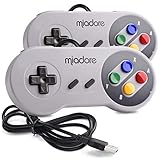
- ✔ Compatible with Windows98/ME/Vista/2000/2003/XP/7/8/8.1/10; Mac OS X and beyond ; Emulators ;Raspberry Pi ;Raspberry PI 2 model B ;Retro Pi OS; Retropi System.
- ✔ Simple USB plug and play, no drivers and software required. Note: If you have trouble with using this, make sure it is plugged in before starting your emulator. Also go into input settings and you may have to map the buttons.
- ✔ Work with any emulator you wish to download and use. Google S-N-E-S emulator and then the same for Roms. Way better than normal joypad and keyboard and mouse playing to really enjoy the emulator experience.
- ✔ Super sensitive buttons for precision control, Eight-way directional pad and six digital buttons. Play your favorite old school games with authentic retro feel. Arrowed D-pad, concave X and Y buttons, convex A and B buttons, rubber start and select buttons. Cord is approx. 5 ft. Long, providing a comfortable distance while playing.
- ✔ If you want to play S-N-E-S, N-E-S, PSX, Atari, Genesis, or any other types of this vintage of games... get this. You will not regret it. NOTE:Third party controller, not original S-N-E-S / N-E-S controller. But it works phenomenal with the Raspberry Pi game emulation and so on.
When choosing an image, verify that it was dumped or created for the PC-98 release of the game. Do not rely only on a generic label such as “DOS disk” or “bootable floppy.”
Floppy, hard-disk and CD-style media
Floppy images are normally used for games distributed on one or more disks. Hard-disk images such as .hdi, .nhd or .hdd may contain an installed game and can avoid disk swapping once mounted. NP2kai also documents .cmd files for mounting floppy, hard-disk and CD images. The correct choice depends on how the particular game was distributed and what the image contains.
Load the first image
- Start RetroArch and select the Neko Project II Kai core.
- Choose Load Content and browse to the PC-98 image.
- Select the image as the content. If RetroArch asks which core to use, choose Neko Project II Kai.
- Allow the virtual machine to boot. A floppy-based title may show a Japanese DOS or game startup screen before loading.
If the game is supplied as a compressed archive, use the supported .zip form only when the archive contains an image Kai can read. If it does not mount, extract the image and load the actual disk file instead.
4. Understand the “How many files (0-15)?” screen
A ROM BASIC prompt asking “How many files (0-15)?” usually means the firmware was found and started, but the selected floppy or hard-disk image did not mount as bootable media. It is not normally evidence that the BIOS is missing.
Work through these checks:
- Exit or reset the running core.
- Confirm that the selected file is the intended PC-98 image and not an IBM PC/AT disk.
- Try the image in its native supported format rather than a renamed file.
- If the game has separate floppy sides or disks, load the boot disk first.
- Restart the core after changing the image so the virtual machine sees a clean media insertion.
If a hard-disk image is supposed to boot but produces the same screen, check that it is being mounted as a hard disk rather than inserted into a floppy drive.
5. Open the NP2 menu and change virtual disks
Libretro documentation identifies F12 as the shortcut for opening the NP2 menu. The NP2kai project also documents F12, the mouse middle button, or L2 on its Libretro port. Which shortcut works depends on RetroArch’s keyboard and controller bindings, so try the binding appropriate to your build.
From the NP2 menu you can swap floppy and hard-disk images and access emulator hardware settings. RetroArch’s own Quick Menu > Disk Control can also be available for builds that expose the core’s disk interface.
Quick wins for a faster PC:
Clear out junk files and repair common Windows errorsFree Scan →Scan for outdated or missing drivers - takes under a minuteDriver Scan →Repair Windows errors before they cause bigger problemsFix Now →Changing a floppy
- Pause the game if necessary and open the NP2 menu.
- Choose the floppy-drive or disk-image entry.
- Select the next disk image and confirm the change.
- Return to the game and follow its prompt to continue, or reset if the title requires a reboot.
Changing a hard disk
The NP2kai project warns that swapping a hard-disk image requires a reset. Save the game first, change the image, then use the menu’s reset function or restart the core. Removing a hard disk while the emulated system is still running can leave the game at a boot error or with an inconsistent virtual filesystem.
Rank #3

- ✅【Compatibility】Compatible with Raspberry Pi, Windows PC, Linux ,Mac. Specifically designed for playing classic old school retro snes games on computer or laptop.This is the USB controller what has a USB plug for PC, NOT compatible for Original SNES super Nintendo console
- ✅ 【Ergonomic Design】Super precise cross key and function buttons,the cross direction key adopts frosted concave design,anti-sweat and anti-slip.The shape of the controller is designed to fit the contour of your hands,easy and comfortable to hold.
- ✅ 【Advanced Game Experience】PC running operating system:Windows 98/2000/ ME/XP/Vista/Win7/8/8.1/11 or later,or Mac running OS X 10.0/Mac OS X or above.It works with most of emulators you wish to download and use,such as VirtuaNES(PC),sens9x,Zsens,sensgt,Uosnesw,RetroArch,OpenEmu(MAC),NESEmu and Jnes etc.
- ✅ 【Wired USB Connection】Standard USB 2.0 port with a 1.5 meters (5ft) cable, don't need to install any drivers, you must manually set the buttons and directionals within the emulator you're using, and the controller not automatically assigns buttons/directional axes. Notice: please download the game emulator first before start the games, you can download the emulator “VirtuaNES” on PC and “OpenEmu”on MAC.
- ✅【Satisfaction】Third party controller(USB Version), not for original snes console and not support for switch. If there is an incompatibility on MAC or Raspberry Pi , please contact the seller for a support.
Multiple disks: .m3u and .cmd
NP2kai project documentation describes UTF-8 .m3u lists for floppy disks and .cmd files for mounting floppy, hard-disk and CD images. However, the project also notes that .m3u support was not present in its Libretro core implementation. This is an implementation and version distinction, not a contradiction that can be solved by renaming files.
Use this decision path:
- If your specific Libretro Kai build documents or exposes
.m3uhandling, create a UTF-8 list with one image filename per line and load that list as the content. - If the list is rejected or only the first disk appears, use the NP2 menu or RetroArch Disk Control to insert each image manually.
- Use a project-supported
.cmdworkflow only when your port and build recognize it. A standalone NP2kai instruction for.cmdfiles may not apply to the Libretro core.
Keep all disks in an accessible folder and use simple filenames while troubleshooting. The menu method is the least dependent on frontend-specific playlist support.
6. Configure keyboard, mouse and controller input
A physical keyboard is the simplest baseline because many PC-98 games were designed around Japanese keyboard layouts, function keys and DOS commands. Start with keyboard input before adding a gamepad, then add mouse mapping if the title needs it.
The Tool Desk
Outbyte PC Repair FREERepair Windows errors before they cause bigger problemsFix Now →Outbyte Driver Updater FREEScan for outdated or missing drivers - takes under a minuteDriver Scan →Keyboard and RetroArch hotkeys
RetroArch can reserve keys for frontend actions such as opening menus, pausing, saving states or exiting. If a game appears not to receive a key, check whether a RetroArch hotkey is intercepting it. The NP2kai project documents using the frontend’s enable-hotkeys and game-focus approaches so keyboard events go to the emulated machine instead of triggering RetroArch.
Test the keys at a DOS prompt or in the game’s own key-config screen. A key that works in the menu but not in the game may be intentionally unused by that title rather than incorrectly mapped.
NP2kai joypad modes
NP2kai exposes several joypad routes. The useful choice depends on whether the game expects cursor keys, numeric keypad directions, ordinary keyboard keys or mouse movement:
| Mode | Use it when |
|---|---|
| Arrows | The game uses the PC-98 cursor keys for movement. |
| Keypad | The title expects numeric-keypad directions or keypad commands. |
| Manual keyboard mapping | You need to assign controller buttons to specific emulated keyboard keys. |
| Mouse input | The game uses a pointer, menus driven by a mouse, or mouse-based controls. |
A USB game controller is optional. It can be convenient for movement or button-heavy titles, but compatibility depends on the controller, operating system and RetroArch input driver. Keep the keyboard available for function keys, text entry and setup screens.
Free tools Windows power users keep installed
One-click scans. No signup required.
When the game’s mouse does nothing
- Select the NP2kai mouse input mode rather than an arrow or keypad mode.
- Check that RetroArch is passing the physical mouse to the core and has not captured it for a frontend menu.
- Verify that the game or its DOS environment loads a mouse driver from
CONFIG.SYS. NP2kai’s project documentation specifically points to the driver as a common requirement. - Restart the game after changing the driver or input mode, because some software detects the mouse only during startup.
If the pointer moves but buttons do not work, inspect the game’s own control configuration. Emulating mouse movement does not automatically translate every controller button into a left or right click.
Rank #4

- With broad game support, the Logitech Gamepad F310 works with old standbys to today's biggest titles, so it's easy to set up and use with your favorite games.
- Profiler software allows the gamepad to be programmed to perform keyboard and mouse commands for games without gamepad support.* * Requires software installation.
- A familiar control layout that doesn't require a learning curve to be able to use, with all the same buttons as on an Xbox 360.
- The unique floating D-pad rests on four switches-instead of a single pivot point-making it responsive to quick changes in direction.
- The six-foot cord lets you lean back and play a comfortable distance from your PC monitor.
7. Adjust compatibility options only when a title needs them
Begin with NP2kai’s defaults. Changing several machine parameters at once makes it difficult to tell which setting fixed or broke a game. Use a title’s documented PC-98 requirements when available, then alter one option at a time.
Machine options
Kai exposes options including:
- PC model or machine generation.
- CPU base clock and multiplier.
- Available RAM.
- Graphics controller.
- Sound board and sound generator.
Older software may depend on timing, memory layout or a particular sound device. Newer PC-98 titles may expect a faster model or a later sound board. The Libretro and NP2kai documentation commonly describes 26K sound as a fit for older games and 86 sound for newer games, but that is a starting guideline, not proof that every title follows it.
Restart requirements
Some settings are marked as requiring a core restart. Save any in-game progress, close the content and relaunch it after changing those options. Changing the sound generator requires a reset. A setting that appears unchanged during the current session may not take effect until the virtual machine is restarted.
Recommended Free Tools
A controlled tuning sequence
- Launch the game with default model, clock, memory, graphics and sound settings.
- Record the exact symptom: failure to boot, corruption, incorrect speed, missing sound or a crash at a particular screen.
- Change only the setting associated with that symptom, such as sound board for missing audio.
- Restart the core when the option requires it.
- If the result is worse, restore the previous value before testing another option.
Do not increase the CPU clock simply because a game feels slow. Some PC-98 software relies on original timing and can become too fast or unstable when overclocked.
RetroArch/Libretro Kai versus standalone NP2kai
Both forms emulate PC-98 hardware, but their setup surfaces are not interchangeable.
| Area | RetroArch with Libretro Kai | Standalone NP2kai or another port |
|---|---|---|
| Firmware location | Place the documented files under RetroArch’s system/np2kai. |
Follow that port’s own directory and filename rules. |
| Core selection | Install and select Neko Project II Kai inside RetroArch. | Launch the standalone executable or platform frontend. |
| Menu access | F12 is documented; the Libretro port also documents a middle mouse button or L2. | Shortcut and button assignments vary by port. |
| Disk handling | Use the NP2 menu and, where supported, RetroArch Disk Control; playlist support depends on the build. | The project’s documented .m3u or .cmd behavior may apply, but not automatically to Libretro. |
| Frontend hotkeys | RetroArch can intercept keyboard input unless hotkeys or game focus are configured. | No RetroArch hotkey layer is present unless another frontend adds one. |
| Configuration options | Core options are stored and exposed through RetroArch and may require a core restart. | Use the standalone port’s configuration files or menus. |
If an instruction tells you to copy files into a folder that does not exist in RetroArch, it may describe standalone NP2kai rather than the Libretro core. Identify the running core first, then use instructions for that implementation.
Troubleshooting by symptom
| Symptom | Likely cause | What to check |
|---|---|---|
| “How many files (0-15)?” appears | Firmware started, but the game media did not mount. | Use a supported PC-98 image, verify the selected disk, mount the correct device type and restart. |
| Japanese text is missing or unreadable | The font is absent, misnamed or in the wrong directory. | Check font.bmp or FONT.ROM inside system/np2kai, confirm the Kai core is running and restart. |
| The game boots but the mouse does nothing | Wrong input mode or no DOS mouse driver. | Select mouse mode, check RetroArch mouse capture and verify the game or DOS loads its driver from CONFIG.SYS. |
| A gamepad moves a cursor, but the game expects keys | The joypad is mapped to mouse input instead of keyboard input. | Switch to arrows, keypad or manual keyboard mapping. |
| Keyboard commands open RetroArch menus | Frontend hotkeys are intercepting the keys. | Review enable-hotkeys and game-focus behavior, then test again with the game focused. |
| Sound is wrong or the game behaves strangely | Model, timing or sound-board mismatch. | Return to defaults, then try the title’s documented model or sound requirement. Reset after changing the sound generator. |
| The second disk never appears | The frontend or core build does not support the selected list-file method. | Use the NP2 menu or RetroArch Disk Control, and verify whether that build supports .m3u or .cmd. |
| A hard-disk swap leaves a boot error | The image was changed without resetting the virtual machine. | Save, swap the image and reset or restart the core. |
Fast, repeatable setup checklist
- Install Neko Project II Kai in RetroArch; do not begin with the superseded original Libretro NP2 core.
- Find RetroArch’s System/BIOS directory through Settings > Directory.
- Create
np2kaithere. - Copy legally obtained
font.bmporFONT.ROM,bios.rom,itf.romandsound.rominto that folder. - Add optional
bios9821.rom,d8000.romor YM2608 rhythm samples only when needed. - Use a PC-98 disk image in a supported format, not an IBM PC/AT floppy image.
- Load the Kai core before loading the game.
- Use F12, the documented middle-mouse/L2 shortcut, or RetroArch Disk Control to manage media.
- For multiple disks, confirm whether your build supports
.m3u; otherwise swap disks manually. - Start with keyboard input and defaults, then configure mouse, joypad mode, model, memory, clock or sound only when the game requires it.
With the firmware in the correct system/np2kai directory and the right PC-98 media mounted, most startup failures become a specific path, image-format, input or compatibility-setting problem rather than an unexplained emulator failure.
Do these 3 things before closing this tab:
1Clear out junk files and repair common Windows errors2Fix the driver behind crashes, sound loss and screen glitches3Repair Windows errors before they cause bigger problemsQuick Recap
Product prices and availability are accurate as of the date/time indicated and are subject to change. Any price and availability information displayed on Amazon at the time of purchase will apply.

