Quick wins for a faster PC:
Fix the driver behind crashes, sound loss and screen glitchesFind Drivers →Clear out junk files and repair common Windows errorsFree Scan →Scan for outdated or missing drivers - takes under a minuteDriver Scan →The defensible way to compare mining and construction equipment suppliers is to score every bidder against one site-specific requirement set and one lifecycle-cost model. The purchase price is only the starting point: fuel or energy, maintenance, parts, downtime, training, software, financing, rebuild choices and resale can determine the real cost of production.
There is no universal best supplier. The right choice depends on the machine’s duty cycle, local dealer capability, contract terms and the consequences of a failure at your site. Require documentary evidence, comparable customer references and a written responsibility matrix before treating a bid as comparable.


As an Amazon Associate I earn from qualifying purchases.
1. Define the work before comparing brands
Start with an application brief that every supplier must use. Comparing headline horsepower, payload or list price without describing the work can produce a machine that looks attractive on paper but misses production, access or compliance requirements.
The Tool Desk
Outbyte PC Repair FREEClear out junk files and repair common Windows errorsFree Scan →Outbyte Driver Updater FREEScan for outdated or missing drivers - takes under a minuteDriver Scan →Specify the operating envelope
- Material: density, abrasiveness, moisture, fragmentation and contamination.
- Duty cycle: loading, hauling, digging, grading, crushing or road-building cycle times; expected loads; idle time; shift pattern; and seasonal changes.
- Utilization: planned operating hours, days per year, peak periods and reserve capacity.
- Site conditions: altitude, temperature range, dust, water, gradients, ground bearing, road geometry, turning radius and access for delivery or recovery.
- Production target: tonnes, cubic metres, lane kilometres or other measurable output, with quality tolerances.
- Interfaces: attachments, hydraulic flow, couplers, electrical systems, software compatibility and fleet-telemetry requirements.
- Compliance: safety rules, emissions tier, noise limits, local registration and site-specific standards.
- Commissioning: required delivery date, assembly, operator training, acceptance tests and ramp-up period.
Turn these into mandatory pass/fail requirements and scored requirements. A supplier that cannot meet a safety, emissions, interface or delivery gate should not be rescued by a low price elsewhere in the score.
#1 Best Overall
Ask for an application-specific performance case
Require each bidder to state assumptions for cycle time, payload, fuel or energy use, availability, maintenance hours and expected annual production. Ask how each estimate was measured and whether it comes from a comparable site. Keep supplier assumptions separate from your own baseline so they can be tested later.
2. Compare lifecycle economics, not quoted CAPEX
Build one model that covers the period you actually expect to own or operate the equipment. State utilization, production, fuel or electricity prices, labor rates, inflation, financing terms, downtime cost and resale assumptions. Show a base case and sensitivities rather than hiding uncertainty in one point estimate.
Cost categories to include
| Cost element | What to capture |
|---|---|
| Acquisition and financing | Purchase price, options, taxes, transport, assembly, commissioning, interest, fees, deposits and payment timing. |
| Energy | Fuel or electricity consumption under the stated duty cycle, energy price, charging or storage infrastructure and idle consumption. |
| Maintenance labor | Scheduled labor hours, inspection time, technician rates, travel and overtime. |
| Parts and consumables | Filters, fluids, lubricants, wear parts, tires or undercarriage items, planned components and expected price escalation. |
| Unplanned repairs | Failure probabilities or supplier estimates, repair labor, recovery, expedited freight and collateral damage. |
| Downtime exposure | Lost production, substitute-machine rental, contractor cost, penalties, rescheduling and restart losses. |
| People and software | Operator and technician training, licenses, telemetry subscriptions, connectivity and cybersecurity requirements. |
| Major components | Engine, transmission, hydraulic, electric-drive, battery or other replacement and rebuild assumptions. |
| End of life | Expected resale, trade-in, disposal, decommissioning and transfer costs. |
Use a production-based metric
For a mine or quarry, calculate lifecycle cost per tonne (or another output unit) as total expenses divided by production over the stated period. Komatsu describes this approach in its lifecycle-management material and says its total-cost studies examine replacement parts, maintenance, electricity, labor and consumable parts. That is a useful model structure, not evidence that one supplier is cheaper in every application.
For construction, use cost per productive hour, cubic metre, lane kilometre or project milestone when that better reflects the contract. Keep the denominator consistent across bids. A machine with lower hourly cost but lower production can be more expensive per tonne or per completed project.
Run sensitivity cases
- Lower and higher annual utilization.
- Fuel or electricity prices above and below the base assumption.
- Longer parts lead times and a major component failure.
- Different downtime values during a critical production window.
- Earlier replacement, a rebuild, or a longer ownership period.
- Lower resale value or a delayed project completion.
Show which assumptions change the ranking. If a bidder wins only under an optimistic fuel-use or uptime assumption, make that risk explicit in the recommendation and contract.
3. Evaluate the local support organization separately from the manufacturer
A strong global brand does not guarantee strong support at your site. Identify the legal and operational chain: manufacturer, importer, dealer, distributor, service contractor and any subcontractors. Ask who is accountable if a channel arrangement changes.
Rank #2

- NIOSH APPROVED: For at least 95 percent filtration efficiency against certain non-oil based particles
- COMPATIBLE: With a variety of protective eyewear and hearing protection
- ADJUSTABLE NOSECLIP: Reduces potential for eyewear fogging and helps provide a custom and secure seal
- TWO-STRAP DESIGN: With welded dual point attachement that helps provide a secure fit
- APPLICATIONS: Gringing, sanding, sweeping, bagging, and other dusty operations. Metalworking, chemical processing, construction, and metal processing
Verify people, facilities and coverage
- Nearest parts warehouse, service branch and rebuild facility.
- Number of field technicians, shifts, travel radius and after-hours coverage.
- Technician qualifications, factory training and refresh cycle.
- Workshop capacity, lifting equipment, machining, testing and contamination-control capability.
- Diagnostic tools, software access and ability to escalate faults to factory engineering.
- Warranty-claim authority and the person responsible for disputed claims.
- Emergency dispatch process, response target and completion target.
- Continuity plan if the dealer, distributor or service subcontractor changes.
Ask for names, locations, coverage hours and evidence—not just a statement that support is “available.” Secondary procurement guidance likewise recommends verifying parts ownership, warranty responsibility, factory access and local channel capability.
Make accountability contractual
Put the support map in the tender response and final agreement. For each event—diagnostic alarm, parts shortage, warranty failure, software outage or safety issue—identify the responsible party, escalation route, response clock and remedy. A service promise without an accountable counterparty is difficult to enforce when production is stopped.
4. Test parts availability with a criticality-based list
Do not compare suppliers by warehouse size or a generic “parts available” claim. A single unavailable seal, sensor or electronic module can stop a machine as effectively as a major component.
Classify your parts
- Routine consumables: filters, fluids, lubricants and other planned service items.
- Planned replacements: wear components and scheduled-life parts.
- Critical unplanned-failure parts: items whose absence stops production or creates a safety risk.
For every critical item, request local or regional stock status, the order path, quoted lead time, replenishment plan, repair or exchange option and escalation route. Ask whether the quoted lead time is a normal estimate, a contractual commitment or an expedited exception.
Judge stock against consequence
Map each part to the cost of a stockout: lost tonnes, idle crews, rental equipment, recovery work, project delay and safety exposure. A supplier with fewer total items but dependable stock of your critical parts may be lower risk than one advertising a larger inventory that is far away or not contractually reserved.
Free tools Windows power users keep installed
One-click scans. No signup required.
5. Compare warranty and service agreements line by line
Published support programs are examples, not interchangeable offers. Availability, exclusions and duration vary by market, product and dealer. Obtain the actual contract, schedules and responsibility matrix for your machine and location.
Rank #3
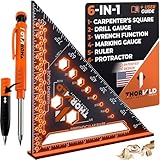
- 🛠️ WORK FASTER & SMARTER - Save precious time on woodworking with our new rafter square. Easily measure, trace, and take angles using only one woodworking square! No need to bring a bulky toolbox. With our 6-in-1 carpenter tools, you have everything you need to work quickly and efficiently!
- ✏️ A WHOLE TOOLBOX IN ONE SQUARE - Our new triangle ruler isn't just any ordinary measuring tool. It combines six carpentry tools in one accessory, including a square, two protractors, three marking gauges, two rulers, a drill gauge, and a wrench. Your new all-purpose precision tool!
- 💪 BACKED BY THE PROS - Our wood working square is made to last a long time. It's made of 4mm-thick aluminum, making it light and durable. The square features laser-engraved inscriptions that won't fade. If you're looking for an accurate and solid home improvement tool, our carpenter square is what you need.
- 📐 A PRECISE 1/16" CARPENTER'S SQUARE - Need help plotting accurately or just not a big fan of standard carpentry squares? That's quite normal since such tools may not be enough to do the job right. That's why we made the 6-in-1 square measuring tool with 1/16" graduations. Amaze your friends with your accurate and exceptional work!
- 📦 CARPENTER'S PENCIL INCLUDED - Thanks to our new 2-in-1 carpenter pencil, you'll finally love writing with a worksite pen! It features a removable grip, allowing you to write in complete comfort. The removable grip also lets you switch to deep hole marker mode in an instant.
Build a contract comparison sheet
| Term to compare | Questions for every bidder |
|---|---|
| Duration and limits | What calendar period, operating-hour limit or event ends coverage first? |
| Covered systems | Which components, software, attachments and wear items are included? |
| Exclusions | Are contamination, operator damage, modified equipment, consumables or environmental conditions excluded? |
| Labor and travel | Are technician hours, travel, accommodation, freight and recovery included? |
| Response and completion | What starts the clock, what are the targets, and what remedy applies if they are missed? |
| Inspections | Which inspections, oil sampling, scheduled services and records are required to preserve coverage? |
| Data services | Are monitoring, software licenses, connectivity, alerts and data export included or separately charged? |
| Payment basis | Is the fee fixed, hourly, per tonne, per machine, usage-based or subject to escalation? |
| Renewal and transfer | Can the agreement be renewed, assigned, transferred with resale or terminated early? |
| Post-warranty support | What parts pricing, labor rates, rebuild options and technical access remain after coverage ends? |
Use published programs as questions, not promises
Cat Customer Value Agreements describe combinations of dealer advice, parts acquisition, maintenance, support and flexible payment options, with details differing by industry and product. Caterpillar also describes mining lifecycle agreements that can include vendor-managed inventory and cost-per-hour or cost-per-ton structures. Ask your local dealer to identify exactly which elements are offered, priced and enforceable.
Komatsu Australia states that qualifying genuine parts supplied and fitted by Komatsu carry a 24-month or 4,000-hour warranty and describes free scheduled maintenance for the first three years or 2,000 hours under the stated program. Those are Australia-market terms with eligibility and exclusions; they must not be generalized to another country or dealer.
6. Demand credible uptime and diagnostic evidence
Ask for reliability or availability history from machines operating in conditions comparable to yours. Require the definition, calculation, time period, machine population and denominator. “Availability” can exclude planned maintenance, waiting for parts or operator delays, so the number is meaningless without its calculation.
What’s actually slowing this PC down?
Pick the symptom - the matching free tool is one click away.
Evaluate monitoring and diagnostics
- Which faults are detected, and how early?
- Can the supplier access the machine remotely, and under what authorization?
- Who reviews alerts and contacts your team?
- What is the response and resolution process for a critical alarm?
- Who owns the data, and can you export it in a usable format?
- What happens when connectivity fails or the subscription ends?
- What cybersecurity controls, access logs and retention terms apply?
- Are hardware, installation, cellular service, software and support included in the quoted price?
Komatsu’s MineCare page reports a manufacturer example of $1.25 million in annual savings and an 11.6% increase in shovel availability. The retrieved page does not state the year, method or matched cross-brand comparison. Treat these as claims to contextualize and verify with site-specific references, not as expected results.
7. Treat delivery, financing and commissioning as operational risks
Compare the date a usable machine reaches production, not merely the date a factory expects to ship it. Request a schedule covering production slot, shipping, customs, assembly, site acceptance, software setup, training, spares and ramp-up. Identify long-lead components and the supplier’s recovery plan for delay.
For financing, compare total payment, interest, fees, deposits, currency exposure, escalation, ownership at term end and the effect of delayed commissioning. A lower monthly payment can conceal a higher lifecycle cost or leave you paying before the machine produces.
Rank #4
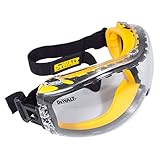
- DEWALT ToughCoat hard coated lens provides tough protection against scratches.
- DEWALT anti-fog lens coating provides tough protection against fogging.
- Soft, dual injected rubber conforms to the face to provide a high level protection from dust and debris.
- Adjustable, elastic cloth head strap provides a comfortable fit.
- Ventilation channels allow breathability and added protection against fogging.
Define commissioning acceptance
- Inspect configuration, attachments, safety systems and documentation.
- Run a controlled production or performance test against agreed criteria.
- Record defects, software versions, baseline readings and open actions.
- Confirm operator and technician training completion.
- Set the date when warranty, payment and performance obligations begin.
8. Compare rebuild against a new purchase
A rebuild is not automatically the cheaper or safer option. Compare it with a new unit using the same production and downtime assumptions.
Questions for a rebuild proposal
- What is replaced, inspected, upgraded or left in service?
- What remaining service life is expected for every major system?
- What testing proves the rebuilt machine meets performance and safety requirements?
- What warranty and technical support apply, and who performs the work?
- Which parts are reserved, and what is the lead time for future repairs?
- How does the rebuild fit the mine or project plan over its ownership period?
- Will operators and technicians need different training or software?
- What is the contingency if the rebuild overruns its schedule?
Procurement guidance recommends comparing downtime, lead time, remaining service life, reliability risk, upgrade potential, training, parts strategy, warranty, support and future-plan fit. Include the value of earlier production from a new machine and the risk of inherited defects in a rebuild; do not compare invoice prices alone.
Independent reader supportYour contribution helps us test, update, and keep practical guides available for everyone.9. Create a documented, cross-functional scorecard
Operations, maintenance, engineering, procurement and finance should agree on mandatory requirements and scoring weights before bids are opened. There is no evidence-based universal weighting that works for every mine or construction project.
Record evidence beside every score
| Scorecard field | Record |
|---|---|
| Requirement | The measurable application, service or commercial requirement. |
| Supplier response | The exact specification, commitment or exception. |
| Evidence | Contract clause, test result, inventory record, reference or named facility. |
| Assumption | Utilization, production, energy price, downtime value or other model input. |
| Risk | What could fail, its consequence and its owner. |
| Clarification | The unanswered question, responsible bidder and due date. |
| Sensitivity | How the ranking changes under the agreed alternative case. |
Keep a decision log explaining exceptions and trade-offs. A bid that scores lower on acquisition price may be preferred if it has a stronger critical-parts plan, enforceable response commitments or lower downtime exposure. The record should show why, so the decision remains defensible after award.
10. Questions to send with the request for proposal
- Which assumptions support your production, fuel or energy and availability estimates?
- Provide comparable-site references, including duty cycle, climate, utilization and support arrangement.
- Who owns warranty decisions, parts supply, field dispatch and factory escalation?
- List the nearest facilities, technicians, coverage hours, diagnostic tools and rebuild capabilities.
- Classify our critical parts and state stock location, lead time, replenishment and exchange options.
- Provide the complete warranty and service agreement, including exclusions, response clocks and remedies.
- State data ownership, export format, connectivity requirements, cybersecurity terms and subscription costs.
- Provide delivery milestones, commissioning tests, training plan and delay recovery plan.
- Price a new machine, a rebuild or exchange option and the post-warranty support path on comparable assumptions.
- Identify every supplier assumption that differs from the buyer’s baseline and quantify its effect on lifecycle cost.
11. How to interpret supplier case studies
Case studies are useful for identifying questions and possible support models, but they are not independent head-to-head tests. A Caterpillar customer story published August 3, 2026, describes a city request for proposals that considered lifetime operating cost alongside manufacturer and dealer product support. A city official, Schmaltz, said, “They used the total cost of operation for the life of the machine and recognized that is the most cost-effective approach for taxpayers.” The example supports the evaluation category; it does not prove that one supplier will win every project.
Do these 3 things before closing this tab:
1Repair Windows errors before they cause bigger problems2Scan for outdated or missing drivers - takes under a minute3Clear out junk files and repair common Windows errorsA Volvo Construction Equipment brochure for EMEA describes dealer technical and financial support, customer-support agreement tiers, training and fleet optimization. Its geography and road-building application limit how far the claims can be generalized. Use such material to build your RFP questions, then obtain local terms and references.
Best Value
12. Common comparison mistakes and their fixes
Choosing the lowest bid
Why it fails: CAPEX hides energy, parts, downtime and financing exposure.
Fix: compare cost per productive output over the stated ownership period.
Scoring the brand instead of the local channel
Why it fails: response, parts and warranty performance depend on the organization serving your site.
Fix: score facilities, people, coverage and contractual accountability separately.
Accepting an uptime percentage without a denominator
Why it fails: definitions can exclude the very delays that matter to production.
Fix: require calculation method, population, period, exclusions and references.
Counting warehouse items instead of critical parts
Why it fails: a stockout of one low-volume component can stop the fleet.
Fix: map every critical part to lead time, consequence and recovery option.
Assuming a published program applies locally
Why it fails: market, model, dealer and eligibility terms differ.
Fix: attach the local contract and responsibility matrix to the bid.
Ignoring data and subscription exit terms
Why it fails: diagnostics may stop or data may become inaccessible when a service ends.
Fix: specify ownership, export, connectivity, cybersecurity and post-contract access before award.
13. A practical award sequence
- Issue one application brief and lifecycle-model template to every bidder.
- Screen mandatory safety, emissions, interface, production and delivery requirements.
- Validate application assumptions through demonstrations, tests and comparable references.
- Audit the local service organization, facilities, technicians and critical-parts plan.
- Normalize warranty, service, financing, training, software and delivery terms.
- Run base-case and sensitivity lifecycle models, including downtime and rebuild alternatives.
- Have the cross-functional team score evidence, record risks and close clarifications.
- Negotiate measurable response, availability, parts, data and remedy obligations.
- Set commissioning acceptance tests and baseline readings before final acceptance.
The strongest supplier is the one whose machine fits the work and whose local organization can keep it producing at a predictable lifecycle cost. A transparent model, documented evidence and enforceable support terms are more reliable than a brand reputation or a low opening quotation.
Quick Recap
Product prices and availability are accurate as of the date/time indicated and are subject to change. Any price and availability information displayed on Amazon at the time of purchase will apply.

