What’s actually slowing this PC down?
Pick the symptom - the matching free tool is one click away.
Compare grocery prices by dividing each item’s price by the same unit—such as ounces or pounds—then check how much usable food it provides and whether you’ll use it. For a lower total bill, plan meals, shop with a quantity-based list, and check only the sales or coupons you can actually redeem.
Compare unit prices first
The basic calculation is unit price = total package price ÷ package quantity. USDA MyPlate expresses it as “TOTAL PRICE ÷ SIZE = UNIT PRICE”; its Shop Smart guidance explains that shelf unit prices make differently sized products easier to compare.
As an Amazon Associate I earn from qualifying purchases.
Use the same measurement for both items. If a 12-ounce bag costs $3 and a 20-ounce bag costs $4.50, the first is $0.25 per ounce and the second is $0.225 per ounce. The larger bag is cheaper by weight in this example—but that does not yet mean it is the better purchase.
- Check the package quantity, not just the large shelf-tag price.
- Convert both products to the same unit if shelf labels differ; for example, 16 ounces equal 1 pound.
- Compare like with like: similar ingredients, product form, and quality. A prepared product and a basic ingredient may not be interchangeable.
- Include a sale or coupon only if you qualify for it and can meet its terms, such as buying a required quantity.
If the shelf label is missing or uses a different unit, a phone calculator is sufficient: divide the price by the package amount, then convert as needed.
#1 Best Overall
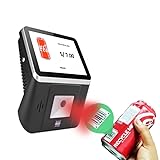
- 【8-Inch Responsive Touchscreen】Features an 8-inch capacitive touchscreen with clear display quality and smooth touch response, providing an easy and efficient user experience for retail stores,
- 【Android 11 System with RK3568 Processor】Powered by the RK3568 Quad-core Cortex-A55 processor up to 2.0GHz and running Android 11, delivering stable performance and compatibility with various retail, POS, and commercial applications.
- 【Built-in 1D/2D Barcode Scanner】Integrated high-speed barcode and QR code scanner supports automatic recognition of 1D and 2D codes, helping improve efficiency in retail price checking, inventory inquiry, warehouse management, and self-service applications.
- 【2GB RAM + 32GB Storage & Multiple Connections】Equipped with 2GB RAM and 32GB internal storage for daily commercial tasks. Supports WiFi connection and RJ45 Ethernet for stable networking and reliable data communication.
- 【Commercial Wall-Mount Kiosk Design】Compact all-in-one commercial terminal with wall-mount support for space-saving installation. Ideal for use as a price checker, self-service information terminal, product inquiry machine, or retail kiosk in supermarkets and convenience stores.
Compare the food you can actually use
Price per ounce or pound is a useful starting point, but products can differ in edible yield, draining, trimming, preparation, and storage. A lower price for a heavier package may not mean a lower cost per serving. Consider how many portions the product will realistically provide, how much preparation it needs, and whether you can store and use it before it spoils.
USDA’s Food Buying Guide illustrates the distinction with green beans. Its example lists illustrative raw costs of $0.30 per pound for fresh, $0.24 per pound for canned, and $0.86 per pound for frozen beans. After estimating servings, the guide gives raw cost per serving as $0.027, $0.034, and $0.074, respectively. These figures are examples in the guide, not current prices or a universal ranking of fresh, canned, and frozen foods. The guide also notes that its raw-food-cost example excludes labor and storage costs. See USDA’s Food Buying Guide for the method.
Rank #2

- MAKES LEARNING MATH FUN: This interactive toy register helps children practice addition, subtraction, and counting through hands-on grocery store pretend play and cashier scenarios
- WORKING FEATURES: Solar-powered kid calculator, drawer with ka-ching sound, card scanner, receipt pad, and play store checkout create an engaging pretend play experience for kids
- COMPLETE SET INCLUDED: 73 piece set and a kids credit card for pretend shopping
- DEVELOPS ESSENTIAL SKILLS: Beyond math toys fun, children build fine motor abilities, social interaction skills, vocabulary, and creative thinking through imaginative pretend play for toddlers 3-5
- DURABLE CHILD-FRIENDLY DESIGN: This simple register is built from sturdy, high-quality materials to withstand enthusiastic play with large buttons sized for little fingers and small hands
For your own comparison, look at the following factors together:
Free tools Windows power users keep installed
One-click scans. No signup required.
| Factor | What to check |
|---|---|
| Price basis | Price per ounce, pound, quart, or another shared unit. |
| Product form | Fresh, frozen, canned, prepared, or bulk; compare equivalent products and measures. |
| Usable yield | Edible portion, drained weight, trimming, and servings the package is likely to produce. |
| Effort and storage | Preparation time, storage space, and whether you can use the quantity in time. |
| Final price | Price after a sale or coupon you can redeem, including any purchase conditions. |
A large package, store brand, or sale item does not automatically win. Check the actual unit price and usable amount. Keep nutrition as a separate consideration: the lowest-priced item is not automatically the best nutritional choice.
Rank #3

- Pretend cash register and grocery store play set with over 150 songs, sounds and phrases for interactive shopping role play
- 20 play pieces, including bread, cheese, eggs, strawberries, box of crackers, box of cookies, sandwich, carton of milk/juice, 11 pieces of money, 1 credit card
- 3 Smart Stages learning levels introduce numbers & counting, the alphabet, colors, shapes, cause & effect, greetings, sharing and taking turns
- Press 15 buttons or “scan” for songs and sounds; cash out customers with slot-through money drawer
- Helps toddlers practice dexterity and fosters communication skills during pretend play for preschool kids ages 2 years and older
Plan the trip around meals and quantities
USDA’s Healthy Eating on a Budget guidance recommends spending 15–20 minutes each week planning meals and making a list of what and how much to buy. It also advises checking coupons, sales, specials, and loyalty-card offers; comparing unit prices; and preparing meals ahead or freezing leftovers. USDA says a list—and avoiding rushed or hungry shopping—can help reduce impulse purchases and convenience foods that raise the bill.
- Check what you have. Look in the pantry, refrigerator, and freezer before planning so you do not buy duplicates.
- Choose meals and reuse ingredients. Plan meals and snacks, then write a list with quantities that match those plans.
- Compare recurring staples. Note the usual unit prices for items you buy regularly, then check the current price and relevant offers.
- Buy only a usable amount. Choose a larger pack only if you have room to store it and a realistic plan to use it.
- Prepare or freeze portions. Make planned food easier to use as meals, and freeze suitable leftovers rather than letting them go unused.
- Review receipts occasionally. Notice which repeat purchases are driving the total and adjust future quantities or meal plans.
Your receipt total will depend on household size, location, diet, store availability, and the meals you choose. These steps can make comparisons more deliberate, but they do not guarantee a specific dollar or percentage saving.
Rank #4

- Wooden Cash Register with Shopping Cart: The wooden cash register features realistic buttons, a functional calculator, and a smooth-rolling shopping cart, enhancing imaginative play and teaching basic math skills. With a shopping cart, this pretend play for toddler make the shopping experience more real. What’s more, kids cash register comes with a real calculator, plus a light-up scanner with fun sound effects-perfect for pretend grocery store games.
- Educational Toys For Kids: The cash register toy for kids 3-5 comes with a real calculator, encouraging children to learn basic math skills. Counting money, and scanning food toys through scanner and calculating, just like grocery store pretend play, allows your darling to learn subtraction multiplication skills,which is a nice learning toy for kids, it is good for preschool education.
- Ideal Gift for Kids: Made from wood with smooth edges, this cash register is both kid-safe and durable. This is the perfect cash register toy for toddlers ages 3, 4, 5, 6, 7, 8 and up. It is a nice toys for 4 5 6 7 8 9 year old girls as a birthday/Christmas/party/Halloween gift, it’s a fantastic gift that combines learning and fun.
- Easy to Install & Rich Accessories: Easy to assemble shopping cart, kids can play without any hesitation. Comes with 2 menus (including 4 categories: drinks, fast food, vegetables, dessert) 1 shopping cart, 2 credit cards, 1 hamburger, 1 pair of chicken wings, 1 box of fries, 1 bottle of Coke, 5 kinds of vegetables and fruits, 1 fish, 3 bottles of drinks, 2 ice creams, 2 donuts, 40 cash and 18 coins. The scanner beeps and lights up like a real checkout, while buttons produce fun sound effects—making it the ultimate pretend play set for kids ages 4-8!
- Go Shopping Now: This grocery pretend play store game set includes a cash register with a scanner and sound effects. Children can be able to simulate shopping through 2 payment modes, the cash register comes with a scale and coins of different denominations, a credit card, some play food, drinks, and a pretend shopping cart. Kids can enjoy a happy pretend supermarket trip.
Use official price data for context, not today’s store prices
USDA Economic Research Service data can help explain broader price patterns, but the public datasets described below do not tell an individual shopper which nearby store is cheapest today.
Food-at-Home Monthly Area Prices
The Food-at-Home Monthly Area Prices dataset covers 90 food-at-home categories across 15 U.S. geographic areas, with monthly data from 2012 through 2018. It reports average unit-value prices and price indexes by food group, area, and month. Unit values are expressed per 100 grams; price indexes are unitless measures of the cost of a basket. Because the observations are historical and aggregated, use them as context rather than a current local quote. USDA ERS documentation was updated in 2026.
Best Value

- Interactive Register Play: This 26-piece toy cash register with scanner brings checkout play to life with a light-up beeping scanner, beeping buttons, a pretend microphone, movable conveyor belt, and a lockable cash drawer for hands-on shopping fun.
- Complete Shopping Set: Includes 1 cash register, 1 toy key, 3 coins, 15 paper bills, 1 pretend credit card, 1 shopping basket, 1 green pepper, 1 lemon, 1 tomato, and 1 onion for pretend grocery store and checkout role play.
- Working Calculator Feature: Kids can ring up items and total purchases on a cash register that doubles as a real working calculator, adding counting and money recognition to pretend cashier and customer play at home or in the playroom.
- Ready Right Away: The cash register comes fully assembled and includes 2 x AA (1.5V) batteries, so kids can start using the lights and sounds as soon as playtime begins. Warning: small parts; not suitable for children under 3 years.
- Giftable Pretend Play Toy: A fun birthday or holiday gift for kids ages 3 years and up who enjoy shopping games, cashier role play, play money, pretend groceries, and hands-on store adventures with interactive lights, sounds, and accessories.
Purchase to Plate National Average Prices
USDA ERS’s Purchase to Plate National Average Prices database connects grocery scanner data with foods reported in the What We Eat in America survey. Its public-use file includes four two-year series: 2011–12, 2013–14, 2015–16, and 2017–18. ERS says updates are planned every two years, subject to data availability, and that 2021–23 data are expected no earlier than spring 2027. The public file therefore should not be treated as a source of current-year shelf prices.
Food Price Environment visualization
The Food Price Environment visualization covers topics such as household food spending, inflation over time, differences by category and region, and restaurant-versus-grocery inflation. It is useful for understanding trends, not for comparing your personal shopping list or checking a live store price.
Quick Recap
Product prices and availability are accurate as of the date/time indicated and are subject to change. Any price and availability information displayed on Amazon at the time of purchase will apply.

