Compare the amount the sender pays with the amount the recipient can actually access—not just the advertised transfer fee or blockchain fee. For a fair comparison, get live quotes for the same sending amount, corridor, currencies, funding method, payout method and timing, then include every conversion, service and withdrawal cost.
Set up an apples-to-apples comparison
A quote only answers your question if it matches the transfer you intend to make. Record these details before comparing routes:

As an Amazon Associate I earn from qualifying purchases.
- Corridor: sender and recipient countries, and the currencies used at each end.
- Amount and timing: how much you are sending and when you obtained each quote. Rates and crypto network costs can change.
- Funding method: for example, bank account, card or an existing crypto balance.
- Payout method: bank deposit, cash pickup, mobile wallet or another method the recipient can actually use.
Use each provider’s live quote before confirming a transfer. If a route requires an additional exchange, wallet or withdrawal before the recipient can use the money, include that step or treat the quote as incomplete.
Quick wins for a faster PC:
Repair Windows errors before they cause bigger problemsFix Now →Scan for outdated or missing drivers - takes under a minuteDriver Scan →Clear out junk files and repair common Windows errorsFree Scan →Record the full cost, not just the stated fee
For each route, keep the quote and note the sender’s total outlay, the amount that is converted, the exchange rate, all other charges and the recipient’s final usable proceeds. A provider may charge an explicit fee and also offer a less favorable exchange rate. A “zero fee” label does not, by itself, mean the conversion is free.
#1 Best Overall

- INFRARED & MAGNETIC DETECTION MODES - Help you to quickly identify counterfeit bills
- MULTI-CURRENCY CAPABILITY - Able to detect US Dollars, Euros, British Pounds Sterling, and Mexican Pesos
- ADD & TOTAL VALUE FUNCTIONALITY - Automatically adds and provides total value of banknotes fed into machine for mixed denominations (i.e., $1, $5, $10 and so on) at the same time; bills can be fed in any direction (facing up, down, left or right)
- POWER CORD & RECHARGEABLE BATTERY - Conveniently sized at 4.75" x 5.75" x 3" with a power cord and rechargeable battery for flexibility
- VISUAL & AUDITORY FAKE BANKNOTE ALERT - When machine detects a fake bill, it will emit 3 beeps and display an error code on the screen
| What to record | Why it matters |
|---|---|
| Sender’s total outlay, including fees and applicable taxes | Shows how much leaves the sender’s hands overall. If a fee is taken from the principal, distinguish the amount converted from the total paid. |
| Provider’s offered exchange rate | Compare it with a suitable reference rate captured at the same time; the difference can reveal a conversion markup. |
| Explicit and third-party charges | Include fixed and variable provider fees, and any disclosed intermediary, recipient-bank or other transfer charges. |
| Recipient’s final local-currency amount | Shows what the recipient can actually access after deductions and any required conversion or withdrawal. |
| Delivery estimate and payout details | Record expected time, payout form, tracking availability and whether the recipient can use the account or cash-out option. |
As a practical cross-check, the UK Financial Conduct Authority’s 2025 guidance lists the amount sent, applied rate, markup above a reference rate, fixed and variable fees, total fees and recipient amount among the pricing information firms should show before commitment. It also says firms should explain possible intermediary and recipient-bank charges. The FCA states that “Firms communicate markups above their reference rate as a cost to the consumer.” Read the FCA’s international payment pricing transparency guidance.
Calculate the traditional-transfer cost
For a bank, money-transfer service or other traditional route, add the stated transfer fee to any rate markup and other charges that affect what the recipient receives. Intermediary institutions or the recipient’s bank may deduct charges along the way, so a sender-facing fee alone may not describe the full cost.
Rank #2

- Powered by 4 AA batteries, power adapter not included, includes starter size paper roll
- Powered by 4 AA batteries, power adapter not included, includes starter size paper roll
- Note the total amount the sender will pay and how much the provider will convert.
- Record the provider’s rate and compare it with a reference rate from the same time. Treat a less favorable rate as a cost, even if the advertised fee is zero.
- Check the quote and terms for taxes, third-party charges and possible intermediary or receiving-bank deductions.
- Use the quoted recipient amount where available; if deductions are uncertain, record that uncertainty instead of assuming the recipient gets the full quoted amount.
In the United States, covered remittance transfers are subject to disclosure requirements that include the transaction total, exchange rate, applicable fees and taxes, covered third-party charges and the amount the recipient will receive before payment. These requirements apply to covered transfers and providers under the U.S. Remittance Rule; they are not a global rule and should not be assumed to cover every crypto transfer. The CFPB also warns that advertising a “no fee” transfer or promotional rate without clearly explaining applicable limits or temporary terms can mislead consumers. See CFPB Circular 2024-02.
The Tool Desk
Outbyte Driver Updater FREEScan for outdated or missing drivers - takes under a minuteDriver Scan →Outbyte PC Repair FREERepair Windows errors before they cause bigger problemsFix Now →Include every leg of a crypto route
A blockchain transaction fee is only one possible cost. A crypto remittance can involve converting fiat currency to a crypto asset, transferring it, then selling or converting it into the recipient’s local currency. Costs may arise at both conversion ends, as well as from exchange or platform fees, spreads, network charges, withdrawal fees or cash-out charges.
Rank #3

- PROTECTIVE HINGED COVER: Features a hinged, hard cover that protects the keys and display when stored, making this handheld calculator durable and easy to carry safely.
- DUAL-POWER SOURCE: Runs on solar energy with a battery backup, ensuring consistent and reliable use in any lighting condition or environment.
- LCD SCREEN SIZE: The 2-inch screen size, 8-digit LCD screen clearly shows each digit, helping to prevent reading errors and making numbers easy to read at a glance.
- CONVENIENT FUNCTION KEYS: Includes a 3-key independent memory, square root key, change sign key, automatic power down, and more to provide efficient, reliable everyday math.
- TRUSTED BY WORKPLACES FOR DECADES: Sharp has been a dependable name in office calculation for generations — practical tools built around the way people actually work.
- Acquisition: record the cost of buying the crypto asset, including any platform fee and difference between the quoted buy price and a contemporaneous reference price.
- Transfer: include the network charge shown for the transaction, if applicable, and note the expected transfer time.
- Sale or local conversion: record the recipient-side sell or conversion rate, plus applicable fees or spreads.
- Withdrawal or cash access: add charges to move the proceeds to a usable bank balance, wallet or cash payout.
- Usability: verify the recipient can access the required account, local conversion service and withdrawal or cash-out method.
The CFPB cautions that conversion and withdrawal costs can make a supposedly free digital-wallet transfer costly to use. IMF analysis likewise notes that crypto’s efficiency is less clear once conversion costs are counted, and that access to cash and cash-out services can constrain a route. The IMF working paper’s observations about Bitcoin cash-out costs are historical and specific to its context; they are not current estimates for all assets, countries or providers. CFPB guidance on remittance costs · IMF policy paper on crypto assets · IMF working paper on crypto assets as remittances.
Compare what the recipient gets, what the sender spends and when it arrives
After filling in both routes, compare the recipient’s usable local-currency amount alongside the sender’s total outlay. Also compare the expected delivery time and payout method. A route that looks cheaper at one stage may require a costly extra conversion or withdrawal, or may not offer a practical way for the recipient to access the funds.
OECD guidance recommends transparent disclosure of total costs, including currency conversion, as well as expected delivery time and payment tracking. It is international policy guidance, not evidence that every jurisdiction has implemented identical rules. Read the OECD’s financial consumer protection guidance.
Do these 3 things before closing this tab:
1Scan for outdated or missing drivers - takes under a minute2Clear out junk files and repair common Windows errors3Fix the driver behind crashes, sound loss and screen glitchesRepeat the comparison when the scenario changes
Run the worksheet again if the amount, date, funding source or payout method changes. Fixed charges take up a larger share of a small transfer; percentage-based spreads change with the amount. There is no universal break-even point: it depends on actual quotes for the chosen corridor and route.
Best Value
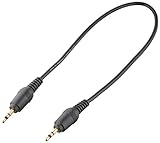
- Transfer and play games with other calculators
- Connects one calculator to another
- Made in China
- Package Dimensions : 1.0 L x 1.0 H x 1.0 W (inches)
The available evidence does not establish a universal cheapest or fastest option. An IMF policy paper says crypto remittance efficiency is less clear once fiat-to-crypto and crypto-to-fiat costs are counted, and is likely to depend on the corridor. It notes that traditional intermediaries may be more cost-efficient in the US–EU corridor, while other corridors may differ; that is a qualified analysis, not a current ranking of services. The paper also cites historical 2020 data estimating an average fee of 5.7% for a $200 remittance, with 75th- and 25th-percentile fees of 7.7% and 4%. Those figures describe the cited historical study, not today’s average or a direct comparison of crypto with traditional transfers. Read the IMF policy paper.
Quick Recap
Product prices and availability are accurate as of the date/time indicated and are subject to change. Any price and availability information displayed on Amazon at the time of purchase will apply.

