Quick wins for a faster PC:
Scan for outdated or missing drivers - takes under a minuteDriver Scan →Repair Windows errors before they cause bigger problemsFix Now →Fix the driver behind crashes, sound loss and screen glitchesFind Drivers →Choose pure vanilla extract for the easiest measuring and the widest range of baking uses. Choose whole vanilla beans when you want to scrape in visible seeds or steep the pod in a custard. Choose vanilla bean paste when you want visible flecks in a thick, scoopable product without splitting and scraping a pod.
The three forms are not automatically interchangeable in every recipe. Handling, appearance, the product name on the label, and the recipe’s intended use all matter. The substitution commonly suggested by Food Network is ½ vanilla bean = 1 teaspoon pure vanilla extract = 1 teaspoon vanilla bean paste; use it as a practical starting point rather than a legal standard or a guarantee for every formula.
As an Amazon Associate I earn from qualifying purchases.
Quick decision: which form fits your recipe?
| Choose | Best when you need | What you do | Typical uses described by Food Network |
|---|---|---|---|
| Pure vanilla extract | Fast, repeatable liquid measurement | Measure with a teaspoon or other recipe quantity and add it to the mixture | Cakes, brownies, cookies, batters and custards |
| Whole vanilla bean | Visible scraped seeds or pod-infused liquid | Cut the pod lengthwise, scrape the seeds, and optionally steep both seeds and pod | Puddings and custards where flecks are visible |
| Vanilla bean paste | Visible flecks in a convenient, scoopable form | Scoop the thick paste and measure it as directed on the recipe or label | Baked goods, pastries, ice cream, glazes and frosting |
This is a use-and-handling comparison, not a controlled taste ranking. The available guidance does not establish that one form always tastes better, that a higher-priced product is superior, or that every paste has the same formula.
What is actually different about extract, beans and paste?
Liquid extract prioritizes convenience
Extract is already a liquid, so it can be measured directly into a batter, dough, custard or other mixture. Food Network describes it as widely available, relatively affordable and broadly useful. If a recipe simply says “vanilla” and gives a teaspoon measurement, pure extract is normally the least complicated interpretation.
#1 Best Overall

- Fresh Gourmet Grade A Madagascar Vanilla Beans Harvested from the Most Recent Crop Suistainably Sourced From Malagasy Farmers at Fair Market Prices
- Length is ~ 5 - 7 Inches (Approximately 15-17 cm) with an average moisture content of 33% meaning these beans are soft, pliable, and filled with millions of tiny vanilla seeds.
- Uses: Vanilla beans can be used in a variety of recipes as flavoring or ingredients and other uses such as homemade vanilla extract, baking, cooking, and brewing
- Madagascar boubon beans have a rich and creamy flavor along with an intense heavenly aroma.
- Our triple inspection process ensures only the highest quality beans are sent out by checking the size, smell, aroma, and appearance before packaging in our commercial vacuum sealers.
“Pure vanilla extract” is also a specific product identity in the United States. Do not treat the words vanilla flavor, imitation vanilla and vanilla extract as synonyms. Read the declared product name and ingredient list instead of inferring the contents from front-label artwork.
Beans supply seeds and a pod
A whole bean is a cured, dried fruit pod. You open it, scrape the seeds with the back of a knife, and place those seeds in the recipe. The seeds create the dark flecks many cooks associate with vanilla. You can also steep the scraped seeds and the pod in a liquid, then remove the pod before finishing the recipe.
Beans require more handling than a liquid or paste. They are therefore most useful when the flecks or the infusion process is part of the dessert, rather than when a recipe only needs a small, invisible flavoring addition.
Paste combines flecks with scoopable handling
Vanilla bean paste is thicker and more gelatinous than extract. It is designed to be scooped, giving you visible flecks without the cutting and scraping required by a pod. Food Network lists baked goods, pastries, ice cream, glazes and frosting as suitable applications.
Paste is not governed by the same standardized formula as U.S. vanilla extract in the material cited here. Formulas can vary, so check the particular container’s ingredient list and any instructions in your recipe before assuming that every paste behaves identically.
Rank #2

- Fresh Gourmet Grade A Madagascar Vanilla Beans Harvested from the Most Recent Crop Suistainably Sourced From Malagasy Farmers at Fair Market Prices
- Length is ~ 5 - 7 Inches (Approximately 15-17 cm) with an average moisture content of 33% meaning these beans are soft, pliable, and filled with millions of tiny vanilla seeds.
- Uses: Vanilla beans can be used in a variety of recipes as flavoring or ingredients and other uses such as homemade vanilla extract, baking, cooking, and brewing
- Madagascar boubon beans have a rich and creamy flavor along with an intense heavenly aroma.
- Our triple inspection process ensures only the highest quality beans are sent out by checking the size, smell, aroma, and appearance before packaging in our commercial vacuum sealers.
How to read a U.S. vanilla label
Two federal sources describe the U.S. identity rules that distinguish vanilla extract from other flavoring products. The rules concern the amount of vanilla constituent, alcohol content and how the product is named; they are not a sensory score or a guarantee of a particular flavor profile.
The standard for vanilla extract
The federal definition describes vanilla extract as a solution in aqueous ethyl alcohol of the sapid and odorous principles extractable from vanilla beans. It must contain at least 35% alcohol by volume and at least one unit of vanilla constituent per gallon of finished product.
For this standard, one unit is based on 13.35 ounces of vanilla beans at 25% moisture. That unit is a regulatory measurement, not the weight of a pod you must put into a home recipe.
Optional ingredients permitted in vanilla extract include glycerin, propylene glycol, sugar (including invert sugar), dextrose and corn syrup (including dried corn syrup). Ingredients still have to be declared under applicable labeling rules, so the ingredient list is the place to check what is in the bottle.
1X, concentrated extract and vanilla flavor
| Label category | Vanilla constituent requirement | Alcohol requirement | What it means for shopping |
|---|---|---|---|
| 1X vanilla extract | One unit per gallon of finished product | At least 35% ethanol by volume | The ordinary standardized extract level described by TTB |
| Concentrated vanilla extract | Two or more units per gallon | At least 35% ethanol by volume | The specified whole-number fold designation appears in the product name |
| Vanilla flavor | One unit per gallon | Less than 35% ethanol by volume | It is a different labeled category from standardized vanilla extract |
If an extract is made wholly or partly by diluting vanilla oleoresin, concentrated vanilla extract or concentrated vanilla flavoring, the label must identify that fact. If a product does not meet the standard of identity, the Alcohol and Tobacco Tax and Trade Bureau (TTB) states: “If a product does not meet the standard of identity, it will be treated as any other flavor.” TTB’s guidance carrying that statement was updated April 1, 2024.
Rank #3
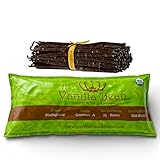
- Fresh Gourmet Madagascar Bourbon Vanilla Beans Harvested from the Most Recent Crop Suistainably Sourced From Malagasy Farmers at Fair Market Prices
- Length is ~ 5 - 6 Inches (Approximately 13-15 cm) with an average moisture content of 33% meaning these beans are soft, pliable, and filled with millions of tiny vanilla seeds.
- Uses: Vanilla beans can be used in a variety of recipes as flavoring or ingredients and other uses such as homemade vanilla extract, baking, cooking, and brewing
- Madagascar boubon beans have a rich and creamy flavor along with an intense heavenly aroma.
- Our triple inspection process ensures only the highest quality beans are sent out by checking the size, smell, aroma, and appearance before packaging in our commercial vacuum sealers.
How to use the rules at the shelf
- Read the exact name. Look for “vanilla extract” if that is what your recipe specifies. “Vanilla flavor” signals a different regulatory category.
- Check the alcohol statement and ingredients. A standardized extract must meet the 35% alcohol threshold; optional ingredients such as sugar or glycerin should appear in the declaration when used.
- Notice fold wording. A whole-number fold designation indicates concentrated extract with at least two units per gallon, not merely a marketing description detached from the regulation.
- Do not transfer extract rules to paste. Paste may contain a different blend of ingredients and is not established here as having a single standard formula.
Choosing and preparing whole vanilla beans
What to look for
Food Network’s practical buying cues are pods that are plump, soft and aromatic. Those are editorial selection cues, not a formal federal grade or a universal Grade A/Grade B purchasing rule. The cited material does not establish that a particular grade always performs better in a given dessert.
Do these 3 things before closing this tab:
1Scan for outdated or missing drivers - takes under a minute2Repair Windows errors before they cause bigger problems3Fix the driver behind crashes, sound loss and screen glitchesAt the regulatory level, vanilla beans for the U.S. standard are properly cured and dried fruit pods of Vanilla planifolia Andrews or Vanilla tahitensis Moore. The one-unit weight is 13.35 ounces at no more than 25% moisture; beans with more moisture are adjusted to an equivalent moisture-free bean-solid amount for the calculation.
How to scrape a pod
- Place the pod on a stable cutting surface.
- Cut it lengthwise to expose the interior.
- Use the back of a knife to scrape along the opened pod and collect the seeds.
- Stir the seeds into batter or another mixture when you want visible flecks distributed through the dessert.
- For an infusion, add both scraped seeds and the pod to the liquid, steep as the recipe directs, and remove the pod before serving or finishing.
The pod-and-seed method is especially helpful in puddings and custards, where the flecks can remain visible and the liquid can carry the infused vanilla. If a recipe has no liquid-steeping step and only asks for a small measured addition, extract or paste will usually be easier to execute.
Choosing and measuring vanilla bean paste
Why cooks choose paste
Paste is useful when appearance matters but the recipe does not justify handling a whole pod. Its thick texture stays on a spoon instead of pouring like extract, and the seeds provide the flecked look associated with scraped beans. Food Network specifically names ice cream, glazes and frosting, in addition to baked goods and pastries.
How to account for formula differences
There is no single standardized paste formula established by the cited sources. One product may have a different balance of vanilla material, sweeteners, thickeners or other permitted ingredients than another. Check the label, follow the recipe’s stated quantity, and do not assume that a scoop of one paste has exactly the same density or sweetness as another.
Rank #4

- WHAT THESE PODS ARE: Extract Exclusive Grade Organic Madagascar Vanilla bean Pods - 4"-5.5" lenght (short) dry but very aromatic vanilla beans.
- WHAT THESE PODS ARE NOT: These are not gourmet bean pods. Not ideal for caviar/seed scraping. Get our Grade A or Grade A/B pods if intention is to scrape the caviar.
- HOW TO USE THESE PODS: Cut them up into pieces and immerse in alcohol and wait for the flavor extraction. More vanilla to shorten the extraction duration.
- SAVE MONEY & HAVE FUN WITH YOUR HOME-MADE VANILLA EXTRACT: Our specially sorted Extract Exclusive Grade B Organic pods are bourbon conditioned longer to eliminate more water weight with rich aroma. Quality Homemade extract at lower cost.
- WE ARE PROUD OF OUR BEANS & STRIVE FOR COMPLETE AND HAPPY CUSTOMER EXPERIENCE: We go the extra mile to offer the best vanilla beans to our customers. If our beans do not meet your expectations, please email us and we will do whatever we can to meet your expectations.
The practical conversion of one teaspoon paste for one teaspoon pure extract comes from Food Network’s guide. It is useful for starting a substitution, but it is not a legal standard and may need adjustment when a particular product label or recipe gives different directions.
Substituting one form for another
Food Network’s published guide suggests this relationship:
| Original amount | Suggested substitute | Status of the guidance |
|---|---|---|
| ½ vanilla bean | 1 teaspoon pure vanilla extract | Practical cooking recommendation from Food Network |
| ½ vanilla bean | 1 teaspoon vanilla bean paste | Practical cooking recommendation from Food Network |
| 1 teaspoon pure vanilla extract | 1 teaspoon vanilla bean paste | Practical starting point; paste formulas vary |
Use the conversion when the recipe’s goal is vanilla flavor at roughly the same scale. It does not reproduce every physical feature: a scraped pod contributes visible seeds and can infuse a liquid, while extract contributes a measured liquid and paste contributes a thick mixture with flecks. If those physical properties affect the recipe, match the form to the method rather than substituting automatically.
Independent reader supportYour contribution helps us test, update, and keep practical guides available for everyone.Decision framework by dessert and technique
For cakes, brownies, cookies and batters
Use pure extract when the recipe calls for a liquid teaspoon measure and you want a quick, repeatable addition. Paste is an alternative when visible flecks are desirable and the extra thickness will not interfere with the batter’s intended consistency.
Free tools Windows power users keep installed
One-click scans. No signup required.
For puddings and custards
Whole beans are especially suitable when you want seeds to remain visible or you can steep the pod and seeds in the liquid. Extract also works as a straightforward measured addition when the recipe does not call for an infusion.
Best Value

- MADAGASCAR ORGANIC VANILLA BEANS GRADE A: About 5" long, inviting rich aroma, oily moist fresh, pods densely filled with seeds. We get our beans directly from the source - peasant Malagasy farmers at fair market price. Authentic Madagascar Vanilla Beans
- ORGANIC MADAGASCAR BOURBON VANILLA: NON-GMO, traditional harvest and conditioned for months to enhance the characteristic captivating flavor. The #1 choice of all cultivated vanilla species. The Bourbon (now French Reunion) is an island in the Pacific, just like Madagascar known for curing great aromatic vanilla. It has nothing to do with the alcohol bourbon.
- USES: Ideal for all culinary purposes, baking, brewing, desserts, ice cream, beverages, coffee, and great for extract also.
- VACUUM-SEALED: They are vacuum sealed to maintain the moisture content. Should there be air in the bag it does not mean the pods are denigrated. Note that as part of the curing process they are air ”dried” in the early morning breeze.
- BUY WITH CONFIDENCE, 100% GURANTEED QUALITY: We go the extra mile to offer the best vanilla beans to our customers. If our pods do not meet your expectations, please email us through Amazon and we will resolve all issues.
For ice cream
Paste is listed as a useful option because it combines a scoopable texture with visible flecks. A bean is appropriate when the method includes steeping the pod and seeds in the dairy or other liquid. Extract is the simplest choice when the recipe is written for a liquid flavoring.
For glazes and frosting
Paste can provide flecks in a thick preparation, while extract blends in as a liquid. Choose according to whether the finished appearance should show seeds and whether the formula has room for the added liquid.
Common mistakes and how to avoid them
- Calling every vanilla product “extract.” Check whether the label says vanilla extract, vanilla flavor or imitation vanilla; the categories are not interchangeable names under the U.S. rules.
- Assuming “double” or another fold term is informal hype. Concentrated extract with two or more units per gallon has a specified fold designation under the regulation. Read the full product name.
- Expecting paste to have one universal recipe. Paste is not established here as a single standardized formula. Use the specific product label and recipe instructions.
- Buying a bean without a plan for the pod. Decide whether you will scrape the seeds into the mixture, steep both pod and seeds, or use a liquid product that better matches the method.
- Using the substitution ratio as an exact law. The ½-bean-to-1-teaspoon relationship is a practical publisher recommendation. It is not a regulatory conversion and may not fit every brand or recipe.
- Treating appearance as proof of quality. Flecks show that seeds are present, but the cited sources do not establish a universal taste ranking, grade rule or price-to-quality relationship.
A practical shopping checklist
- Start with the recipe’s physical requirement. Is it asking for a liquid measure, visible seeds or an infusion?
- Choose the form. Select extract for liquid convenience, beans for scraped or steeped seeds, or paste for scoopable flecks.
- Verify the product identity. For U.S. extract, distinguish standardized vanilla extract from vanilla flavor and imitation vanilla.
- Read the ingredient declaration. Optional ingredients permitted in extract include glycerin, propylene glycol, sugar, dextrose and corn syrup; the label should identify ingredients used.
- Match the quantity. Follow the recipe first. If substituting, begin with Food Network’s ½ bean = 1 teaspoon extract or paste guide and account for the different texture and seed content.
- Prepare beans correctly. Split lengthwise, scrape with the back of a knife, and steep the pod with the seeds when the method calls for infusion.
What the regulations do—and do not—tell you
The federal thresholds help you identify a regulated product category. They do not tell you which form you will prefer in a particular dessert, provide a universal freshness test for a pod, or establish that one brand tastes better than another. A bottle can satisfy the extract identity requirements while a cook still chooses paste or beans for visual or handling reasons.
Likewise, the 13.35-ounce unit and the 25% moisture limit are used for the regulatory calculation of vanilla constituent. They are not instructions to weigh that amount for a home batch. Keep the regulatory figures attached to their context: one unit per gallon and at least 35% ethanol for standard extract; two or more units per gallon and at least 35% alcohol for concentrated extract.
Bottom line for a first purchase
If you want one versatile option for ordinary baking, buy pure vanilla extract and confirm that the U.S. label identifies it as extract rather than vanilla flavor. Add whole beans when a recipe benefits from scraped seeds or an infusion, especially a pudding or custard. Choose paste when you want the bean-fleck appearance in a scoopable product for ice cream, glazes, frosting or pastries. Use the published substitution as a starting point, then let the recipe’s texture, method and label instructions decide.
Quick Recap
Product prices and availability are accurate as of the date/time indicated and are subject to change. Any price and availability information displayed on Amazon at the time of purchase will apply.

