Do these 3 things before closing this tab:
1Fix the driver behind crashes, sound loss and screen glitches2Repair Windows errors before they cause bigger problems3Scan for outdated or missing drivers - takes under a minuteYou do not need a special television for Roku. Any TV with a working HDMI input can use a Roku streaming player, including an older HD set. A Roku player cannot upgrade an HD panel to 4K, however: 4K or HDR playback requires compatible content, a compatible Roku device, a compatible TV input, and an HDMI path that supports the required copy protection.
If you are buying a television rather than adding a player, choose by the exact model’s resolution, HDR formats, HDMI and HDCP support, refresh rate, and audio connections. Roku’s Select, Plus, Pro, and Pro OLED families provide different hardware, but the available evidence does not establish an independently tested picture-quality winner.
As an Amazon Associate I earn from qualifying purchases.
Start with the decision that determines everything else
There are two sensible ways to watch Roku:
- Add a Roku player to a television you already own. This is usually the least expensive route when the set has HDMI and its picture is still satisfactory.
- Buy a television with Roku built in. The TV and Roku interface arrive as one product, with fewer boxes and remotes to manage.
Neither route is automatically better. A separate player is replaceable if streaming hardware becomes outdated, while a built-in Roku TV ties the interface to the television’s useful life. Decide which situation describes you before comparing specifications.
| Question | External Roku player | Roku TV |
|---|---|---|
| What you buy | A streaming device for an existing HDMI television | A television with Roku software integrated |
| Best fit | You like your current panel or want to replace streaming hardware independently | You are replacing the whole television and want one integrated interface |
| Resolution limit | The TV and player must both support the target resolution | The screen’s own resolution sets the ceiling |
| Upgrade path | Replace the player without replacing the display | Replace the entire TV to change the panel or built-in platform |
| Installation | Requires an HDMI input, power, network access, and possibly an HDMI cable | Requires the TV’s setup and network connection |
Does a Roku player need a special TV?
No. Roku states that its streaming players work with a television that has HDMI. The Roku Streaming Stick 4K product description likewise says it works with any TV that has an HDMI port. The statement concerns the connection, not the picture quality: an HDMI-equipped 720p or 1080p set can display the Roku’s HD output, but it cannot display 4K detail.
#1 Best Overall

- Bright, clear picture: Bring entertainment to life on our 40" flat screen TV with bright 1080p Full HD—perfect for bedrooms, kitchens, and beyond. Roku Smart Picture cleans up incoming TV signals, optimizes them, and chooses the right picture mode.
- Seamless streaming: With fast Wi-Fi and apps that launch in a snap, Roku Select Series TVs get you to your entertainment quickly. You get excellent picture quality, clear sound, automatic updates, and more. It’s simple to use. Hard to outgrow.
- TV, simplified: With setup that only takes minutes, a simple-to-navigate Home Screen, and an uncluttered remote control that does all you need—Roku makes it easier to watch the TV you love.
- A world of free entertainment: Enjoy a huge selection of free live TV, news, sports, movies, shows, and much more—all just a click away.
- More streaming, less searching: With personalized picks right on your Home Screen, quick access to the sports and entertainment you watch most, and fast and easy search in one place—the days of endless scrolling are over.
Check the television for a full-size HDMI socket labeled HDMI, HDMI 1, HDMI 2, or similar. Composite red-white-yellow inputs alone are not enough for current Roku players. If your set has no HDMI, you would need a different legacy solution rather than assuming a Roku player will work through an adapter.
What a 4K Roku setup actually requires
4K is a chain, not a feature that one box can add. Roku identifies a compatible 4K television and player, appropriate 4K content, and a supported connection as prerequisites. The Roku Streaming Stick 4K (model 3820R2) is specified for output up to 2160p at 60 frames per second on a compatible 4K TV. That specification does not make an HD television a 4K display.
Resolution
Match the player’s capability to the panel. On a 1080p television, an HD-capable Roku is sufficient; a 4K-capable player will normally output a lower resolution selected by the TV and connection. On a 4K television, use a player and content service that can deliver 4K if that detail matters to you.
HDR formats
High dynamic range is separate from resolution. The Streaming Stick 4K page lists Dolby Vision, HDR10, HDR10+, and HLG support. The television must support the format being played, and the app or title must be available in that format. A 4K screen that accepts only one HDR format will not gain the benefits of formats it cannot decode.
Rank #2

- Breathtaking picture: Sharp 4K brings out rich detail on our 55" flat screen TV, while the QLED screen and HDR10 create bright, accurate colors. Roku Smart Picture cleans up incoming TV signals, optimizes them, and chooses the right picture mode.
- Seamless streaming: With fast Wi-Fi and apps that launch in a snap, Roku Select Series TVs get you to your entertainment quickly. You get excellent picture quality, clear sound, automatic updates, and more. It’s simple to use. Hard to outgrow.
- TV, simplified: With setup that only takes minutes, a simple-to-navigate Home Screen, and an uncluttered remote control that does all you need—Roku makes it easier to watch the TV you love.
- A world of free entertainment: Enjoy a huge selection of free live TV, news, sports, movies, shows, and much more—all just a click away.
- More streaming, less searching: With personalized picks right on your Home Screen, quick access to the sports and entertainment you watch most, and fast and easy search in one place—the days of endless scrolling are over.
HDMI and HDCP 2.2
Roku’s 4K guidance calls for HDCP 2.2 support across the HDMI signal chain. That includes the TV input, and it also includes an audio/video receiver, switch, soundbar, or other device placed between the Roku and TV. If one link lacks HDCP 2.2, Roku says playback may fall back to a lower resolution such as 720p or 1080p.
Do not assume every HDMI socket on a television has identical capabilities. Read the exact model’s manual or specification and use the input marked for 4K, UHD, HDCP 2.2, or an equivalent label when one is provided.
Cable requirements
An HDMI Streaming Stick plugs directly into the TV and does not need a separate HDMI cable. For other wired Roku player connections, Roku recommends a High Speed HDMI cable for 720p or 1080p televisions and a Premium High Speed HDMI cable when the TV supports 4K and/or HDR. A cable cannot add missing HDCP or HDR support to a TV, receiver, or switch.
Roku’s player choices in plain language
Roku’s own comparison material positions its devices as follows. These are manufacturer descriptions, not independent laboratory rankings.
Rank #3
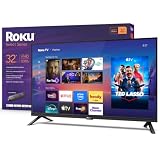
- Bright, clear picture: Bring entertainment to life on our 32" flat screen TV with bright 1080p Full HD—perfect for bedrooms, kitchens, and beyond. Roku Smart Picture cleans up incoming TV signals, optimizes them, and chooses the right picture mode.
- Seamless streaming: With fast Wi-Fi and apps that launch in a snap, Roku Select Series TVs get you to your entertainment quickly. You get excellent picture quality, clear sound, automatic updates, and more. It’s simple to use. Hard to outgrow.
- TV, simplified: With setup that only takes minutes, a simple-to-navigate Home Screen, and an uncluttered remote control that does all you need—Roku makes it easier to watch the TV you love.
- A world of free entertainment: Enjoy a huge selection of free live TV, news, sports, movies, shows, and much more—all just a click away.
- More streaming, less searching: With personalized picks right on your Home Screen, quick access to the sports and entertainment you watch most, and fast and easy search in one place—the days of endless scrolling are over.
| Device or category | Roku’s stated positioning | Choose it when |
|---|---|---|
| HD Streaming Stick | For HD televisions | Your display is 720p or 1080p and you want a compact direct-to-TV connection |
| Streaming Stick Plus | A 4K option | You have a compatible 4K television and do not require the feature set listed for the 4K model |
| Streaming Stick 4K | 4K with Dolby Vision and stronger Wi-Fi | You want the listed 4K/HDR formats, including Dolby Vision, and your TV input supports the required connection |
| Streambar SE | A streaming device combined with a soundbar | You also need a simple audio upgrade and want streaming and sound in one unit |
Product names and generations can change. Confirm the model number and current specifications before purchasing, especially when a retailer uses a shortened name.
Roku TV series: what the lineup tells you
Roku’s official product-information page lists Select Series HD, Select Series 4K, Plus Series, Pro Series, and Pro OLED. The series-level differences below are useful for narrowing a search, but they are not substitutes for the specification of the exact screen size and model year.
| Series | Resolution or panel description | Backlight or display technology listed | Refresh rate listed | What to verify on the exact model |
|---|---|---|---|---|
| Select Series HD | HD | Direct-lit LED | 60 Hz | Screen size, HDMI count, HDR support, and audio outputs |
| Select Series 4K | 4K | Direct-lit LED | 60 Hz | Which HDR formats and which HDMI input supports 4K/HDCP 2.2 |
| Plus Series | 4K | QLED | 60 Hz | Exact ports, HDR formats, and audio connections for the chosen size |
| Pro Series | 4K | Mini-LED local dimming | 120 Hz | Model-year differences, HDMI features, and the number of high-bandwidth inputs |
| Pro OLED | 4K | OLED | 120 Hz | Exact OLED model, HDR formats, eARC or optical output, and port layout |
Direct-lit LED, QLED, Mini-LED local dimming, and OLED describe different display approaches; they do not by themselves prove that one series has the best image in every room. Brightness, black-level behavior, reflections, viewing angle, processing, screen size, and price require model-specific testing that is not established here.
The Tool Desk
Outbyte PC Repair FREEClear out junk files and repair common Windows errorsFree Scan →Outbyte Driver Updater FREEScan for outdated or missing drivers - takes under a minuteDriver Scan →How to choose among Roku TVs
For a basic bedroom or secondary room
A Select Series HD television can be reasonable when the screen is smaller, viewing distance is longer, and you mainly watch HD streams. Verify that the size you want is actually an HD model and check the number and placement of HDMI ports before mounting it.
Rank #4

- Bright, clear picture: Bring entertainment to life on our 24" flat screen TV with bright 720p HD—perfect for bedrooms, kitchens, and beyond. Roku Smart Picture cleans up incoming TV signals, optimizes them, and chooses the right picture mode.
- Seamless streaming: With fast Wi-Fi and apps that launch in a snap, Roku Select Series TVs get you to your entertainment quickly. You get excellent picture quality, clear sound, automatic updates, and more. It’s simple to use. Hard to outgrow.
- TV, simplified: With setup that only takes minutes, a simple-to-navigate Home Screen, and an uncluttered remote control that does all you need—Roku makes it easier to watch the TV you love.
- A world of free entertainment: Enjoy a huge selection of free live TV, news, sports, movies, shows, and much more—all just a click away.
- More streaming, less searching: With personalized picks right on your Home Screen, quick access to the sports and entertainment you watch most, and fast and easy search in one place—the days of endless scrolling are over.
For a mainstream 4K living-room setup
Select Series 4K supplies a 4K Roku TV starting point, while Plus Series adds the QLED display description. Compare the exact model’s HDR formats, brightness claims, HDMI inputs, and audio outputs rather than choosing solely by the series name.
For gaming or fast motion
Roku lists 120 Hz for Pro and Pro OLED, versus 60 Hz for Select and Plus. A higher refresh rate can be relevant to compatible high-frame-rate sources, but inspect the exact HDMI version, supported input refresh rates, variable-refresh features if needed, and game settings. The series label alone does not document every gaming feature.
For dark-room movie viewing
Pro’s Mini-LED local dimming and Pro OLED’s OLED panel are the relevant technologies in Roku’s lineup description. Decide based on your priorities—uniformity, black-level behavior, reflections, brightness, and viewing angle—and seek current model-specific measurements before paying a premium. Roku’s series page does not independently establish a universal winner.
Free tools Windows power users keep installed
One-click scans. No signup required.
Check the exact television before you buy
Series names cover multiple sizes and years. Save the full model identifier and verify these points on the manufacturer’s page or manual:
Best Value

- Breathtaking picture: Sharp 4K brings out rich detail on our 50" flat screen TV, while the QLED screen and HDR10 create bright, accurate colors. Roku Smart Picture cleans up incoming TV signals, optimizes them, and chooses the right picture mode.
- Seamless streaming: With fast Wi-Fi and apps that launch in a snap, Roku Select Series TVs get you to your entertainment quickly. You get excellent picture quality, clear sound, automatic updates, and more. It’s simple to use. Hard to outgrow.
- TV, simplified: With setup that only takes minutes, a simple-to-navigate Home Screen, and an uncluttered remote control that does all you need—Roku makes it easier to watch the TV you love.
- A world of free entertainment: Enjoy a huge selection of free live TV, news, sports, movies, shows, and much more—all just a click away.
- More streaming, less searching: With personalized picks right on your Home Screen, quick access to the sports and entertainment you watch most, and fast and easy search in one place—the days of endless scrolling are over.
- Native resolution: confirm HD or 4K rather than relying on a retailer’s category label.
- HDR formats: record whether the set accepts Dolby Vision, HDR10, HDR10+, HLG, or another combination.
- HDMI input capability: identify which ports support 4K at the frame rate you need and HDCP 2.2.
- Port count: count the HDMI sockets you will need for a Roku player, game console, disc player, receiver, or computer.
- Audio return and output: check for HDMI ARC or eARC and, if relevant, optical audio.
- Refresh rate: distinguish a listed 60 Hz or 120 Hz panel from marketing terms that do not state an input refresh rate.
- Screen size and stand dimensions: make sure the chosen size fits your furniture and viewing distance; specifications can change within one series.
Set up an external Roku player correctly
- Choose the input. On a 4K/HDR television, select the HDMI socket identified for 4K, UHD, or HDCP 2.2. On an HD TV, any functioning HDMI input is generally suitable.
- Connect the player. Plug a Streaming Stick directly into HDMI. For a box-style player, connect HDMI from the Roku to the television, using a High Speed cable for HD or a Premium High Speed cable for 4K/HDR as Roku recommends.
- Connect power. Use the supplied power method or a suitable USB power source specified for the player. If the TV’s USB port cannot provide stable power, use the included power adapter instead.
- Turn on the TV and select the input. The Roku startup screen should appear. If it does not, check the selected input, power indicator, and cable seating before changing display settings.
- Join your network and update. Complete Roku’s on-screen network and account steps, then allow software updates to finish.
- Let Roku detect display capabilities. On a compatible 4K/HDR chain, the device should offer the television’s supported modes. Choose the highest mode that the TV, content, and connection can actually sustain.
- Test a known compatible title. A title’s available resolution and HDR badge depend on the service, subscription, and title. Do not use an HD title to judge whether the 4K connection works.
Roku says remote power and volume controls work with most televisions, not necessarily every model. If those buttons do not operate the TV, continue using the television remote or repeat the remote setup with the correct brand and connection options.
Troubleshoot a 4K or HDR problem systematically
The Roku shows 720p or 1080p
- Confirm that the TV itself is 4K and that the selected HDMI input supports 4K and HDCP 2.2.
- Remove an HDMI switch, receiver, or soundbar temporarily and connect the Roku directly to the TV. Every intermediary must support HDCP 2.2 for the protected 4K path.
- Replace an old or damaged cable with the Premium High Speed type Roku recommends for 4K/HDR wired connections.
- Check the title and service. Not every program is offered in 4K, and HDR availability can vary by title and subscription.
The picture is intermittent or the screen goes blank
- Reseat both HDMI ends and try the TV’s designated 4K input.
- Test the Roku directly on the TV to isolate an audio/video receiver or soundbar.
- Use the TV’s manual to confirm its input mode, enhanced HDMI setting, or HDCP requirement.
- If direct connection works but the original chain does not, the intermediary or its cable is the likely compatibility boundary.
HDR is missing while 4K works
- Verify that the television supports the specific HDR format in the title.
- Confirm that the Roku output mode and HDMI input are enabled for HDR.
- Check whether the content service labels the title as HDR and whether your subscription includes that tier.
When a Roku soundbar belongs in the plan
Audio should influence the purchase only if the TV’s speakers are inadequate or you want fewer devices. Roku describes Streambar SE as supporting an HDMI ARC one-cable setup or an HDMI-plus-optical arrangement. ARC sends TV audio to the soundbar through the HDMI connection; optical can be useful when the TV or soundbar lacks a suitable ARC path.
For a normal external Roku player, first verify the TV and HDMI compatibility. Add a combined streaming soundbar when it solves an audio problem, not because every Roku installation requires one.
Common buying mistakes
- Buying a 4K player for an HD television and expecting an upgrade. The panel remains HD.
- Checking only the TV’s headline resolution. HDR formats, HDCP 2.2, ports, and audio outputs determine whether the rest of the system works as intended.
- Routing 4K through an incompatible receiver or switch. One noncompliant device can force a lower-resolution fallback.
- Assuming every HDMI port is equivalent. Model specifications often assign different capabilities to different inputs.
- Assuming a cable is always required. A Streaming Stick plugs directly into HDMI; a separate cable applies to other wired arrangements.
- Treating a series name as a complete specification. Size and model year can change ports, formats, and features.
- Calling a series the tested best. The available Roku materials describe compatibility and product positioning, not independent picture-quality or value testing.
A practical decision checklist
Use this sequence before ordering:
- Decide whether you are keeping your current TV or replacing it.
- If keeping it, confirm that it has HDMI and note its maximum resolution.
- If replacing it, choose the screen size and room placement first.
- For 4K, match the TV, Roku player, content service, HDR formats, HDMI input, and HDCP 2.2 support.
- Count HDMI ports for every current and planned source.
- Choose the audio connection: TV speakers, ARC/eARC, optical, or a separate system.
- Verify the exact model number, year, and current specification rather than relying on a series-level description.
- After installation, test direct HDMI connection before adding receivers, switches, or soundbars.
What “best” can and cannot mean here
There is no defensible single best Roku television from compatibility specifications alone. A small HD Select model may be the right answer for a bedroom, while a 120 Hz Pro or Pro OLED may better fit a large-screen enthusiast’s requirements. An existing 1080p set paired with an HD Roku player can be more practical than replacing a fully functional television.
Roku’s official materials establish compatibility rules, output limits, supported formats, and series-level hardware descriptions. They do not independently measure picture quality across brands, room lighting, viewing angles, screen sizes, or price tiers. Treat the lineup as a shortlist, then verify the exact model and consult current independent measurements if image performance or value is your deciding factor.
Quick Recap
Product prices and availability are accurate as of the date/time indicated and are subject to change. Any price and availability information displayed on Amazon at the time of purchase will apply.

