Do these 3 things before closing this tab:
1Scan for outdated or missing drivers - takes under a minute2Repair Windows errors before they cause bigger problems3Fix the driver behind crashes, sound loss and screen glitchesThere is no universally “best” construction steel. Select the material by matching the exact product form and member, the project’s adopted design standard, required strength and thickness, toughness and fabrication demands, exposure, design life, and confirmed availability. A higher yield-strength number is not automatically a safe substitute for another grade.
In U.S. building work, ASTM product specifications are commonly used with the applicable AISC requirements. In Europe, designations such as S275 and S355 belong to a different specification system. The responsible project engineer must approve the final grade, connection assumptions, welding requirements, and corrosion-protection strategy under the code adopted for the project.
| # | Preview | Product | Price | |
|---|---|---|---|---|
| 1 |

|
Steel Construction Manual, 16th edition | $543.00 | Buy on Amazon |
| 2 |

|
16th ed. Steel Construction Manual | $690.00 | Buy on Amazon |
| 3 |
|
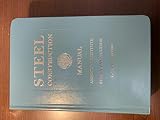
Steel Construction Manual | $358.58 | Buy on Amazon |
| 4 |

|
Steel Construction Manual, 13th Edition (Book) | $179.99 | Buy on Amazon |
| 5 |

|
Steel Construction Manual | $363.88 | Buy on Amazon |
As an Amazon Associate I earn from qualifying purchases.
A practical steel-selection framework
Use this sequence before a grade is written on drawings or a purchase order:
- Identify the member and product form. Decide whether the order is for a W-shape, another rolled shape, plate, hollow structural section (HSS), or a different product. Grade permissions and availability are tied to the product specification.
- Establish the governing design basis. Confirm the jurisdiction’s adopted building or bridge code, the referenced material standard, and whether the design uses allowable-strength design (ASD), load-and-resistance factor design (LRFD), or another method.
- Define the mechanical-property requirements. Check specified minimum yield and tensile strengths for the actual product and thickness, then assess toughness, ductility, weldability, fatigue or fracture sensitivity, and connection behavior.
- Describe the exposure and design life. Record moisture, salts, industrial contaminants, drainage, condensation, temperature, and access for inspection and recoating. Select a coating or weathering strategy accordingly.
- Check fabrication and procurement. Confirm that the mill, service center, and fabricator can supply the exact grade, dimensions, sub-grade, thickness range, and any supplementary requirements.
- Obtain engineering approval. Any substitution or alternate grade needs review of the complete design and fabrication implications, not just a comparison of nominal yield strength.
Start with the member and product form
Wide-flange and other rolled shapes
AISC materials guidance identifies ASTM A992 as a preferred specification for W-shapes. That recommendation is specific to the product category; it is not a blanket instruction to use A992 for every steel item on a project. Other rolled shapes may have different permitted specifications, section availability, or supplementary requirements.
#1 Best Overall
Plate
Plate is ordered and qualified by its own product specification, thickness, and any toughness or through-thickness requirements. A grade that is readily available in a W-shape may not be available in the plate dimensions needed for a girder, transfer element, base plate, or connection component. Thickness can also change the minimum properties that apply.
Hollow structural sections and miscellaneous products
HSS, bars, rods, fastener material, and proprietary or cold-formed products follow their own standards. Do not copy a grade from an adjacent W-shape into an HSS or plate callout without checking the applicable product specification. The purchase description should identify the product standard, grade, dimensions, and required testing or supplementary provisions.
Use the code edition adopted for the project
The American Institute of Steel Construction describes ANSI/AISC 360-22 as providing generally applicable requirements for the design and construction of structural steel buildings and other structures. The specification includes both LRFD and ASD methods and supersedes the 2016 edition on AISC’s reference page. That does not mean every jurisdiction has adopted the 2022 edition. The contract documents and locally adopted code control.
For a U.S. project, establish at least these items before comparing grades:
- the adopted AISC specification edition and supplements;
- the applicable building, bridge, or infrastructure code;
- the design method and load combinations;
- fire, seismic, fatigue, fracture-control, or other project-specific provisions; and
- the material and welding standards referenced by the contract.
European projects use a separate set of standards and designation rules. A European grade label should be read with its complete standard, product form, thickness range, and sub-grade—not treated as an ASTM grade with a similar number.
Compare more than yield strength
Yield strength is the stress at which the specified material begins significant permanent deformation. Tensile strength describes the specified minimum strength at rupture. Both matter, but neither alone proves that a steel is interchangeable with another grade.
Thickness effects
Minimum yield strength can decrease as plate or section thickness increases. A value printed in a catalog may apply only to a stated thickness range. The engineer and supplier must use the minimum property for the ordered thickness, not the most favorable value shown for a thinner product.
Free tools Windows power users keep installed
One-click scans. No signup required.
Toughness and impact resistance
Toughness is the ability to absorb energy without sudden fracture. Low temperatures, thick material, high restraint, fatigue loading, notches, and fracture-critical details can make impact requirements important. Where the design calls for a Charpy impact requirement or a particular sub-grade, that requirement belongs in the specification and material documentation.
Ductility
Ductility allows redistribution and deformation before fracture. Seismic systems, yielding connections, moment frames, and other ductility-dependent designs may require properties beyond a basic strength comparison. A nominally stronger steel can still be unsuitable if the required deformation behavior is not demonstrated for the product and detail.
Weldability and fabrication
Weldability depends on the grade, thickness, chemistry, heat input, joint restraint, and the approved welding procedure. Review preheat, interpass control, consumables, inspection, and any heat-affected-zone or lamellar-tearing concerns with the welding engineer. The steel callout and the welding specification must be compatible; changing the grade late can force procedure qualification or alter connection details.
ASTM and European grade examples
The following are context-specific examples, not a universal ranking. Values shown from AISC guidance are example minimums for the referenced product context; confirm the current specification and ordered thickness.
Crashes, No Sound, or Screen Glitches?
Random freezes, missing sound and display glitches usually trace back to one bad driver. Find and replace yours safely.Free scan · under a minutePC Slower Than It Used to Be?
A free scan shows the junk files, broken settings and background clutter dragging Windows down - then fixes them in one click.Free scan · Windows 10 & 11| Designation | Typical context | Example minimum properties or characteristics | What to verify |
|---|---|---|---|
| ASTM A992 | Preferred by AISC for W-shapes | Fy = 50 ksi; Fu = 65 ksi in the cited AISC example | W-shape applicability, section availability, thickness limits, toughness and project requirements |
| ASTM A36 | Common for several shape categories and general structural uses | Fy = 36 ksi; Fu = 58 ksi in the cited AISC example | Current product specification, shape and plate availability, and whether the lower strength meets the design |
| ASTM A572 | Multiple strength grades used according to product and shape | Grade 50 is a cited example; complete properties are product- and thickness-dependent | Exact grade, product form, thickness range, toughness, weldability, and local stock |
| ASTM A588 | Weathering steel option for certain shape categories | Not stated here; use the applicable current product specification | Atmospheric suitability, detailing, drainage, appearance, thickness, and coating or maintenance plan |
| ASTM A242 | Weathering steel option for certain shape categories | Not stated here; use the applicable current product specification | Same environmental and product-form checks as for other weathering grades |
| EN S275 | Typical European structural-member designation | Sub-grade and thickness determine additional properties | Complete EN standard, sub-grade, product form, toughness class, and adopted execution requirements |
| EN S355 | Typical European structural-member designation | Sub-grade and thickness determine additional properties | Do not equate the label directly with an ASTM grade; verify the complete specification |
The A36, A992, and A572 examples come from AISC materials guidance that is older than the current AISC design edition. Use it to understand the distinctions, then check the current specification, mill certification, and project documents.
Which steel grade is best for construction?
The best grade is the one that satisfies the design and fabrication requirements for the specific product while remaining obtainable and economical over the intended service life. In many U.S. building projects, A992 is a logical starting point for W-shapes because AISC identifies it as preferred for that category. It is not automatically the right choice for plate, HSS, bridges, unusual temperatures, or corrosion-prone details.
A lower-strength option such as A36 can be appropriate when the member demand, stability calculations, connection design, and availability support it. A higher-strength option such as an A572 grade can reduce section weight in a design that permits it, but the engineer must check thickness-dependent properties, connection limit states, welding, detailing, and procurement. The designation alone does not establish those answers.
Rank #3
What is the difference between ASTM A36 and A992?
In the AISC examples, A36 has a specified minimum yield strength of 36 ksi and tensile strength of 58 ksi, while A992 for W-shapes is shown at 50 ksi yield and 65 ksi tensile strength. The practical difference is not simply “strong versus weak.” A992’s principal context in the guidance is W-shapes, whereas A36 is described as common for several shape categories. Product availability, thickness, ductility, welding, connection behavior, and the adopted design rules still govern whether either grade is suitable.
What’s actually slowing this PC down?
Pick the symptom - the matching free tool is one click away.
Do not replace A36 with A992—or the reverse—without checking the member calculations and every affected connection. The change can alter net-section resistance, bolt or weld demands, block shear, yielding patterns, seismic behavior, and fabrication procedures.
Corrosion resistance is an exposure decision
Coated ordinary structural steel
Ordinary carbon structural steel does not protect itself in a wet or contaminated environment. Exposed work generally receives paint, galvanizing, or another coating system selected for the environment and required design life. The specification should identify surface preparation, coating materials and thicknesses, repair of damaged areas, inspection, and access for future maintenance as applicable to the project.
Weathering steel
Weathering grades such as ASTM A588 or A242 can develop an adherent patina that slows further atmospheric corrosion. That behavior is conditional. The steel needs an environment that permits repeated wetting and drying, adequate drainage, and details that prevent persistent dampness, debris traps, runoff staining, and salt concentration. Weathering steel is not a universal coating-free solution and should not be promised as maintenance-free without project-specific exposure and detailing review.
Situations that need extra caution
- Marine or deicing-salt exposure can overwhelm assumptions made for benign inland atmospheres.
- Constantly wet, buried, immersed, or poorly ventilated locations may not allow a stable protective patina.
- Crevices, horizontal ledges, leaking joints, and contact with dissimilar materials can retain moisture or concentrate contaminants.
- Architectural requirements may reject the color variation, runoff staining, or initial rust appearance of weathering steel.
- Inspection and maintenance access can be as important as the initial coating selection.
Bridge guidance often discusses weathering and coating choices in more severe environments than ordinary building interiors. Apply bridge-specific recommendations only when the project’s exposure, details, and governing standards match that context.
Availability and procurement can change the answer
A grade that works on paper may not be stocked in the required section, length, thickness, or sub-grade. AISC materials guidance specifically cautions designers to confirm availability of alternatives for some shapes. Ask the supplier and fabricator to confirm the exact specification before the design is frozen.
Put the following information in the material schedule or purchase description:
Rank #4
- AUTOR:American Institute Of Steel Construction
- PAGINAS: 2,190
- TOMOS: 1
- IDIOMA:INGLES FORMATO:9.3 x 6.4 x 2.2 inches
- EDICION: 13ª FECHA ED.: 2006
- product form and dimensions;
- governing material standard and edition;
- grade and, where applicable, sub-grade;
- ordered thickness and applicable minimum properties;
- impact, toughness, or supplementary requirements;
- coating, galvanizing, or weathering requirements;
- required material certificates and traceability; and
- approval procedure for substitutions.
Do not infer price or lead time from grade numbers. Comparative cost and inventory require current supplier quotations for the actual project.
Compare candidates with a decision matrix
When two or more grades appear possible, score each against the same questions rather than choosing by strength alone.
The Tool Desk
Outbyte Driver Updater FREEScan for outdated or missing drivers - takes under a minuteDriver Scan →Outbyte PC Repair FREEClear out junk files and repair common Windows errorsFree Scan →| Decision axis | Questions to answer | Evidence needed |
|---|---|---|
| Design strength | Does the minimum yield and tensile strength for this thickness satisfy member, stability, and connection checks? | Current material specification and design calculations |
| Toughness and fracture risk | Are temperature, thickness, restraint, fatigue, seismic demand, or fracture-critical details present? | Code provisions, impact requirements, and project-specific engineering review |
| Ductility | Must the member or connection sustain inelastic deformation or redistribution? | System behavior requirements and connection design |
| Weldability | Can the fabricator weld the grade and thickness under the approved procedure? | Grade chemistry, welding procedure, consumables, and inspection plan |
| Corrosion protection | Will the environment support a coating or weathering strategy for the design life? | Exposure description, details, coating system, drainage, and maintenance plan |
| Supply | Can the exact product, dimensions, and sub-grade be delivered when needed? | Written supplier and fabricator confirmation |
| Compliance | Is the grade permitted by the adopted jurisdictional standard and contract? | Code edition, material standard, and engineer approval |
Worked selection examples
Interior W-shape in a U.S. building
Begin with the adopted AISC edition and the W-shape material options permitted by the project. A992 may be the preferred starting specification under AISC guidance, then verify the required section, thickness, availability, strength checks, connections, fire protection, and any seismic or toughness provisions.
Plate for a heavily loaded transfer member
Define the plate thickness and connection details first. Compare the permitted plate grades at that thickness, then check yield, tensile resistance, fracture and toughness requirements, weldability, and procurement. A grade available for rolled shapes should not be assumed available or permitted for the plate.
Exposed frame where an unpainted appearance is desired
Determine whether the site has suitable wet-dry atmospheric exposure, reliable drainage, no persistent moisture traps, and acceptable runoff appearance. If those conditions are uncertain, specify an engineered coating system instead of assuming a weathering grade will protect itself.
European building using S275 or S355
Use the complete European standard and sub-grade, including its toughness classification and thickness rules. Select the grade through the project’s adopted Eurocode and execution requirements; do not convert the label to an ASTM grade by matching the number.
Common mistakes and how to correct them
Treating a grade as universal
Problem: A designer copies one grade across W-shapes, plate, HSS, and connection parts. Correction: Specify each product under its own applicable standard and confirm permitted grades and availability.
Best Value
- Steel manual, AISC, Book
- Fourteenth Edition
- 14th edition
- Steel construction manual
Choosing the highest yield number
Problem: A stronger grade is substituted without reviewing ductility, toughness, welding, or connections. Correction: Recheck the entire affected design and obtain written engineer approval.
Ignoring thickness
Problem: A catalog value for thin material is applied to a heavy plate or thick section. Correction: Use the minimum properties for the ordered thickness range.
Mapping ASTM and EN labels directly
Problem: S355 is treated as an ASTM grade with the same numerical meaning. Correction: Identify the complete standard, sub-grade, product form, and toughness requirements.
Recommended Free Tools
Assuming weathering steel needs no design effort
Problem: Patina formation is expected in a constantly wet, salty, or poorly drained location. Correction: Assess exposure and detailing; use a coating system where the environment is unsuitable.
Using an unadopted code edition
Problem: A current publication is treated as automatically controlling. Correction: Follow the edition adopted by the authority having jurisdiction and incorporated into the contract.
Specification checklist before release
- Write the member type and product form.
- Name the governing code and material standard, including edition.
- State the grade, sub-grade, thickness range, and minimum properties.
- Identify toughness, impact, ductility, fatigue, or fracture requirements.
- Coordinate the grade with the welding and fabrication procedures.
- Describe exposure, drainage, coating or weathering requirements, and maintenance assumptions.
- Obtain supplier and fabricator confirmation for dimensions, stock, lead time, and documentation.
- Have the responsible engineer approve the final material and any substitution.
Further reading
The AISC Steel Construction Manual, 16th Edition, is an optional technical reference with design tables and supporting material for professionals. AISC also publishes the ANSI/AISC 360-22 specification as a separate reference. Neither replaces the code adopted for a particular jurisdiction or project-specific engineering review.
Bottom line
Choose steel by product form, governing standard, thickness-specific properties, toughness and fabrication needs, exposure, design life, and verified supply. A992, A36, A572, weathering grades, S275, and S355 each belong to defined specification contexts. The final selection—and any substitution—belongs with the project engineer under the jurisdiction’s adopted code.
Quick wins for a faster PC:
Clear out junk files and repair common Windows errorsFree Scan →Fix the driver behind crashes, sound loss and screen glitchesFind Drivers →Quick Recap
Product prices and availability are accurate as of the date/time indicated and are subject to change. Any price and availability information displayed on Amazon at the time of purchase will apply.

