Choose treadmill speed and incline by how hard the walk feels—not by a universal setting. Start at a pace that feels stable and comfortable, use the talk test to check intensity, and add time or days before making the workout harder. There is no evidence-backed incline percentage that every beginner, intermediate walker, or highly fit person should use.
The Centers for Disease Control and Prevention (CDC) lists brisk walking at 2.5 miles per hour or faster as an example of moderate-intensity activity, but that figure is not a required treadmill target. Your walking ability, current fitness, balance, and health status determine what a given speed or incline means for you.
As an Amazon Associate I earn from qualifying purchases.
What treadmill speed should you walk at?
Use a speed that produces the intended effort while allowing controlled, comfortable steps. A number on the console is only a starting reference because the same speed can feel easy to one person and strenuous to another.
What’s actually slowing this PC down?
Pick the symptom - the matching free tool is one click away.
The CDC describes brisk walking at 2.5 miles per hour or faster as an example of moderate-intensity activity on its current intensity guidance page. It is an example measured for general guidance, not an individual prescription or a setting that every treadmill user must reach. See the CDC explanation of physical-activity intensity. The CDC page updated in 2025 uses that figure to illustrate brisk walking; it does not turn the display number into a universal test of fitness.
#1 Best Overall

- 【Folding Treadmill with Handle Bar】This foldable walking pads functions as a traditional treadmill with handle bar, a foldable walking pad, and an under bed treadmill. It offers three speed modes: walking (0.6–1.2 MPH), jogging (1.9–2.5 MPH), and running (3.1–4 MPH). The walking pad treadmill features a compact design and includes a detachable phone holder for convenience.
- 【Powerful and Quiet Motor】This portable treadmills for home and office runs smoothly and quietly, suitable for home and office use. The folding walking mat can bear a maximum weight of 264lb, with a power of 440 watts and a frequency of 50-60 Hz. Walking pad with handle bar is suitable for exercising at home or in the office.
- 【LED Display & Remote Control】This folding walking pad features a clear LED screen showing time, speed, calories, and distance in real time, helping you track your fitness progress. The foldable walking pad with bar includes a remote control for quick speed and mode adjustments. A pause button lets you temporarily stop your workout while retaining data (pause time up to 10 minutes).
- 【Compact & Portable with Shock Absorption】This folding treadmills small offers a spacious 90 x 38 cm running area and features a 5-layer non-slip belt for added comfort and joint protection. Fully assembled, walking pad treadmill folds down to just 104 x 48.7 x 10.5 cm – suitable for small spaces. Walking pad with a desk features built-in wheels, making it effortless to move and convenient to store.
- 【Multiple Modes with Foldable Treadmill for Home】 Folding treadmill includes a handle bar and a phone holder.The handrails can be easily removed by unscrewing the fixed bolts, allowing the walking pad treadmill to be used flat as an under-desk running pad treadmill. Note: The treadmill folds easily by unscrewing the bolts.
| Effort | What you should notice | How to adjust the treadmill |
|---|---|---|
| Easy | Breathing and conversation remain comfortable, and you can maintain the walk without strain. | Use this range for familiarization, recovery, or a warm-up and cool-down. |
| Moderate | You can talk but not sing. This is the CDC talk-test description of moderate intensity. | Keep the setting if the effort is sustainable; lower speed or incline if conversation becomes difficult. |
| Vigorous | You can say only a few words before pausing for breath. | Treat this as a higher-intensity effort and use it only when your current conditioning and plan support it. |
The talk test is a practical way to measure relative intensity. The CDC states: “The talk test is a simple way to measure relative intensity. In general, if you’re doing moderate-intensity activity, you can talk but not sing during the activity.” Read the full guidance at the CDC intensity page.
Why a fixed speed chart can mislead
Treadmill speed does not account for stride length, walking experience, body size, fatigue, medication, terrain familiarity, or balance. Someone returning after a long period of inactivity may reach moderate effort at a lower display speed, while a conditioned walker may need a faster pace or another change in workload. The useful question is not “Which number belongs to my fitness level?” but “What speed lets me reach the planned effort safely and consistently?”
Even your own number can change from day to day. Poor sleep, stress, a long workday, heat, or a recent illness may make a familiar pace feel harder. Conversely, a well-rested day may make it feel easier. Treat the console as a measurement of belt movement, not as a verdict about your fitness. The talk test and your ability to keep a steady stride provide better context.
How to find your starting speed
Use the following setup whenever you begin with a new treadmill or resume training after a break. The machine’s own instructions take priority for controls, emergency-stop procedures, and model-specific safety requirements.
- Clear the area and identify the safety controls. Read the treadmill manual before the first session. Confirm how to start, stop, pause, and change speed or incline.
- Begin at the easiest controllable walking pace. Choose a speed at which you can step steadily without reaching for the handrails or rushing to keep up. Let your posture and foot placement settle before judging the workout.
- Give the pace enough time to feel real. After the initial adjustment period, check breathing, conversation, and perceived control rather than reacting to the number alone.
- Classify the effort. If you can speak comfortably and could sing, the effort is probably easy. If you can talk but not sing, it fits the CDC’s general moderate-effort description. If you can manage only a few words, it is vigorous.
- Change one control only when needed. If the effort is too hard, reduce speed or incline. If it is clearly too easy for the planned work, raise one setting modestly, then reassess before changing the other.
This process produces a personal starting point without pretending that a single speed applies to everyone. Record the speed, incline, duration, and how the effort felt so the next session can start from observed information rather than guesswork.
What to record after a session
A simple note can include the date, total walking time, speed range, incline setting, and whether you could talk normally. Also note whether you felt stable, had to shorten your steps, or needed to stop early. These observations help distinguish a genuinely manageable progression from a one-day achievement that cannot be repeated. They are especially useful when a treadmill has several preset programs or when the console changes settings automatically.
What incline should you use?
Public-health guidance reviewed for this topic does not establish universal incline tiers for beginners, intermediate walkers, or advanced walkers. There is therefore no defensible chart that assigns a specific percentage to each fitness level.
Free tools Windows power users keep installed
One-click scans. No signup required.
Use the lowest incline that gives you a stable, purposeful walk, then evaluate the change through breathing, conversation, leg fatigue, and control. If you add incline, make a modest change and allow your body to respond before altering speed. This one-variable-at-a-time method is practical teaching guidance, not a named federal rule.
Why incline changes the decision
An incline can make the same belt speed feel substantially harder. Because the workload changes without changing the displayed pace, a walker who focuses only on miles per hour may accidentally move from moderate to vigorous effort. Recheck the talk test after every incline adjustment.
Incline also changes the movement itself. You may naturally shorten your stride or lean differently as the belt rises. Those changes are signals to reassess, not reasons to force the original speed. If you cannot maintain a smooth, controlled pattern, lower the incline before attempting to walk faster.
Rank #2
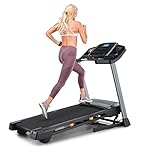
- THE T6.5S TREADMILL - See your live workout stats on the clear LCD display or use your own device to follow iFIT trainers and automatically control your treadmill, all from your phone or tablet (iFIT Train Membership Required).
- 0-10 MPH - Run, jog, or walk at speeds of up to 10 MPH. Perfect for home workouts, cardio training, and endurance building.
- 0-10% INCLINE - Boost calorie burn and target more muscle groups with a 0–10% incline range.
- KEYFLEX CUSHIONING - Reduce joint impact while walking or running. This treadmill supports smoother strides and improved comfort for daily use.
- FOLDABLE & COMPACT - The folding frame makes this treadmill ideal for small spaces. When you're done, fold it and roll it away. Press the foot bar for smooth, assisted lowering.
What treadmill controls can do
A Johnson Health Tech treadmill owner’s guide shows that treadmill programs can combine adjustable speed and incline controls. That demonstrates how the controls operate on supported machines; it does not validate one incline setting for all users. Follow your own model’s manual for the exact button names and available range: Johnson Health Tech treadmill owner’s guide.
Do these 3 things before closing this tab:
1Repair Windows errors before they cause bigger problems2Scan for outdated or missing drivers - takes under a minute3Clear out junk files and repair common Windows errorsWhen flat walking is the right choice
A low or flat setting is appropriate when you are learning the belt, rebuilding consistency, monitoring how a new medication affects exercise, or finding out how much walking you can perform without losing control. You do not need an incline to make a session worthwhile. Consistent moderate activity at a manageable setting is more useful than a steep setting that forces you to stop early.
Is walking at an incline always better?
No. Incline is one way to alter workload, not a requirement for health or fitness. A flat walk that you can repeat contributes to your weekly activity; a steep walk that causes instability may not. Choose incline when it serves your goal and remains compatible with the effort and technique you can sustain. If your goal is simply to accumulate moderate activity, there is no need to add incline solely because a program or online chart labels it as superior.
Build duration and frequency before adding intensity
If you are inactive or exercising less than you intend, federal Physical Activity Guidelines advise starting with light or moderate effort for short periods and increasing gradually. One example in the guidelines uses five-minute walks several times a day. That is an example of a gradual start, not a mandatory schedule or a target that fits every person.
For adults, the CDC’s broader weekly guidance is 150 to 300 minutes of moderate-intensity aerobic activity, plus muscle-strengthening activity on two days each week. This is a general adult-health recommendation, not a treadmill-specific prescription. Details are available on the CDC adult activity guidelines page.
Recommended Free Tools
Think of progression as a sequence: establish repeatable sessions, extend the time or add another day, and only then consider a harder pace or incline. If a change makes the walk unstable or pushes you beyond the planned effort, return to the last manageable setting rather than forcing the new one.
A practical progression framework
| Current situation | Primary objective | What to change next |
|---|---|---|
| New to treadmill walking or returning after inactivity | Learn the belt, controls, and a comfortable walking rhythm. | Keep sessions brief and easy to moderate. Add repeatable time before adding incline. |
| Walking consistently at a manageable effort | Accumulate more weekly activity without losing control. | Increase session duration or add a day gradually. Keep the talk-test effort appropriate. |
| Comfortable with regular moderate walking | Create additional challenge while preserving technique. | Change either speed or incline modestly, reassess, and keep the change only if the effort remains suitable. |
| Training for a specific event or demanding goal | Match the workout to the goal and your established conditioning. | Use planned variations only when you can recover from them and maintain stable walking; individualized coaching may be useful. |
Progression is not required to be linear. If a new setting leaves you unusually tired or makes the next session worse, repeat the previous workload or take more recovery. A slower week can still be productive because it preserves the habit and gives you information about what you can sustain.
Warm up and cool down on the treadmill
The federal guidelines describe warm-up and cool-down as slower or lower-intensity activity that allows heart rate and breathing to change gradually. Start below the main-workout effort, then move toward the planned pace. At the end, reduce speed and, if applicable, incline before stopping.
A warm-up is also a chance to verify that the belt, footwear, posture, and controls feel predictable. A cool-down gives you a lower-effort period in which to notice whether breathing and walking control are returning toward normal.
Read the full federal document here: Physical Activity Guidelines for Americans, second edition.
Rank #3

- THE T5 TREADMILL - See your live workout stats on the clear LCD display or use your own device to follow iFIT trainers and automatically adjust your treadmill, all from your phone or tablet (iFIT Train Membership Required).
- 0-10 MPH - Run, jog, or walk at speeds of up to 10 MPH. Perfect for home workouts, cardio training, and endurance building.
- 0-10% INCLINE - Increase calorie burn and target more muscle groups with a 0–10% incline range.
- KEYFLEX CUSHIONING - Diminish joint impact while walking or running. This treadmill supports smoother strides and improves comfort for daily use.
- POWERED BY IFIT - With the iFIT Train Membership*, access over 10,000 workouts. Just press start, and your machine auto-adjusts to match the trainer’s pace and terrain. SmartAdjust will scale any workout up or down based on your fitness level.
How to combine speed and incline without guessing
- Choose the effort first. Decide whether the session is intended to be easy or moderate, or whether a higher-intensity interval is appropriate for your current training.
- Set a controllable speed. Begin at the pace that lets you walk with stable steps and the planned breathing response.
- Hold the speed while testing incline. If you want more challenge, add a modest incline change while keeping speed steady. Recheck the talk test and your ability to maintain form.
- Keep or remove the incline. Retain the change only if you can sustain the planned effort. If not, return to the previous setting.
- Progress one variable later. On a future session, increase time or days first when your goal is general fitness. When you are ready for more intensity, change speed or incline—not both simultaneously—so you know what caused the new workload.
This approach makes the console easier to interpret. If breathing becomes harder after an incline change, you know which adjustment to reverse. If you alter both controls together, you cannot tell which change exceeded your current capacity.
How to use preset programs
Preset programs can be useful only when you understand what they change and can stop them easily. Some alternate speed, incline, or both. Read the manual, watch the first few transitions, and use a short trial rather than committing to a long session immediately. If the transitions are abrupt, the effort exceeds your plan, or you cannot maintain stable walking, switch to manual control or end the session. A program name such as “hills” does not establish that its settings are appropriate for your fitness level.
Common problems and the appropriate adjustment
The stated speed feels too hard
Lower the speed until your steps are controlled and your breathing matches the intended effort. The CDC’s 2.5-mph example is not a requirement; a lower speed can still be the correct moderate effort for your present ability.
PC Slower Than It Used to Be?
A free scan shows the junk files, broken settings and background clutter dragging Windows down - then fixes them in one click.Free scan · Windows 10 & 11Outdated Drivers Are Slowing You Down
One free scan finds every outdated or missing driver and matches the right update for your exact hardware.Free scan · exact hardware matchThe workout feels easy but you are new to exercise
Do not jump immediately to a steep incline. First make the session repeatable, then add time or another day within a gradual progression. A comfortable session that you can complete consistently provides a better base than an exhausting one that interrupts your routine.
Incline makes you lose walking control
Reduce the incline and reassess at the previous speed. If control does not return, slow down or end the session. A higher setting is not an achievement if it prevents stable walking.
You cannot talk at the planned moderate effort
Reduce speed or incline until you can talk but not sing, which is the CDC’s general moderate-intensity talk-test description. If you intended vigorous work, use a plan appropriate to your conditioning rather than treating loss of conversation as a universal goal.
You want to use a preset program
Check what the program changes. Some treadmill programs vary speed, incline, or both, and the owner’s guide for a compatible machine documents those controls. Start with a short exposure, monitor effort, and stop or switch to manual control if the changes are too abrupt.
Quick wins for a faster PC:
Fix the driver behind crashes, sound loss and screen glitchesFind Drivers →Clear out junk files and repair common Windows errorsFree Scan →Scan for outdated or missing drivers - takes under a minuteDriver Scan →You rely on the handrails
If you need the rails to keep your balance, reduce the workload and review the machine’s safety instructions. Reaching repeatedly for support can hide how demanding the setting is and may indicate that the speed or incline is not currently controllable. Choose a setting at which you can walk securely rather than treating rail-free walking as a test you must pass immediately.
You feel fine at the start but fade quickly
Lower the setting or shorten the session so the effort remains repeatable. Early enthusiasm can make a pace feel manageable for a few minutes without making it suitable for the entire workout. Build the duration gradually and use the talk test again as fatigue develops.
Independent reader supportYour contribution helps us test, update, and keep practical guides available for everyone.When a general treadmill guide is not enough
Do not choose a high incline or fixed pace as a self-directed prescription if you have an injury, significant balance concerns, or a medical condition that affects exercise tolerance. The public-health sources cited here do not establish individualized treadmill settings for those situations. Ask a qualified health professional how to begin and which symptoms require stopping.
Rank #4

- Multi-layer Shock Absorption Design: The fold down treadmill is made of Q235 steel and high-quality ABS material, which is both sturdy and durable. The running belt is 39'' x 15 '', holds up to 220 lbs for safe use. It is equipped with 6 built-in shock absorbers and 5- layer silicone pads. The dual buffering design effectively reduces the impact force upon landing, providing meticulous care for the knees and joints.
- Powerful Performance, Quiet Operation: The threadmills machine features a DC motor (peak power: 2.5 HP, continuous power: 0.75 HP), delivering high-performance support for intense, extended workouts. With a speed range of 0.6 to 6.2 mph, it is suitable for walking, jogging, and running, meeting a variety of fitness needs. Running smoothly, Noise ≤70 dB.
- 3.5-inch LED Display: The 3.5-inch LED controlled folding treadmill running machine clearly displays time, distance, calories burned and speed, allowing you to easily monitor your progress during exercise. The walking pad includes 12 preset automatic programs and three countdown modes: time, distance and calories, making your exercise more diverse and motivating.
- Compact Design Saves Space: The treadmill with handles can be quickly assembled, disassembled, and folded by adjusting four screws. When folded, it measures 45.08'' × 21.85'' × 5.2'' and weighs 55 lbs.It’s thin and easy to store. You can put it under beds, sofas or in small corners. Perfect for workouts in apartments, dorms and small homes. The bottom is equipped with mobile wheels, making it effortless to move and transport.
- Low-Maintenance and Durable: The electric treadmill is equipped with sturdy, non-slip handrails that help users maintain balance, significantly enhancing comfort during workouts. Additionally, the equipment is easy to maintain. After prolonged use, simply apply silicone oil to the running belt periodically as per the manual to reduce friction and noise, minimize motor wear, and extend the running machine’s overall lifespan.
During any session, stop if you feel unsafe or develop concerning symptoms. Resume only after you understand the cause and have appropriate guidance; a treadmill setting is never more important than your ability to walk safely.
The Tool Desk
Outbyte PC Repair FREERepair Windows errors before they cause bigger problemsFix Now →Outbyte Driver Updater FREEFix the driver behind crashes, sound loss and screen glitchesFind Drivers →A quick decision checklist
- Can you start and stop the treadmill and adjust its controls safely?
- Does the starting speed allow stable, comfortable walking?
- Does the talk test place the effort where you intend it to be?
- Have you changed only speed or incline, rather than both at once?
- Are you increasing time or days gradually before pursuing more intensity?
- Have you included lower-effort warm-up and cool-down periods?
- Do injury, balance, or health concerns mean you should obtain individualized advice?
- Can you repeat the session without unusual fatigue or loss of control?
- Have you checked your model’s manual before using a preset or automatic adjustment?
The best treadmill setting is the one that matches your present effort, supports controlled walking, and can be progressed gradually. Use the display as information, the talk test as a practical check, and your own repeatable response as the final guide.
Frequently Asked Questions
What is a good treadmill speed for beginners?
Start at the easiest speed that allows steady, comfortable steps and lets you learn the controls. Use the talk test rather than a preset number: moderate effort generally means you can talk but not sing. The CDC’s 2.5-mph brisk-walking example is not a required beginner setting.
What incline should I use on a treadmill?
There is no evidence-backed incline percentage for every beginner, intermediate, or advanced walker. Begin at a comfortable, controllable setting, change incline modestly if desired, and reassess breathing, conversation, leg fatigue, and walking stability.
Is walking at an incline better than walking flat?
Not automatically. Incline is one way to increase workload, but flat walking can provide valuable moderate activity and may be the safer choice while you learn the belt, rebuild consistency, or manage balance concerns.
How do I know whether my treadmill workout is moderate?
Use the CDC talk test. During moderate-intensity activity, you can talk but not sing. If you can say only a few words before pausing for breath, the effort is more vigorous; if conversation and singing are easy, it is probably easy.
Should I increase speed or incline first?
For general fitness, build repeatable time and frequency before adding intensity. When you are ready to make the workout harder, change either speed or incline—not both at once—so you can identify how the workload changed.
How long should a beginner walk on a treadmill?
The federal guidelines use five-minute walks several times a day as one example for inactive adults beginning gradually. It is not a mandatory schedule. Start with a brief, comfortable period you can repeat and add time or days progressively.
What should I do if an incline makes me unstable?
Lower the incline and reassess at the previous speed. If control does not return, slow down or stop. A setting is too demanding when it prevents stable walking, regardless of the number displayed.
Do I need a warm-up and cool-down?
The federal guidelines describe both as slower or lower-intensity activity that lets heart rate and breathing change gradually. Begin below the main effort and reduce speed and, when applicable, incline before stopping.
When should I ask a professional about treadmill settings?
Seek individualized guidance before choosing a high incline or fixed pace if you have an injury, significant balance concerns, or a medical condition affecting exercise tolerance. General public-health guidance cannot determine your personal setting.
The Bottom Line
Choose treadmill speed and incline by relative effort and control. Start easy, use the talk test, change one setting at a time, build duration and frequency gradually, and seek individualized advice when injury, balance, or medical concerns affect exercise.
Quick Recap
Product prices and availability are accurate as of the date/time indicated and are subject to change. Any price and availability information displayed on Amazon at the time of purchase will apply.
Free tools Windows power users keep installed
One-click scans. No signup required.

