Recommended Free Tools
Choose the projector that fits your room and service plan, not simply the light-source label. Lamp models can cost less initially but require periodic replacement. LED and laser models generally avoid routine lamp changes, yet their 20,000–30,000-hour ratings are estimates for the light source—not guarantees that the entire projector will last that long or retain its original brightness. Before buying, compare usable brightness in your room, placement, image requirements, ventilation and filter maintenance, warranty, authorized service, replacement-part policy, and total ownership cost.
Start with the decision that matters
For most new home-theater installations, an LED or laser projector is the simpler ownership choice when its price and image performance suit the room. You avoid keeping a spare lamp and planning a lamp change every few thousand hours. A lamp projector can still be sensible when its lower purchase price, readily available replacement lamps, or a specific model’s picture and placement features outweigh that maintenance.
As an Amazon Associate I earn from qualifying purchases.
Do not treat “laser,” “LED,” or “lamp” as a picture-quality ranking. No independent, current comparison of home-theater models is established by the manufacturer information described here. A well-designed lamp projector can outperform a poorly matched solid-state projector in a particular room, while a bright projector can look disappointing if the screen, throw distance, or ambient light is wrong.
The Tool Desk
Outbyte Driver Updater FREEScan for outdated or missing drivers - takes under a minuteDriver Scan →Outbyte PC Repair FREERepair Windows errors before they cause bigger problemsFix Now →- Choose lamp first when acquisition cost is the overriding concern, you are comfortable budgeting for replacement lamps, and the model has dependable parts and service.
- Choose LED first when you want long rated source life, low routine maintenance, modest heat and noise, and the model provides enough measured brightness for your screen and room.
- Choose laser first when you want long rated source life, instant on/off convenience, and stable operation over many viewing hours, provided the projector’s brightness, color controls, installation flexibility, warranty, and service network fit your needs.
What the three light-source types actually mean
Lamp projectors
A conventional projector lamp is a replaceable consumable. It gradually dims, and its color balance can change as it ages. Sony’s projector white paper describes the general behavior this way: “As a UHP lamp ages, light levels tend to decline and color balance tends to shift.” The exact life depends on the lamp, projector, brightness mode, ventilation, dust, and operating pattern.
#1 Best Overall

- A Roku account and internet connection are required for activation (Creating an account is free). Note: Power Supply: 100-240V AC, 50/60Hz.
- America's #1 TV Streaming Platform, All Top Apps: With Roku as your entertainment guide, exploring popular apps like NetfIix, Prime Video, Hulu, YouTube, Roku Channel—plus free movies, shows, and live TV—is as easy as it is fun. No dongles or extra remotes. Enjoy 500+ TV channels with live news and weather, sports coverage, and more—totally free.
- A Simple and Fast Home Screen: Enjoy a simple projector interface with intuitive navigation, quick search, and personalized recommendations. No-nonsense remote keep it effortless, while the Roku mobile app lets you control with your phone, type easily, or use voice commands.
- 1080P Full HD Resolution: Enjoy your favorite movies and TV shows in stunning high-definition picture quality for enhanced clarity and detail. This projector is perfect for creating a massive 60 to 150-inch screen for your home theater and outdoor movie nights.
- Auto Focus & Keystone Zero-Fuss: Advanced auto focus and auto keystone correction instantly adjust for a sharp, aligned screen-just place, power on, and enjoy a big screen without manual setup.
An Epson Home Cinema 700 user guide gives a concrete, model-specific estimate of about 3,000 hours with Brightness Control set to High and 4,000 hours with it set to Low. The same manual identifies replacement part V13H010L41 and notes that the lamp contains mercury. Those figures and that part number apply to that model and must not be generalized. Check your projector’s manual for the correct lamp, replacement procedure, and disposal rules; never assume another Epson or another brand uses the same part.
LED projectors
LED projectors use solid-state emitters rather than a user-replaceable projection lamp. BenQ says the applicable LED models listed in its FAQ use sources rated around 20,000–30,000 hours. The rating is an estimate for the light source under stated test conditions. It does not promise that the optical engine, cooling system, electronics, or fan will operate for the same period, nor that brightness will remain unchanged.
BenQ also advises that replacement for those LED models is handled by a service center. In practical terms, a failed or severely degraded LED engine is normally a service event rather than a task you perform by opening the projector. Confirm the policy for the exact model and region before purchase.
What’s actually slowing this PC down?
Pick the symptom - the matching free tool is one click away.
Laser projectors
Laser projectors use laser diodes, often with phosphor or other optical components, to generate the projected light. BenQ lists approximately 20,000–30,000 hours for the GV50 laser source and says laser replacement is not user-serviceable. The number is a manufacturer estimate for that model, not a universal laser life or a guarantee of total projector life.
Epson explains that source life varies with operating mode and environmental conditions and that brightness declines over time. Its example estimates the source reaching roughly half its initial brightness at about 20,000 hours when operated at 100% brightness, 24,000 hours at 80%, and 30,000 hours at 70%. These are approximate, model-specific figures. A lower brightness setting can extend the rated period, but it also produces a dimmer image at the screen.
Rank #2
![Outdoor-Projector-4K [VIDAA Live TV/40W Dolby/920 ISO] with WiFi6 and Bluetooth Compatible with Netflix, Smart Projector, AI Voice Control & Auto Focus, HDR10, Movie Proyector for Ceiling Home Theater](https://m.media-amazon.com/images/I/51R8227Xr5L._SL160_.jpg)
- 【2026 No.1 Fast VIDAA OS | Cloud Storage & Data Security】The upgraded X9 PRO 4k projector builds on the classic X9 proyector with superior speakers, higher brightness, and the exclusive VIDAA OS—designed to feel like a smart TV but perform even smoother. Unlike standard Android or Google TV projectors, VIDAA stays fast and stable over months of heavy use, with zero lag. It includes cloud storage to keep local memory free, and no data tracking, no targeted ads, and no personal collection. Kids mode with enhanced privacy protection. Whether at home, camping, or watching live sports, you get a secure, distraction‑free cinema experience every time
- 【Massive Apps | AI Recommendations | 1,000+ Live Channels】This smart projector delivers buttery‑smooth playback with popular streaming pre‑loaded—compatible with Netflix, YouTube, and Prime Video are ready with one tap. It also intelligently recommends region‑specific apps like Disney+, Hulu, Peacock, HBO MAX and TV Channels. With over 1,000 built‑in live TV channels, including Sky News (5507) and FIFA+ (5340), it becomes the complete entertainment hub for the whole family. No more switching devices—everything is personalized and easy to access on this feature‑packed outdoor projector
- 【True 920 ISO ANSI Brightness | 4K Decoding | HDR10】Delivering a real 920 ANSI lumens (ISO‑standard), the 4K projector outperforms many that inflate their "3500 brightness" claims. With native 1080P resolution, 4K video decoding, a 130% NTSC wide color gamut, and HDR10 support, images are vivid, rich, and deep. Even in moderately lit rooms, picture quality stays impressive—sports motion is crisp, and movie scenes transition naturally from light to shadow. Whether you're using this outdoor projector for blockbuster films or live matches, the visual experience is consistently stunning. Note: 4K‑labeled content plays at native 1080P, commonly known as "4K decoding," ensuring exceptional clarity
- 【2*20W Speakers | Dolby Audio | Bluetooth 5.4 | HDMI ARC & CEC】Equipped with 2×20W dual‑cavity speakers and Dolby Audio certification, this bluetooth projector brings cinematic sound to any space—from clear dialogue to powerful bass. Upgraded two‑way Bluetooth 5.4 gives you flexibility: connect an external soundbar wirelessly for a full theater setup, or switch to standalone speaker mode instantly. HDMI ARC and CEC support means a single cable links to your soundbar or external speakers, streamlining your gear while elevating every listening experience. It’s TV and audio combined, simplified
- 【Official AirPlay 2 & HomeKit | Smartphone Voice Control】Enjoy versatile casting with native AirPlay and screen mirroring—no third‑party apps required, unlike typical Google TV systems. It's simpler, faster, and more reliable on this AirPlay-compatible outdoor movie projector. Seamlessly integrated with Apple HomeKit, you can control power and menu navigation remotely from your iPhone, iPad, or Mac. The VIDAA app also turns your smartphone into a full remote, and both the remote and app support voice commands. Perfect for bedroom movies, outdoor camping, gym sessions, or hosting friends—this smart projector fits every occasion effortlessly
Sony’s white paper says its laser system’s colorimetry remains stable while brightness decreases somewhat over the years. That is a technology claim from Sony’s own paper, not an independent cross-brand test. Treat it as a useful description of one manufacturer’s design objective rather than proof that every laser projector maintains color or brightness in the same way.
Compare ownership, not just rated hours
Rated hours are only one line in a buying decision. Use this table as a checklist for the exact model you are considering.
| Factor | Lamp | LED | Laser |
|---|---|---|---|
| Typical maintenance issue | Lamp output declines and the lamp eventually needs replacement. | Usually no routine lamp change; dust, filters, fans, and electronics still require care. | Usually no routine lamp change; cooling, optical components, and electronics still require care. |
| Rated source life in the cited material | About 3,000 hours in High and 4,000 hours in Low for the Epson Home Cinema 700 example. | About 20,000–30,000 hours for applicable BenQ models. | About 20,000–30,000 hours for the BenQ GV50 example; Epson’s example reaches half brightness at approximately 20,000–30,000 hours depending on brightness setting. |
| User replacement | Often designed for owner replacement, but follow the model manual and safety instructions. | BenQ says replacement for its listed models is handled by a service center. | BenQ says laser replacement for the GV50 is not user-serviceable. |
| Brightness over time | Declines as the lamp ages; color balance can shift. | Declines with source and optical aging; the manufacturer rating is not a constant-brightness promise. | Brightness decreases over time even when color performance is intended to remain more consistent. |
| What the rating does not establish | It does not predict the life of the whole projector or guarantee a particular replacement cost. | It does not guarantee the projector or its electronics will last 20,000–30,000 hours. | It does not guarantee the projector or its electronics will last 20,000–30,000 hours. |
| Key purchase check | Replacement-lamp availability, authentic part number, price, warranty, and disposal procedure. | Authorized service, source-replacement policy, warranty length, and real room brightness. | Authorized service, source-replacement policy, warranty length, and real room brightness. |
Translate hours into your own viewing pattern
A source-life number becomes useful only when you relate it to your schedule. Divide the rated hours by your average viewing hours per week, then divide by 52 to estimate years. This is an arithmetic illustration, not a service-life prediction.
estimated years = rated hours ÷ (hours watched per week × 52)At 20 hours per week, 3,000 hours is about 2.9 years and 4,000 hours about 3.8 years. At the same schedule, 20,000 hours is about 19.2 years and 30,000 hours about 28.8 years. Real ownership can end sooner because of fan failure, dust, HDMI or power-board faults, obsolete software, declining contrast, or a room renovation. Conversely, a lightly used projector may never reach its source rating before you replace it for another reason.
For a lamp model, add the cost and inconvenience of each replacement to the purchase price. Find out whether the quoted lamp life applies to High, Medium, or Eco mode; the same projector can have different figures for each. For LED and laser models, ask what the manufacturer means by “source life,” whether it is a half-brightness threshold, and whether an engine replacement is economically realistic after the warranty expires.
Rank #3

- 【The Latest WIFI 6 Technology And Bluetooth 5.3】This projector with Wi-Fi and Bluetooth is equipped with the latest Wi-Fi 6 technology, compatible with Wi-Fi 6, 5G and 2.4G, offering faster connection speed and stronger stability, eliminating buffering and disconnection issues, and ensuring smoother online content playback. Additionally, it is fitted with the latest Bluetooth 5.3 chip, allowing for easy connection to Bluetooth speakers, headphones or other Bluetooth audio devices, providing a more efficient and stable transmission channel, and enabling users to enjoy higher audio quality with ease
- 【Built-in Streaming Media APP】Without any additional equipment,The YGSKK Wi-Fi projector supports streaming apps such as Prime Video, YouTube, and Hulu.The built-in applications allow you to easily enjoy a wide variety of movies, popular TV series and millions of other contents. Moreover, it also has an app store where you can download more applications. Whether it's a shared movie night or personal entertainment, this smart projector is very suitable
- 【Native 1080P High Definition,Compatible 4K】The native 1080P resolution presents you with clear and sharp full HD picture quality, with a brightness of up to 300 ANSI lumens, offering you images that are 50% brighter than those of similar projectors on the market. Whether you are watching movies, TV series, playing games or browsing photos, it will bring you astonishing clarity. Moreover, this movie projector is compatible with 4K, allowing you to enjoy the perfect experience of 4K picture quality. Note: Please ensure to connect 4K devices (such as TV sticks or USB drives) via HDMI to play 4K videos
- 【Wirelessly Connect to a Smart Phone, 50-200‘’ Large Screens】This is an amazing projector for iPhone. It is equipped with the "J-Share" setting, which enables wireless connection with smartphones. Both the phone and the projector need to be in the same network environment. Android phones need to download a program to connect, while iPhones do not need to download any applications (connect through the iPhone's screen mirroring function). In addition, this portable projector can project a large screen of 50 to 200 inches. You can adjust the screen size according to your personal preference to better enjoy the perfect experience of a large screen
- 【Strong Compatibility And Built-in Speakers】YGSKK projector for bedroom is equipped with three interfaces: HDMI, USB and audio (with an HDMI cable included). It is compatible with TV sticks, TV boxes, DVD players, laptops, USB flash drives, Switch/PS5, PC and other devices. The projector is built with high-fidelity stereo speakers, providing excellent and clear audio quality for an outstanding audio experience. It is also an excellent mini projector suitable for both indoor and outdoor activities
Match usable brightness to the room
Brightness on a specification sheet is not the same as a convincing image from your seat. The screen’s size and gain, throw distance, zoom position, image mode, wall color, and ambient light all change the result. A living room with windows and light-colored walls demands more usable light than a dark, dedicated theater. A large screen spreads the same optical output over more area and therefore appears dimmer.
Do these 3 things before closing this tab:
1Repair Windows errors before they cause bigger problems2Fix the driver behind crashes, sound loss and screen glitches3Clear out junk files and repair common Windows errorsInspect the room before choosing a model
- Measure the distance from the proposed lens position to the screen and the screen’s width and height.
- Record when daylight or room lighting reaches the screen, not merely when it reaches the seats.
- Decide whether you can darken windows, paint the room, or use controlled lighting during films.
- Check ceiling height, lens shift, keystone limits, cable routes, ventilation clearance, and access for cleaning or service.
- Confirm that the projector’s stated brightness is measured in the same standard and mode you intend to use; do not compare an unknown “bright” mode with a calibrated cinema mode as if they were equivalent.
The manufacturer information described above does not establish a universal brightness winner among lamp, LED, and laser. BenQ’s 2024 church-projector guide describes laser as the main source for church projectors above 4,000 lumens, but that is a vendor statement in a church context, not a rule for home theaters. For a home installation, select the model whose measured, usable output and image controls suit your screen and lighting.
Picture and placement questions to answer
Light-source type cannot compensate for an unsuitable optical design. Before comparing prices, verify:
- Resolution and content: Match native resolution to your sources and viewing distance. Confirm support for the refresh rates and HDR formats you actually use.
- Lens and throw: Calculate whether the zoom range, throw ratio, lens shift, and mounting position place the image inside the screen without excessive digital keystone correction.
- Contrast and black level: Ask for independent measurements when available, and read how the test was performed. Manufacturer contrast figures alone are not a reliable cross-brand ranking.
- Color controls: Look for calibrated picture modes, grayscale controls, and a way to disable aggressive dynamic processing.
- Motion and gaming: Check input lag at the resolution and refresh rate you will use, rather than relying on a generic gaming label.
- Noise and heat: Read the acoustic rating for the intended mode and leave the specified ventilation space. A quiet Eco mode may be less bright.
Maintenance and service: the questions that prevent surprises
For a lamp projector
- Locate the exact user manual before buying and record the lamp part number.
- Confirm whether the manufacturer sells lamps directly or lists authorized suppliers.
- Check the manual’s replacement-hour guidance; some models recommend replacement after a warning, while others specify a maximum operating period.
- Plan for cooling: do not unplug immediately after shutdown if the manual requires a cooldown cycle.
- Follow the manual’s mercury-handling and local disposal instructions. Do not put a spent lamp in ordinary household waste where prohibited.
For an LED or laser projector
- Ask whether the light engine is replaceable, and whether the work must be performed by an authorized service center.
- Request the estimated out-of-warranty engine and labor cost in your country. A long source rating has little value if a replacement is unavailable or costs nearly as much as a new projector.
- Read filter-cleaning and ventilation requirements. Solid-state light sources do not make the projector dust-proof.
- Check warranty exclusions for blocked vents, smoke, high humidity, extreme temperatures, or unauthorized opening.
Epson’s general buying guidance specifically calls out lamp maintenance, filters, and service support as comparison factors. Include all three in your notes instead of treating “no lamp replacement” as “no maintenance.”
Build a total-cost estimate
Use a simple worksheet for each candidate:
| Cost item | What to record |
|---|---|
| Projector | Street price in your region, taxes, delivery, and any required accessories. |
| Light source | For lamps, authentic replacement price and expected hours by mode. For LED or laser, quoted service or engine-replacement policy. |
| Installation | Mount, longer cables, ceiling reinforcement, electrician labor, or a stand. |
| Room and screen | Screen size and gain, blackout curtains, wall treatment, or lighting control needed to achieve the intended image. |
| Maintenance | Filters, cleaning, shipping to a service center, and possible downtime. |
| Warranty and support | Coverage period, authorized repair locations, turnaround expectations, and whether parts remain available after warranty. |
For a lamp projector, an illustrative ownership calculation is:
Quick wins for a faster PC:
Clear out junk files and repair common Windows errorsFree Scan →Fix the driver behind crashes, sound loss and screen glitchesFind Drivers →Rank #4
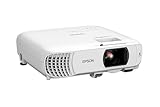
- HOME THEATER PROJECTOR — Bring your entertainment experience to the next level; With detailed 1080p images and fast data processing, the Epson Home Cinema projector is optimized for fast-action sports and more; Also an exciting casual gaming projector
- ULTRA BRIGHT IMAGES — 4,000 Lumens of Color Brightness (IDMS rated) and 4,000 Lumens of White Brightness (ISO Rated)¹; Wall projector for tv and movies delivers clear and crisp images in a variety of lighting conditions
- VIVID AND PRECISE COLOR — Advanced 3LCD technology displays 100% of RGB color signal for every frame, providing precision color accuracy while maintaining vivid color brightness, without distracting "rainbowing" or "color brightness" issues
- VERSATILE CONNECTIVITY — Streaming projector features two HDMI ports and a USB port that functions as a power source for streaming devices²; Connect laptops and devices, including Fire TV, Apple TV, Roku, and Chromecast; Seamless video conferencing
- QUICK AND SIMPLE SETUP — The built-in speaker means you can start using this projector immediately; Easy setup for video and audio right out of the box; Portable projector with speaker can also be easily repositioned
total cost = projector price + (hours planned ÷ lamp life in your chosen mode × lamp price) + maintenance and installationRound the replacement count down only when you are estimating actual purchases; keep a contingency for a lamp that fails early or a projector that is used in a brighter mode than planned. For solid-state models, substitute the manufacturer’s service estimate rather than assuming a free replacement at the end of the rated hours.
A step-by-step buying process
- Define the use. Write down weekly movie hours, sports or daytime viewing, gaming, screen size, seating distance, and whether the room can be darkened.
- Set the installation envelope. Measure throw distance, lens height, ceiling or shelf location, power and cable paths, ventilation clearance, and service access.
- Choose a minimum usable-brightness target. Compare measured reviews or manufacturer data in the operating mode you will actually use, while accounting for screen size and ambient light.
- Shortlist by optical fit. Eliminate models whose throw ratio, lens shift, resolution, refresh support, or input lag does not match your room and sources.
- Pick the light-source strategy. Select lamp if lower entry cost and replaceability win; LED if a qualifying model meets your brightness needs with straightforward service; laser if its long-life convenience and installation features justify the price.
- Verify service before checkout. Contact the manufacturer or authorized service provider with the exact model and your country. Ask about source replacement, parts availability, labor, warranty, and expected turnaround.
- Read the manual. Confirm brightness-mode hours, filter intervals, shutdown procedure, environmental limits, lamp disposal, and mounting requirements.
- Budget the complete system. Add screen, mount, cables, blackout treatment, maintenance, and likely replacement or service costs.
- Keep records. Save the receipt, serial number, manual, source part number, and installation date. These details speed warranty and service claims.
Which technology fits common home-theater situations?
Dedicated dark room, moderate weekly use
All three technologies can work. A lamp model may offer the lowest entry price, especially when you already have a reliable replacement-lamp channel. LED or laser becomes more attractive when you value instant operation, frequent short sessions, or avoiding a future lamp purchase. Compare black level, color controls, fan noise, and lens placement rather than choosing from the source label.
Living room with daytime viewing
Prioritize usable brightness, screen size, and light control first. A long-life LED projector that is too dim for a large screen will not solve the room problem. A laser model can be a convenient fit if its measured output and image mode work in the available light, but no manufacturer specification cited above establishes that laser is universally brighter than lamp or LED.
Frequent family use and many short sessions
Solid-state sources avoid lamp warm-up and repeated lamp replacement planning, which may simplify daily use. Verify automatic-shutdown behavior, cooling, child-safe placement, and the manufacturer’s service policy. Do not assume that high usage makes a 20,000–30,000-hour rating a guarantee of two decades of trouble-free operation.
Lowest possible initial cost
A lamp projector can be the rational choice if you include future lamp purchases in the budget and can obtain authentic parts. Compare the complete price over your expected ownership period; a cheap projector with scarce lamps or expensive service can lose its advantage.
Best Value

- [ Built-in Google TV | 10,000+ Apps | Voice Control ] - VISSPL 4K projector brings your favorite entertainment together—no TV stick, no extra devices, and no complicated setup. This Google TV projector gives you instant access to YouTube, Prime Video, Disney+, Hulu, and 10,000+ apps from one easy-to-use home screen. Enjoy 800+ free live TV channels, personalized recommendations, and seamless access to movies, shows, sports. Simply press the voice button on the remote and ask Google Assistant to search movies, launch apps, adjust volume, or check the weather. From home theater nights to outdoor entertainment, this smart projector makes every viewing experience faster, smarter, and easier.
- [ 4K Decoding & 3500 ANSI: Stunning Visual ] - Experience a brighter, more immersive big-screen experience with this smart 4K projector. Featuring 3500 ANSI brightness, native 1080P resolution, 4K decoding support, HDR10 enhancement, and 99.8% wide color gamut, this projector 4K delivers vibrant colors, sharp details, and enhanced contrast for every scene. Whether you are watching blockbuster movies, streaming your favorite shows, gaming, or enjoying outdoor movie nights, every frame feels more vivid, detailed, and cinematic. Create a premium home theater experience with a powerful movie projector designed for immersive entertainment.
- [ Google Voice Assistant: Just Speak & Watch] – Simply press the voice button and speak naturally. Just say, "Play Stranger Things on Netflix," "Open YouTube," or "What's the weather like today?" and Google Voice Assistant does the rest. Find movies across your favorite apps, launch content, adjust the volume, and control your entertainment without typing or complicated navigation. Faster, smarter, and completely hands-free—whether you're relaxing at home or enjoying movie night outdoors.
- [ 25dB Whisper-Quiet – Sleep Friendly ] – With an advanced cooling system operating at just 25dB, enjoy immersive entertainment with minimal noise—perfect for late-night movies, bedrooms, and shared spaces. Enjoy immersive movies with crystal-clear dialogue and fewer distractions, whether you're relaxing in bed, watching late at night, or sharing a room with someone who's already asleep.
- [ WiFi 6 & Bluetooth 5.2 – Effortless Connectivity ] - Stream, mirror, and connect with ease. This projector with WiFi and Bluetooth features next-generation WiFi 6 for faster, more stable streaming, while wireless casting lets you share movies, photos, and presentations from your phone, tablet, or laptop. Bluetooth 5.2 allows easy connection to external speakers, making it a versatile WIFI projector for enhanced audio experiences. HDMI ARC/CEC and USB ports support gaming consoles, streaming devices, USB drives, and more, providing flexible compatibility with multiple devices.
Common mistakes and how to avoid them
- Using a source-life number as a projector-life promise: Treat the rating as an estimate for the light source under specified conditions.
- Comparing maximum-lumen modes: A brightest mode may alter color, fan noise, and source-life assumptions. Compare the mode you will watch.
- Ignoring the screen: Screen size and gain can change perceived brightness more than a small difference in the specification sheet.
- Assuming solid-state means maintenance-free: Filters, fans, dust, heat, and electronics still matter.
- Opening a non-serviceable engine: BenQ identifies LED replacement on listed models and laser replacement on the GV50 as service-center work. Follow the exact model’s instructions and warranty terms.
- Buying the wrong lamp: Part numbers are model-specific. The Epson V13H010L41 example belongs to the Home Cinema 700 manual; verify your own model before ordering.
- Relying on a vendor claim as an independent test: Sony’s statements about color stability and lamp color shift, and BenQ’s source-life figures, are manufacturer claims. Use independent measurements when you need a cross-brand picture comparison.
- Forgetting the room’s heat and dust: Blocked vents and unsuitable temperature or humidity can shorten component life regardless of source type.
Questions to ask before you buy
- What is the rated source life in the exact brightness mode I will use?
- What brightness or output threshold defines that rating?
- How does brightness change over time, and is the figure approximate?
- Can the source be replaced, by whom, and at what estimated parts-and-labor cost in my country?
- Which filters need cleaning or replacement, and how often?
- What warranty covers the light source, optical engine, fans, and electronics?
- Where is the nearest authorized service center, and what is the typical turnaround?
- What throw range, lens shift, screen size, resolution, refresh rate, and input-lag measurements apply to my installation?
- Are the quoted brightness and contrast figures measured in a mode that preserves acceptable color?
- What environmental limits and ventilation clearances does the manual specify?
Final buying checklist
- The image is bright enough on your actual screen with your normal lights on or off.
- The lens can fill the screen from the planned mounting or shelf position without excessive digital correction.
- The projector supports your sources, refresh rates, HDR needs, and gaming requirements.
- You have written down the source-life conditions, not just the headline hours.
- A lamp model has an authentic replacement-part path and disposal plan.
- An LED or laser model has a documented service and engine-replacement policy.
- Filter, ventilation, noise, warranty, and authorized-service requirements fit the room and your tolerance for maintenance.
- Your budget includes the screen, mount, cables, room control, maintenance, and eventual service.
The practical conclusion is straightforward: select lamp when replaceable, affordable consumables make sense; select LED when a solid-state model meets your brightness and service needs; select laser when long-life convenience and installation behavior justify its cost. In every case, the room, optical fit, support policy, and total ownership cost determine whether the projector is a good home-theater choice.
Frequently Asked Questions
Does a 20,000-hour LED or laser rating mean the projector will last 20,000 hours?
No. It is an estimated light-source life for specified conditions. Fans, electronics, optical components, dust, heat, software, and brightness decline can end useful ownership earlier.
Can I replace an LED or laser light source myself?
Do not assume so. BenQ says replacement for its listed LED models and laser replacement for the GV50 are handled by a service center. Check the exact model’s manual and warranty.
Free tools Windows power users keep installed
One-click scans. No signup required.
How often will a lamp projector need a new lamp?
It depends on the model and brightness mode. Epson’s Home Cinema 700 manual estimates about 3,000 hours in High and 4,000 hours in Low; other models differ, so use your own manual.
Is laser always better than LED or lamp for picture quality?
No universal ranking is established here. Compare the projector’s measured brightness, contrast, color controls, lens, placement, noise, and room performance, then factor in maintenance and service.
Quick Recap
Product prices and availability are accurate as of the date/time indicated and are subject to change. Any price and availability information displayed on Amazon at the time of purchase will apply.

