Free tools Windows power users keep installed
One-click scans. No signup required.
The right Fitbit depends on which compromise you will notice every day. Choose Inspire 3 if low price, a slim band and infrequent charging matter most. Choose Charge 6 if you want a band with built-in GPS and additional heart-related sensors. Choose Versa 4 for a smartwatch-style screen with GPS at a lower listed price than Sense 2. Choose Sense 2 when stress-response tracking and ECG-app compatibility justify the highest price in this group.
The battery figures below are Google’s manufacturer estimates, not independent test results. The prices are official US list prices observed on Google Store technical pages in 2026; promotions, availability and regional features can change. Before buying, check your phone’s operating system, your country and the current Google Health app requirements.
As an Amazon Associate I earn from qualifying purchases.
Fitbit models compared at a glance
This comparison separates the four models by the decision factors most likely to affect ownership: advertised runtime, official US list price and the hardware or form factor that sets each one apart.
What’s actually slowing this PC down?
Pick the symptom - the matching free tool is one click away.
| Model | Official US list price observed in 2026 | Advertised battery | Best fit | Important qualification |
|---|---|---|---|---|
| Fitbit Inspire 3 | $99.95 | Up to 10 days | Slim, lower-priced tracker and the least frequent charging in this group | SpO2 and skin-temperature variation features have availability and use limitations |
| Fitbit Charge 6 | $159.95 | Up to 7 days | Band-style tracker with built-in GPS and additional electrical sensors | Always-on display and SpO2 use can require more frequent charging |
| Fitbit Versa 4 | $199.95 | 6+ days | Smartwatch-style display with built-in GPS | Actual runtime depends on settings and enabled features |
| Fitbit Sense 2 | $249.95 | 6+ days | Smartwatch-style device with cEDA body-response tracking and ECG-app compatibility | Always-on display, SpO2 and cEDA can reduce runtime |
Google’s category page is a useful place to check the current lineup before ordering: Fitbit and Pixel watches and trackers. The figures in the table are listed prices and manufacturer claims, not market averages or guaranteed sale prices.
#1 Best Overall

- This Exciting Bundle/Kit Includes: Fitbit Inspire 3 Health & Fitness Activity Tracker (Midnight Zen / Black), Small & Large Bands, PremGear 3.3ft USB Charging Cable, PremGear Wall Adapter, 2 PremGear Screen Protectors & PremGear Quality Cleaning Cloth
- DO WHAT YOU LOVE – the best exercise is the one you love. Active Zone Minutes tracks your heart rate so you know when you’re in fat burn, cardio peak zones and can adjust your effort to match your goals
- JUST BREATHE IT OUT: Everyone feels stress – how you respond to it makes the difference. Stress Management Score and guided breathing sessions can teach you healthier ways to handle it all
- TIRED OF BEING TIRED? – Better energy starts with better rest. Track your Sleep Score, light, deep & REM sleep, sleeping heart rate and how consistent your schedule is
- KEEP AN EYE ON YOUR WELL-BEING: The Fitbit app is like a control panel for your body. By watching for changes in your resting heart rate, blood oxygen, skin temperature & more, you can get to know your body and do what’s best for it
Start with the form factor: band or smartwatch-style device?
Band-style trackers: Inspire 3 and Charge 6
A band-style tracker is the more discreet choice when you mainly want activity, sleep and health data without wearing a watch-sized device. The Inspire 3 is the slimmer, lower-priced option. Charge 6 is the more capable band in this comparison because it adds built-in GPS and electrical sensors that work with the ECG app and EDA Scan app.
Choose a band when a small profile, lower entry price or fewer visual distractions matters more than having a large on-device display. You will generally rely more on the phone app for reviewing detailed information, so check that the app experience and phone compatibility suit you.
Smartwatch-style devices: Versa 4 and Sense 2
Versa 4 and Sense 2 are the alternatives for readers who want a larger watch-like display and built-in GPS. That format can make it easier to view workout information or notifications on the wrist, but the larger interface does not automatically mean better health measurements. The deciding difference between these two is the sensor set: Sense 2 adds cEDA body-response tracking and ECG-app compatibility, while Versa 4 is the lower-priced smartwatch-style comparison point for someone who does not need those Sense-specific capabilities.
Recommended Free Tools
A smartwatch-style device is not automatically the better choice for everyone. If you rarely need on-wrist information and want to charge as seldom as possible, starting with Inspire 3 may be more sensible than paying for a larger display.
How to interpret Fitbit’s battery claims
“Up to” and “6+ days” are manufacturer estimates rather than guarantees. Google says usage, settings, environment and enabled features affect actual battery life. Treat the advertised figure as a ceiling under the company’s stated testing conditions, not as a promise that every user will reach it.
What tends to reduce runtime
- Always-on display: Keeping the screen continuously visible uses more power than waking it only when needed. Charge 6, Versa 4 and Sense 2 users should account for this when comparing their own settings with the headline estimate.
- GPS sessions: Built-in GPS is useful for outdoor workouts without a phone, but recording location consumes more power than ordinary day-to-day tracking.
- SpO2 measurements: Oxygen-saturation sensing can affect charging frequency. Feature availability and behavior vary by market and software.
- cEDA: Sense 2’s continuous electrodermal activity-based body-response tracking can require more frequent charging.
- Environment and usage pattern: Google lists these as factors that can change actual battery life, so a result from one owner is not a universal expectation.
Putting the estimates into a buying decision
If charging is your overriding concern, Inspire 3 has the longest advertised runtime in this comparison. Charge 6 sits between Inspire 3 and the smartwatch-style models on the headline claim, while Versa 4 and Sense 2 advertise six or more days. That ordering is useful for a first pass, but it can change in practice if you enable power-hungry features.
Compare each claim with the way you will wear the device. Someone who keeps an always-on display enabled, records frequent GPS workouts and uses SpO2 should expect a different charging routine from someone who turns those options off. Ask yourself whether a larger display or extra sensors are worth plugging in more often.
Crashes, No Sound, or Screen Glitches?
Random freezes, missing sound and display glitches usually trace back to one bad driver. Find and replace yours safely.Free scan · under a minuteWindows Errors? Fix Them Before They Spread
Repair common Windows errors and clear accumulated junk for a smoother, more stable PC - no reinstall needed.Free scan · no reinstallRank #2
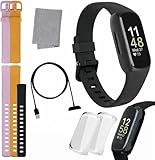
- INSPIRED FITNESS: The Fitbit Inspire 3 is an all in one 24/7 fitness tracker. Track active minutes, fitness exercises, steps, distance, calories, skin temperature, sleep cycles and more. Help optimize your fitness and performance with this easy to use tracker.
- PREMIUM BUNDLE: The Fitbit Inspire 3 watch bundle includes - 1 Fitbit Inspire 3, 2 silicone replacement bands (small and large), 2 screen protectors, a cleaning cloth and fast charger. Unisex design is great for men and women of all ages and activity levels.
- WATER RESISTANT: Enjoy swim proof water resistant use up to 50 meters. Perfect for swimming and tracking laps in the pool or running and dancing in the rain. Full color touchscreen works when dry and when wet.
- STYLISH DESIGN: You'll love the stylish sleek look of the Fitbit Inspire 3. It looks great with all outfits and the low profile design won't get in the way while you work out, run, walk, swim or hike. The Fitbit Inspire 3 bands can be swapped out to mix and match different colors and band lengths.
- WORKS WITH YOUR PHONE: 10 day battery life keeps you connected longer than ever. Enjoy Smart Wake alarm, call, text and app notifications, find my phone, do not disturb and sleep modes. Even make purchases with Fitbit Pay. Works with Apple iOS 15 or higher and Android OS 9 or higher.
Match health features to a specific need
Built-in GPS for phone-free route recording
Charge 6, Versa 4 and Sense 2 have built-in GPS according to their technical specifications. This matters if you want outdoor workout location tracking without carrying a phone during the session. Inspire 3 is the battery-focused, slim option in this group; do not select it expecting the same built-in-GPS capability.
GPS is a feature decision, not a health-quality ranking. If you exercise indoors or normally carry your phone, paying more for built-in GPS may not improve your routine. If you run, walk or cycle outdoors and want the tracker itself to record the route, it becomes a meaningful reason to move up from Inspire 3.
ECG-app compatibility and electrical sensors
Charge 6 includes electrical sensors compatible with the ECG app and EDA Scan app. Sense 2 also has ECG-app compatibility. Availability of the ECG app varies by country, so the presence of compatible hardware does not guarantee that the feature will be offered where you live.
An ECG-compatible sensor is not a substitute for clinical care. These features are intended to provide information within the supported app experience; they do not turn a consumer tracker into a diagnostic service. If you have symptoms or a medical concern, use a qualified healthcare professional rather than relying on a wrist reading.
Stress-response and cEDA tracking
Sense 2 is the only model here identified with cEDA body-response tracking. Google describes the purpose on its official product page this way: “A cEDA sensor helps identify potential signs of stress so you can reflect on your emotions, take action and go on with your day.” Read that as a reflection and awareness feature, not a diagnosis of stress, anxiety or any other condition. Google also notes that cEDA use may affect battery life. See the official Sense 2 product page for the feature description and requirements.
SpO2 and skin-temperature variation
Inspire 3 lists SpO2 and skin-temperature variation features, and Versa 4 lists SpO2 sensors. These features can be useful for observing personal trends when available, but availability and use limitations apply. Google states that SpO2 and skin-temperature features are not intended to diagnose or treat medical conditions. They may also be unavailable in some markets, so verify your region before treating them as a purchase requirement.
Heart-rate information
Versa 4’s technical specification lists a heart-rate sensor. Charge 6 and Sense 2 provide the electrical-sensor capabilities described above. A sensor specification tells you what hardware is included; it does not promise a particular reading in every activity or make the device equivalent to medical equipment.
Rank #3

- Inspire 3 is the tracker that helps you find your energy, do what you love and feel your best – all you have to do is wear it;
- Compatible with Apple iOS 16.4 or higher and Android OS 11.0 or higher
- Move more: Stay motivated with a Daily Readiness Score, Active Zone Minutes, all-day activity tracking and 24/7 heart rate, 40+ exercise modes, automatic exercise tracking, and reminders to move
- Stress less: Keep an eye on your well-being with a daily Stress Management Score, mindfulness sessions, relax breathing sessions, irregular heart rhythm notifications, SpO2, menstrual health tracking, resting heart rate, and more[1,2]
- Sleep better: Automatic sleep tracking, a daily detailed Sleep Score, smart wake vibrating alarm, and sleep mode help you improve your sleep quality[3]
Price: what the listed dollars do and do not tell you
The observed official US list prices establish the order of entry cost: Inspire 3 is lowest, followed by Charge 6, Versa 4 and Sense 2. They are not independent market statistics, and they are not guaranteed street prices. Google Store pages also displayed promotional prices; those offers can expire. Confirm the current price before purchase.
| If your priority is… | First model to investigate | Why | What you give up or should verify |
|---|---|---|---|
| Lowest listed price and long advertised battery | Inspire 3 | It combines the lowest observed list price with the longest advertised runtime in this group | No built-in GPS is identified in the supplied technical comparison; check feature availability for your market |
| Built-in GPS in a band | Charge 6 | It adds GPS and electrical sensors without moving to a smartwatch-style body | It costs more than Inspire 3 and always-on display or SpO2 use can shorten runtime |
| Smartwatch-style GPS at a lower listed price than Sense 2 | Versa 4 | It offers the larger watch-style format and built-in GPS | It does not provide the Sense 2 cEDA and ECG combination described here |
| Stress-response tracking and ECG-app compatibility | Sense 2 | It has the broadest stated sensor set in this four-model comparison | It is the most expensive listed option and cEDA can increase charging frequency |
A practical decision process
- Set a maximum price using the current store page. Start with the live US listing rather than an old promotion. If your budget stops below the Charge 6 price, Inspire 3 is the natural first check. If you can spend more, continue to the next question instead of assuming a higher price is necessary.
- Decide whether you need a band or a smartwatch-style screen. Choose between Inspire 3 or Charge 6 and Versa 4 or Sense 2. This prevents you from paying for a watch-like display when a small band would suit your routine.
- Mark whether built-in GPS is essential. If you need the tracker to record outdoor routes without a phone, compare Charge 6, Versa 4 and Sense 2. If you normally carry a phone or do not record routes, GPS should not determine the purchase by itself.
- Choose the health feature you will actually use. Select Sense 2 only when cEDA body-response tracking and ECG-app compatibility are meaningful to you. Consider Charge 6 when ECG-app and EDA Scan compatibility in a band matter. Treat SpO2 and skin-temperature features as optional trend tools subject to regional limits, not as medical requirements.
- Stress-test the battery estimate against your settings. Write down whether you will use an always-on display, frequent GPS, SpO2 or cEDA. If the answer is yes, do not plan your charging routine around the maximum advertised number.
- Verify compatibility and availability. Check your phone operating system, country and current app support for the exact model and feature. Do this before ordering, especially if ECG, SpO2 or skin-temperature functions are central to your decision.
Phone, country and app checks before buying
Fitbit features depend on more than the hardware in the box. The Inspire 3 technical page lists setup requirements of iOS 16.4 or newer and Android 11 or newer. Requirements can change, and the other models or individual features may have different conditions, so use the current technical page for the model you are considering rather than assuming the Inspire 3 requirement applies to every device.
- Operating system: Confirm that your phone meets the current supported iOS or Android version.
- Country: Check whether ECG, SpO2, skin-temperature and other sensor features are enabled in your market. Regulatory approval and app availability can differ by country.
- App: Confirm that the current Google Health mobile app supports the model and the functions you expect. Some Sense 2 features require the mobile app.
- Account and setup: Allow time for pairing, software updates and permissions before judging the day-to-day experience or battery behavior.
Use the model-specific pages for the final check: Inspire 3 technical specifications, Charge 6 technical specifications, Versa 4 technical specifications and Sense 2 technical specifications.
Common buying mistakes and how to avoid them
Choosing only by the biggest battery number
A longer estimate is valuable only if the device also has the features and shape you will use. Do not buy Inspire 3 solely for its battery claim if phone-free GPS is essential; do not buy Sense 2 solely for its sensor list if you will leave cEDA and ECG functions unused.
Treating a sensor as a medical diagnosis
ECG compatibility, SpO2, skin-temperature variation and cEDA can support personal awareness, but the manufacturer does not present them as a replacement for diagnosis or treatment. Regional availability also limits what you can actually use.
The Tool Desk
Outbyte Driver Updater FREEScan for outdated or missing drivers - takes under a minuteDriver Scan →Outbyte PC Repair FREEClear out junk files and repair common Windows errorsFree Scan →Comparing list prices with expired promotions
Promotional prices shown on product pages may no longer be active. Compare the current checkout price in your region with the observed list-price order, and remember that a discount does not change the model’s feature or charging trade-offs.
Ignoring the settings that consume power
Always-on display, GPS, SpO2 and cEDA are not minor details when battery life is your primary reason for buying. Decide which settings you will enable, then compare models on that realistic configuration rather than the headline estimate alone.
Rank #4

- Advanced Health Monitoring: Track your health with features like 24/7 heart rate monitoring, stress management tools, and a sleep score to help you achieve your wellness goals.
Recommendations by reader profile
“I want the fewest charging interruptions.”
Begin with Inspire 3. It has the longest advertised battery estimate and the lowest observed official US list price in this comparison. Verify that its band-style design and available features cover your needs before treating the battery advantage as decisive.
“I want GPS but prefer a slim band.”
Start with Charge 6. Its built-in GPS addresses phone-free route recording, and its electrical sensors support the ECG and EDA Scan apps where those apps are available. Account for the effect of always-on display and SpO2 settings on charging.
“I want a watch-like screen and GPS, but not the highest price.”
Compare Versa 4 first. It is the smartwatch-style alternative with built-in GPS and a lower observed list price than Sense 2. Move to Sense 2 only if its additional cEDA and ECG-app capabilities matter.
“Stress-response tracking is the feature I care about.”
Sense 2 is the model in this comparison with cEDA body-response tracking. Confirm country and app availability, understand that cEDA can reduce runtime, and use the information for reflection rather than medical conclusions.
“I need health features but want to stay under a fixed budget.”
Use the price table as a boundary, then remove models whose form factor or required feature is wrong. A cheaper tracker that you wear consistently can be a better choice than a more expensive device whose display, GPS or charging routine discourages regular use.
Bottom-line buying rule
Choose by eliminating mismatches in this order: phone and country compatibility, band versus smartwatch form factor, need for built-in GPS, health feature priority, then battery behavior under your settings. Inspire 3 is the value-and-runtime starting point; Charge 6 is the GPS band; Versa 4 is the less expensive smartwatch-style option; Sense 2 is the specialist choice for cEDA and ECG-app compatibility. Recheck Google’s current US listing and model specifications because prices, promotions, software requirements and regional features can change.
Quick Recap
Product prices and availability are accurate as of the date/time indicated and are subject to change. Any price and availability information displayed on Amazon at the time of purchase will apply.

