Free tools Windows power users keep installed
One-click scans. No signup required.
Choose a camping lantern by matching its useful light to the task, then compare runtime at the brightness you will actually use. A lantern’s headline maximum runtime normally comes from its lowest setting, not its brightest output. After brightness and runtime, weigh power source, charging and backup options, trip length, carrying weight, cold-weather performance, and safety. Electric LED lanterns are generally the practical choice for enclosed tent use; fuel and candle models need ventilation, heat control, and fire clearance.
Start with the task, not the biggest lumen number
Lumens describe how much light a lantern produces. REI’s buying guidance states that higher lumen output means greater light intensity, or brightness. That specification is useful, but it does not by itself tell you whether a lantern will work for your campsite. The right question is: what area must be lit, and what will you be doing there?
As an Amazon Associate I earn from qualifying purchases.
Close-up work and ambient light
For reading close to the lantern, checking gear, or creating a small pool of ambient light, REI’s 2026 guide says 100 lumens or fewer may be enough. This is a practical use-case suggestion, not a universal minimum or guarantee. A low-output lantern can also be preferable when you want to preserve battery power or avoid washing out everyone’s night vision.
PC Slower Than It Used to Be?
A free scan shows the junk files, broken settings and background clutter dragging Windows down - then fixes them in one click.Free scan · Windows 10 & 11Outdated Drivers Are Slowing You Down
One free scan finds every outdated or missing driver and matches the right update for your exact hardware.Free scan · exact hardware matchCooking, dining, and a whole campsite
Cooking, preparing food, playing cards at a table, or lighting a shared campsite requires more illumination than a close-up task. REI advises looking for more light when you need to illuminate a cooking area, dining area, or campsite. The amount depends on the size and layout of the area, how far the lantern will be from the work surface, and whether you need one pool of light or coverage for several people. Treat the lumen figure as an output ceiling, then decide whether the lantern has a setting you can comfortably use for the task.
#1 Best Overall

- 【360° Lighting Coverage】Adopts 6+1 high-intensity LED chips, energy efficient/with wide range of visibility. Doubles as both a lantern & as a flashlight, adjust the brightness by how high up you pull up the lantern, providing tons of light at full open, easily light up an entire room.
- 【Lightweight & Portable】Collapsible design, as small as a phone when collapsed, easy to carry. With folding handle, can be hang it on tents or tree, free your hands. The extremely lightweight design also fit for young child, everyone can have a reliable light to access when needed.
- 【Durable & Waterproof】Made of high quality ABS material, ensures a long-time durability and water resistant, heat-resistant, freeze resistant, trouble-free in tough environment. More than 25 hours Long Last Lighting when fully charged, perfect for indoor or outdoor activities.
- 【Two Charging Methods】Built-in 1600mAh rechargeable battery, the upgrade led lantern with two charging methods: Solar charging and USB Charging. Automatic power-off protection, Don't worry about overcharging.
- 【Multipurpose Use】A necessary Survival Equipment for outdoor activities, great kit for camping, hiking, fishing, hunting or night walking. A perfect emergency lights for home power failure in the Hurricanes, Storms. No matter where you live, everyone needs this reliable light.
Useful output versus maximum output
Maximum lumens can be useful for a short burst, but a lantern that is uncomfortable to run at its top setting will not deliver that output for most of your trip. Compare the brightness setting you expect to use with the runtime listed for that same setting. If a specification gives only a maximum lumen figure and a separate maximum-runtime figure, do not assume those two numbers occur together.
Understand what runtime claims actually mean
Runtime changes dramatically between low and high settings. The longest number in a product listing usually describes the lowest light level, while the shortest number often describes the brightest setting. A fair comparison therefore pairs a useful brightness with its corresponding runtime instead of ranking lanterns by the largest hour figure.
Read the setting behind the number
Look for a table or manual that identifies runtime by brightness mode. If the listing does not say which setting produced a runtime, treat the figure as incomplete for trip planning. Published runtimes are specifications, not guarantees: battery age, temperature, charging state, and the lantern’s control mode can affect the result.
Quick wins for a faster PC:
Fix the driver behind crashes, sound loss and screen glitchesFind Drivers →Clear out junk files and repair common Windows errorsFree Scan →Scan for outdated or missing drivers - takes under a minuteDriver Scan →Examples from current published specifications
REI’s 2026 product guidance illustrates how far these figures can vary:
| Example lantern | Published light output | Published runtime | Power source | What the figures show |
|---|---|---|---|---|
| Goal Zero Lighthouse 600 | 600 lumens | Average 2.5 hours on high; 180 hours on low | 5,200 mAh rechargeable lithium-ion NMC battery | High output and very long low-setting endurance are different operating modes. |
| BioLite Luci Original Clear 2.0 | 75 lumens | Up to 24 hours | 1,000 mAh rechargeable lithium-ion battery; solar or USB-C charging | A lower-output lantern can emphasize long use and flexible charging. |
These are published specifications reported in REI’s roundup updated September 22, 2026, not independent measurements here. Availability and specifications can change, so check the manufacturer’s current instructions and listing before buying.
Rank #2
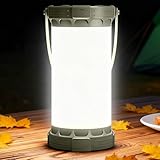
- [Brighten your entire campsite silently] With 135 upgraded LEDs, this camping lights delivers a full 360° beam that evenly illuminates an area of about 201 ft², minimizing harsh shadows. Five dimmable brightness levels allow you to choose the perfect glow for any situation—whether camping, hiking, night fishing, hosting a backyard BBQ, or handling an unexpected emergency, you'll never be left in the dark with our lanterns for power outages.
- [Up to 200H of Light] With a built-in 5000mAh rechargeable battery, our camping lantern can last up to 200 hours on low, up to 12 hours at the maximum brightness, and a full charge takes just 3.5 hours. One charge lasts your entire camping weekend, It's perfect for multi-day camping trips, Charge your phone in emergencies, overnight hikes, or power outages at home, ensuring you're ready for your next adventure. Note: You can charge the lantern using the included USB-C to C cable or any USB-A to C charging cable. Notice: 1500LM "Super Bright" mode illuminates for 4 minutes, covering a larger area in emergencies if necessary. Essential outdoor lanterns for the darkest & stormiest nights.
- [3 Color Modes for Every Scenario]: The lantern offers 3 color modes that adapt to every situation. Switch between 3000K warm light for foggy conditions or cozy family moments, 4500K neutral light for reading or hiking, and 6001K cool white for crisp, energizing illumination—ideal lanterns for studying, tasks, or clear outdoor visibility.
- [Emergency Ready] Designed with safety in mind, the led lantern features a 1501LM super bright mode for instant wide-area lighting, an SOS red strobe to signal for help, and a Type-C port to charge your phone, keeping you connected and visible during storms, roadside emergencies, or unexpected power outages.
- [Built Tough for the Outdoors] Compact, lightweight (1.5Oz/299g), and IP45 waterproof, this lantern lamp is ready for rain, dust, and rugged adventures. Take it camping, fishing, RVing, or keep it in your car or home emergency kit—reliable light wherever you go.
Plan around your real nightly use
Write down how many hours you expect the lantern to be on each night and at which setting. Compare that schedule with the runtime for the same mode. A lantern rated for many hours on low may still need a recharge or replacement battery if you routinely use high. Conversely, a lantern with a shorter high-mode rating may be adequate if high brightness is reserved for cooking and the rest of the evening is spent on low.
Allow a reserve rather than planning to exhaust the battery at the end of the trip. The exact reserve is your risk decision: a remote trip with no charging access calls for more margin than a car-camping trip where a compatible spare or USB power source is available.
Choose disposable or rechargeable power deliberately
Power source determines how you recover from an empty battery. Disposable-cell lanterns can be renewed in the field when you carry compatible spares. Rechargeable lanterns avoid routine cell replacement but require a way to restore charge. Select the system that matches your trip rather than assuming one chemistry is always better.
Disposable batteries
- Field replacement: Carrying compatible spare cells can restore a lantern without a mains outlet.
- Planning requirement: Verify the exact battery size and chemistry accepted by the lantern. Do not substitute a different type merely because it fits.
- Storage: Keep spares protected and follow the lantern maker’s battery instructions.
Rechargeable lanterns
- Charging access: Confirm whether you can charge from a wall outlet, vehicle, USB source, or another supported method during the trip.
- Backup: A rechargeable lantern is less forgiving if it empties far from a charging source. Consider a second light or a compatible backup plan.
- Integrated battery: Check whether the battery is replaceable and how the manufacturer specifies charging, storage, and transport.
Solar and manual charging
Some rechargeable models add solar or manual charging. These options can extend a trip when conditions and equipment permit, but they are not a reason to ignore the primary runtime rating. Confirm how the lantern is intended to be charged and what cable or accessory it requires.
Account for cold-weather battery behavior
Temperature can change how a battery performs. REI states that alkaline batteries lose power quickly below 20°F, while lithium batteries perform well in cold. That does not mean every lantern can safely use lithium cells.
Rank #3

- BRIGHT LED BULBS- This camping lantern is fitted with 46 LED light bulbs to deliver an extremely high 1800 lumens. to deliver an extremely high 1800 lumens. As we now know, LED light bulbs are some of the best light bulbs in the industry when it comes to brightness, energy-saving and low energy consumption, as well as longevity.
- Rechargeable & Power Bank- The LED lantern has built-in 4400mAh rechargeable battery. A fully charge can be last up to 12 hours. The lantern can be used as power back for smartphone or tablet in emergency. It is perfect for power outage, earthquake, camping and indoor usages.
- WATER-RESISTANT- This LED light lantern has been constructed to be waterproof so that you can easily carry it with you for your camping or hiking trips. Similarly, this makes it an ideal candidate for your emergency or survival kit.
- FOUR MODES- This emergency light comes with 4 light modes- daylight, warm light, both, and flash mode. Additionally, these modes are also dimmable and this brightness can be adjusted by pressing down on the ON/OFF switch.
- SLIP-PROOF HANDLE- This rechargeable LED lantern features a slip-proof handle for easy hanging and a hand-free light source. This LED flashlight can also help light up your patio or backyard during winters!
Verify compatibility before using lithium
REI also warns against using lithium or lithium-ion batteries in a light unless the manufacturer says that particular model supports them. Battery chemistry, voltage, charging circuitry, and safety controls are model-specific. Follow the lantern’s manual and use only the supported battery type.
The Tool Desk
Outbyte PC Repair FREERepair Windows errors before they cause bigger problemsFix Now →Outbyte Driver Updater FREEScan for outdated or missing drivers - takes under a minuteDriver Scan →Plan for sub-20°F conditions
If your trip may fall below 20°F, identify the battery type in advance and carry the manufacturer-approved option. Keep a spare power source protected according to its instructions, and do not rely on an alkaline runtime observed in mild weather to predict performance in severe cold.
Match size and weight to the trip
Size and weight matter more for backpacking than for car camping. A basecamp lantern can be larger if it provides the area coverage and runtime you need, while every extra ounce competes with food, shelter, and other equipment in a backpack.
Backpacking
- Prioritize a compact form and low carrying weight after confirming that its useful setting is bright enough for your tasks.
- Compare runtime at that setting, not only the lantern’s maximum output.
- Choose a charging or battery plan that works without a vehicle or fixed outlet.
Car camping
- You can usually tolerate more size if the lantern lights a cooking or dining area effectively.
- Disposable-cell models may be practical when you can carry spares; rechargeable models work well when you have reliable USB or vehicle charging.
- Weight is still relevant when carrying equipment from the vehicle to the campsite, but it may not be the deciding constraint.
Evaluate fuel and candle lanterns for heat and ventilation
Fuel-powered lanterns require ample ventilation and generate considerable heat. Candle lanterns also produce heat and must be kept away from flammable materials. Those requirements make them a different safety category from an electric LED lantern.
Why enclosed tents are a poor fit
For enclosed tent use, favor an electric LED lantern. Fuel and candle models need airflow and heat clearance that a small tent interior cannot reliably provide. Never treat a flame as interchangeable with a cool-running electric light.
Rank #4
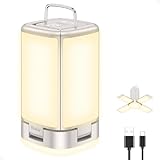
- 【Super bright Camping Lantern】Blukar camping lantern uses 116 high-quality LED beads, the light source is stable and glare-free. The 360° beam angle provides you with bright and soft light, emitting uniform and bright 3000K warm white light, which can light up your tent or room in the dark.
- 【7 Lighting Modes】With 7 lighting modes to choose from: High Side Light - Low Side Light - High Bottom Light - Low Bottom Light - Full High Light - Full Light Strobe - Red Light SOS. One key to change, long press directly off or 8 seconds no operation after another short press to turn off the lights, you can freely choose different modes according to different scenes, fully meet your lighting needs.
- 【90°Adjustable & Multifunctional】Dual-use design: in the folded state, it can be used as a portable camping lantern, with more concentrated light and more powerful lighting; unfold the 4 side lights outward 90°, it can be used as a small chandelier to illuminate a wider area. Hook design, additionally equipped with climbing buckle, convenient for campers to hang in tents, light stands, tree branches, etc., to bring the light to any corner.
- 【High-capacity Battery & Long Lasting】 The built-in 4800mAh USB battery provides 10 to 48 hours of illumination. (Note:The Camping Lantern adopts a built-in non-removable integrated battery pack,not a separate cylindrical Li-ion battery). The LED power indicator keeps you informed of battery consumption, and the standard USB-C data cable allows for easy recharging anytime. With it, the darkness is no longer a worry, but a source of peace of mind.
- 【Portable & Versatile】Made of sturdy and durable ABS material, compact and lightweight, it can easily be carried in your backpack when you are out without any burden. Perfect for camping, picnics, fishing, hiking, trekking and other outdoor activities, also can be used as emergency lighting in garages and basements.
Clearance and placement
- Keep fuel and candle lanterns away from tents, sleeping bags, clothing, dry vegetation, paper, and other flammable materials.
- Provide the ventilation specified by the manufacturer for fuel models.
- Place any hot lantern where it cannot be knocked over or touched accidentally.
- Allow the lantern to cool before packing it.
Compare lanterns on five decision axes
When two models appear similar, use the same checklist for both. This prevents a dramatic maximum-lumen figure or an unusually long low-mode claim from dominating the decision.
| Axis | Question to ask | Evidence to record |
|---|---|---|
| Useful brightness | Is the output appropriate for the area and task? | Brightness modes and the setting you expect to use. |
| Runtime | How long does it run at that useful setting? | Runtime by mode; identify whether the figure is a maximum or average. |
| Power and backup | How will you recharge or replace power? | Battery type, charging method, spare-cell compatibility, and required cables. |
| Portability | Can you carry it comfortably for this trip? | Size and weight, considered alongside output and runtime. |
| Safety | Does it require ventilation, heat clearance, or flame precautions? | Fuel or candle requirements versus electric LED operation. |
A step-by-step buying process
- Describe the job. Write whether the lantern is for close-up tasks, ambient light, cooking, dining, or broad campsite illumination.
- Set a useful brightness target. Use the task guidance rather than choosing the highest lumen number. For close-up or ambient use, begin by considering whether 100 lumens or fewer is sufficient; larger shared areas generally need more light.
- Choose the operating mode. Decide which brightness setting you will use most nights and whether you need a short high-output mode.
- Read runtime at that mode. Reject comparisons that pair one lantern’s low-mode runtime with another’s high-mode runtime.
- Calculate the trip requirement. Multiply expected hours of use per night by the number of nights, then compare that total with the published runtime for the selected mode. Add a reserve for cold, battery aging, and unplanned use.
- Select the power system. Choose disposable cells when field replacement and compatible spares matter most; choose rechargeable power when you have dependable charging access. Consider solar or manual charging only if the model supports it and the trip conditions make it useful.
- Check temperature limits and chemistry. For cold trips, account for alkaline losses below 20°F and confirm that any lithium option is explicitly approved for the lantern.
- Check carrying constraints. Compare weight and size with the output and runtime, giving portability extra priority for backpacking.
- Confirm safety requirements. For tent interiors, favor electric LED. If considering fuel or candle light, verify ventilation, heat, and clearance requirements before purchase.
- Verify current specifications. Product listings and availability can change. Confirm the current manufacturer instructions, battery requirements, charging method, and runtime table.
How the example specifications translate into choices
When a high-output lantern makes sense
The Goal Zero Lighthouse 600 example lists 600 lumens, an average 2.5-hour runtime on high, and 180 hours on low from a 5,200 mAh rechargeable lithium-ion NMC battery. That combination suits a buyer who values strong illumination for selected tasks and is prepared to use a much lower setting for long-duration light. It is not evidence that 600 lumens will last 180 hours.
When a lower-output lantern may be the better fit
The BioLite Luci Original Clear 2.0 example lists 75 lumens, up to 24 hours of runtime, a 1,000 mAh rechargeable lithium-ion battery, and solar or USB-C charging. A 75-lumen ceiling may be appropriate for close-up or ambient use, but it may not provide the coverage a group needs for cooking or dining. Its charging choices can be valuable when access to a USB source or sunlight is part of the trip plan.
Why neither specification is a universal winner
The two examples serve different priorities. One emphasizes a much higher maximum output with sharply different high- and low-mode runtimes; the other emphasizes modest output, a long published runtime, and multiple charging methods. Select based on your task, operating setting, and power plan rather than declaring one specification superior in every campsite.
Prevent common lantern-buying mistakes
Mistake: treating maximum runtime as normal runtime
Fix: Locate the mode associated with the hour figure and compare it with the brightness you will actually use.
Best Value

- 6 Lighting Modes : Front flashlight: High Light Mode (350lm) & Low Light Mode (120lm); Side Lantern: High Light Mode & Low Light Mode & Red Light (Stay on) & Strobe Red Light (SOS Signal for Emergency)
- USB Charging & Power Bank : Built-in large capacity battery charged by USB port (USB-C Cable Included), used as a power bank for you mobile devices
- Water Resistant Design : The IPX4 waterproof level can prevent circuit from splashing water from all directions; Suitable for both indoor and outdoor even under severe weather conditions
- Portable & Lightweight : Portable design with lightweight of 0.76 pounds, compact size, allows it to be carried portably, perfect for searching, hiking, camping, climbing, fishing, hunting, exploring, cycling, power outage, etc.
- Multifunctional : Designed with a comfortable carry handle & two-way hook, this LED torch can work as a searchlight or become a camping lantern with the side light on; Carry it as a flashlight or hang it on tent, backpack, and branches
Mistake: buying by lumens alone
Fix: Start with the area and task. A lower-output lantern can be adequate for close work, while a campsite cooking area needs more illumination.
Mistake: assuming rechargeable means self-sufficient
Fix: Identify the charging source, cable, and backup plan before leaving. Rechargeable power still runs out.
Mistake: putting unsupported lithium cells in a lantern
Fix: Follow the model’s battery instructions. Use lithium or lithium-ion cells only when that particular lantern explicitly supports them.
What’s actually slowing this PC down?
Pick the symptom - the matching free tool is one click away.
Mistake: overlooking cold
Fix: If temperatures may fall below 20°F, account for alkaline power loss and select an approved cold-capable battery solution.
Mistake: using flame inside a tent
Fix: Use an electric LED lantern for enclosed tent lighting. Keep fuel and candle models ventilated and clear of flammable materials.
Pre-trip checklist
- Task identified: close-up, ambient, cooking, dining, or campsite lighting.
- Brightness mode selected for normal use.
- Runtime checked at that mode, with the specification’s wording preserved.
- Total expected hours estimated for every night.
- Reserve power planned for cold and unexpected use.
- Battery chemistry and size verified against the manufacturer’s instructions.
- Charging cable, adapter, solar input, or compatible spare cells packed.
- Lantern weight and size checked against the trip’s carrying limits.
- Fuel or candle ventilation, heat, and clearance requirements understood, if applicable.
- Current manufacturer specifications confirmed before departure.
The practical choice
For most campers, the best lantern is the one that provides enough light for the primary task at a setting it can sustain for the whole trip. Compare useful brightness and same-setting runtime first. Then choose disposable or rechargeable power according to charging access and backup needs, account for cold-weather battery behavior, and match weight to the way you travel. Use electric LED lighting in enclosed tents, and treat fuel or candle lanterns as heat- and flame-producing equipment that demands ventilation and clearance.
Quick Recap
Product prices and availability are accurate as of the date/time indicated and are subject to change. Any price and availability information displayed on Amazon at the time of purchase will apply.
Do these 3 things before closing this tab:
1Clear out junk files and repair common Windows errors2Fix the driver behind crashes, sound loss and screen glitches3Repair Windows errors before they cause bigger problems
