The reliable check is the Wireless Power Consortium (WPC) Certified Products Database. Search for your phone’s exact model and manufacturer part number, then confirm that the entry is a certified phone receiver with Qi v2.2.1 (the WPC designation for Qi2 25W). Check the charger as a separate certified transmitter. A charger labelled 25W cannot make a phone that is not certified for 25W receive that power.
What “25W Qi2” actually means
Wireless charging labels cover several different capabilities. “Qi,” “Qi2,” and “Qi2 25W” are not interchangeable.
As an Amazon Associate I earn from qualifying purchases.
| Label | What it establishes | What it does not establish |
|---|---|---|
| Qi | The product supports a Qi wireless-charging specification or has a Qi-related claim. | That it supports magnetic alignment, Qi2, or 25W reception. |
| Original Qi2 | The product is certified for the original Qi2 generation, which WPC describes as a 15W level. | That it supports the newer 25W tier. |
| Qi2 25W | The product is certified for the higher-power Qi2 tier. WPC identifies this tier with Qi v2.2.1. | That every Qi2 charger, cable, adapter, case, or phone accessory in the setup can deliver 25W. |
Qi2 uses magnetic attachment to help align the phone and charger. WPC describes Qi2 25W as nearly 70% more charging power than original Qi2 and gives an example of charging a smartphone battery from 0% to 50% in about 30 minutes. Those are WPC’s standard-level figures, not a guarantee for every phone. Battery size, thermal management, the wall adapter, cable, charger design, software, case, temperature, and simultaneous phone use can all change the result.
What’s actually slowing this PC down?
Pick the symptom - the matching free tool is one click away.
The first limited Qi2 25W certification launch described by WPC in July 2025 covered 14 certified devices, including receivers and transmitters. That announcement was not a complete phone list, and certification records continue to change. Use the current record for the exact model rather than relying on an old list or a brand-wide assumption.
#1 Best Overall

- 【Fast Charging 2-Pack for Phones & Earbuds】Supports 25W wireless fast charging with the magnetic compatibility standard. This 2-pack charger efficiently powers your smartphones and earbuds - perfect for home, office, or sharing with family
- 【Efficient Charging】Delivers 25W fast charging, charging up to 20 minutes faster than traditional 15W wireless chargers and reaching 50% in approximately 30 minutes on compatible phones. Magnetic Alignment ensures enhanced energy efficiency, reduced heat generation, and optimized power delivery for a safer, faster charge. For best performance, please use a compatible power adapter (30W+ recommended, not included)
- 【Wide Compatibility】Compatible with all magnetic enabled devices, including iPhone Duo/18/Air/17/16/15/14/13/12 series, AirPods models (wireless charging case required). No need to worry about compatibility, simply place your device on the pad for a secure connection. The maximum charging power is determined by your device
- 【Strong Magnetic Alignment】Built with N52 magnets for precise magnetic alignment and secure attachment. The auto snap-on design ensures perfect positioning every time, reducing energy loss and improving charging efficiency compared to standard wireless chargers. These ultra-strong magnets ensure your phone stays secure even during vibrations or sudden movements while providing fast charging capabilities without interruption
- 【Case Compatibility】This magnetic charging pad works best with bare devices or MagSafe-compatible cases (≤0.12 inch/3 mm thick). For optimal charging speed and alignment, please ensure your device is Mag-enabled or use a thin Mag-compatible case. Not compatible with metal cases, cases with metal plates or credit cards, or non-Mag cases
Why the charger’s wattage is not enough
A wireless charger is a transmitter; the phone is a receiver. They have separate certification records and separate power limits. A 25W transmitter can charge a phone that accepts only 5W, 7.5W, 15W, or another limit. The phone controls how much power it requests and accepts.
Likewise, a phone may advertise wireless charging without supporting Qi2 25W. A product page saying “Qi compatible,” “Qi compliant,” or “Works with Qi” does not by itself prove that the product completed WPC certification. WPC specifically advises checking its database to establish whether a product has been tested to Qi certification standards.
A magnetic ring or magnetic case can help a phone attach to a charger, but it does not upgrade the phone’s receiver electronics. Do not treat a magnetic appearance, a 25W marking on the charger, or a generic magnetic case as evidence of Qi2 25W support.
Step 1: Identify the phone precisely
Before searching, record the identifiers that distinguish your handset from similar models.
- Open the phone’s settings and look for an About phone, Device information, or similarly named page. Record the model name, model number, and manufacturer part number if shown.
- Check the original packaging, purchase invoice, or the manufacturer’s support page for the full model code. The code may include letters or regional suffixes that are absent from the retail name.
- Note the market or region in which the phone was sold. A model family can contain regional variants with different radios, batteries, accessories, or charging hardware.
- Write down the exact casing or storage variant only when it changes the manufacturer’s model identifier. Storage capacity alone does not necessarily indicate a different receiver, but it should not be used to substitute for the formal model code.
Search the formal identifier first. Searching only a family name such as “Phone X” can return several records or a transmitter accessory instead of the phone receiver.
Step 2: Search the WPC Certified Products Database
Use the Wireless Power Consortium’s live Certified Products Database. The database is the central check because it exposes product identity, product type, power profile, Qi version, and certification date.
- Enter the exact manufacturer part number, if available. If there is no result, try the full model name and then the model code without punctuation, while keeping notes about which search produced each result.
- Filter or inspect the results for the phone manufacturer and the matching product name.
- Open each plausible record rather than treating the search-result title as proof. Verify the product identity against the code on your phone or packaging.
- Confirm that the product type is a receiver or phone receiver. A charger, charging stand, battery pack, or other transmitter record is not evidence that the phone itself supports 25W reception.
- Read the listed power profile and Qi version. A general Qi record or an original Qi2 record does not establish Qi2 25W.
- Record the certification date. It helps distinguish a current entry from an older certification and can reveal that a newer regional variant has been added separately.
WPC’s database is updated as products are certified. Treat a current exact-match entry as stronger evidence than a retailer description, launch article, search snippet, or an old compatibility chart.
Step 3: Read the record instead of the marketing label
Use the following fields to decide whether the entry proves the phone’s capability.
| Database field | What to verify | What an unresolved value means |
|---|---|---|
| Brand and manufacturer | They match the phone maker printed on the device or packaging. | A similarly named third-party accessory may be a different product. |
| Product name | The name describes your handset, not a charger, case, puck, stand, or battery. | Do not infer receiver capability from an accessory entry. |
| Manufacturer part number | The number is identical to the phone’s formal model code, including relevant regional characters. | A family-level match may not cover your regional variant. |
| Product type | The record identifies a receiver/phone receiver. | A transmitter record confirms only the accessory’s role. |
| Power profile | The profile corresponds to Qi2 25W, not merely a lower Qi or original Qi2 profile. | “Wireless charging” alone is insufficient. |
| Qi version | The entry shows Qi v2.2.1 for the Qi2 25W tier. | An unspecified or earlier version needs manufacturer confirmation. |
| Certification date | The date is consistent with the product generation you own. | Check whether a later regional or revised model has its own record. |
Do not count a search result as confirmed until the identity, receiver role, and 25W-capable Qi version all line up.
Step 4: Check whether the phone is “Qi2 Ready”
Some receiver products are certified as Qi2 Ready rather than as a complete magnetic phone-and-accessory combination. WPC’s logo guidance says a Qi2 Ready receiver must be used with the specific approved accessory with which that receiver was tested and certified.
When the WPC record or manufacturer documentation says Qi2 Ready:
Crashes, No Sound, or Screen Glitches?
Random freezes, missing sound and display glitches usually trace back to one bad driver. Find and replace yours safely.Free scan · under a minutePC Slower Than It Used to Be?
A free scan shows the junk files, broken settings and background clutter dragging Windows down - then fixes them in one click.Free scan · Windows 10 & 11Rank #2
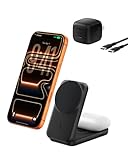
- FAST CHARGE W/ THE LATEST Qi2 TECHNOLOGY: Charge your iPhone or Qi2 devices up to 25W on the magnetic charger; fast charging is supported only on iOS 26 and newer, not iOS 18; MagSafe 25W wireless charger for up to 5x faster wireless charging*
- ULTRA-FAST CHARGING FOR YOUR DEVICES: With wireless charging now as fast as wired, you can wirelessly charge iPhone 0-50% in 29 min** and AirPods up to 5W, while fast charging a Pixel 11, Galaxy S26, or other USB-C device via the built-in 5W USB-C port.
- SIMULTANEOUS CHARGING, EASY ALIGNMENT: Wirelessly charge your iPhone and AirPods at the same time with this Qi2 wireless charger to prepare for your next adventure; this portable charger has a magnetic alignment that easily snaps your phone in place
- FOLDABLE, ADJUSTABLE, TRAVEL-READY: Folding makes this wireless charger MagSafe easy to pack & travel with; you can charge your iPhone even while the charger is folded; the stand angle also adjusts for landscape or portrait phone attachment up to 65°
- SAFE, COOL, AND SUSTAINABLE: This Qi2 MagSafe charger is crafted with fire-resistant, soft-touch silicone, recycled materials; Belkin SmartProtect and ChillBoost passive cooling ensure safe & efficient charging while protecting your devices & battery
- Identify the exact approved case, cover, ring, or other accessory named for that receiver.
- Match the accessory’s model or part number, not just its appearance or generic “magnetic” description.
- Confirm that the accessory is intended for your exact regional phone variant.
- Do not assume that a third-party magnetic case provides the certified alignment or power behavior.
If the approved accessory is required, the phone’s certification does not mean that bare-phone charging on every magnetic charger has been validated at 25W.
Step 5: Verify the charger separately
After confirming the phone, search the charger’s exact model in the same WPC database. Check its manufacturer, part number, product type, power profile, Qi version, and certification date.
The charger should be a certified transmitter capable of the required Qi2 25W profile. Also check the charger maker’s specifications for the wall adapter and cable. A transmitter may need a particular USB-C power-adapter rating to reach its advertised output; a low-power adapter can limit the charger even when the charger itself is certified.
Keep these two conclusions separate:
- Phone confirmed: the exact receiver model is certified for Qi2 25W.
- Charger confirmed: the exact transmitter is certified for the corresponding profile and is supplied with adequate adapter power.
Only when both sides are suitable, and any required Qi2 Ready accessory is installed, does a 25W setup make sense. Certification still does not promise a constant 25W at every battery level or temperature.
What to do when the phone is missing or ambiguous
No exact model appears
First retry with the manufacturer part number, the complete model name, and alternate punctuation. Check whether the phone is listed under the legal manufacturer name rather than the retail brand. If there is still no exact match, do not convert the absence into a “yes” or “no” from memory.
Ask the manufacturer for the WPC certificate or a model-specific statement that names your exact part number and Qi2 25W receiver profile. A family-wide statement is weaker when regional variants exist.
Several entries appear
Compare every result’s manufacturer part number, product type, Qi version, power profile, and certification date. Choose only the entry matching the handset in your hand. If two records appear identical but have different regions or dates, request clarification from the manufacturer rather than selecting the newer one automatically.
Only a charger entry appears
This establishes something about the charger, not the phone. Search the handset independently and request a receiver certificate if no phone record is available.
Recommended Free Tools
The product page says “Qi compatible”
That wording can describe general interoperability and is not proof of WPC certification. Require the database record or a certificate that resolves to a WPC page showing the same product identity. WPC explains that a valid certificate URL should lead to a WPC page displaying the matching product.
The phone is magnetic but has no 25W record
Magnetic alignment and receiver power are separate properties. A phone can attach to a magnetic charger while receiving a lower Qi level, or it may need an approved Qi2 Ready accessory. Continue using the exact database and certificate checks.
How manufacturer support pages fit into the check
Manufacturer documentation is useful for finding model codes, regional variants, case requirements, and troubleshooting steps. It is not automatically a model-by-model Qi2 25W certification list.
Rank #3
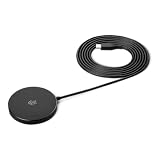
- QI2.2 CERTIFIED: Delivers up to 25W of fast wireless charging for Qi-enabled phones and devices. Note: For optimal performance, pair with a PD-certified adapter (min. 30W output). Adapter Not Included. NOTE: It doesn't not work if your phone or device doesn't support wireless charging.
- LIGHTWEIGHT DESIGN: Sleek, compact, and convenient for use at home, in the office, or on the go
- CASE-FRIENDLY: Wireless charging works through phone cases up to 3mm (0.1 in) thick with magnetic ring for hassle-free charging. Note: Propose to remove any magnetic/metallic attachments, decorations or cases with thickness exceeding 3mm (0.1 in) as they may interfere with charging or magnetic attraction force.
- EXTRA-LONG CABLE: 5ft cord provides flexible placement and convenient charging wherever you need it
- COMPACT DIMENSIONS: Measures 2.36 x 2.36 x 0.33 inches for space-saving setup
Google’s general Pixel support guidance says wireless charging is available on Pixel 3 and later with exceptions and advises checking that the case is compatible with Qi2. That broad guidance does not identify every Pixel as Qi2 25W certified.
The Tool Desk
Outbyte PC Repair FREEClear out junk files and repair common Windows errorsFree Scan →Outbyte Driver Updater FREEScan for outdated or missing drivers - takes under a minuteDriver Scan →Samsung’s surfaced troubleshooting guidance covers wireless charging generally and advises checking non-Samsung chargers with the manufacturer or WPC. It likewise does not substitute for an exact receiver record.
Use support pages to identify your device and resolve accessory questions, then use the WPC record to establish the certification and power tier.
Performance expectations after certification
Certification answers whether the phone and charger were tested for the specified profile; it does not guarantee a fixed charging time. WPC’s “about 30 minutes from 0% to 50%” example should be read as an illustrative standard-overview figure.
- The phone may reduce power as the battery fills or as its temperature rises.
- A thick, misaligned, damaged, or non-approved case can reduce coupling or interrupt charging.
- Using navigation, games, cameras, or cellular data while charging increases heat and can slow net battery gain.
- The wall adapter and cable must supply what the transmitter requires.
- Foreign objects, debris, or poor contact can trigger protection behavior.
If a certified setup charges more slowly than the WPC example, compare these conditions before concluding that the certification is wrong.
Free tools Windows power users keep installed
One-click scans. No signup required.
A two-minute verification workflow
For a quick but defensible answer, work in this order:
- Read the exact model and part number from the phone’s settings or label.
- Search that identifier in the WPC Certified Products Database.
- Open the record and confirm the manufacturer, product name, receiver role, Qi v2.2.1 designation, 25W power profile, and certification date.
- Check whether the entry says Qi2 Ready and, if so, write down the named approved accessory.
- Search the charger separately and verify that it is a certified 25W transmitter.
- Confirm that the supplied USB-C adapter and cable meet the charger maker’s input requirements.
- Save the WPC record URL or certificate with your purchase records. This makes it easier to resolve a warranty or compatibility question later.
Stopping after step five can still produce an incorrect conclusion: the phone may be certified but the charger may be limited, or the charger may be certified while the phone is only an original Qi2 receiver.
Common buying and setup mistakes
| Mistake | Why it fails | Safer approach |
|---|---|---|
| Buying the highest-wattage charger available | The phone negotiates its own receiver limit. | Verify the phone first, then buy a transmitter certified for the same tier. |
| Assuming a magnetic case creates Qi2 25W | Magnets provide alignment; they do not add receiver electronics. | Use the exact approved Qi2 Ready accessory when the certification requires one. |
| Using a family name instead of a part number | Regional variants may have separate certification records. | Match the full manufacturer code and market. |
| Trusting a retailer badge | “Qi compatible” and similar wording may not mean WPC certification. | Open the WPC record or a certificate URL that resolves to the same product. |
| Reusing a low-power adapter | The transmitter may never receive enough input to reach its rated output. | Meet the charger’s specified adapter and cable requirements. |
| Expecting constant 25W | Power changes with battery state, heat, alignment, and use. | Compare performance under controlled conditions and treat WPC’s 30-minute example as illustrative. |
How to judge a certificate link
A manufacturer or retailer may publish a certification link. Follow it instead of trusting a screenshot or a certificate number copied into a listing. WPC says a valid certificate URL should open a WPC page showing the same product identity. Check the displayed brand, product name, part number, product type, Qi version, and power profile against your handset.
A link for a charging pad, stand, battery pack, or another product is not interchangeable with a phone receiver certificate. If the page has been removed, redirects to a generic search page, or omits the model code, ask the manufacturer for a current model-specific certificate.
Do these 3 things before closing this tab:
1Scan for outdated or missing drivers - takes under a minute2Clear out junk files and repair common Windows errors3Fix the driver behind crashes, sound loss and screen glitchesWhat the certification date can and cannot tell you
The date is useful evidence of which product was tested and when, but it is not a promise that every later revision is identical. A manufacturer can add a regional model or a revised hardware version under a different part number. Conversely, an older record may still cover a phone sold today if the formal identifier is exactly the same.
Use the date as a comparison field, not as a reason to choose the newest entry automatically. If your phone’s code, region, and receiver profile match, the record is relevant; if any of those differ, obtain clarification.
Rank #4

- Palm-Sized Foldable Design, Made for Travel: Measures just 3.74 × 2.38 × 1.22 inches and weighs 8.11 oz, about the same as an iPhone 17 Pro Max. Folds flat to fit in your pocket, bag, or tech pouch for easy packing. This is a wall-powered wireless charger, not a power bank.
- Qi2.2-Certified 25W Fast Charging: Enjoy up to 25W of magnetic wireless charging with Qi2.2 technology. Charges iPhone 18 Pro to 50% in 27 minutes, unleashing peak-speed wireless charging for your new iPhone. Results may vary.
- Whisper-Quiet AirCool Temperature Control: The advanced AirCool system operates at just 19 dB and helps keep iPhone 18 Pro Max below 98.6°F during charging. It delivers up to 25W of power while helping maintain long-term battery health.
- 3-in-1 Charging, Packing Simplified: Travel with one charger instead of a tangle of cables. Charge your iPhone, Apple Watch (MFi-certified), and AirPods from a single foldable station—less to pack, more to enjoy.
- What You Get: Anker Prime Wireless Charging Station (3-in-1, MagGo, AirCool, Foldable), 45W USB-C charger, 5 ft USB-C to USB-C cable, 2× anti-slip watch stickers, welcome guide, 24-month warranty, and our friendly customer service.
A practical decision checklist
Use this checklist when buying a charger or verifying an existing setup:
- Have you recorded the phone’s exact model and manufacturer part number?
- Does the WPC entry match that identity and the correct region?
- Is the entry a phone receiver rather than a transmitter or accessory?
- Does it show Qi v2.2.1, the WPC designation for Qi2 25W?
- Is there a separate requirement for a named Qi2 Ready approved accessory?
- Does the charger have its own matching transmitter record and 25W-capable profile?
- Does the wall adapter meet the charger’s input requirement?
- Are you relying on a current database record rather than a generic retail label or old compatibility list?
- If anything is ambiguous, have you obtained a certificate or model-specific statement from the manufacturer?
The shortest reliable answer
To answer “Does my phone support 25W Qi2 wireless charging?” search the exact phone model in the WPC Certified Products Database and verify a receiver entry showing Qi v2.2.1 and the matching part number. Then verify the charger separately. If the phone is Qi2 Ready, use the specifically approved accessory. Without an exact record or manufacturer certificate, general Qi support, a magnetic case, a brand name, or a 25W charger label is not enough evidence.
Frequently Asked Questions
How can I tell whether my phone supports Qi2 25W?
Find the phone’s exact manufacturer part number, search it in the Wireless Power Consortium Certified Products Database, and confirm a phone receiver entry showing Qi v2.2.1 and the Qi2 25W power profile. Check the charger separately.
Is a 25W wireless charger enough to charge my phone at 25W?
No. The charger is a transmitter and the phone is a receiver with its own certified limit. A 25W transmitter can charge a phone certified only for a lower Qi level.
Does original Qi2 mean 25W?
No. WPC describes original Qi2 as a 15W level. Qi2 25W is the newer tier identified with Qi v2.2.1.
Does a magnetic phone case enable Qi2 25W?
Not by itself. A magnetic case can help alignment but cannot upgrade the phone’s receiver. If the phone is Qi2 Ready, use the exact approved accessory named in its certification.
Quick wins for a faster PC:
Fix the driver behind crashes, sound loss and screen glitchesFind Drivers →Repair Windows errors before they cause bigger problemsFix Now →Scan for outdated or missing drivers - takes under a minuteDriver Scan →What if my exact phone model is not in the WPC database?
Retry with the full part number, alternate punctuation, and the legal manufacturer name. If no exact record appears, ask the manufacturer for a certificate or model-specific statement naming your part number and receiver profile.
Can I rely on a product page that says Qi compatible?
No. WPC says labels such as Qi compatible, Qi compliant, or Works with Qi do not prove certification. Use the database record or a certificate URL that opens a WPC page with the same product identity.
Do Google Pixel or Samsung support pages prove Qi2 25W support?
No. Google’s Pixel guidance and Samsung’s troubleshooting guidance address wireless charging generally. They help identify devices and accessories but do not replace an exact WPC receiver record.
Why is my certified setup slower than the advertised 30 minutes from 0% to 50%?
WPC presents that timing as an example. Battery size, heat, case thickness, alignment, adapter and cable capacity, software, battery level, and phone use can all reduce charging speed.
The Tool Desk
Outbyte Driver Updater FREEScan for outdated or missing drivers - takes under a minuteDriver Scan →Outbyte PC Repair FREERepair Windows errors before they cause bigger problemsFix Now →Should I choose the newest WPC record when several look similar?
Not automatically. Match the exact manufacturer part number, region, product type, Qi version, power profile, and device generation. Ask the manufacturer when two records remain ambiguous.
The Bottom Line
Verify both sides of the system. The phone must appear as an exact Qi v2.2.1 receiver in the WPC Certified Products Database, and the charger must have its own certified Qi2 25W transmitter record. Use any specifically named Qi2 Ready accessory, meet the charger’s adapter requirements, and treat “Qi compatible,” magnetic appearance, and a 25W label as insufficient proof.
Quick Recap
Product prices and availability are accurate as of the date/time indicated and are subject to change. Any price and availability information displayed on Amazon at the time of purchase will apply.

