First identify the Cube generation and installed Fire OS build. ADB can confirm device identity and software context, but the available documentation does not provide one root-detection test that is conclusive for every generation or modification method. A root-management app, a demonstrably privileged shell, or a known modification history can be evidence, while developer options, sideloaded apps, custom launchers, and enabled ADB are not proof of root. Amazon’s factory reset erases the device; it is not documented as a stock-firmware reflash, downgrade, or bootloader relock.
Start by identifying the exact Fire TV Cube
“Fire TV Cube” covers several hardware generations with different software and recovery circumstances. Do not apply a rooting or recovery guide until you have recorded the model identifier and installed build.
As an Amazon Associate I earn from qualifying purchases.
| Cube generation | Amazon model identifier | Documented context |
|---|---|---|
| First generation | AFTA | Use only first-generation documentation and images. |
| Second generation | AFTR | The cited temporary-root project targets this generation only. |
| Third generation | AFTGAZL | Amazon identifies the 2022 Cube as running Fire OS 7 with Android API level 28. |
The model identifiers above come from Amazon’s Fire TV identification material. Hardware, boot chains, firmware eligibility, and available recovery methods can differ substantially between generations. A guide that says only “Fire TV Cube” is incomplete for any operation that writes boot, recovery, or system partitions.
Record the software version before making changes
If the Cube still starts normally, open Settings and the device-information or About screen, then write down the Fire OS version, build number, and model shown there. Menu wording can vary by Fire OS release. Photograph the screen if you are troubleshooting remotely or expect the device may stop booting.
#1 Best Overall

- Our fastest-ever streaming media player - Brings lightning-fast app starts with an octa-core processor and is 2X as powerful as Fire TV Stick 4K Max.
- The newest Fire TV experience (2026) – Our biggest update to Fire TV has a new, modern design that gets you to your entertainment fast. Browse dedicated content categories, pin more of your favorite apps, and get personalized recommendations from Alexa+. Spend less time scrolling, and more time watching.
- Smarter picks with Alexa+ – Getting to what you love has never been easier. Press the voice remote button and talk naturally to find what to watch across your apps, manage your smart home, or dive into virtually any topic.
- Hands-free Alexa with built-in mic and speakers - Control your compatible TV, soundbar, and receivers with your voice, even from across the room.
- Seamlessly navigate between your entertainment - Connect compatible devices and easily go from streaming to your cable box, game console, or webcam.
Do not assume that a current-looking interface means the device is unmodified. Conversely, an old build does not prove that it is rooted. The version and build are selection criteria for any later instructions, not a root verdict. Amazon notes that OTA update timing can differ between devices, so two Cubes with the same generation label may not show the same software at the same time.
Use ADB only as an information-gathering step
When ADB is already enabled and the computer is authorized, Amazon documents these commands:
adb shell getprop
adb shell pm list features
getprop reports Android system properties, while pm list features lists framework features. Use the output to confirm the model, Android level, Fire OS context, and other device properties. Save the complete output with the date and build number. Keeping the output is useful if the normal interface later becomes unavailable or if support asks what was installed.
Quick wins for a faster PC:
Fix the driver behind crashes, sound loss and screen glitchesFind Drivers →Clear out junk files and repair common Windows errorsFree Scan →Scan for outdated or missing drivers - takes under a minuteDriver Scan →These commands do not certify that the current shell has superuser privileges. ADB being enabled, a successful connection, or a familiar property value can all exist on an unrooted Cube. Do not treat a property inspection as proof that system partitions were modified. If ADB is not already enabled and authorized, do not begin changing security settings solely to perform a root check; first establish the device identity and the risks of the procedure you are considering.
Prepare a record before troubleshooting
- Write the model identifier exactly as displayed, including whether it is AFTA, AFTR, or AFTGAZL.
- Save the complete Fire OS version and build string, not just “Fire OS 7” or a marketing name.
- Note whether the Cube boots normally, reaches recovery, loops at a logo, or shows an authentication message.
- List any known bootloader, recovery, root-manager, temporary-exploit, or image changes.
- Back up information you still need. A later reset deletes account information and downloaded content.
What counts as evidence of root?
Root status has two separate questions: whether privileged access is available right now, and whether that access survives a reboot. The available documentation does not establish a universal command that answers both questions on every Cube generation and root method.
Stronger indicators
- A demonstrably privileged shell: If a shell session can perform an operation that requires superuser privileges and the result can be independently verified, that supports a conclusion that root is available in that session. Record the exact conditions; a temporary exploit may be active. Do not confuse a shell that can read ordinary properties with one that has elevated authority.
- A root-management utility: A recognized management app can be a useful clue, especially if it reports a functioning superuser service. Its presence alone does not prove that root is currently active, persistent, or compatible with the installed build. An old app left behind after an update may no longer control anything.
- Known modification history: A documented unlock or exploit applied to this exact model and firmware is useful evidence. Treat an unverified seller or previous owner’s claim as history, not as a technical test. Ask what changed, when it changed, and whether the device was rebooted afterward.
Things that are not root proof
- Developer options being visible or enabled.
- ADB connecting successfully.
- Sideloaded applications, a custom launcher, or an unusual home screen.
- Changes to settings or performance that could have another explanation.
- The model, Android level, or Fire OS build reported by
getprop. - A factory-reset prompt or an OTA notification. Neither one reports the privilege state of the device.
Temporary root versus persistent modification
A temporary root can exist only during the current boot session. The documented second-generation project describes an unlock loaded from a connected computer, running in memory without modifying the Cube, and requiring the process to be loaded again after a reboot. Such a Cube may expose privileged access now and appear unrooted after it restarts.
Rank #2

- This bundle contains Fire TV Cube (3rd Gen) and Alexa Voice Remote Pro.
- The newest Fire TV experience (2026) – Our biggest update to Fire TV has a new, modern design that gets you to your entertainment fast. Browse dedicated content categories, pin more of your favorite apps, and get personalized recommendations from Alexa+. Spend less time scrolling, and more time watching.
- Smarter picks with Alexa+ – Getting to what you love has never been easier. Press the voice remote button and talk naturally to find what to watch across your apps, manage your smart home, or dive into virtually any topic.
- Our fastest-ever streaming media player - Brings lightning-fast app starts with an octa-core processor and is 2X as powerful as Fire TV Stick 4K Max.
- Hands-free Alexa with built-in mic and speakers - Control your compatible TV, soundbar, and receivers with your voice, even from across the room.
Therefore, test and record the state in which you observed access: normal boot, recovery, a computer-assisted session, or another mode. Do not describe a temporary session as a permanently rooted device. Rebooting simply to see whether access survives is not a harmless diagnostic if the device has been partially flashed or depends on a temporary exploit to boot.
Free tools Windows power users keep installed
One-click scans. No signup required.
A practical, low-risk checking procedure
- Write down the model and build. Capture the AFTA, AFTR, or AFTGAZL identifier and the full Fire OS version/build from Settings or an authorized ADB session.
- Record the modification history. Note whether anyone unlocked a bootloader, changed recovery or system partitions, used a temporary exploit, installed a root manager, or flashed an image. If the history is unknown, mark it as unknown rather than guessing.
- Collect ADB diagnostics, if available. Run
adb shell getpropandadb shell pm list features, save the output, and compare the model and software information with Amazon’s device documentation. - Look for privileged-access evidence. Check whether a root manager is installed and whether a currently running, authorized session can perform a verified privileged action. Do not install an exploit or flash an image merely to “test” root.
- Check the operating state. Write down whether the evidence appeared after a normal boot, after connecting a computer, or in a special boot mode. That context determines whether the access may be temporary.
- Reboot only when you understand the risk. If the access may be temporary, a reboot can remove it. A modified or partially flashed Cube may also fail to boot, so preserve logs and the original build information first.
- Classify the result. Label the Cube as “no root evidence,” “root evidence in the current session,” “persistent modification suspected,” or “status unknown.” This is more accurate than a binary claim based on one app or property.
Factory reset, OTA update, and firmware recovery are different actions
| Action | What it addresses | Data impact | Does the cited documentation establish stock-firmware restoration? |
|---|---|---|---|
| Settings/ADB inspection | Identifies the device and software context. | No data deletion from the inspection itself. | No. These are diagnostic checks. |
| Amazon factory reset | Erases user configuration and returns the device to its reset state. | Yes. Account information and downloaded content are deleted. | No. Amazon documents an erase/reset, not a reflash, downgrade, or bootloader relock. |
| Amazon OTA update | Installs an update when Amazon makes one available to that device. | The cited overview does not describe it as a reset. | No. It does not promise to undo root or repair modified partitions. |
| Model-specific recovery or reflash | May address a modified or damaged firmware installation. | Depends on the exact, verified procedure. | No universal method is established across Cube generations. |
This distinction prevents a common mistake: choosing an erase operation when the actual problem is a changed boot or recovery partition. A reset can remove personal data while leaving the underlying modification untouched. An OTA package can update software without restoring every partition or relocking a bootloader. A reflash, when one is genuinely supported, has its own model, build, cable, and failure requirements.
How to perform Amazon’s factory reset
Use this procedure when the Cube boots and you want to erase accounts, applications, downloads, and settings. Do not select it as a substitute for a stock-image restoration.
Reset from the Fire TV interface
- Open Settings.
- Select My Fire TV.
- Choose Reset to Factory Defaults.
- Read the warning and confirm the reset.
The reset deletes account information and downloaded content. Arrange any backups or account details you need before confirming. You will need to complete setup again, including signing in and reinstalling desired applications.
Reset with the remote
- Point the remote at the Cube.
- Hold Volume Down and Mute together.
- Continue until the light flashes blue, which Amazon describes as taking about 40 seconds.
- Follow the on-screen confirmation and setup prompts.
This is still an erase operation. Amazon’s instructions do not say that it rewrites original partitions, reverses an unlocked bootloader, downgrades Fire OS, or removes a root modification. If the Cube cannot reach a usable interface and the remote combination does not produce the documented response, stop repeating it and move to model-specific support rather than assuming the reset failed because the firmware is damaged.
Do these 3 things before closing this tab:
1Scan for outdated or missing drivers - takes under a minute2Clear out junk files and repair common Windows errors3Fix the driver behind crashes, sound loss and screen glitchesWhat an OTA update can—and cannot—tell you
Amazon’s Fire OS overview describes over-the-air updates and notes that rollout timing can vary between devices. An available update indicates that Amazon is offering software to that device; it does not establish that the update will remove root, restore altered recovery or system partitions, or repair a failed boot.
Rank #3
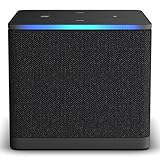
- Like-New Fire TV Cube is refurbished, tested, and certified to look and work like new and comes with the same limited warranty as a new device. Like-New Amazon devices may be packaged in generic Amazon-branded boxes.
- Our fastest-ever streaming media player - Brings lightning-fast app starts with an octa-core processor and is 2X as powerful as Fire TV Stick 4K Max.
- Hands-free Alexa with built-in mic and speakers - Control your compatible TV, soundbar, and receivers with your voice, even from across the room.
- Smarter searching starts here with Alexa – Find movies by actor, plot, and even iconic quotes. Try saying, "Alexa show me action movies with car chases."
- Seamlessly navigate between your entertainment - Connect compatible devices and easily go from streaming to your cable box, game console, or webcam.
Do not start an OTA update as an improvised recovery method on a modified Cube. First identify the exact build and modification state. If the device has changed boot or recovery partitions, the outcome of an update is model- and modification-dependent. An update notification is therefore useful information about Amazon’s service availability, not a guarantee of stock restoration.
The second-generation temporary-root warning
The raven-root project is specifically for the second-generation Fire TV Cube (AFTR), not for AFTA or AFTGAZL. Its README describes a computer-assisted, temporary unlock that runs in memory without modifying the Cube. The project lists a computer, a micro-USB cable, and hardware for entering its DFU mode, and ties eligibility to an older Fire OS condition. Those requirements and limits are project-specific and may not match a particular device today.
Its maintainer, Pro-me3us, gives this warning in the project README:
“DO NOT FLASH ANY MODIFIED IMAGES, OR INSTALL MAGISK THROUGH TWRP! This will cause an authentication error / soft brick when rebooting without the exploit present.”
That warning applies to the project’s temporary second-generation procedure. It is not a universal statement about every Cube root method, but it is a clear reason not to turn a temporary-root guide into a generic flashing or restoration recipe. The same documentation says the temporary exploit must be loaded again after a reboot.
Do not infer that the project’s DFU-entry hardware, firmware eligibility, or boot sequence applies to another generation. Even within AFTR units, the stated older-Fire-OS condition matters. Confirm eligibility from the project’s own current instructions before connecting hardware, and preserve the original software details first.
Rank #4

- Ultra-speedy streaming: Roku Ultra is 30% faster than any other Roku player, delivering a lightning-fast interface and apps that launch in a snap.
- Cinematic streaming: This TV streaming device brings the movie theater to your living room with spectacular 4K, HDR10+, and Dolby Vision picture alongside immersive Dolby Atmos audio.
- The ultimate Roku remote: The rechargeable Roku Voice Remote Pro offers backlit buttons, hands-free voice controls, and a lost remote finder.
- No more fumbling in the dark: See what you’re pressing with backlit buttons.
- Say goodbye to batteries: Keep your remote powered for months on a single charge.
If you need genuine stock-firmware restoration
There is no single supported stock-image reinstall procedure established here for all three Cube generations. A safe recovery decision depends on the exact model identifier, installed build, boot state, and what was changed.
When the Cube still boots normally
- Record the model, build, and ADB output before changing anything.
- Document root tools, bootloader changes, recovery changes, and images previously used.
- Use only recovery instructions that explicitly name your exact generation and build.
- Do not substitute a second-generation image or exploit for a first- or third-generation device.
- If no verified procedure exists, contact Amazon support rather than guessing at a flash.
When the Cube is boot-looping or will not reach the interface
- Stop repeated flashing attempts; each attempt can make the state harder to identify.
- Write down the last successful boot and the last change made.
- Do not assume that the remote factory-reset combination will repair altered partitions.
- Do not use an image merely because its filename contains “stock” or because it was intended for another Cube generation.
- Seek instructions that explicitly match the model, build, and boot condition, or use Amazon’s support channel.
When you see an authentication error after reboot
An authentication error or soft brick after reboot is consistent with the risk called out by the second-generation project when its modified images or Magisk-through-TWRP path is used without the temporary exploit. Treat that symptom as evidence that the procedure’s assumptions no longer hold, not as a prompt to try more unrelated images. Record the exact message, the last successful state, and whether the temporary exploit was present; those details are more useful than repeated resets.
Micro-USB and DFU hardware: what they are for
The second-generation project lists a micro-USB cable because its temporary computer-assisted procedure communicates with the Cube. If you need one, verify that it supports data transfer and has the correct connector; a charging-only cable cannot substitute for a data cable. A cable is not a root checker and cannot restore firmware by itself. No particular cable brand or product listing is validated here.
The project also refers to HDMI/I2C hardware for entering its DFU mode. The cited material does not validate a generic HDMI cable as a substitute, and it does not establish that this hardware or procedure applies to other Cube generations. Treat that hardware as specialist equipment, not as a routine accessory for every Cube owner.
Independent reader supportYour contribution helps us test, update, and keep practical guides available for everyone.Decision guide: choose the least destructive next step
- You only want to know what the device is: Record the model and Fire OS build, then run the documented ADB property and feature commands if ADB is already authorized.
- You suspect a root app but the Cube works: Treat the app as an indicator, record whether privileged access is actually available, and check whether the access survives a reboot only if the device’s modification history makes that safe.
- You want to erase personal data: Use Amazon’s factory-reset path. Expect account and downloaded-content deletion; do not expect a firmware reinstall.
- You want to remove root or relock a modified device: Find a procedure written for the exact generation and build. The general documentation here does not provide a universal method.
- The device is bricked or shows authentication errors: Stop applying cross-generation images and obtain model-specific recovery guidance or Amazon support.
Common pitfalls to avoid
- Calling a Cube “rooted” because a launcher or sideloaded app looks different.
- Assuming ADB access equals superuser access.
- Testing a temporary exploit by rebooting before saving the build and logs.
- Using a factory reset to solve a bootloader or partition problem.
- Flashing an image from a different generation because the product name looks similar.
- Installing Magisk through TWRP in the temporary second-generation workflow despite the project’s explicit warning.
- Buying a charging-only micro-USB lead for a computer-assisted procedure that requires data communication.
- Assuming an OTA notification guarantees removal of modifications or repair of a soft brick.
Final checklist before you reset or flash anything
- Model recorded as AFTA, AFTR, or AFTGAZL.
- Fire OS version and full build number saved.
- ADB output saved, when ADB is authorized.
- Root, bootloader, recovery, and image history documented.
- Personal data and account information backed up or deliberately surrendered.
- Procedure explicitly names the same generation and build.
- You understand whether the procedure is a reset, an OTA update, or a firmware reflash.
- You have a recovery plan if the device fails to boot.
The reliable conclusion is narrow but important: identify first, use ADB for context rather than proof, distinguish temporary access from persistent modification, and never equate Amazon’s factory reset with stock-firmware restoration.
The Tool Desk
Outbyte PC Repair FREEClear out junk files and repair common Windows errorsFree Scan →Outbyte Driver Updater FREEScan for outdated or missing drivers - takes under a minuteDriver Scan →Frequently Asked Questions
Does enabling ADB prove that my Fire TV Cube is rooted?
No. ADB can be enabled on an unrooted device. The documented getprop and pm list features commands identify properties and features, but they do not certify superuser access.
Best Value

- Advanced 4K streaming - Elevate your entertainment with the next generation of our best-selling 4K stick, with improved streaming performance optimized for 4K TVs.
- The newest Fire TV experience (2026) – Our biggest update to Fire TV has a new, modern design that gets you to your entertainment fast. Browse dedicated content categories, pin more of your favorite apps, and get personalized recommendations from Alexa+. Spend less time scrolling, and more time watching.
- Cloud gaming, no console required – Stream Call of Duty: Black Ops 7, Hogwarts Legacy, Outer Worlds 2, Ninja Gaiden 4, and hundreds of games on your Fire TV Stick 4K Select with Xbox Game Pass and Luna via cloud gaming. Xbox Game Pass subscription and compatible controller required. Each sold separately.
- Smarter picks with Alexa+ – Getting to what you love has never been easier. Press the voice remote button and talk naturally to find what to watch across your apps, manage your smart home, or dive into virtually any topic.
- Wi-Fi 6 support - Enjoy smooth 4K streaming, even when other devices are connected to your router.
Can a root-management app prove root is permanent?
It is an indicator, not conclusive proof. Confirm that privileged access actually works in the current session and record whether the access depends on a temporary exploit or computer connection.
Will Amazon’s factory reset reinstall stock firmware?
Amazon documents the reset as an erase that deletes account information and downloaded content. It does not promise a reflash, downgrade, bootloader relock, or removal of root changes.
What are the Fire TV Cube model identifiers?
Amazon identifies the first generation as AFTA, the second generation as AFTR, and the third generation as AFTGAZL. Use the identifier and full build when selecting any recovery instructions.
Recommended Free Tools
Why might root disappear after a reboot?
The documented AFTR raven-root project describes a temporary, in-memory unlock loaded from a computer. It must be loaded again after reboot, so access during one session does not establish persistent root.
Can an OTA update undo a root modification?
The Fire OS overview describes OTA delivery but does not promise that an update removes root, restores changed partitions, or repairs a failed boot. Treat an OTA as an update, not a universal recovery method.
What does the authentication-error warning mean on a second-generation Cube?
The raven-root README warns that flashing its modified images or installing Magisk through TWRP can cause an authentication error or soft brick after reboot without the exploit. Do not respond by trying unrelated images.
Do I need a special cable for the temporary AFTR procedure?
The project lists a micro-USB data cable, a computer, and DFU-entry hardware. A charging-only cable will not substitute for a data cable, and the equipment is not a general root checker or universal recovery kit.
The Bottom Line
Identify AFTA, AFTR, or AFTGAZL and save the exact Fire OS build first. Use ADB to document device context, not as proof of root. Treat temporary access separately from persistent modification. Amazon’s factory reset erases user data but is not a stock-firmware reflash; any recovery or flashing step must be verified for the exact generation, build, and boot state.
Quick Recap
Product prices and availability are accurate as of the date/time indicated and are subject to change. Any price and availability information displayed on Amazon at the time of purchase will apply.

