To price a Pokémon card fairly, identify the exact printing, match its language, finish, condition and grading status, then compare recent evidence from the same market and currency. Treat asking prices, completed sales and published guide figures as different measurements—not interchangeable quotes—and use several observations rather than one eye-catching listing.
Start with the card’s exact identity
A Pokémon’s name is only the beginning. The same character can appear in many sets, collector numbers, artworks, languages and finishes, with values that differ substantially. Before opening a price guide, write down the identifying details visible on the card.
As an Amazon Associate I earn from qualifying purchases.
Record these fields
- Card name: the Pokémon or trainer name exactly as printed.
- Set: the expansion or special set symbol and its set name.
- Collector number: the number printed in the lower corner, including the total where shown (for example, “123/198”).
- Artwork: confirm the illustration, not just the character. Alternate-art and gallery versions can share a name with a regular card.
- Language: English, Japanese, or another language should be matched to the market in which you are checking prices.
- Finish: identify whether the copy is a standard, holographic, reverse-holographic or another finish shown for that printing. Do not assume two cards with the same number have the same surface treatment.
- Grading status: note whether the card is raw (ungraded) or encapsulated by a grading company, and record the label and grade if it is graded.
Use the card image to verify the match. Search results can group several printings under one Pokémon name, and a wrong set or collector number makes every later price comparison irrelevant. TCGIndex’s identification guidance specifically calls for matching set, number, artwork, language, finish and condition; use those fields as a minimum record.
Free tools Windows power users keep installed
One-click scans. No signup required.
A practical identification worksheet
| Field | What to check on the physical card | Why it changes the comparison |
|---|---|---|
| Name | Exact printed name and any variant designation | Names can recur across sets and products. |
| Set and symbol | Expansion name or symbol near the card number | Different releases can have different supply and demand. |
| Collector number | Number and total in the lower corner | Separates regular, secret, gallery and promotional entries. |
| Artwork | Illustration and layout | Alternate artwork is a different market item. |
| Language | Language of the card text | Prices are market- and language-specific. |
| Finish | Surface pattern and foil treatment | Regular, holo and reverse-holo copies are not automatically equivalent. |
| Grade | Raw card or slab label and grade | Graded and ungraded markets must be compared separately. |
If any field is uncertain, photograph the front and back and resolve the identity before discussing a trade value. A price attached to a similar-looking image is not evidence for your card.
#1 Best Overall
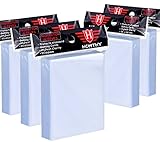
- High Capacity: Each package contains 5 pack ( one pack contains 500 Pcs card sleeves), a total of 500 clear card sleeves. Enough to meet your need for storing and protecting cards.
- High Quality: Superior plastic material are made of non-PVC and no acid polypropylene ensures it sturdy and durable, and largely prevents your cards from damaging, scratching,and fad, provide perfect protection for your trading cards.
- Transparent Card Sleeves: The trading card sleeves are made by transparent and clear material, your cards will be displayed clearly in the card sleeves, convenient for you to insert and take out your trading cards.
- Wide Application: Compatible with all standard sized trading cards, such as Football cards, baseball cards, Gaming Cards, MTG cards, Yugioh cards, proxy cards, mini photos, etc.
- Ideal Present for Card Collectors: It's a perfect present to send your friends who have a hobby of collecting cards, it can provide a home to store your cards. If you encounter any issues with our product, you can contact us and we will try our best to help you.
Assess condition from the actual copy
Price references often describe a specific condition. PokeValues states that its ungraded figure is based on TCGplayer market price calculated from completed sales and concerns near-mint ungraded cards. That figure is a reference for a near-mint raw copy, not a guaranteed amount for every physical card.
Inspect four areas under good light
- Edges: look for whitening, chips, dents and edge wear, especially on the back.
- Corners: check for softening, bends, whitening and compressed tips.
- Surface: look for scratches, print lines, dents, stains, residue and fading. Tilt the card to catch shallow marks.
- Structural damage: identify bends, creases, waves, water damage or evidence that the card was altered.
Handle the card by its edges and keep it in a sleeve while inspecting it. A sleeve protects the card during a meeting, but it does not raise the card’s market grade. If you cannot agree on condition, describe the visible defect and use the lower, more conservative comparison rather than silently applying a near-mint figure.
Keep raw and graded copies separate
A raw near-mint card, a played raw card and a graded card are three different comparison groups. A slab’s grade and label should match the exact printing you identified; a high grade on another set or artwork is not a substitute. Do not use a graded sale as a direct comp for an ungraded card, or vice versa. If the other trader values a card as near mint while you see played-level wear, pause and agree on the condition assumption before adding prices.
Quick wins for a faster PC:
Fix the driver behind crashes, sound loss and screen glitchesFind Drivers →Clear out junk files and repair common Windows errorsFree Scan →Choose the market and currency first
Prices describe a market, not an abstract global number. US and European sources may reflect different buyers, inventory and transaction conditions. Select a marketplace or guide appropriate to where the trade will occur and keep observations from different markets visibly separated.
Rank #2
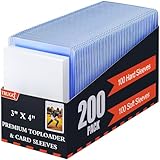
- CARD SLEEVES TOP LOADERS SETS:(100ct Hard Card Sleeves and 100ct Soft Card Sleeves) are colorful and meet different collection needs. Each set is carefully packaged to prevent damage during transportation.
- PERFECT FIT FOR STANDARD SIZE CARDS: Top Loader measures 3“ x 4” and holds game and sports cards up to 2.5“ x 3.5” and up to 35pt thick. Soft Sleeve measures 2.6“ x 3.7” and is designed to fit standard-sized cards, keeping every card in good hands: designed to securely hold and display trading cards in place and protect them from damage.
- HIGH QUALITY MATERIAL&CLEAR AND DURABLE: The Card Top Loader is made of high quality PVC, acid-free, scratch-resistant, abrasion-resistant, durable and tough, like a strong shield. High quality ensures worry-free daily use for card collectors, and high transparency makes the contents of the card visible at a glance.
- MULTIPURPOSE PROTECTION FOR PEACE OF MIND: The Baseball Card Top Loading pouch is extremely sturdy and prevents valuable collectible cards from bending, fraying and damaging during transportation. They also protect cards from water, scratches, fading and fingerprints during everyday storage and display. Soft card sleeves protect against scratches. Deuble protection keeps cards in perfect condition after long-term storage,Ideal for storing and displaying cards of all types and sizes.
- APPLICABILITY AND VALUE: The Hard Card Sleeves is suitable for collecting all kinds of standard cards, such as baseball cards, soccer cards, MTG cards, game cards, K-pop photo cards and so on. All-round protection of cards from damage, important for transportation and collection.
Keep currencies distinct
Record each observation in the currency reported by the source. Do not place USD and EUR figures in one average. If you convert, write down the exchange rate and conversion date, and remember that an exchange-rate calculation does not remove differences in local demand, taxes, shipping or buyer fees. A trade completed locally may be worth less than an online listing after postage and transaction costs.
Account for the way the trade will actually happen
- Local, face-to-face trade: compare with evidence from the same broad geography where possible; there is no shipping benefit to the party handing over a card in person.
- Online swap or sale: consider postage, platform fees, payment fees and the risk of returns when translating a headline price into an offer.
- Cross-border transaction: keep the source currency and market visible, then make any conversion explicit. Customs, delivery time and import charges can change the practical value.
These adjustments are about what the parties receive, not about changing the card’s identity. Record the unadjusted observation first so another person can see how your estimate was formed.
Understand what each price number measures
Price sources use different bases. The Pokémon TCG API price-object documentation distinguishes offers, sales and derived or published values and cautions against mixing them. Use the label attached to every figure.
| Evidence type | What it tells you | What it does not prove | How to use it |
|---|---|---|---|
| Asking price | What a seller is requesting for an available card. | That a buyer will pay it, or that the item will sell at that amount. | Use as a current offer reference; do not count it as a completed transaction. |
| Completed sale | A recorded transaction price. | That every copy of the card should sell for the same amount; condition and timing still matter. | Prefer like-for-like sold records when estimating a trade. |
| Guide value | A published reference calculated using a stated method. | That it is a guaranteed cash offer or that it reflects your local market exactly. | Read the guide’s condition, currency and calculation notes before using it. |
| Derived value | A value calculated from other observations, such as a median. | That the underlying sample is large, recent or free from outliers. | Use it with the source’s methodology and sample context. |
Never average active listings with completed sales as if they were the same measurement. If you show both, place them in separate columns and label the basis. TCGplayer’s help material explains market-price and price-point concepts, while the API documentation describes how source and basis fields are represented; use those definitions rather than guessing from a number alone.
Rank #3
- 🔸【UPGRADED MATERIAL】- JIQEZNL penny card sleeves made of hard PVC which is acid-free, ensure that clear card sleeves is sturdy and durable; Meanwhile high clarity easy to use and offer a clear view of your cards, making them perfect for displaying and storing your cards
- 🔸【EXCELLENT PROTECTION】- Soft sleeves for trading cards are made by durable flexible material ensures that your cards are pristine during long-term storage without the trouble of fading; Also keep your valuable collectible trading cards from dust in the mail or in the carrying; Even protect your cards against dust, water and fingerprints for storage and display; offering a cost-effective, convenient, and hassle-free solution for collectors
- 🔸【UNIVERSAL SIZES】- Penny card sleeves with dimensions: 66 X 91mm, perfectly sized fit for standard 2 1/2 x 3 1/2 trading or sports game cards; and the snug yet easy-to-use opening allows for effortless card insertion and removal, so you can be sure that your lovely cards will stay secure and easy to handle
- 🔸【WIDE APPLICATION】- Pokemon penny sleeves are good to organizing and displaying your collection and will fit various types of cards, such as trading cards, baseball cards, sports cards, Pokemon Card, MTG, Yugioh cards, Kpop photo cards... An ideal gift for card collector, player, hobbyist, or professional trader
- 🔸【WORRY FREE AFTERSALES】- 1-Year money back protection by JIQEZNL! If you're not completely satisfied with your sport card sleeves for any reason, simply let us know and we promise will solve it for you with whatever it takes!
Use several recent observations, not one exciting result
One sale can be an outlier caused by an unusually high grade, a damaged copy, a bundle, an error in the listing or a buyer who paid a premium. Collect several observations that match the same identity, condition and market, then look for the cluster and the exceptions.
Read a history view carefully
PokeValues describes daily snapshots and a three-day median intended to smooth sporadic trades. A median can make an isolated high or low result less dominant than a single headline sale. It does not establish a universal ideal time window, and it cannot fix incorrectly matched printings or inconsistent condition descriptions. For cards that trade rarely, a thin sample may remain noisy even after a median is calculated.
A simple observation log
| Date observed | Source and market | Basis | Currency | Condition/grade | Price | Notes |
|---|---|---|---|---|---|---|
| Record the date shown by the source | Marketplace or guide and geography | Ask, sold, guide or derived | USD, EUR or reported currency | Near mint, played, raw or exact slab grade | Copy the figure exactly | Shipping, unusual defect, bundle or other context |
Sort the log by date and remove only observations that clearly refer to a different printing, grade or condition. Do not delete a legitimate high or low sale merely because it makes your preferred value inconvenient; mark why it is unusual and explain whether it belongs in the comparison.
Do these 3 things before closing this tab:
1Repair Windows errors before they cause bigger problems2Fix the driver behind crashes, sound loss and screen glitches3Clear out junk files and repair common Windows errorsTurn the evidence into a fair trade estimate
The goal is not to discover a permanent “true price.” It is to create a transparent, defensible estimate for two specific cards at a particular time and in a particular market.
Rank #4

- 1000 COUNT BULK VALUE FOR LARGE COLLECTIONS: Stock up with 1000 clear penny sleeves designed for card breakers, card shops, online sellers, collectors and hobby stores. The large bulk pack makes it easier to sort, protect, display and prepare thousands of cards while reducing the need for frequent reordering—an economical choice for high-volume card storage and daily packing needs.
- STANDARD SIZE FOR TRADING AND SPORTS CARDS: Each soft card sleeve measures approximately 66 x 91 mm and is designed to fit standard 2.5 x 3.5-inch cards. Ideal for baseball cards, football cards, basketball cards, hockey cards and other collectible cards, providing a smooth fit without adding unnecessary bulk to your collection.
- CLEAR PP MATERIAL FOR EASY CARD VIEWING: Made from transparent polypropylene material, these trading card sleeves help keep card artwork, names, statistics and details clearly visible. The lightweight soft plastic creates a protective barrier against dust, fingerprints and everyday surface scratches, making the sleeves suitable for organizing, displaying, selling and long-term card storage.
- FITS INSIDE TOP LOADERS AND BINDER PAGES: Use these soft penny sleeves as the first protective layer before placing valuable cards into compatible rigid top loaders, storage boxes or 9-pocket binder pages. The slim design helps cards slide in smoothly while reducing direct contact with harder plastic surfaces, giving collectors a practical two-layer protection solution for valuable or frequently handled cards.
- VERSATILE PROTECTION FOR COLLECTORS AND CARD BREAKERS: Perfect for sorting new card breaks, preparing online orders, organizing large collections, storing sports cards or protecting cards during trading events. Whether used at home, in a hobby shop or at a breaker station, the bulk card sleeves keep supplies ready for everyday use and help make card handling, packaging and collection management more efficient.
- Complete the identity worksheet for both cards, including language, finish and collector number.
- Assign a condition or grade after inspecting each physical copy. If a card falls between descriptions, state the visible wear and use a conservative category.
- Select one evidence basis for the main comparison—preferably comparable completed sales, or a guide value whose method and condition match. Keep asks and guides in separate supporting columns.
- Collect multiple matching observations and note the date, source, currency and market for every row.
- Identify the central range of the matching observations. A cluster is more informative than the maximum sale; an isolated result should be discussed rather than silently adopted.
- Adjust for the transaction by accounting for shipping, fees and currency conversion only when those costs will actually apply.
- Write the assumptions beside the numbers: for example, “raw, played, English, local-market completed sales, reported in USD.”
Example of a transparent comparison
Suppose one trader offers an English raw card with edge whitening for an English raw card that appears near mint. You would first verify that both collector numbers and artworks match the intended printings. Next, you would record played-condition completed sales for the first card and near-mint completed sales for the second, keeping each currency and market separate. A near-mint guide figure for the first card would not be applied unchanged because the physical copy is played. If the available history contains only one sale for either card, state that the estimate is uncertain instead of presenting the result as precise.
Independent reader supportYour contribution helps us test, update, and keep practical guides available for everyone.When two sources disagree
Disagreement is often a sign that the inputs differ. Work through the axes below before deciding that one source is “wrong.”
- Identity: recheck set, number, artwork, language and finish from the image.
- Condition: compare near-mint, played and damaged copies separately; inspect the back as well as the front.
- Grading: remove slabbed sales from a raw-card sample unless you are making a separate graded comparison.
- Market: a US observation and a European observation may represent distinct buyer pools.
- Currency: do not average figures reported in different currencies.
- Basis: an asking price, a sold price and a guide value answer different questions.
- Recency and sample: a recent isolated result can be less informative than a consistent cluster for an infrequently traded card.
After aligning the axes, you may still have a range rather than one number. Present the range and the assumptions. A range is more honest than false precision when sales are sparse or the card’s condition is debatable.
Common pricing mistakes and how to correct them
Using rarity alone
Rarity can help explain why a card attracts attention, but it does not identify the printing or guarantee a value. Correct the mistake by matching the card number, artwork and finish first, then checking market evidence.
Best Value

- 【PACKAGE INCLUDED】 You will get 200ct Hard Sleeves and 200ct Soft Sleeve, which will keep your collectible trading cards safe from water, dirt, and dust while keeping them looking new.
- 【STANDARD SIZE】 3" x 4" sized card protectors hold 2-1/2" x 3-1/2" standard size trading cards and sports cards up to 35pt thickness. 2-5/8"x3-5/8" standard size soft soft sleeves.
- 【CLEAR & THICK MATERIAL】 The card holders are made of quality PVC which is acid-free, anti-scratch, and heavy-duty, premium quality allows it stands up to your daily use by any card collectors. High clarity lets you read your cards effortlessly.
- 【EXCELLENT INVEST & PROTECTION】 The hard plastic card sleeves are sturdy enough to keep your valuable collectible trading cards from bending, scuffs, and marring, and protect your cards against water, scratches, fading, and fingerprints for daily storage and display.
- 【WIDE APPLICATION】 Perfect for collecting any type of standard cards, such as Sports Cards, Baseball Cards, Football Cards, Yu Gi Oh, MTG, Kpop Photocard Cards, and more other cards.
Taking the highest listing as the value
An active listing is an offer, not proof of a sale. Move it to a separate asking-price column and look for completed transactions that match condition and market.
Applying a near-mint guide to a played card
Played copies trade below a near-mint reference according to PokeValues’ condition guidance. Inspect the actual defects and use played-condition evidence where available.
Mixing raw and graded data
A slab grade changes the comparison group. Keep graded records separate and match the grade and exact printing when using them.
Combining currencies without a note
Retain the reported currency in every row. If conversion is necessary, show the rate and date and remember that local-market differences remain after conversion.
Trusting a single unusual sale
Check several observations or a history view. Mark unusual results and explain why they may not represent the ordinary trade range.
Five-minute checklist before you agree
- Have I matched the set, collector number, artwork, language and finish?
- Did I inspect edges, corners, surface and bends on the actual card?
- Are both cards being compared as raw or graded, with the grade recorded where applicable?
- Are the figures from the same market and shown in the same currency, or is any conversion explicit?
- Did I separate asking prices, completed sales, guide values and derived figures?
- Did I check more than one recent observation and flag any outlier?
- Have I written the condition assumptions and transaction costs beside the estimate?
- Am I applying the same method to both sides of the trade?
If any answer is no, pause the negotiation and gather the missing information. A short delay is preferable to agreeing on a number that describes a different card, condition or market.
Quick Recap
Product prices and availability are accurate as of the date/time indicated and are subject to change. Any price and availability information displayed on Amazon at the time of purchase will apply.

