Quick wins for a faster PC:
Fix the driver behind crashes, sound loss and screen glitchesFind Drivers →Repair Windows errors before they cause bigger problemsFix Now →Scan for outdated or missing drivers - takes under a minuteDriver Scan →The safest way to assess a used electric vehicle is to obtain a dated, VIN-linked battery report, confirm exactly what its percentage measures, and then test the vehicle’s practical range against your routes. Do not confuse state of health (SoH) with the charge shown on the dashboard (state of charge, or SoC), and do not treat a displayed range estimate as a capacity test.
Battery warranties, diagnostic procedures and degradation thresholds vary by model, model year and country. Use the vehicle identification number (VIN) to verify the original in-service date, warranty terms, repair history and whether any report applies to the exact car you are considering.
As an Amazon Associate I earn from qualifying purchases.
Battery health is not the same as battery charge
State of charge (SoC) is how much energy is in the pack now—for example, 62% on the instrument panel. State of health (SoH) describes the pack’s condition compared with when it was new. A car can show 100% SoC while having considerably less usable capacity than it had when new.
Free tools Windows power users keep installed
One-click scans. No signup required.
New Zealand’s Energy Efficiency and Conservation Authority describes SoH as a way to judge how much useful life a used EV battery has left. Australian government guidance similarly describes SoH as condition or performance relative to the original battery. A percentage has meaning only when you know the vehicle, software, test method and definition behind it.
#1 Best Overall

- NOTE: It requires a compatible third-party app and is designed primarily for standard OBD-II diagnostics. It is not a full-system scanner. Advanced or vehicle-specific functions depend on your vehicle and the app. Please check compatible apps and supported functions before purchase.
- STANDARD OBD-II FUNCTIONS – read & clear trouble codes for check engine light, view freeze frame data, I/M readiness, and live sensor data to help monitor vehicle health and diagnose check engine problems.
- VEHICLE COMPATIBILITY – Works with most 1996+ cars and light trucks in the US for standard OBD-II diagnostics functions. Support for EVs & PHEVs is app-dependent; please use Apps developed for EVs such as Car Scanner ELM OBD2 to check compatibility or contact Veepeak.
- EASY BLUETOOTH CONNECTION: Supports Bluetooth LE for iOS & Android (not WiFi): please connect from within the app after setting the correct connection type. Also supports classic Bluetooth mode for Android. Android head units may not be supported.
- APP COMPATIBILITY: Compatible with generic Apps including Car Scanner ELM OBD2, Torque (for Android), OBD Fusion, as well as vehicle-specific Apps like BimmerCode*, BimmerLink*, OBD JScan, Dr. Prius, OBDocker, etc. Note: some Apps or in-App features require separate purchase from third party developers. NOT compatible with Carly, MHD, xHP, ProTool, bootmod3, etc.
| Reading or term | What it tells you | What it does not prove |
|---|---|---|
| State of charge (SoC) | Energy currently available in the pack. | How much capacity the pack has lost over time. |
| State of health (SoH) | Estimated or measured capacity/performance relative to new, depending on the test. | That the number was produced by a comparable test on another vehicle. |
| Usable capacity | Energy the car allows you to use between its operating limits. | Total physical cell capacity or future degradation rate. |
| Full-charge range estimate | The vehicle’s current prediction of distance at a full charge. | A laboratory range result or a direct measurement of battery capacity. |
| Fault scan | Active or stored diagnostic codes detected by the scan tool. | Proof that the pack has its original capacity. |
| Charge bars | A model-specific visual indicator; some Nissan Leaf versions show up to 12 bars. | A universally comparable SoH percentage. |
Start with the exact vehicle, not a generic battery rule
Before arranging a test, record enough information to tie every result to the car you may buy. The same model name can cover different battery sizes, software revisions and warranty terms.
- Record the identity: make, model, trim, model year, mileage and VIN.
- Find the original in-service date: this is often more important for warranty expiry than the date of manufacture or registration.
- Ask what battery is fitted: establish whether the traction battery is original, partially repaired, rebuilt or fully replaced.
- Request supporting records: ask for invoices, dealer job cards, recall work and battery-related service notes.
- Confirm the market: a vehicle imported from another country may have different warranty language, charging equipment and diagnostic access.
NIST’s used-EV valuation work treats original packs, partial cell replacement and full pack replacement as separate attributes. That distinction matters: a replacement can improve present capacity, but it also changes the age and documentation you should verify.
Get a dated battery report instead of guessing from the dashboard
Ask the seller for the best existing evidence
Request a dated manufacturer or workshop report linked to the VIN. Ask whether the result is a capacity estimate, an SoH percentage, a range estimate, a fault scan or a warranty pass/fail outcome. Those outputs answer different questions and cannot be substituted for one another.
PC Slower Than It Used to Be?
A free scan shows the junk files, broken settings and background clutter dragging Windows down - then fixes them in one click.Free scan · Windows 10 & 11Crashes, No Sound, or Screen Glitches?
Random freezes, missing sound and display glitches usually trace back to one bad driver. Find and replace yours safely.Free scan · under a minuteArrange an independent inspection when evidence is incomplete
Australian government buying guidance says many EVs expose health data through onboard diagnostics or apps, but an independent check may be preferable. An EV-experienced mechanic can inspect the high-voltage system, charging equipment, cooling system, isolation faults and stored codes in addition to reviewing battery data. Ask the provider what software and hardware are compatible with the exact make, model and year.
Use an OBD reader only when compatibility is confirmed
A vehicle-compatible OBD data reader or Bluetooth adapter can be useful, but there is no universal guarantee that an adapter or app will expose traction-battery data. Verify compatibility first and ask which values the tool actually reads. A generic scan that reports no fault codes is not automatically a capacity test.
Rank #2
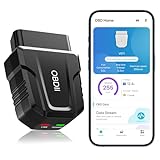
- 【Comprehensive Performance Testing】V011 OBD2 Scanner provides a complete diagnostic solution, giving you a thorough understanding of your vehicle's condition. It supports a variety of performance tests, support 9 protocols,👍automotive fault clearing,including fast reading of DTCs, access to electronic emission readiness, turning off CEL or MIL, resetting monitors, reading live data and retrieving the vehicle's VIN, freeze frame, sensor data, data streaming, diagnostic reports, onboard monitoring, live data streaming, and more. With these features, you can monitor your car's performance in real time and discover potential problems before they become major issues.
- 【Convenience and Savings for All Users】Designed with user-friendliness in mind, the V011 OBD2 Scanner is perfect for both novices and seasoned car enthusiasts. The intuitive app helps you interpret the check engine light, and suggests possible fixes. This can help you avoid unnecessary trips to the repair shop and prevent you from being overcharged for repairs. The product also includes helpful how-to guides and video tutorials, empowering you to clear the check engine light yourself and save significantly on repair bills.The fault code can only be cleared after the car is repaired. ⚠️ Notice:lf the car is not repaired,the fault code can only be cleared by the computer in the 4s shop.
- 【Intuitive Data Visualization】Understanding car diagnostics has never been easier. The V011 OBD2 Scanner displays detected data in clear, easy-to-read charts. Whether it's engine coolant temperature, engine speed, vehicle speed, or control module voltage, the visual representation helps you quickly grasp your car’s status. Even beginners can compare these readings against normal values to determine if their car needs any repairs.
- 【Broad Compatibility】The newly upgraded V011 OBD2 Scanner supports over 96% of car makes and models, making it one of the most versatile diagnostic tools on the market. It is compatible with a wide range of brands including Toyota, Honda, Chevrolet, Ford, Mercedes-Benz, Jeep, BMW, Porsche, Subaru, Nissan, Cadillac, Volkswagen, and Lexus, covering vehicles from 1996 to the present. This ensures that almost any vehicle owner can benefit from its extensive features. The device also supports multiple languages, including English, German, Spanish, Finnish, French, Italian, Dutch, Portuguese, and Chinese, ensuring accessibility for a global audience.
- 【Advanced Bluetooth 5.4 Connectivity】Say goodbye to the hassle of traditional wired connections. The V011 OBD2 Scanner features an upgraded Bluetooth 5.4 system, providing faster and more reliable connections. This seamless connectivity ensures you can start diagnosing your vehicle without any delays.Tips: 1. The car must be started (power on and ignition), 2. The mobile phone Bluetooth is turned on. Note that Apple phones only need to turn on Bluetooth, do not connect Bluetooth in the phone settings to turn on OBD Home, the APP will automatically connect (this product is only suitable for OBD home)
Require these fields on the report
- VIN and vehicle identification.
- Test date and mileage.
- Diagnostic hardware, software and procedure.
- SoH percentage and/or usable-capacity estimate.
- Whether the value is measured, calculated or inferred.
- Active and stored battery-management faults.
- Pack, module or cell replacement history.
- Any tolerance, confidence range or warranty threshold stated by the provider.
- Technician or organization identification.
How common test methods differ
| Method | Useful for | Important limitation |
|---|---|---|
| Dashboard range at full charge | Seeing what the car currently predicts under its recent driving history. | It changes with speed, weather, terrain, heating or cooling, payload and driving style. |
| Onboard diagnostic or app reading | Obtaining model-specific battery data without dismantling the pack. | Access and definitions vary; some apps expose only estimates or limited values. |
| Manufacturer capacity test | Applying the maker’s defined procedure, often for a warranty decision. | May require specific charge levels, time and fault-code conditions; it is not universal across models. |
| Independent EV battery report | Getting a documented pre-purchase assessment and checking for inconsistencies. | Quality depends on the provider, equipment and compatibility with the vehicle. |
| Road test and charging observation | Detecting practical range, charging interruptions and abnormal behavior. | It cannot by itself isolate battery degradation from weather, route or driving style. |
Compare two reports only when their methods and definitions are comparable. A quick scan, a manufacturer capacity test and an independent estimate may legitimately produce different figures because they measure different things.
Model-specific procedures you should know
Tesla Model S Battery Health Test
The US Model S owner manual describes an energy-retention evaluation that uses battery-management data and compares expected retention for the battery type, age and use. The optional Battery Health Test requires AC charging, can take up to 24 hours, and has prerequisites including a low state of charge and no relevant active alerts. When complete, the touchscreen shows a percentage comparing energy retention with when the battery was new; the instrument-cluster range estimate may also be recalibrated.
Do these 3 things before closing this tab:
1Fix the driver behind crashes, sound loss and screen glitches2Clear out junk files and repair common Windows errors3Scan for outdated or missing drivers - takes under a minuteThis procedure applies to the described Model S feature. Do not assume that every Tesla model, software version or market offers the same test or requirements. Follow the current manual or ask an authorized service center for the exact car.
Volkswagen workshop testing
A Volkswagen Group of America technical bulletin released December 7, 2023 covers 2015–2019 e-Golf and 2021–2024 ID.4 vehicles in the specified US process. It directs technicians to address relevant battery-management fault codes before determining capacity. The procedure can produce a Battery Health Status and, when indicated, a longer Battery Health Certificate test. Customer-requested testing is not covered by the bulletin’s warranty policy.
Do not extend that bulletin to other model years, countries or Volkswagen vehicles. Ask the workshop to identify the applicable bulletin, market and warranty procedure in writing.
Rank #3
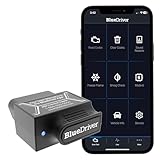
- [Diagnose Like a Pro] BlueDriver Pro is a professional OBD2 scanner and diagnostic tool that helps you scan, understand, and clear vehicle trouble codes with confidence. Turn your phone into a powerful car diagnostic scanner—no guesswork, no unnecessary repairs.
- [Read and Clear More Codes Than Ever] Read and clear more codes than basic car code readers. Access enhanced diagnostics for Check Engine, ABS, SRS, Airbag, TPMS, Transmission.
- [Verified Fixes and Real-Time Data] Get unlimited, technician-verified repair reports matched to your VIN, with definitions, causes, and confirmed fixes. Monitor live vehicle data as you drive, view freeze frames, check smog readiness, and analyze Mode 6 test results.
- [Wireless & Bluetooth Enabled] - Say goodbye to wires. BlueDriver connects with Bluetooth via your phone/tablet to a sensor that plugs into your car's OBDII port. Get all of the capabilities of an expensive code reader & scan tool without any annoying wires.
- [Broad Make & Model Coverage] Strong support for GM, Ford, Stellantis (RAM, Jeep, Chrysler), Toyota, Honda, Nissan, Mazda, Subaru, Hyundai, Mercedes-Benz, BMW, and VW.
Nissan Leaf battery bars
Some Nissan Leaf dashboards represent battery condition with the number of capacity bars remaining out of 12. Treat the bars as a model-specific indicator, not as a universal percentage. Ask for the vehicle’s diagnostic definition and supporting report if you need a precise comparison with another car.
How to read an SoH percentage
First identify whether the number refers to original capacity, usable capacity, energy retention or a warranty pass/fail test. NIST’s consumer valuation study defines SoH as the percentage of original capacity remaining and treats electric range separately as distance on a full charge under typical conditions. Those definitions help separate concepts, but they do not certify any particular car or diagnostic product.
Next check how the value was produced. An estimated number based on battery-management data may be useful, but it is not interchangeable with a controlled capacity test. Look for the test date, mileage and any stated tolerance. A report without a method is weak evidence even if its percentage looks reassuring.
There is no universal “good” cutoff
Warranty thresholds are tied to a vehicle, jurisdiction and procedure. A 70% capacity threshold appears in the Volkswagen US bulletin for its covered vehicles and process; it is not a general used-EV buying rule. A different manufacturer may use another threshold, test plan or exclusion.
A UK Parliament written answer on March 19, 2026 cited studies suggesting that the average battery retains between 81.6% and 85% of original capacity after eight years. That is a range of study estimates, not a prediction for an individual vehicle. Weather, storage, charging history, thermal management, chemistry and repair history can all affect a particular pack.
Rank #4

- Turn your iPhone, Android device, or Windows PC into a professional grade diagnostic scan tool.
- Recommended adapter for FORScan, Torque, BimmerCode, Dashcommand, AlfaOBD, Carista, and more.
- Enhanced OEM Support for Ford, GM, Mazda, Nissan/Infiniti, Toyota/Lexus/Scion, Honda, Hyundai, Kia.
- Clear check Engine Light and get more live parameters (ABS, SRS, TPMS, etc) than other scanners.
- Over-voltage and battery drain protection, and included firmware updates.
Do not use mileage as a substitute for health
Odometer mileage alone cannot establish SoH. EECA notes that a low-mileage EV can have reduced SoH, including after storage, while a higher-mileage vehicle with better SoH may be the sounder purchase. Ask how the car was stored and used rather than ranking cars by mileage alone.
Independent reader supportYour contribution helps us test, update, and keep practical guides available for everyone.Estimate the range you can actually use
Start with the exact model and trim
Record the original published range for the exact battery, trim and model year, then compare it with the report and a full-charge estimate. Do not compare a larger-battery trim with a smaller one or mix test-cycle figures from different markets.
Separate the car’s estimate from your route requirement
BMW notes that range varies with vehicle type, conditions, terrain and driving style. In practice, assess the routes you will drive, not just the maximum number on the screen. Consider:
- Winter or summer temperatures and whether the pack can precondition.
- Motorway speed versus slower urban driving.
- Elevation changes, wind and road surface.
- Heating, air conditioning and battery preconditioning.
- Passengers, luggage, roof equipment and towing.
- Availability and reliability of charging at home, work and on longer trips.
Use a conservative reserve for your normal journeys. A full-charge estimate is a prediction based partly on recent consumption; it can rise or fall after the vehicle learns a different driving pattern.
What’s actually slowing this PC down?
Pick the symptom - the matching free tool is one click away.
Observe a controlled charging and road-test session
- Note the starting SoC, displayed range and outside temperature.
- Charge using equipment known to be compatible with the vehicle and record the energy or percentage added if the charger provides it.
- Drive a representative route with the climate system set as you would normally use it.
- Record distance travelled, energy consumption and remaining SoC.
- Check for charging interruptions, warning messages, unusual heat, slow charging or abrupt percentage changes.
This observation helps you judge suitability and detect anomalies, but it does not replace a formal capacity test. A short drive cannot separate every effect of weather, traffic and terrain from battery condition.
Best Value

- NOTE: This device requires a compatible third-party app to operate and is primarily designed for standard OBD-II diagnostics. Please check the product description or user instructions before purchase for compatible apps and supported data & functions.
- GENERIC OBD-II FUNCTIONS – read & clear trouble codes for check engine light (CEL or MIL), view freeze frame data, I/M readiness, and live sensor data to help monitor vehicle health and diagnose check engine problems.
- DUAL MODE BLUETOOTH CONNECTION: Supports Bluetooth LE for iOS & Android (not WiFi): please connect from within the app after setting the correct connection type. Also supports classic Bluetooth for certain Android Apps. Android head units may not be supported.
- NOTE ON VEHICLE-SPECIFIC DATA: Availability of advanced data (e.g. EV battery SOH, transmission temperature) depends on the vehicle make, model and year. We recommend getting the Car Scanner ELM OBD2 app to verify if a suitable connection profile is available for your vehicle or the specific data you wish to monitor.
- NOTE ON ADVANCED FUNCTIONS: Advanced diagnostics (e.g. ABS, SRS, TPMS, BCM) may be available for certain vehicles through compatible third-party apps, which are usually paid. Special functions such as injector coding, EPB reset, ABS bleeding and oil/service resets are NOT supported.
Verify warranty protection in writing
Use the VIN with the manufacturer or its authorized network and request written confirmation of remaining time, mileage, capacity threshold, exclusions, transfer rules and required service records. Confirm whether a repaired or replaced pack changes the warranty start date or coverage.
| Published example | What it says | How to use it |
|---|---|---|
| Australian government buying guidance | Many manufacturers offer battery warranties of 8 years or 160,000 km. | Use this as general context only; verify the exact make, market and contract. |
| BMW USA certified all-electric vehicle information | Specifies an 8-year/100,000-mile battery warranty for the described US program. | Applies to that program and market, not to every BMW or other EV. |
| Volkswagen US technical bulletin | Uses a 70% capacity threshold in the covered warranty-test process. | Check that the car, model year, market and test procedure are covered. |
| UK Parliament written answer, March 19, 2026 | Reports study estimates of 81.6%–85% average capacity after eight years. | It is evidence about study averages, not a warranty promise or vehicle-specific forecast. |
Inspect charging hardware and the rest of the high-voltage system
Battery condition is only one part of ownership risk. Australian guidance recommends checking the plug type and inspecting the included cable and vehicle charge port. Confirm that the car can use the charging network you rely on, that the cable locks and releases normally, and that there is no corrosion, impact damage or heat discoloration.
Ask the inspector to check for high-voltage isolation faults, cooling-system leaks, warning lights, underbody damage, abnormal module temperatures and evidence of previous pack removal. A clean exterior and a normal dashboard do not rule out stored diagnostic codes.
What to do when the seller has no report
- Make inspection a condition of purchase: arrange an independent EV battery-health check or an inspection by an EV-experienced mechanic before paying a non-refundable deposit.
- Ask for access to the VIN: without it, you cannot reliably confirm warranty or service history.
- Define the deliverable: agree that the report will state method, SoH or usable capacity, fault codes, repair history and test date.
- Price the uncertainty: if the seller will not permit a meaningful inspection, treat the unknown battery condition as a material risk rather than assuming it is normal.
- Walk away when evidence conflicts: an unexplained mismatch between a claimed replacement and the service records warrants clarification before purchase.
Compare two used EVs with a decision matrix
When two cars appear similar, rank evidence quality and route suitability rather than choosing the one with the lowest mileage or highest dashboard range.
| Comparison axis | Questions to answer | Strong evidence |
|---|---|---|
| Verified battery condition | Is there a dated result tied to the VIN, and what does it measure? | Method-described OEM or independent report. |
| Usable range | Does the exact trim meet daily and longer-trip needs with a reserve? | Report plus representative road and charging observation. |
| Warranty protection | How much time and mileage remain, and is the warranty transferable? | Written VIN confirmation from the manufacturer. |
| Evidence quality | Are records consistent with the seller’s claims? | Invoices, service history and inspection findings that agree. |
| Charging practicality | Are the port, cable and local charging options suitable? | Physical inspection and a successful test charge. |
Questions to ask the seller or inspector
- What is the VIN-linked SoH or usable-capacity result, and when was it measured?
- Was the value estimated from battery-management data or established by a capacity test?
- Which software, diagnostic tool and procedure produced it?
- Are there active or stored battery-management fault codes?
- Has the pack, a module or individual cells been repaired or replaced?
- What is the original in-service date?
- What battery warranty remains, including its capacity threshold and transfer conditions?
- Can the vehicle complete an AC and DC charging session without errors?
- Which cables and adapters are included, and are they undamaged?
- Can I have an independent EV inspection before completing the purchase?
A practical pre-purchase checklist
- Write down make, model, trim, model year, mileage and VIN.
- Confirm the original in-service date and market.
- Obtain service invoices and battery-repair records.
- Request a dated, VIN-linked battery report.
- Identify whether the result is SoH, usable capacity, range, fault scan or warranty pass/fail.
- Check the test method, software and stated limitations.
- Verify active and stored high-voltage fault codes.
- Confirm remaining warranty time, mileage, threshold, exclusions and transferability.
- Compare the exact trim’s expected range with your routes and a conservative reserve.
- Inspect the charge port, cable and plug type.
- Complete a representative road test and, where possible, a test charge.
- Use an independent EV-experienced inspection if seller evidence is incomplete.
The buying decision should rest on documented battery condition, practical range, warranty protection and charging usability together. A single percentage or dashboard number cannot answer all four questions.
Quick Recap
Product prices and availability are accurate as of the date/time indicated and are subject to change. Any price and availability information displayed on Amazon at the time of purchase will apply.

