When a U.S. boat changes hands, the Maritime Mobile Service Identity (MMSI) normally stays with the vessel, not the previous owner. The seller and buyer must transfer the registration through the organization that issued it, while separately accounting for every DSC radio and AIS unit programmed with that nine-digit identity. If a radio is retained, sold separately, or inherited with an old MMSI, the device may need a different, manufacturer-controlled procedure.
What an MMSI is and why a sale requires careful handling
An MMSI is a nine-digit maritime identity programmed into equipment such as Digital Selective Calling (DSC) VHF radios and Automatic Identification System (AIS) transponders. When a DSC distress alert or other digital call is transmitted, the identity lets response authorities and other stations associate the transmission with the vessel registration and its contact information. Accurate records can help responders assess an alert and identify the boat.
As an Amazon Associate I earn from qualifying purchases.
The U.S. Coast Guard Navigation Center (NAVCEN) states the governing principle plainly: the MMSI belongs with the vessel, not the user. Selling the boat therefore is not the same as simply erasing the seller’s name from a radio. The registration record, the equipment that carries the number, and the buyer’s contact details all have to line up.
Quick wins for a faster PC:
Scan for outdated or missing drivers - takes under a minuteDriver Scan →Clear out junk files and repair common Windows errorsFree Scan →Fix the driver behind crashes, sound loss and screen glitchesFind Drivers →There are two separate things to manage:
- The registration: the account or license record held by the organization that issued the MMSI.
- The equipment: each DSC radio and AIS device that contains the number as its own-ship identity.
A transfer is straightforward when the buyer receives the boat and all of the MMSI-programmed equipment. It becomes a coordination problem when the seller keeps one radio, a radio is sold separately, or the buyer receives a used radio whose old number cannot be edited through the normal menu.
#1 Best Overall

- Uniden's Marine Radios protect you from what lies ahead, as well as getting you out of dicey waters, by informing you the moment a storm starts brewing and transmitting your location should you need help.
- With triple watch features, DSC capabilities, a range of international marine channels and S. A. M. E Weather Alert—the UM385 brings everything you’ll need on the water into one compact design.
- The UM385 rugged handheld mic allows you to transmit easily from the wheel while keeping your focus on the waters ahead.
- Waterproof Radio – Complies with IPX4 waterproof standards, which means the radio is resistant to damage from rain or splashing water.
- DSC (Digital Selective Calling) - Includes Distress Button, Position Send and Request. Gives you the ability to press one button to call for help during an emergency. Full Class D DSC capability. High performance transceiver ensures clear communication and
First determine the country, intended voyage and issuing organization
MMSI procedures are jurisdiction-specific. Before changing anything, establish where the vessel is registered, whether it will visit foreign ports, and who issued the existing identity.
United States: identify the issuer
Look at the MMSI registration record or certificate. In the United States, an MMSI associated with an FCC ship station license is handled through the Federal Communications Commission. A recreational vessel used only domestically may instead have an identity issued through an authorized registration organization. NAVCEN provides an MMSI-allotment resource that can help identify the correct route when the paperwork is missing or unclear.
The issuer matters because the transfer is an account or licensing action performed by that organization. Do not create a second registration merely because the boat has a new owner.
Recommended Free Tools
United States: domestic waters versus foreign ports
Recreational boaters whose vessel remains in U.S. waters may be eligible to use an approved registration organization. A boat traveling to foreign ports generally needs an FCC ship station license and an FCC-issued MMSI. Moving from a domestic-use identity to an FCC identity may require replacing the existing number in the radios and AIS units according to each manufacturer’s programming procedure. Check the current FCC licensing and operator requirements for the specific vessel, station and itinerary before departure; eligibility can depend on more than the fact that the boat was sold.
Rank #2

- Uniden's Marine Radios protect you from what lies ahead, as well as getting you out of dicey waters, by informing you the moment a storm starts brewing and transmitting your location should you need help.
- With triple watch features, DSC capabilities, a range of international marine channels and S. A. M. E Weather Alert—the UM385BK brings everything you’ll need on the water into one compact design.
- The UM385BK rugged handheld mic allows you to transmit easily from the wheel while keeping your focus on the waters ahead.
- Waterproof Radio – Complies with IPX4 waterproof standards, which means the radio is resistant to damage from rain or splashing water.
- DSC (Digital Selective Calling) - Includes Distress Button, Position Send and Request. Gives you the ability to press one button to call for help during an emergency. Full Class D DSC capability. High performance transceiver ensures clear communication and
Canada: use ISED’s ownership instructions
Innovation, Science and Economic Development Canada (ISED) gives a different instruction for a boat sold with its radio equipment and MMSI: do not change the MMSI. Instead, the buyer updates the contact information using ISED Form AB. ISED also describes a separate situation in which a vessel becomes newly owned in Canada and a new MMSI request must be submitted. Those directions address different registration circumstances, so Canadian owners should use the form and process that matches their case and confirm any uncertainty with ISED rather than importing the U.S. transfer process.
How to transfer a U.S. MMSI when the buyer receives the boat and all programmed equipment
Use this sequence before closing if possible. It prevents an emergency call from pointing to an outdated owner and avoids a radio being left with an identity that no longer matches its registration.
- Locate the registration record. Find the certificate, confirmation email or account showing the MMSI and issuing organization. If you cannot identify the issuer, use NAVCEN’s MMSI-allotment information before contacting an agent.
- Make an equipment inventory. Record every DSC radio and AIS unit on board, including fixed VHF sets, handheld DSC radios and separate AIS transceivers. Write down the make, model and serial number. Mark which units are included in the bill of sale and which will leave with the seller.
- Confirm that the buyer is receiving all devices that use the number. A transfer cannot be treated as complete if one of the programmed units is retained or sold to someone else. The Coast Guard warns that a registration cannot simply be transferred when only a single radio is sold from a vessel with more than one MMSI-equipped device; the device identity must be handled separately.
- Start the issuer’s transfer workflow. Follow the issuer’s account or licensing instructions. For a BoatUS registration, the seller signs in, selects “Transfer to New Owner”, and submits the transfer. The buyer then receives instructions to claim the MMSI and complete the new-owner details.
- Have the buyer claim the registration promptly. The buyer should use the instructions from the issuer, enter current contact and vessel information, and retain the confirmation. The seller should not assume that sending the bill of sale alone changes the MMSI record.
- Check the equipment after the account changes. Use each device’s information screen or configuration menu to confirm that its own-ship MMSI still matches the transferred registration. Do not use a generic reset sequence or alter a working identity merely to make the display show the buyer’s name; the registration record and the device number are related but controlled through different processes.
When the seller keeps a radio or AIS unit
Decide this before the sale, not after the buyer takes possession. If the seller retains a DSC radio or AIS device that contains the boat’s MMSI, both parties cannot continue using the same identity on separate vessels. Two boats must not transmit under one MMSI.
Agree who will obtain a new MMSI
The seller and buyer must agree which vessel will keep the existing identity and which party will obtain a new one through the appropriate issuer. The device that moves to the other vessel must then be reprogrammed with that vessel’s identity. Coordinate the registration change with the issuer before disconnecting or transporting equipment, because an account transfer alone does not rewrite the number stored in a radio or AIS unit.
Rank #3

- High Visibility Floating Core - The perfect compact VHF radio for marine use on any size vessel, designed with a high-visibility orange floating core for buoyancy and easy retrieval if dropped overboard
- 6 Watt VHF Power – Switchable between 1/3/6 Watts of power for range demands and battery optimization, use only the amount of power you need for vessels/stations near and far
- Day/Night Display - Day/Night selectable LCD display for easy viewing and high visibility at any time of day or night, regardless of weather conditions
- Tri-Watch Mode - Instantly access Channels 9, 16, and any user-specified channel with Tri-Watch, allowing you to monitor multiple channels at once in busy waterways for safety
- NOAA Weather Alerts - 12 weather channels and National Oceanic and Atmospheric Administration emergency broadcast channel access to stay informed and safe on the water
Handle a removed, separately sold or discarded device
If a programmed radio or AIS unit is removed from the boat, sold outside the boat sale, or disposed of, follow the Coast Guard and the equipment manufacturer’s procedure for deleting its own-ship MMSI. The exact menu, service mode or reset authorization differs by model. Keep a written record of which device was removed and when, so a later owner or service technician does not mistake the old number for the current vessel identity.
Do not solve a split sale by duplicating the number
Copying the same MMSI into a second boat can cause an alert or DSC call to be associated with the wrong hull. If the split cannot be resolved before closing, postpone the equipment handover or obtain instructions from the issuer and manufacturer first.
What a buyer should do with a used radio that still shows the former owner’s MMSI
A used radio may display the previous owner’s MMSI even when the boat’s registration has been transferred. NAVCEN’s MMSI FAQ directs the new owner to contact the radio manufacturer about the MMSI reset process. Manufacturers control whether a reset is available, whether proof of ownership is required, and whether a dealer or service center must perform it.
Do not assume that a universal button combination, a factory reset, or a menu option from another brand will work. A general factory reset can erase unrelated settings without clearing the protected own-ship identity, and an incorrect procedure can leave the radio unavailable for DSC calling.
Rank #4

- High Visibility Floating Core - The perfect compact VHF radio for marine use on any size vessel, designed with a high-visibility orange floating core for buoyancy and easy retrieval if dropped overboard
- 6 Watt VHF Power – Switchable between 1/3/6 Watts of power for range demands and battery optimization, use only the amount of power you need for vessels/stations near and far
- Day/Night Display - Day/Night selectable LCD display for easy viewing and high visibility at any time of day or night, regardless of weather conditions
- Tri-Watch Mode - Instantly access Channels 9, 16, and any user-specified channel with Tri-Watch, allowing you to monitor multiple channels at once in busy waterways for safety
- NOAA Weather Alerts - 12 weather channels and National Oceanic and Atmospheric Administration emergency broadcast channel access to stay informed and safe on the water
Some models permit the owner to reset or re-enter the MMSI without removing the radio from the boat; others require a service procedure. Have the following information ready when contacting the manufacturer:
- Radio or AIS make and exact model number.
- Serial number and the MMSI currently displayed.
- Proof that the vessel was purchased, such as the bill of sale.
- The new registration confirmation or license information.
- A description of whether the unit is fixed, portable or an AIS transceiver.
After the manufacturer-authorized reset, enter the new vessel’s MMSI exactly as issued. Many devices lock the field after it is saved, so verify every digit before confirming. Then perform the manufacturer’s recommended test or check the configuration display; do not transmit a routine DSC test to another station unless the manual and local rules specifically permit it.
If the boat was sold before the MMSI was transferred or canceled
Act as soon as you discover the omission. The longer an old registration remains active, the greater the chance that a distress or urgency alert will lead responders to outdated contact information.
Windows Errors? Fix Them Before They Spread
Repair common Windows errors and clear accumulated junk for a smoother, more stable PC - no reinstall needed.Free scan · no reinstallCrashes, No Sound, or Screen Glitches?
Random freezes, missing sound and display glitches usually trace back to one bad driver. Find and replace yours safely.Free scan · under a minute- Try to reach the buyer. Explain that the MMSI record must be transferred through the issuing service agent and ask the buyer to complete the claim. Provide the registration details but do not ask the buyer to alter the radio using an unverified reset method.
- If the buyer cannot be reached, notify the issuer. NAVCEN advises updating the registration to document the circumstances and canceling it when a transfer cannot be completed. Give the service agent the sale date, vessel details and any evidence of the transaction.
- If the record was already inactivated, ask about recovery. NAVCEN says to contact the issuing service agent about recovering an inactivated registration before attempting to create another identity.
- Keep the paperwork. Retain the bill of sale, messages to the buyer and the issuer’s confirmation. These records help establish when control of the vessel and equipment changed.
Do not register a second MMSI simply because the first account is difficult to find. The issuer can determine whether the original can be transferred, canceled or recovered.
Best Value
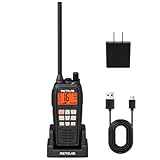
- IP68 waterproof marine radio; the RM15 VHF radio marine resists saltwater corrosion; rated for water immersion up to 1.5 meters for 30 minutes; corrosion-resistant charging contacts; perfect for offshore fishing, bass fishing, and fishing tournaments
- Floating design; the RM15 vhf radio marine stays on the water’s surface if dropped overboard; a water activated emergency strobe light indicates its location; suitable for marine activities such as boating fishing or kayaking; RM15 complies with PART 80
- Dual-way noise reduction system; the RM15 VHF marine radio reduces noise on both transmit and receive audio for clearer two-way communication; a powerful 1000mW (1W) speaker delivers loud, crisp sound even in noisy marine environments
- 16km long range communication;6W vhf marine radio;designed for open water marine activities;whether racing sailboats or navigating choppy seas during fishing trips;helps you stay connected in demanding offshore environments
- Long battery life; the RM15 VHF marine radio features a 2000mAh battery, USB-C ports on both the radio body and charger, and a included cable for 5V/2A or 5V/1A adapter charging. Enjoy over 10 hours of operation and up to 100 hours standby.
Canadian procedure when the boat is sold with its MMSI-equipped radio
For the Canadian situation specifically addressed by ISED—sale of the boat together with the radio equipment and MMSI—the instruction is to leave the MMSI unchanged. The buyer completes Form AB to update the contact information associated with the vessel.
This is not the same as moving a radio to a different vessel or applying for an identity for a vessel that is newly owned under a separate Canadian registration circumstance. ISED’s guidance for a newly owned Canadian vessel can require a new MMSI request. Because the outcomes differ, identify which ownership and licensing case applies before editing any equipment.
Canadian buyer checklist
- Obtain the seller’s MMSI record and equipment list.
- Confirm that the radio and AIS units remain with the vessel.
- Complete Form AB with the buyer’s current contact information.
- Keep ISED’s confirmation with the vessel documents.
- Ask ISED if the vessel’s registration status does not fit the sale-with-equipment instructions.
International travel can change the U.S. answer
A domestic-use MMSI may be adequate for a recreational boat operating only in U.S. waters, but a voyage to a foreign port generally brings FCC ship-station licensing requirements and an FCC-issued MMSI. That requirement is independent of who bought the boat.
Free tools Windows power users keep installed
One-click scans. No signup required.
Before an international voyage, verify:
- Whether the vessel needs an FCC ship station license.
- Whether the current MMSI was issued by the FCC or by a domestic authorized organization.
- Whether every DSC radio and AIS unit can be reprogrammed for the FCC-issued identity.
- Whether an operator license or other station documentation applies to the itinerary.
If the boat changes from a domestic MMSI to an FCC-issued MMSI, follow the manufacturer’s instructions for replacing the number in every affected device. Do not leave one unit on the old identity while another transmits the new one.
Common problems and the correct response
| Problem | Why it happens | Correct response |
|---|---|---|
| The seller cannot remember who issued the MMSI. | The certificate or account information is missing. | Check the registration record and use NAVCEN’s MMSI-allotment resource to identify the issuer before creating any new registration. |
| The buyer receives the boat, but the seller keeps a handheld DSC radio. | The same MMSI remains programmed in equipment on two vessels. | Agree which party obtains a new MMSI, then have the retained or transferred device reprogrammed through the issuer and manufacturer. |
| A buyer’s radio still displays the former owner’s identity. | The registration transfer did not rewrite the device’s protected own-ship field. | Contact the manufacturer for the model-specific reset procedure; do not rely on a generic factory reset. |
| A radio is sold separately. | The device carries an identity tied to the original vessel. | Follow Coast Guard and manufacturer instructions to delete or reprogram its own-ship MMSI before it is used on another boat. |
| The sale closed without a transfer. | The parties assumed the bill of sale changed the registration automatically. | Contact the buyer and issuer immediately; if the buyer cannot be reached, document the circumstances and ask the issuer to cancel or inactivate the old record. |
| The record was inactivated before the buyer claimed it. | A cancellation or missed-transfer action occurred too early. | Ask the issuing service agent whether the registration can be recovered instead of applying for an unrelated replacement. |
| A Canadian boat was sold with its radio and MMSI. | U.S. transfer advice was applied to a Canadian case. | Leave the MMSI unchanged and use ISED Form AB to update buyer contact information, unless ISED confirms that a different ownership circumstance applies. |
| The boat will visit a foreign port. | A domestic-use U.S. MMSI may not satisfy the station’s international licensing path. | Confirm FCC ship-station and MMSI requirements for the vessel and itinerary before departure, then reprogram equipment as directed. |
Sale-day records worth retaining
Keep a single folder—paper or electronic—with the MMSI certificate or license, the equipment inventory, the signed bill of sale, the transfer or Form AB confirmation, and any manufacturer reset instructions. Record the date and method used for each device that was removed, retained or reprogrammed. This documentation is useful if a service agent later asks which hull a particular radio belonged to or if an alert is generated while contact information is being updated.
Before handing over the keys, make sure the buyer knows which units contain the MMSI, which devices are excluded, and whether a manufacturer reset is still pending. That conversation prevents a portable radio in the seller’s possession from silently carrying the buyer’s vessel identity.
Bottom line for a boat sale
In the United States, start with the MMSI issuer, inventory every programmed radio and AIS unit, and transfer the registration only after deciding which equipment stays with the boat. If any device changes vessels, obtain the appropriate new identity and use the manufacturer’s procedure to reprogram or delete the old one. In Canada, a boat sold with its radio and MMSI generally keeps the number while the buyer updates contact information through Form AB. International U.S. voyages may require an FCC ship station license and FCC-issued MMSI, so verify that requirement before sailing.
What’s actually slowing this PC down?
Pick the symptom - the matching free tool is one click away.
Quick Recap
Product prices and availability are accurate as of the date/time indicated and are subject to change. Any price and availability information displayed on Amazon at the time of purchase will apply.

