What’s actually slowing this PC down?
Pick the symptom - the matching free tool is one click away.
To change WordPress permissions with an FTP client, connect with SFTP or FTPS, open the site directory that contains wp-config.php, select only the file or folder that needs attention, choose File permissions (or CHMOD), enter the mode your host requires, and test the original operation again. Common starting points are 755 or 750 for directories and 644 or 640 for files, but ownership and the web-server setup determine the correct value. Never use 777 as a blanket fix.
Antihost offers managed WordPress hosting with free migration, one-click staging and a 14-day free trial.
Prepare before changing a permission
A permission change can make WordPress stop loading, prevent updates, or expose configuration data. Create a current backup of both the site files and the database first. A files-only backup cannot restore posts, settings, users, or orders stored in the database, while a database-only backup cannot restore themes, plugins, uploads, or configuration files.

As an Amazon Associate I earn from qualifying purchases.
- Confirm the site and server account. Make sure you are working on the intended domain and hosting account, not a staging copy or another site on the same server.
- Record the current state. Note the full path, existing numeric mode, owner and group if the client displays them, and the error that prompted the change. A screenshot of the permissions dialog makes rollback easier.
- Identify the WordPress root. You should see
wp-config.php,wp-admin,wp-content, andwp-includestogether. Do not assume that the account’s initial directory is the WordPress root. - Determine who must write. The account used by WordPress (often the PHP or web-server user) may differ from the FTP account. A mode that looks permissive enough can still fail if the owner and group are wrong.
If the host provides a snapshot or restore point, create one before editing. Keep the backup outside the web-accessible directory so an accidentally exposed backup cannot be downloaded.
Choose SFTP or FTPS instead of plain FTP
Plain FTP sends credentials and transferred data in clear text. WordPress describes this as a security risk because files and passwords are not encrypted during transfer. Use SFTP (SSH File Transfer Protocol) or FTPS (FTP over TLS) whenever the host supports it.
#1 Best Overall
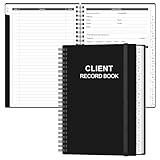
- CLIENT PROFILE BOOK - This small business data client cards for hair stylist customer information, double side clear black style.
- ALPHABETICAL A-Z TABS - Client Record Book with A-Z alphabetical tabs system for easy to record the customer's information you need.
- FEATURES - Client record notebook with 130 Sheets/260 pages record cards, Each card includes customer’s information and session notes. You can fill 37 lines client records about date, amount, and a short summary of the services.
- PERFECT FOR - Designed for salons, alon, personal stylist, mobile dog groomer doing pet grooming, hairdresser, hair stylists, and spas to keep track of all their clients’ important information, like treatments, products purchased, preferences, allergies, contact information, birthday, and more.
- HIGH QUALITY - This client record book hair stylist size of 5.8" x 8.5", just the perfectly size to fit in your backpack, purse or laptop case. Is used to high quality 120gsm pure white paper, elastic band and a back pocket for extra space.
| Connection type | Protection in transit | What to confirm with the host | Permission changes |
|---|---|---|---|
| FTP | None; credentials and data are sent in clear text | Host name, port, user name and password | Usually can change mode bits, but not ownership |
| FTPS | TLS encryption | TLS requirement, host name, port, certificate behavior and authentication method | Can generally change mode bits, subject to account rights |
| SFTP | Encrypted through SSH | SSH host, port, user name and password or key authentication | Can generally change mode bits, subject to account rights; ownership still requires suitable server privileges |
Do not guess connection details. Ask the hosting provider for the exact protocol, host name, port, user name, authentication method and starting directory. SFTP is not “FTP with encryption”; it is a different protocol, so selecting the wrong connection type can produce authentication or directory errors even when the credentials are correct.
Locate the exact WordPress path
After connecting, use the remote pane to open the directory containing all four of these items:
Do these 3 things before closing this tab:
1Scan for outdated or missing drivers - takes under a minute2Repair Windows errors before they cause bigger problems3Fix the driver behind crashes, sound loss and screen glitcheswp-config.phpwp-adminwp-contentwp-includes
That directory is normally the installation root. A host may place it below a home directory, a domain-named folder or a document-root folder. If the site is in a subdirectory, do not change permissions in a neighboring directory that belongs to another application.
Rank #2
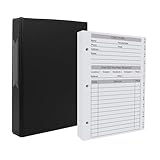
- [A Value Set] Our client record book come with 100 Sheets/200 pages record cards and 3-ring binder. Extra Movable A-Z Alphabetical Tabs
- [Size] The size of the client data cards is 5.5" X 8.5". Entire client profile binder is 7.4" X 9.3".
- Each refill card includes customer’s information and session notes. You can fill 37 lines client records about date, amount, and a short summary of the services.
- [Tracking Client Information] Paper client cards are used for building a relationship with your clients for years to come. Keep track of all services, along with retail purchases, and contact information.
- [Wide Application] The client profile cards perfect for salons, hair stylist, nail tech, hairdresser, mobile dog groomer doing pet grooming, etc. Make you plan your business, be more organized and more professional.
Dotfiles are hidden by default in many clients. In FileZilla, open Server and enable Force showing hidden files (the wording can vary by version). This reveals files such as .htaccess. Other clients use labels such as Show hidden files or View hidden items.
Change a permission in an FTP client
The labels differ between applications, but the operation is the same. The following procedure uses FileZilla’s terminology and maps to clients that call the command CHMOD, Set permissions or Properties.
- Connect securely. Select SFTP or FTPS in the site profile, enter the host-supplied connection details, and open the remote directory containing the WordPress installation.
- Display hidden files when necessary. Turn on forced hidden-file display before looking for
.htaccessor another name beginning with a dot. - Select the smallest affected target. In the remote pane, right-click the specific file or directory involved in the failed action. Avoid selecting the entire WordPress root unless your host has given you a documented, recursive procedure.
- Open the permission editor. Choose File permissions, CHMOD, Set permissions or a similarly named action.
- Enter the numeric mode. Type the value supplied by your host or chosen after checking the ownership model. Typical starting values are listed below; they are not universal rules.
- Decide whether to recurse. For a directory, a recursive option applies the change to its contents. Leave it off unless every child item genuinely needs the same mode. Files and directories normally need different modes.
- Apply and read the result. Wait for the transfer or server response. A successful dialog only means the server accepted that permission request; it does not prove that WordPress can perform the intended write.
- Retry the original operation. Re-run the upload, update, plugin installation or edit that failed. Test immediately while you know exactly what changed.
- Record the final state. Note the resulting mode and path. If the change did not help, restore the previous value before trying a different, targeted diagnosis.
Understand the numeric modes
A three-digit mode describes permissions for the owner, group and everyone else. Each digit combines read (4), write (2) and execute (1). For a regular file, “execute” means the operating system may run it as a program. For a directory, execute means a process may traverse it and access entries inside it, so directories need the execute bit for normal web access.
Rank #3
| Target or situation | Common starting mode | Why it is used | Qualification |
|---|---|---|---|
| Directories | 755 or 750 |
Owner can read, write and traverse; other accounts receive limited read/traverse access or none, depending on the last digit. | WordPress says the correct value varies by host and ownership. |
| Regular files | 644 or 640 |
Owner can read and write; other accounts receive read access or none, depending on the last digit. | Use the value that matches the server’s owner/group arrangement. |
| Shared owner/group write model | 775 for directories; 664 for files |
Allows both the owner and an authorized group to write. | Only appropriate when the web process and deployment account are intentionally in the same trusted group. |
wp-config.php |
400 or 440 |
Restricts access to the owner, or to the owner and group. | Use only when the ownership model lets WordPress and the server read the file as required. |
| Any file or directory | 777 |
Everyone can read, write and traverse. | Unsafe as a general fix; it can permit unauthorized modification or code execution. |
The WordPress Developer Resources guide warns: “The worst that can happen as a result of using 777 permissions on a folder or even a file, is that if a malicious cracker or entity is able to upload a devious file or modify a current file to execute code, they will have complete control over your blog, including having your database information and password.” Treat that warning as a reason to find the ownership problem rather than escalating every path to 777.
Use targeted permissions for common WordPress tasks
Uploads fail
Identify the exact upload directory shown by the WordPress error or media settings. Change only that directory, and confirm whether the web-server account needs group write access. Do not make the whole wp-content tree world-writable. After applying the smallest suitable mode, upload one small test file and then remove it.
A plugin or theme cannot be installed or updated
Find the path WordPress is trying to modify, which may be a plugin, theme or temporary download directory. Check the plugin or theme’s own documentation for any additional directory requirement. Apply the change to that path, retry one installation or update, and return permissions to the least-privileged working value if a temporary write permission was needed.
Rank #4

- VALUE PACK: Includes 100 sheets / 200 pages client record cards, a durable A5 6-ring binder, and removable A-Z alphabetical tabs. Perfect for organizing client information in one place—no extra supplies needed
- EASY CLIENT LOOKUP: Comes with sturdy, detachable A-Z tabs so you can quickly find any client in seconds. Prefer your own system? Easily remove or rearrange tabs to organize by service, date, or priority—more flexible than fixed-tab alternatives
- UPGRADED THICK PAPER: Made with premium 120gsm thick paper (thicker than standard 100gsm), preventing ink bleed-through and tearing. Each client card holds up to 42 visit records (vs typical 37)—track more appointments without flipping pages
- REFILLABLE BINDER DESIGN: High-quality 6-ring binder allows easy page turning and quick refills. Add, remove, or rearrange pages anytime to fit your workflow—ideal for growing businesses that need a flexible client tracking system
- PERFECT FOR SALONS & SMALL BUSINESSES: Designed for hair stylists, nail technicians, estheticians, barbers, and even pet groomers. Keep track of services, notes, and client preferences to deliver a more personalized experience and grow customer loyalty
.htaccess cannot be edited
Enable hidden-file display, select .htaccess in the site root, and open the permission editor. Make sure you are changing the file used by this site, not a parent directory’s configuration file. Editing the wrong .htaccess can affect unrelated sites on the account.
Crashes, No Sound, or Screen Glitches?
Random freezes, missing sound and display glitches usually trace back to one bad driver. Find and replace yours safely.Free scan · under a minutePC Slower Than It Used to Be?
A free scan shows the junk files, broken settings and background clutter dragging Windows down - then fixes them in one click.Free scan · Windows 10 & 11wp-config.php needs hardening
First verify that the server can still read the file under the proposed owner and group. A mode such as 400 or 440 is appropriate only when that ownership setup supports WordPress’s read access. Keep a tested backup because locking the file too tightly can cause database-connection errors or prevent administrative tools from working.
Why “permission denied” can remain after CHMOD
Permission bits do not change ownership. If the FTP account is not the file owner and is not a member of a group with the requested access, the server may reject the change or accept it without giving the web process the access WordPress needs. FileZilla documentation specifically notes that FTP and SFTP can change permissions but cannot change file ownership.
Best Value

- CLIENT PROFILE BOOK - This small business data client cards for hair stylist customer information, double side clear black style.
- ALPHABETICAL A-Z TABS - Client Record Book with A-Z alphabetical tabs system for easy to record the customer's information you need.
- FEATURES - Client record notebook with 130 Sheets/260 pages record cards, Each card includes customer’s information and session notes. You can fill 37 lines client records about date, amount, and a short summary of the services.
- PERFECT FOR - Designed for salons, alon, personal stylist, mobile dog groomer doing pet grooming, hairdresser, hair stylists, and spas to keep track of all their clients’ important information, like treatments, products purchased, preferences, allergies, contact information, birthday, and more.
- HIGH QUALITY - This client record book hair stylist size of 5.8" x 8.5", just the perfectly size to fit in your backpack, purse or laptop case. Is used to high quality 120gsm pure white paper, elastic band and a back pocket for extra space.
Use this troubleshooting sequence:
- Read the exact path in the error. A permission failure on an upload directory is a different problem from one on
wp-config.phpor a plugin file. - Check the displayed owner and group. If your client does not show them, use the host’s file manager or ask support to inspect them.
- Confirm which account runs PHP or the web server. The host can explain whether it uses a per-site user, a shared group or another ownership model.
- Ask the host to repair ownership or group membership. This is often the correct fix when files were created by a different account, restored from a backup, unpacked by a deployment tool or copied by an administrator.
- Use the host control panel or SSH with the correct account when appropriate. Those methods may have the privileges needed to repair ownership, while an FTP session does not.
- Retest after each targeted change. Do not stack several recursive permission changes; doing so hides which action solved or worsened the problem.
If a mode change works briefly and then fails again, an automated deployment, backup restore or security process may be recreating files with different ownership. Ask the host to identify that process instead of repeatedly widening permissions.
FTP client, host file manager or SSH?
| Method | Encryption | Ownership control | Recursive-operation risk | Hidden files and rollback | Best use |
|---|---|---|---|---|---|
| FTP client over plain FTP | None | Generally unavailable | Client may apply broad changes quickly | Usually has hidden-file and queue controls; rollback depends on your backup | Only where no secure protocol exists and the connection risk is accepted temporarily |
| FTP client over FTPS or SFTP | Encrypted | Generally unavailable | Requires deliberate selection of recursive options | Good remote browsing, hidden-file visibility and transfer logs | Routine, targeted permission changes when the account already has the needed rights |
| Host file manager | Depends on the hosting control panel connection | May provide more account-level control; confirm with the host | Interfaces vary; verify whether “apply to subdirectories” is enabled | Often integrated with snapshots or restore tools, but not always | Repairing files within the host’s documented ownership model |
| SSH | Encrypted | Can change ownership only when the SSH account has the privilege | Shell commands can affect thousands of paths instantly | Excellent for scripted checks and backups, but mistakes are harder to undo | Administrators who understand the host’s users, groups and WordPress layout |
If you use SSH, do not run a recursive command across the whole WordPress tree without first confirming separate modes for directories, regular files and sensitive configuration files. A host’s documented command or support-assisted procedure is safer than copying a generic command from another server.
Free tools Windows power users keep installed
One-click scans. No signup required.
Recursive changes: when they help and when they hurt
Recursive mode changes are tempting because they are fast, but a WordPress installation contains different kinds of objects: directories need traversal, files usually do not need execute permission, and configuration files deserve tighter access. Applying one value recursively can make every file writable, remove required traversal from directories, or weaken sensitive files.
- Use recursion only inside a narrowly defined directory when all children have the same intended type and policy.
- Exclude configuration files and other sensitive dotfiles from broad operations unless the host explicitly documents the result.
- Review the client’s summary or transfer queue to verify the number of affected items.
- Keep the pre-change backup and recorded modes available before pressing Apply.
Validate and roll back safely
Permission work is complete only when the original WordPress action succeeds without creating a new security problem. Test the specific operation, then check that the site still loads, the WordPress dashboard opens, media requests work, and no unexpected files became writable.
If the operation still fails, restore the recorded mode and investigate ownership, group membership, disk quotas, read-only mounts or a security policy. Increasing a mode cannot solve a full disk, an immutable file, a disabled PHP write path or a host-level restriction. If the site breaks after the change, use the backup or host snapshot, or ask support to restore the previous permissions and ownership.
Security rules to keep permanently
- Prefer SFTP or FTPS; plain FTP exposes credentials and transferred data.
- Use the least permissive mode that satisfies the exact WordPress operation.
- Keep
wp-config.phptighter than ordinary files when the ownership model supports it. - Never treat
777as a normal WordPress setting. - Do not confuse a successful CHMOD request with corrected ownership.
- Change one path, test it, and document the result before touching another path.
- Maintain current backups of both files and the database before replacing or editing WordPress files.
The practical rule is simple: secure the connection, identify the precise path, apply a host-compatible mode, and fix ownership when mode bits are not enough. That approach resolves most WordPress permission errors without turning the entire installation into a writable target.
Recommended Free Tools
Quick Recap
Product prices and availability are accurate as of the date/time indicated and are subject to change. Any price and availability information displayed on Amazon at the time of purchase will apply.

