Calculate Indian GST in five steps: identify the supply and its current rate, determine the taxable value, establish the legally relevant place of supply, apply taxable value × rate ÷ 100, then show the correct components on the invoice. An ordinary intra-State supply is reported as CGST plus SGST (or UTGST in a Union Territory); an inter-State supply is generally charged as IGST. The tax acronym does not determine the rate, and the buyer’s address or a parcel’s route is not, by itself, the place-of-supply test.
The calculation in one view
For a straightforward taxable transaction, use this sequence:
As an Amazon Associate I earn from qualifying purchases.
- Classify the supply and find its applicable rate. Use the current official rate entry, notification and any conditions for the particular good or service. Do not assume that every item is taxed at 18%.
- Find the taxable value. In a simple unrelated-party sale where price is the sole consideration, this is generally the transaction value. Statutory inclusions, qualifying discounts and special valuation rules can change the base.
- Determine the place of supply. Compare the supplier’s location with the legally determined place of supply under the transaction-specific rules.
- Apply the percentage. GST amount = taxable value × GST rate ÷ 100.
- Split and document it. In the ordinary intra-State case, divide the combined rate between CGST and SGST/UTGST. For an inter-State supply, apply the integrated rate as IGST and include the State name for the place of supply on the invoice.
| Transaction classification | Tax shown | Illustrative combined/rate treatment |
|---|---|---|
| Intra-State supply in a State | CGST + SGST | An 18% total example is 9% CGST + 9% SGST |
| Intra-Union-Territory supply where UTGST applies | CGST + UTGST | An 18% total example is 9% CGST + 9% UTGST |
| Inter-State supply | IGST | An 18% integrated-rate example is 18% IGST |
The percentages in the table are an arithmetic illustration only. The real rate depends on the product or service, classification, exemption status, conditions and transaction date.
How to calculate GST from taxable value
Use the basic formula
Once the taxable value and applicable rate are known:
#1 Best Overall

- LARGE EIGHT-DIGIT DISPLAY – Clear and easy-to-read 8-digit display, perfect for everyday calculations and ensuring accurate results in home or office settings.
- TAX & CURRENCY EXCHANGE FUNCTIONS – Effortlessly handle tax calculations and convert home currency to other currencies for easy financial management.
- GENERAL PURPOSE CALCULATOR – Ideal for a wide range of applications, from basic math to business and personal use, with memory keys for quick storage and recall.
- USER-FRIENDLY KEYBOARD – Easy-to-use layout, featuring square root, percent calculation, and simple functions that make it perfect for everyday tasks.
- COMPACT & PORTABLE DESIGN – Space-saving design that fits easily on any desk or in a briefcase, making it ideal for both home and office use.
GST amount = taxable value × rate ÷ 100
For example, if the established taxable value is ₹10,000 and the applicable total rate is 18%:
₹10,000 × 18 ÷ 100 = ₹1,800 GST.
If the quoted amount is GST-exclusive, the invoice total before other charges is ₹11,800. This calculation does not establish that a real transaction is taxable or that 18% is the correct rate; those questions must be settled first.
When the displayed price already includes GST
If a price is GST-inclusive, do not multiply the full amount by the rate. Extract the tax instead:
Quick wins for a faster PC:
Repair Windows errors before they cause bigger problemsFix Now →Fix the driver behind crashes, sound loss and screen glitchesFind Drivers →Clear out junk files and repair common Windows errorsFree Scan →GST included = inclusive price × rate ÷ (100 + rate)
Taxable value = inclusive price − GST included
At an illustrative 18% rate, a GST-inclusive price of ₹11,800 contains ₹1,800 GST and ₹10,000 taxable value. Confirm that the stated price is actually tax-inclusive and that the same rate applies before using this reverse calculation.
How to split GST into CGST and SGST or UTGST
Ordinary intra-State split
For an ordinary intra-State supply, the combined GST rate is generally divided equally between the central and State taxes. With an 18% total rate, each component is 9%:
- Taxable value: ₹10,000
- CGST: ₹10,000 × 9% = ₹900
- SGST (or UTGST where applicable): ₹10,000 × 9% = ₹900
- Total GST: ₹1,800
- Invoice total before other charges: ₹11,800
The equal split is the ordinary structure for a combined rate. It is not a substitute for checking the rate entry: a rate table can specify the component rates directly, and special schemes or entries may require different treatment.
Do these 3 things before closing this tab:
1Scan for outdated or missing drivers - takes under a minute2Clear out junk files and repair common Windows errors3Fix the driver behind crashes, sound loss and screen glitchesRank #2

- Profit margin calculation
- Quick and easy tax calculation
- Square root, sign change, and memory keys
- Attractive metallic design
- 12 digits
Union Territory supplies
Where the law applies UTGST rather than SGST, show CGST and UTGST as separate components. The arithmetic relationship in the 18% illustration remains 9% plus 9%, but the applicable territory and statutory conditions must be verified for the transaction.
Do not split IGST into two invoice taxes
For an inter-State supply, charge the applicable integrated rate as one IGST amount. An 18% example on ₹10,000 is ₹1,800 IGST, not two separately shown 9% taxes. IGST is generally structured as the sum of the corresponding CGST and SGST/UTGST rates, but the invoice presentation is an integrated-tax line.
How to decide between CGST plus SGST/UTGST and IGST
Start with the legal place-of-supply test
The general test compares the supplier’s location with the place of supply determined under the Integrated Goods and Services Tax Act. If both are in the same State or Union Territory, the supply is generally intra-State. If they are in different States, different Union Territories, or a State and a Union Territory, it is generally inter-State.
That short rule is only the starting point. Place-of-supply provisions differ for goods and services and can contain transaction-specific rules. The legal result is not determined merely by where a courier travels, where an order was placed, or which address appears on a billing record.
Cases requiring extra care
- Goods with unusual delivery arrangements: identify the statutory place of supply rather than relying on the shipping route.
- Services: apply the service-specific place-of-supply provision; the customer’s billing address alone may not resolve it.
- Imports: imports have special inter-State treatment and additional customs-related considerations.
- Exports: export status and zero-rating questions require the applicable statutory conditions, not just a foreign address.
- Special Economic Zones: supplies to or by SEZ units or developers are among the statutory exceptions that need their own rules.
- Related or distinct persons: ordinary transaction-value assumptions may not work, so valuation rules can affect the amount.
For a complex service, export or import, SEZ transaction, or unusual movement of goods, check the specific IGST Act rule and current notification or obtain professional advice before selecting the tax type.
How to determine the taxable value
Simple transaction-value case
For unrelated parties where price is the sole consideration, the CGST Act generally uses transaction value as the taxable base. Begin with the agreed consideration, then test whether statutory additions or exclusions apply.
Amounts that may be included
The valuation provision identifies additions such as incidental expenses charged by the supplier and specified sums for which the supplier is liable but the recipient incurs. Freight, packing, commission or similar amounts cannot be excluded simply because they appear on a separate line; their treatment depends on the statutory facts.
Rank #3
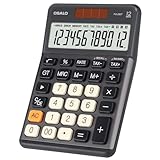
- 【Advanced Tax & Business Functions】Quickly set tax rates with dedicated TAX+/- keys and simplify budgeting via GT, MU, and memory keys (MRC/M+/M-). These tools enable seamless tax calculations and customizable rate settings for precise, tailored results—ideal for accountants, business owners, and professionals requiring accurate tax computations.
- 【Visualized Operation Symbol Display】When you would like to calculate the number, it will express the symbol (plus, subtract, multiply, or divide) on the screen. It can help you see the operation steps when you operate continuously.
- 【Efficient Dual Power System】The calculator uses high conversion rate solar panels, and solar power can be used in well-lit areas. At the same time, we provide a matching battery double safe uninterruptible power supply. The calculator will shut down automatically after 8 minutes without operation.
- 【Small Size, Large Display & Premium Build】It features a large LCD display with a 30° angled screen for clear visibility, paired with a high-grade metal panel and durable ABS buttons. The ergonomic button curvature aligns with natural finger movements, reducing errors and enhancing efficiency.
- 【Durable Construction and Portability】 Made of high-grade metal panel and durable ABS buttons, this 12-digit calculator is lightweight yet durable, capable of withstanding multiple impacts from desktop height. The large, clear LCD Display offers crisp, easy-to-read numbers, minimizing eye strain and ensuring professional-grade performance whether at home, in the office, or while traveling.
Discounts are conditional
A discount is not automatically removed from taxable value. Qualifying discounts can be excluded only when the statutory conditions are met. Check whether the discount was established at or before the supply, is linked to the relevant invoices where required, and whether the recipient’s input-tax-credit treatment creates an additional condition.
Free tools Windows power users keep installed
One-click scans. No signup required.
When a different valuation method applies
The valuation rules provide alternatives where ordinary transaction value does not settle the amount. They cover circumstances including related or distinct persons and supplies through an agent, and can use cost-based or residual methods. In those cases, the sticker price or amount collected is not necessarily the taxable value.
Find the correct GST rate before doing the arithmetic
Use the complete rate entry
The official Central Board of Indirect Taxes and Customs rate table presents separate columns for CGST, SGST/UTGST, IGST and, where relevant, compensation cess. It also describes the supply and lists conditions. A published goods row may, for example, show 2.5% CGST, 2.5% SGST/UTGST and 5% IGST. That row demonstrates the relationship between columns; it is not a universal rate for other goods or services.
For the transaction date, confirm:
- the exact goods or service classification;
- the applicable CGST and SGST/UTGST or IGST percentages;
- any compensation cess;
- exemption wording and eligibility conditions;
- value, quantity, customer, end-use or registration conditions; and
- the current notification in force on the date of supply.
Rates, entries and interpretations can change. A calculator cannot correct a wrong classification, and a familiar 18% example must never be treated as a default rate.
Worked calculations
Example 1: intra-State supply at an illustrative 18% rate
A supplier and the legally determined place of supply are in the same State. The transaction is taxable, the taxable value is ₹10,000, and the verified total rate is 18%.
PC Slower Than It Used to Be?
A free scan shows the junk files, broken settings and background clutter dragging Windows down - then fixes them in one click.Free scan · Windows 10 & 11Crashes, No Sound, or Screen Glitches?
Random freezes, missing sound and display glitches usually trace back to one bad driver. Find and replace yours safely.Free scan · under a minute| Line | Rate | Calculation | Amount |
|---|---|---|---|
| Taxable value | — | Established taxable base | ₹10,000 |
| CGST | 9% | ₹10,000 × 9 ÷ 100 | ₹900 |
| SGST | 9% | ₹10,000 × 9 ÷ 100 | ₹900 |
| Total GST | 18% | ₹900 + ₹900 | ₹1,800 |
| Invoice total | — | ₹10,000 + ₹1,800 | ₹11,800 |
Example 2: intra-Union-Territory supply at an illustrative 18% rate
Using the same ₹10,000 taxable value and 18% verified total rate, where UTGST applies, show CGST of ₹900 and UTGST of ₹900. Total GST remains ₹1,800 and the pre-other-charge invoice total is ₹11,800.
Example 3: inter-State supply at an illustrative 18% rate
The supplier and legally determined place of supply are in different States. The taxable value is ₹10,000 and the verified integrated rate is 18%.
Rank #4

- 【Pocket Size Calculator】This Pocket calculator weighs only 90 g and measures 13.5 x 9.8 x 2.3 cm,light and slim, which is only the size of the pocket.
- 【Visualized Operation Symbol Display】When you would like to calculate the number, it will express the symbol (plus, subtract, multiply or divide) on the screen. It can help you seeing the operation step when you operate continuously.
- 【Solar Power Calculator】The calculator uses high conversion rate solar panels,solar power can be used in well-lit areas.At the same time, we provide matching battery double safe uninterruptible power.The calculator will shut down automatically after 8 minutes without operation.
- 【ABS Engineering Plastic】This 12 digits calculadora is made of ABS high strength engineering plastics, light weight but durable. It can withstand the impact of falling on the height of the desktop for several times.
- 【30°Angled Desktop Calculator】 Screen of this desktop calculator is just opposite your sight, make all calculation easy to read. Separated big buttons, made of ABS plastic, match with your fingers’ curve, make your every press more accurate and work more efficient.
- IGST: ₹10,000 × 18 ÷ 100 = ₹1,800
- Invoice total before other charges: ₹10,000 + ₹1,800 = ₹11,800
These examples assume a taxable supply, a correctly established ₹10,000 base and an applicable 18% rate. They do not decide classification, exemption, place of supply or valuation for a real invoice.
Example 4: extracting tax from an inclusive price
Suppose ₹11,800 is expressly quoted as inclusive of an 18% GST rate. GST included = ₹11,800 × 18 ÷ 118 = ₹1,800. Taxable value = ₹11,800 − ₹1,800 = ₹10,000. If the applicable rate or inclusion statement differs, recalculate with those verified values.
What’s actually slowing this PC down?
Pick the symptom - the matching free tool is one click away.
Invoice details you must show
Invoice rules require the document to state the taxable value, rate of tax and amount of tax. For an inter-State supply, include the place of supply with the State name. In practice, the tax section should make the classification immediately understandable:
| Supply type | Tax lines for the example | Place-of-supply entry |
|---|---|---|
| Intra-State in a State | Taxable value ₹10,000; CGST 9% ₹900; SGST 9% ₹900 | Use the applicable invoice particulars; the inter-State place-of-supply field is not the defining line |
| Intra-UT where UTGST applies | Taxable value ₹10,000; CGST 9% ₹900; UTGST 9% ₹900 | Use the applicable invoice particulars |
| Inter-State | Taxable value ₹10,000; IGST 18% ₹1,800 | State name for place of supply is required |
Other supplier, recipient, document and supply particulars also apply under the invoice rules. The table focuses on the fields directly connected with calculating and displaying the tax.
Independent reader supportYour contribution helps us test, update, and keep practical guides available for everyone.A practical worksheet for every transaction
- Describe the supply. Record the product or service, relevant classification and whether it is taxable, exempt or otherwise covered by a special treatment.
- Check the current rate entry. Record each component rate, IGST rate, cess and conditions from the current official table or notification.
- Build the taxable value. Start with transaction value where permitted; add required incidental or other statutory amounts and remove only discounts that satisfy the legal conditions.
- Identify supplier location. Use the registration and location relevant to the supply, not an informal business description.
- Determine place of supply. Apply the goods or service rule and test for import, export, SEZ and other exceptions.
- Label intra-State or inter-State. Same State/UT is generally intra-State; different States/UTs or a State and UT are generally inter-State, subject to statutory exceptions.
- Calculate. Multiply the taxable value by the verified percentage and divide by 100.
- Split or consolidate. Show CGST plus SGST/UTGST for the ordinary intra-State case, or IGST for inter-State supply.
- Complete the invoice. Include taxable value, rate, tax amount and the inter-State place-of-supply State name, along with the other required particulars.
- Recheck rounding and records. Ensure component amounts add to the stated total and retain the classification, rate and valuation basis used.
Common mistakes and how to correct them
Assuming the rate from the acronym
CGST, SGST, UTGST and IGST describe how tax is levied and allocated; they do not tell you whether the rate is 5%, 12%, 18% or another percentage. Correct the mistake by looking up the supply’s full rate entry first.
Using the customer’s billing address as the whole test
A billing address can be relevant evidence, but it is not a universal place-of-supply rule. Apply the applicable statutory provision, especially for services, imports, exports, SEZ transactions and unusual delivery arrangements.
The Tool Desk
Outbyte Driver Updater FREEFix the driver behind crashes, sound loss and screen glitchesFind Drivers →Outbyte PC Repair FREEClear out junk files and repair common Windows errorsFree Scan →Charging CGST and SGST because the parcel stayed nearby
Physical distance or courier routing does not replace the legal place-of-supply analysis. Establish the place of supply before selecting the tax type.
Best Value

- Large 12 Digit Blue Fluorescent Display
- 2.5 LPS, 2 Color Ink Printer
- One-Touch Change Calculation Function
- Cost/Sell/Margin keys, Grand Total and Average
- Uses replaceable Victor ink roller IR40T
Treating the sticker price as taxable value in every case
Transaction value is generally used for a simple unrelated-party sale where price is the sole consideration. Incidental expenses, conditional discounts, related-party transactions and special valuation rules can change the base.
Splitting IGST on the invoice
When the supply is inter-State, show the applicable integrated tax as IGST. Do not print separate CGST and SGST lines merely because the integrated percentage equals their sum.
Copying a sample rate into a different product
A rate-table row is tied to its classification and conditions. Verify the exact entry and current notification for the transaction date.
Leaving the place of supply off an inter-State invoice
Invoice rules require the place of supply with State name for inter-State supplies. Add it before issuing the document and check the remaining invoice particulars as well.
When a calculator is not enough
Simple arithmetic is reliable only after legal classification and valuation are settled. Escalate the transaction for specialist review when:
- the supply combines goods and services or has several performance elements;
- the customer, supplier or intermediary is a related or distinct person;
- the transaction involves an agent, import, export or SEZ unit/developer;
- the service’s place of supply is not obvious from the customer’s location;
- a discount, reimbursement, subsidy or incidental charge affects consideration;
- the rate table contains conditions, exemptions or compensation cess; or
- the applicable notification may have changed since an earlier invoice.
In these situations, document the rule and facts supporting the result instead of relying on a generic online GST calculator.
Quick reference formulas
| Purpose | Formula |
|---|---|
| GST on an exclusive taxable value | Taxable value × rate ÷ 100 |
| Intra-State component in the ordinary equal-split case | Taxable value × (combined rate ÷ 2) ÷ 100 |
| GST included in a tax-inclusive price | Inclusive price × rate ÷ (100 + rate) |
| Taxable value from an inclusive price | Inclusive price − GST included |
| Inter-State tax | Taxable value × verified IGST rate ÷ 100 |
Use the equal-split formula only where the applicable rate entry and law produce the ordinary CGST-plus-SGST/UTGST structure. The rate and place-of-supply classification always come first.
Recommended Free Tools
Quick Recap
Product prices and availability are accurate as of the date/time indicated and are subject to change. Any price and availability information displayed on Amazon at the time of purchase will apply.

