Do these 3 things before closing this tab:
1Scan for outdated or missing drivers - takes under a minute2Repair Windows errors before they cause bigger problems3Fix the driver behind crashes, sound loss and screen glitchesBuild your grocery budget from your household’s own receipts, then adjust it using local prices and a regular review—not a blanket inflation percentage. In August 2026, U.S. food-at-home prices were unchanged from July and 2.2% higher than a year earlier, while food-away-from-home prices were 3.4% higher year over year. Those national figures describe different categories and do not predict what your household or nearby stores will charge.
1. Decide what your grocery budget includes
Choose a weekly or monthly budget period and use it consistently. Define “groceries” before you total receipts so that later comparisons are meaningful.
As an Amazon Associate I earn from qualifying purchases.
- Keep food bought for home separate from restaurant meals and takeout. USDA’s food-at-home price measure is distinct from its food-away-from-home measure.
- Decide whether household supplies, pet food, and prepared meals bought at a grocery store belong in your household category. If you include them, keep that definition consistent; an all-purpose shopping receipt is not directly comparable with an official food-only index.
- Choose a period that fits how you shop and get paid. A weekly target can make shopping decisions easier; a monthly target can suit households that shop less often or want to align with monthly bills.
2. Set a starting target from your own spending
Gather several weeks of grocery receipts, card statements, or transaction history. Sort out spending according to the boundary you chose, then calculate the average per budget period. This observed amount is a baseline, not an obligation: set the target to fit the money available and the household’s actual food needs.
What’s actually slowing this PC down?
Pick the symptom - the matching free tool is one click away.
Note the foods you buy regularly and any large, unusual purchases. If a total looks high, check whether it reflects higher prices, buying more, a different mix of products, a one-off stock-up, or a change in who is eating at home. Those factors affect spending differently, so an overall total alone cannot identify the cause.
#1 Best Overall
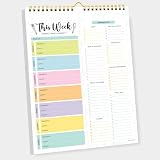
- CPC-CERTIFIED FOR SAFETY - This weekly meal planner for fridge features high-quality paper and strong magnets, all certified as child-safe. Tested to be LEAD-FREE and PHTHALATES-FREE, ensuring your peace of mind and your child's safety.
- PREMIUM QUALITY WITH STRONG MAGNETS - This menu planner and grocery list is made of thick paper with 4 strong magnets at the back, allowing you to easily plan meals. Stick this meal planner notepad on the fridge & stay focused on the upcoming meals.
- EASY TEAR-OFF GROCERY LIST - Plan, tear, and shop. With the perforated feature of the meal plan notepad, you can make your next trip to the store easier. This categorized weekly menu planner pad & weekly meal planner for fridge allows easy shopping.
- MEALS ALL YEAR ROUND - Say goodbye to tedious daily meal plan. With 52 sheets of weekly meal planner notepad, you get to effectively plan your meals every week of the year. Make it a habit to do menu planning with weekly meal planner pad.
- WE JUST WANNA MAKE YOU SMILE - Your happiness is our unwavering priority. If you ever find yourself less than delighted with your magnetic menu planner notepad & weekly food planner, simply reach out, and it will be made right. Buy with confidence and don't miss out on this well-designed meal prep notepad!
Use USDA Food Plans as context, not a household prescription
USDA’s Thrifty, Low-Cost, Moderate-Cost, and Liberal Food Plans describe modeled market baskets for nutritious food at home at four cost levels. They can provide a national reference point, but they are not personalized budgets: household size, location, dietary needs, shopping access, and what you count as groceries all matter. For example, USDA’s July 2026 report listed the Thrifty plan at $58.60 per week for a female adult aged 20–50; that is a dated reference-plan figure, not a predicted bill for every adult.
USDA says it updates all four plans’ cost levels monthly for food-price inflation using the Consumer Price Index for All Urban Consumers (CPI-U). The underlying baskets do not all have the same update history: the Thrifty Food Plan market basket was last reevaluated in 2021, while the other three plans’ cost levels were last set in 1983 and their baskets last reevaluated in 2007. USDA cautions that market baskets from different methodological periods should not be combined into a single continuous time series. See USDA Food Plans: Monthly Cost of Food Reports.
Rank #2

- MEAL PLANNING THROUGHOUT THE YEAR: This weekly meal planner notebook measures 8.5 "x 11" and contains a weekly meal plan and grocery list on each page for you to plan your weekly meals and your grocery list. With 50 pages in total, this meal planner notebook is more than enough for a year's worth of use!
- THICK PAPER: Our menu planner for fridge is made of 80gsm double-glue paper, won't tear and curl, smooth paper, smooth writing, and no ink leakage problem. The layout of the meal planner and grocery list pad is vertical layout, each page in the middle of the meal plan and grocery list notepad has torn auxiliary lines, needs are categorized while it's easy to tear out the grocery list and take it with you to the supermarket.
- BUILT-IN MAGNET: The bottom of the weekly meal planner notebook is a piece of thickened cardboard, on the back of the cardboard, four widened strong magnets are distributed in an enclosing style to ensure that the menu planner for fridge can be firmly attached to the refrigerator and will not fall, and you can easily write with one hand.
- WALL-MOUNTED MEAL PLANNING PADS: The weekly meal planner notebook has a double spiral structure, easy to turn the pages, and comes with a matching suspension rod, all made of iron, sturdy and durable, hanging without deformation, and you can hang it anywhere you want to hang it.
- HEALTHY EATING HABITS: Use a weekly meal planner magnetic to set up a weekly meal plan ahead of time, record daily meals, organize by meal, eat by arrangement, and avoid junk food. Record the ingredients you need in advance and follow the grocery list to save money and time. It's a wonderful thing to have a meal planner notebook that not only helps you have a healthy body but also avoids unnecessary waste!
3. Turn the target into meals and a shopping list
Before planning, check the pantry, refrigerator, and freezer. Build meals around food already on hand, household preferences, and ingredients that are good value locally. USDA MyPlate recommends using a weekly meal calendar and making the grocery list as the plan takes shape.
- List the meals you expect to prepare during the budget period.
- Mark ingredients you already have and plan ways to use them before they go to waste.
- Write down only the remaining ingredients and quantities needed for those meals.
- Identify a few flexible alternatives for ingredients whose price or availability can change. Choose a substitute that fits the meal and household needs, rather than buying a cheaper item that may not be used.
A calendar or notebook can help keep the plan and list together, but neither is required. USDA MyPlate’s meal-planning guidance also recommends planning around foods on hand, family preferences, and good buys.
Rank #3

- Effective Budget Planning - Take control of your finances with the budget account book. This comprehensive planner allows you to plan and track your income, expenses, savings, and financial goals in one convenient place. With its intuitive layout and easy-to-use sections, you can stay organized and make informed decisions to achieve financial success.
- User-Friendly Layout - The budget planner features a user-friendly layout designed for easy navigation and organization. Each month, you'll find dedicated budget pages where you can set financial goals, track your income, and plan your expenses. Additional sections include debt trackers, savings goals, bill payment trackers, and more, making it simple to stay on top of your finances.
- Undated Monthly Calendar & Bonus Stickers - Featuring undated calendar each month, you'll have ample space to mark paydays, bills due, appointments, and important dates. Say goodbye to difficult writing spaces. Plus, we've included 3 cute sticker sheets that allow you to personalize your financial organizer and make budgeting more fun. Dates are not pre-printed and are completed by the user.
- Reliable and Convenient Design - Our monthly budget planner is designed for your convenience and built to last. The elastic band keeps everything securely in place, and the dual-sided pocket provides extra storage. Experience a budget planner that combines practicality and durability.
- Master Budgeting with Ease - Our financial planner includes a complete guidebook that provides valuable insights and instructions for optimal usage. From setting financial goals to tracking expenses, this guidebook offers step-by-step guidance and practical tips. Whether you're new to budgeting or an experienced user, this resource will help you make the most of your budget planner, empowering you to achieve financial success.
4. Track local prices without assuming every food moves alike
Use national price statistics for context, then make shopping decisions using prices at stores you actually use. A national index measures average movement, not the price of a particular item in your neighborhood. USDA ERS notes that price changes vary by food category and geography, and retail prices reflect more than farm commodity costs. Its interactive visualization compares food-price changes by category, region, and other selected categories. Explore USDA ERS’s Food Price Environment visualization.
For a short list of frequently purchased staples, note the product, package size, and unit price. Compare like with like: a lower shelf price may still mean a higher cost per ounce or pound if the package is smaller. You do not need to track every item; a handful of regular purchases can reveal whether your own local prices are changing.
Rank #4

- Record your weekly expenses and plan monthly budgets with simple, straightforward tracker pages.
- Planner provides 52 weekly spending tracker pages.
- Includes 12 monthly budgeting pages.
- And it's undated -- start any time!
- Archival-quality acid-free 120 gsm paper supports pen or pencil.
Category changes can diverge sharply. In August 2026, egg prices rose 3.5% from July but were 23.0% below August 2025. A national food-at-home average or broad inflation adjustment cannot capture that contrast for every item. The USDA ERS August observations and outlook are reported in its Food Price Outlook summary.
The Tool Desk
Outbyte PC Repair FREERepair Windows errors before they cause bigger problemsFix Now →Outbyte Driver Updater FREEScan for outdated or missing drivers - takes under a minuteDriver Scan →Read forecasts as uncertain context, not a budget rule
USDA ERS’s September 2026 forecast projected food-at-home prices to rise 2.4% over calendar 2026, with a forecast interval of 1.8% to 3.0%. For calendar 2027, it projected 1.8%, with a much wider interval of -5.0% to 9.2%. These are forecasts, not observed results or promises: ERS compares average prices across all months of one year with the average across all months of the prior year, and the interval communicates uncertainty. Do not add the forecast mechanically to every item or treat it as a prediction of your total grocery bill.
Best Value

- Effective Budget Plan Book – Take control of your finances with the SUNEE budget account book. This all-in-one budget planner allows you to plan and track your income, expenses, savings, and financial goals. Its intuitive layout and easy-to-use sections help you stay organized and make smart decisions to reach financial success. Our financial planner also included a comprehensive guidebook with valuable tips and instructions to help you get the most out of your budgeting planner.
- Full-Page Calendars – Each month’s full-page calendar provides plenty of space to track paydays, bills due dates, appointments, and important events. No more cramped boxes or tight writing areas, you can easily plan and organize your schedule at a glance.
- Colorful Pages Layout and Tabs – This vibrant budget planner features a user-friendly design for easy navigation and organization. Each month includes dedicated budget pages to set financial goals, track income, and plan expenses. Additional sections like debt trackers, savings goals, and bill payment trackers make managing your finances a breeze. The colorful backgrounds on each page offer clear, instant visibility.
- Bonus 4 Stickers and Convenient Design – This monthly budget planner is built for convenience and durability. Water-resistant cover protects against spills, while the elastic band keeps everything secure, and the dual-sided pocket offers extra storage. Plus, we’ve included 4 adorable sticker sheets to personalize your planner and make budgeting more enjoyable. Experience a budget planner that combines practicality with lasting quality.
- UNDATED DESIGN & 1 YEAR USE - Undated finance books start with 1 page-financial goals, 1 page-Mind Map, 1 page-Financial Strategy, 1 page-Tactics, 2 pages-Important Dates, 4 pages-Bill Tracker, 4 pages-Saving Tracker, 8 pages-Debt Tracker, followed by 12 Months(10 pages per month, 1 unique color for each month). 2 pages-Christmas Budgeting, 2 pages-Yearly Summary, 2 pages-Check Register and 12 pages-Notes(dotted). It is UNDATED, so you could start at any time, suitable for 1 year use.
5. Review actual spending and adjust the next period
At the end of each week or month, compare what you spent with your target. If you were over or under, check what drove the difference: price changes, quantities, substitutions, one-off purchases, or changing household needs. Then decide whether to adjust the next target, the meal plan, or the shopping list.
Make changes based on your records and local prices. If a regular item has become more expensive, consider a suitable substitute, a different meal, or a different store only if the change works for your household. If the budget is repeatedly too low for the foods and needs you have, revise the target to a realistic amount rather than relying on an inflation statistic that may not match your basket. USDA updates Food Plan cost levels monthly, so the official reference can be checked periodically alongside your own spending.
A practical recurring checklist
- Keep the budget period and grocery definition consistent.
- Use receipts or account history to establish and refresh your household baseline.
- Check food on hand before planning meals; list only what the plan requires.
- Compare unit prices for a short set of regular purchases and allow for flexible substitutions.
- Review spending at the end of each period and adjust the next one when prices, needs, or buying patterns change.
USDA’s national price figures are useful context, but your household’s receipts and local shelf prices are the evidence to use when setting its grocery limit.
Quick Recap
Product prices and availability are accurate as of the date/time indicated and are subject to change. Any price and availability information displayed on Amazon at the time of purchase will apply.

