A strong creative portfolio is a selective argument, not an archive. Choose projects that match the employer, client, or reviewer; show the brief and constraints; identify your contribution; make the important decisions visible; and connect the final work to evidence-based outcomes. The format—website, PDF, or another accessible presentation—should make that reasoning easy to inspect.
What your portfolio needs to prove
A reviewer is usually evaluating two related things: the quality of what you made and the quality of the decisions that produced it. A polished image can demonstrate craft, but it may leave unanswered questions: What problem were you solving? What alternatives did you reject? Which parts did you own? How did feedback change the work?
As an Amazon Associate I earn from qualifying purchases.
The Adobe Certified Professional Team describes a portfolio as a curated collection of creative work. That distinction matters. A complete archive asks the reviewer to do the editing for you; a portfolio makes the edit and supplies enough explanation to understand each choice.
Free tools Windows power users keep installed
One-click scans. No signup required.
Angel Rybak, senior designer at Polygraph, summarizes the standard well: “Your portfolio should show your attention to your craft, but also how you think.” Your case studies should therefore let someone follow the path from need to decision to result without requiring a private conversation.
#1 Best Overall

- Composition and Permanence tables provide important information on the composition
- It remains our goal to earn your trust through the traditional way we do business
- Manufactured in France
- Perforated pages for easy removal
Craft is necessary, but not sufficient
Show finished work at a useful scale and in its real context where possible. Then add only the process material that helps a reviewer evaluate the work: a rejected direction, a wireframe that explains a structural choice, a prototype that reveals an interaction decision, or a revision that demonstrates how evidence changed the design.
Judgment must be inspectable
Judgment is not a claim such as “I explored many options.” It is a chain of observable choices. State what was fixed, what was open to interpretation, what options you considered, why one direction fit the brief better, and what information led you to revise it. Chris Montwill, design director at Threespot, puts the question directly: “Present process. What did you do, and why did you do it, and why is the result something that’s good for the client?”
Start with the audience and opportunity
Before choosing projects, define who will review the portfolio and what decision they are making. An employer may be assessing your fit for a role; a client may be deciding whether you can solve a particular communication problem; a school or grant panel may be looking for development, intent, or range. The same project can be framed differently for each audience without misrepresenting the work.
Recommended Free Tools
Write a one-sentence target
Complete this sentence for each version of your portfolio: “I want this reviewer to see that I can ______ for ______ under ______ conditions.” The blanks force you to name the capability, audience, and constraints that matter. For example, a product-design applicant might emphasize turning uncertain requirements into testable flows, while a brand designer might emphasize creating a coherent system across many touchpoints.
Map audience needs to evidence
| Reviewer or opportunity | Evidence to prioritize | Questions your case study should answer |
|---|---|---|
| Employer hiring for a defined role | Work resembling the role, collaboration, iteration, and practical constraints | What did you own, how did you work with others, and can you make decisions under real limits? |
| Prospective client | Understanding of the client’s audience, clear rationale, reliable delivery, and supported outcomes | Did the work address the communication need, and can the client understand how you reached the solution? |
| Reviewer assessing creative development | Range of exploration, reflection, technical control, and a coherent point of view | What changed as you learned, and what principles guide your choices? |
| Mixed or unknown audience | Fast navigation, plain-language context, and a balanced selection of projects | Can I understand the work and your role without specialist knowledge? |
Do not assume that a single generic portfolio is always the most efficient option. A stable core can support several tailored versions: change the opening project, reorder the sequence, adjust captions, or remove work that does not support a particular opportunity.
Select projects as evidence, not decoration
Choose projects for the strengths they demonstrate to the intended audience. Adobe recommends prioritizing strong work and organizing it logically; AIGA Washington, DC notes that selection may change with the employer or project. Your selection should make a case in a few projects, not document everything you have ever made.
Use a selection test
- Relevance: Does the project demonstrate a capability the opportunity requires?
- Quality: Is the finished work strong enough to represent your current standard?
- Judgment: Are there meaningful decisions, trade-offs, or revisions to explain?
- Ownership: Can you accurately identify your contribution and credit collaborators?
- Evidence: Do you have permitted artifacts, feedback, or project records to support the story?
- Distinctiveness: Does this project add new evidence rather than repeat another project’s strengths?
A project with a less spectacular final image can be valuable if it reveals unusually good problem framing or decision-making. Conversely, a beautiful piece that offers no context may add little after your strongest visual work is already represented.
Rank #2

- Quality Material: The mixed media sketchbook is made of recyclable, high-quality 98 lb/160 gsm mixed media paper materials. Sufficient thickness mixed media pad can prevent ink from bleeding through the pages. Each sheet is acid-none multimedia paper, which ultimately prevents the colors from deteriorating or fading. Besides, the hard cardboard made cover and bottom can protect your artistic drawings and sketches. It is not easy to get damaged.
- Tough & Convenient Ring Binding Design: Our multi media sketch book is attached using a sturdy ring binding, which can protect the paint paper when turning mixed media paper pad pages. Meanwhile, the drawing pad is flexible, multimedia sketchbook can be rotated 360 degrees to maximize the sketching, drawing, and writing space.
- Wide Application: Our sketch book mixed media drawing, writing, and painting paper is perfect for a range of different mixed media, including pencil, pen, charcoal, crayons, sketching sticks and gel pen. Multi media paper can be used as sketch pad, sketchbook, drawing pad, memo pad, art book, etc.
- Available in size of mixed media sketch pad 9x12 Inch, each mixed media sketch pad with 60 sheets, this mixed media pad are suitable for all your needs! A multi media sketch book can be tucked into a bag or backpack, perfect for branding your imagination and documenting your ideas anytime, anywhere.
- Great Present & Satisfaction Service: Our mixed media sketchbook 9x12 for drawing would be an present for professional artists, art students, graffiti enthusiasts, and more. Please check the package content upon receiving the product. If you have any questions about the sketchbook mixed media, our customer service is suitablefor you to resolve.
Sequence for comprehension
Put the clearest, strongest match early. The opening project should communicate your level, relevance, and way of thinking before the reviewer has invested much time. Follow with projects that contribute different evidence—such as collaboration, systems thinking, research, production, or work under severe constraints. End with a project that leaves a clear impression, not a weaker item included only to increase the count.
There is no evidence-based universal project count. Stop when the portfolio has established the capabilities you need to establish. More projects are useful only when each one contributes distinct proof.
Build each case study from brief to outcome
A consistent case-study structure helps a reviewer inspect your reasoning. It is a guide, not a mandatory template; adapt the depth to the project and audience. Keep the work central while supplying the context needed to assess choices.
- Context and brief. Identify who the work was for, the intended audience, the communication or product need, and the assignment you received. Explain the starting situation in plain language before showing the solution.
- Constraints. Separate fixed requirements from open questions. Include deadlines, technical limits, brand or accessibility requirements, content dependencies, budget boundaries, approvals, or other conditions that materially shaped the work. Do not list constraints that had no effect on a decision.
- Role and credit. State your title, responsibilities, and the portions you personally made or decided. Name collaborators and explain how their contributions shaped the result. If you led a decision but another person executed it, say so.
- Options and decision points. Show the alternatives that mattered. For each, explain the criterion you used—audience comprehension, feasibility, tone, performance, maintainability, or another brief-related consideration—and why the selected direction fit better.
- Working artifacts. Include sketches, explorations, wireframes, prototypes, tests, drafts, or system diagrams when they clarify a decision. Annotate them so the reviewer knows what to notice; a gallery of unexplained fragments is not process documentation.
- Feedback and revisions. Identify who reviewed the work, what evidence or feedback was available, and what changed as a result. Distinguish a measured finding from a stakeholder preference or your own hypothesis.
- Final system or deliverable. Show the finished work in a context that demonstrates how it functions: a sequence of screens, a set of campaign applications, a motion clip with a readable still, a physical object in use, or a complete identity system rather than a single logo.
- Outcome. State results only when supported by a project record or another reliable source. If there was no formal measurement, describe the delivered scope, approval, launch, or documented response without inventing performance numbers.
Keep the narrative proportionate
Open with the final work or a concise summary so the reviewer knows what the case study is about. Then provide the context and decisions that make the final result meaningful. Long diaries of every experiment can hide the strongest reasoning. Select the few artifacts that change how a reasonable reviewer interprets the work.
Turn process artifacts into evidence
Process material earns its place when it answers a question the final image cannot answer. A thumbnail sheet can show breadth of exploration, but an annotated comparison can show why a direction was rejected. A prototype can establish interaction logic; a revision can demonstrate responsiveness to evidence.
Annotate what matters
- Label the artifact and its stage, such as “early navigation test” or “type-system revision.”
- Point to the decision the artifact supports rather than describing every visual detail.
- Explain what changed between versions and what prompted the change.
- Use captions that can be understood without narration.
For hands-on practitioners, a sketchbook can be a practical way to capture sketches and working artifacts as a project develops. It is an optional capture method, not a credential or a substitute for explaining the decisions those sketches represent.
Show enough, not everything
Include rough work when it reveals a useful fork in the path, not merely because it is rough. Remove repetitive iterations, confidential content, and artifacts that cannot be interpreted without private project knowledge. A clean edit signals judgment in the portfolio itself.
Rank #3

- 98lb/160gsm heavyweight mixed media sketchbook gives SuFly sketch book 9x12 format a sturdier feel than ordinary sketching paper, helping artists, students and beginners draw, shade and paint with confidence; each thick sketchbook includes 60 natural white sheets for pencil, ink and color studies, so your thick paper sketchbook feels ready for daily practice, art class, journaling, homework, studio warmups and weekend creativity without feeling flimsy or weak
- One sketch book mixed media surface lets you move from pencil lines to ink details, marker accents, colored pencil layers, pastel texture, gouache, acrylic and light watercolor washes without switching pads; use this multi media sketch book as mixed media paper for mixed techniques, marker paper for bold accents, colored pencil paper for layered shading, acrylic paper for thin paint, pastel paper for texture, and watercolor paper pad for soft studies in class or at home
- Mixed media paper pad gives light wet and dry media a balanced surface, so marker, ink, gouache, acrylic and watercolor practice looks cleaner without overly soft pages; it helps resist bleed-through and reduce buckling during light washes, blending and layering; use each sheet as watercolor paint paper for soft studies, paint paper for color tests, a classroom painting paper pad, thin-layer acrylic paint paper practice, or a daily watercolor pad for school art
- Cold press texture and white paper help pencil lines, ink details, colored pencil layers and light watercolor washes show with clean contrast, answering buyers who worry about dull color or surface feel; the balanced surface works as white sketch paper for drawing practice, white mixed media paper pad for art journaling, white drawing paper 9x12 for school projects, and mixed media art paper for portraits, landscapes and scans that need a finished look
- With 60 sheets in a 9 x 12 sketchbook, SuFly mixed media pad gives creators space for school assignments, daily sketching, studio warmups and portfolio practice; side spiral bound sketchbook construction flips smoothly and lays flat, while sketch book perforated pages tear out for grading, framing or display; double hard covers help protect pages, making it a spiral bound mixed media sketchbook for class, a protective hardcover sketchbook for travel and an acid free sketchbook at home
Explain decisions with a repeatable framework
For every major choice, write a compact explanation using four parts: the decision, the options, the criterion, and the evidence. This keeps process writing specific and prevents vague claims such as “I chose this because it felt right.”
Do these 3 things before closing this tab:
1Repair Windows errors before they cause bigger problems2Fix the driver behind crashes, sound loss and screen glitches3Clear out junk files and repair common Windows errors| Part | What to write | Example phrasing |
|---|---|---|
| Decision | Name the choice that changed the work. | “We used a single progressive form instead of three separate screens.” |
| Options | Show the plausible alternatives you considered. | “The alternatives were a tabbed flow and a long-form page.” |
| Criterion | Connect the choice to the brief or a real constraint. | “The audience needed to complete the task on a small screen with limited attention.” |
| Evidence | Identify what informed the choice. | “A review with the product team exposed duplicate steps, so we removed them.” |
Use the strongest available evidence and label its status accurately. A recorded test result is different from an internal review, which is different from a personal hypothesis. This distinction increases trust even when the project has no formal metrics.
Claim your contribution and credit the team
Team projects are valuable evidence when the portfolio makes the division of labor clear. Write a short role line near the beginning of the case study, then return to specific ownership when describing decisions. “I designed the interface” is too broad if research, content, engineering, or art direction substantially shaped the result.
Name collaborators by role when appropriate and identify the decisions they contributed to. Credit does not weaken your case; it demonstrates that you understand how creative work is actually made and that you can describe your own accountability precisely.
Protect confidential work
You do not need to publish confidential client material to demonstrate process. Ask for permission before showing unreleased work, internal screens, customer data, or proprietary documents. When necessary, use permitted excerpts, anonymized information, redacted screens, reconstructed examples, or a private presentation shared only with an authorized reviewer. Explain the limitation briefly and show the decision logic that can be disclosed.
Never imply sole authorship of team work, and never attach unsupported business results to a design decision merely to make the case study sound stronger.
Choose a format that serves the work
Websites and PDF portfolios are both legitimate. AIGA guidance does not require one universal format, so choose based on audience access, work type, legibility, and maintenance.
Rank #4
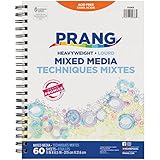
- DURABLE: Spiral bound with heavy chipboard back for drawing support.
- CONVENIENT: Conveniently sized 8.5" x 11" journal is the same size as a standard notebook, making it easy to take anywhere.
- VERSATILE: Ideal art paper for sketching, drawing, or painting. Acid-free and recyclable.
- HIGH QUALITY: Backed by our Prang Promise to replace any product that fails to meet your expectations.
- TRUSTED BRAND: Prang is part of the Dixon Ticonderoga family of products which includes Ticonderoga, Dixon, Pacon, Tru-Ray, UCreate, Fadeless, Classroom Keepers, Bordette, Creativity Street, Spectra, Strathmore, Canson, Daler-Rowney, Lyra, Das, and more.
| Consideration | Website | |
|---|---|---|
| Audience access | Easy to open from a link when the site loads reliably on the reviewer’s devices and network. | Easy to attach or download when the reviewer accepts files and a stable version is important. |
| Work type | Strong for interactive work, motion, audio, and projects that benefit from embedded behavior, provided the experience remains accessible. | Strong for detailed stills, print work, structured case studies, and offline review; interactive behavior may need explanation or a supplementary link. |
| Context and legibility | Allows progressive navigation and expandable detail, but small screens and inconsistent layouts can hide captions. | Supports a controlled reading order, but dense pages, large files, or inaccessible text can slow inspection. |
| Maintenance and sharing | Requires checking links, media, permissions, and responsive behavior; private projects need careful access control. | Requires version control, a sensible file size, readable text, and a filename that identifies you and the date or version. |
You can use both when each solves a different access problem: a concise PDF for an application system and a website for interactive or motion work. Do not force a reviewer to hunt across platforms for basic context. Put the role, brief, and essential decision story wherever the project is first encountered.
Design navigation and writing for inspection
A reviewer should be able to answer three questions quickly: What is this project? What did you do? Why did the work take this form? Use project titles, one-sentence summaries, role labels, and clear section headings to make those answers visible.
Quick wins for a faster PC:
Fix the driver behind crashes, sound loss and screen glitchesFind Drivers →Clear out junk files and repair common Windows errorsFree Scan →Write useful captions
A caption should identify the artifact and its significance. “Homepage exploration, rejected after content review because the hierarchy buried the primary action” is more useful than “Homepage sketches.” Keep descriptions concise enough that the work remains central, but do not remove the context needed to understand a decision.
Make the presentation accessible
- Use readable type, sufficient contrast, and a logical heading order.
- Provide text equivalents or captions for motion and audio where they carry meaning.
- Check that images, videos, and embedded prototypes work without unusual software or permissions.
- Keep file names, links, and contact details current.
- Test the portfolio on the devices and connection conditions your audience is likely to use.
Tailor a version without rebuilding everything
Maintain a master folder containing final assets, process artifacts, credits, permissions, outcome records, and the latest case-study text. For a specific opportunity, create a dated selection rather than editing the only copy.
- Read the opportunity and list the capabilities it explicitly or implicitly requires.
- Score candidate projects for relevance, quality, judgment, ownership, evidence, and distinctiveness.
- Choose the strongest match as the opening project and remove repetitions.
- Adjust project order and captions so the reviewer sees the relevant evidence early.
- Verify that every collaborator, permission, link, and outcome statement is accurate.
- Export or publish a version with a clear date, then inspect it as a reviewer would.
Tailoring should change emphasis, not facts. Do not rewrite your role, inflate outcomes, or hide collaboration to fit a job description.
Prepare to discuss the portfolio
A portfolio often becomes the agenda for an interview or client conversation. Be ready to explain the brief, the most consequential constraint, the alternatives you considered, the evidence behind a revision, and what you would investigate next. Angel Rybak’s advice is practical: “Be prepared to speak about your work, and discuss your process and reasoning!”
PC Slower Than It Used to Be?
A free scan shows the junk files, broken settings and background clutter dragging Windows down - then fixes them in one click.Free scan · Windows 10 & 11Outdated Drivers Are Slowing You Down
One free scan finds every outdated or missing driver and matches the right update for your exact hardware.Free scan · exact hardware matchPractice a short version of each case study and a deeper version for follow-up questions. If a project had a compromise, describe the trade-off and who made the final call. If the outcome was not measured, say what is known and what remains unknown. Clear limits are more credible than invented certainty.
Best Value
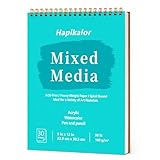
- 【Convenient Spiral Bound】---Designed as a user-friendly mixed media sketchbook, the ergonomic spiral binding ensures effortless use for both left-handed and right-handed individuals. This paint sketchbook allows the mixed media paper to lay flat when opened for comfortable writing or reading.
- 【Easy Tear-Away Pages】---Every page features clean micro-perforation, allowing beginners and young artists to easily remove their artwork without jagged edges. This makes it effortless for kids to tear out a drawing as a gift for parents, or for students to submit individual assignments to teachers. It turns the sketchbook into a convenient portfolio, encouraging creators to proudly display and share their progress.
- 【High-quality Paper Quality 】---This professional sketch book mixed media (98lb/160gsm) is built for durability. Each set contains 30 high-quality sheets of thick paper sketchbook material that resists bleed-through. We designed this mixed media pad so pages can be easily removed and will hardly tear. As a heavy-duty painting book or paint book, it is very suitable for sketching, illustration, and serves as an excellent paper for painting and drawing.
- 【Acid-Free & Non-Faded】---Our mixed media journal is made from fade-resistant, acid-free art paper for drawing and painting. This durable mix media sketchbook preserves your creativity, making it an ideal oil pastel sketchbook or pastel paper solution. It ensures your artwork stays vibrant for years to come, functioning perfectly as a long-lasting sketchbook mixed media for all your artistic endeavors.
- 【Perfect Gifts for Teen & Tween Girls】---Looking for a thoughtful present that sparks creativity? Our multimedia sketch book is an ideal gift for any occasion—whether it's a holiday surprise, a birthday celebration, or a festive Christmas stocking stuffer. Designed to delight young artists, this art sketchbook effortlessly fits into gift baskets or stands alone as a cherished keepsake, perfect for anyone needing a high-quality sketch book thick paper option.
Common portfolio problems and fixes
The portfolio is an archive
Symptom: many projects with no clear relationship to the target opportunity. Fix: remove work that does not add distinct evidence, then sequence the remaining projects around the reviewer’s decision.
The final image does all the talking
Symptom: a polished gallery but no brief, role, constraints, or rationale. Fix: add a compact case-study narrative and one or two annotated decision points.
Process is shown as decoration
Symptom: pages of sketches or iterations with no explanation. Fix: connect each retained artifact to a question, alternative, criterion, or revision.
Team work is presented as solo work
Symptom: broad claims that obscure collaborators. Fix: add a role-and-credit line and identify who made or approved major decisions.
Results are overstated
Symptom: precise performance claims without a project record. Fix: report only supported results and distinguish launch, approval, observed feedback, and measured outcomes.
The format blocks access
Symptom: broken links, unreadable PDFs, inaccessible media, or restricted files. Fix: test the exact shared version, provide a reliable alternative when appropriate, and keep essential context in the primary format.
Final quality check
- The opening project clearly matches the intended audience.
- Every project has a brief, audience or communication need, and relevant constraints.
- Your personal contribution and collaborators are credited accurately.
- At least one meaningful alternative or decision point is explained per case study.
- Process artifacts are annotated and limited to evidence-bearing material.
- Revisions identify the feedback or evidence that prompted them.
- Outcomes are supported, qualified, and never invented.
- Confidential material is permitted, redacted, anonymized, or omitted.
- The chosen format presents the work type clearly and remains easy to inspect.
- Navigation, captions, links, permissions, and contact details have been checked in the version you will share.
The finished portfolio should make a reviewer feel that the work is both carefully made and deliberately chosen. When the brief, constraints, alternatives, evidence, collaboration, and outcome are visible, your judgment is no longer an assertion around the work; it is part of the work the reviewer can assess.
The Tool Desk
Outbyte PC Repair FREERepair Windows errors before they cause bigger problemsFix Now →Outbyte Driver Updater FREEScan for outdated or missing drivers - takes under a minuteDriver Scan →Quick Recap
Product prices and availability are accurate as of the date/time indicated and are subject to change. Any price and availability information displayed on Amazon at the time of purchase will apply.

