Recommended Free Tools
To appeal a denied health insurance claim, follow the instructions and deadline in the denial notice, match your arguments to the plan’s stated reason, and submit a concise packet of supporting documents. Most U.S. consumers start with an internal appeal to the insurer; an eligible denial may then qualify for independent external review. The rules and deadlines vary by plan type and state, so use the notice for your specific claim as the controlling guide.
Start with the denial notice and plan documents
Read the denial notice and explanation of benefits (EOB) together. Find the service or charge the plan denied, the reason it gave, where and how to appeal, any required form, and the filing deadline. The plan must explain its decision, and the notice should include appeal instructions. Do not assume a general deadline replaces a shorter or otherwise applicable deadline stated in your documents.

As an Amazon Associate I earn from qualifying purchases.
Next, compare the denial reason with the relevant plan language. The issue might be whether a service is covered, whether it was received in network, whether it was medically necessary, or whether it is considered experimental or investigational. Eligibility or a rescission issue may require a different argument. Address the actual reason and the language the plan relied on rather than sending a generic request to reconsider. HealthCare.gov’s internal appeals guidance explains the general process.
Build an evidence packet that answers the denial
Make the reviewer’s task straightforward: state what decision you want changed, explain why the denial is inconsistent with the plan or the facts, and point to the documents that support each point.
#1 Best Overall

- 【LARGE CAPACITY】The car registration holder is Large enough for you,and you can put in long car documents without folding them.
- 【 HIGH QUALITY 】The registration and insurance card holder is made of high quality PU leather and vinyl PVC, it is extremely pretty and easily identifiable in your vehicles glove box!
- 【WELL ORGANIZED】The glove box organizer perfectes to organize your car papers,it keeps the cars documents and cards in order.
- 【CONVENIENCE】The car document holder has six pockets, you can put all important information in it,such as insurance, registration and so on,it's easy to show in case of emergency.
- 【Quality Assurance】We stand firmly behind this product's quality. Every step, from material selection to production, undergoes strict checks. Crafted with [replace with specific material, e.g., food-grade silicone/high-hardness alloy], it’s both durable and practical for long-term use.
- Include a copy of the denial notice or EOB and the relevant claim information.
- Quote or identify the plan provision that applies to the disputed service.
- Add relevant medical records, test results, or other records that address the denial reason.
- For a medical-necessity or other clinical judgment denial, ask the treating clinician for a letter explaining the medical rationale and citing relevant clinical support.
- Attach a short chronology if dates or treatment sequence matter, and label each enclosure so the reviewer can locate supporting pages.
The National Association of Insurance Commissioners’ consumer guide to appealing a denied claim recommends short, factual statements and a list of enclosures. Keep the writing focused on evidence rather than emotion.
Submit the internal appeal and preserve a record
- Check the required route. Use the plan’s form or submission method if specified. Otherwise, HealthCare.gov says a written appeal may include your name, claim number, and health insurance ID number, along with the information you want considered.
- Send copies and keep the originals. Keep a complete copy of the appeal and attachments. Send originals only if the plan specifically requires an original request or authorization.
- Save proof of submission. Retain a portal confirmation, delivery record, or other proof showing when and how you submitted the appeal.
- Keep a contact log. For each call, record the date and time, representative’s name and title, what was discussed, and any promised response date. Keep copies of the EOB, denial letters, provider letter, and supporting material.
HealthCare.gov describes 180 days (six months) from receipt of the denial notice as the general filing period for an internal appeal. Confirm the deadline in your actual notice and plan documents; plan type and applicable rules can change the process.
Know the review paths and usual timelines
An internal appeal asks the insurer to reconsider its decision. External review sends an eligible denial to an independent reviewer. The applicable state or federal process, plan type, and denial reason determine whether external review is available and how to request it.
| Stage | Who reviews | General timing in the cited guidance | What to check |
|---|---|---|---|
| Internal appeal filing | The insurer | Generally, file within 180 days (six months) of receiving the denial notice, per HealthCare.gov. | Use the deadline, form, and submission route in the notice and plan documents. |
| Internal appeal decision | The insurer | Generally within 30 days for care not yet received and 60 days for care already received. | Urgent cases have expedited handling; the precise requirements and timing depend on the applicable process. |
| External review request | An independent reviewer | HealthCare.gov gives four months from receipt of the notice or final determination as its general instruction; CMS gives four months for the HHS-administered federal process. | The final denial notice should explain whether you qualify and how to request review. State or plan rules may differ. |
| External review decision | An independent reviewer | Generally within 45 days for a standard review and within 72 hours or less for an expedited review, according to HealthCare.gov and CMS guidance. | Ask which process applies and whether the denial reason qualifies. |
These are general process limits, not guarantees that every appeal will follow the same schedule. CMS’s federal external-review page, last modified September 10, 2024, lists four months to file, 45 days for standard review, and 72 hours for expedited review in the HHS-administered process. See CMS’s federal external-review guidance and HealthCare.gov’s external review instructions.
Rank #3

- Provides peace of mind in the event of a medical emergency for you or an immediate family member
- Important healthcare documents are stored together in one place and are easy to access-just grab and go to doctor appointments
- Zip and store Poly Pouch included to keep a zip drive of X-rays, business cards and other small incidentals contained
- Designed to fit into larger fire proof safes
- Durable Poly construction
Request expedited review if delay could put health at risk
If waiting could seriously jeopardize your life or health, or your ability to regain maximum function, contact the plan and treating clinician promptly. Explain why the matter is urgent and ask about expedited internal review. In qualifying cases, an external review may be requested at the same time rather than waiting for the ordinary sequence; confirm this option under the process that applies to your plan.
HealthCare.gov says an urgent internal appeal’s final decision must come as quickly as the medical condition requires and at least within four business days; if first delivered verbally, written notice must follow within 48 hours. For external review, the general expedited decision period is 72 hours or less depending on urgency. Follow the urgent-care instructions in the plan notice and provide supporting information from the clinician.
Rank #4
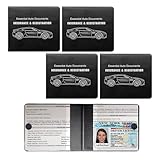
- 【Large Capacity】: This product has two compartments for you to store various types and sizes of documents, registration and insurance cards, driver's licenses, ID cards, business cards, receipts and more. The unified storage keeps these items in order, organizes your car space well to be neat and tidy, and provides you with a pleasant driving mood.
- 【Quick to Access】: Transparent inserts help you to easily find the items you need when you open the document holder. You can see exactly what they are and present them quickly and promptly when someone asks or requests them, without even having to take things out. It provides you with great convenience.
- 【Excellent Quality】: The case of this file and ID holder is made of durable PVC material. It is waterproof and abrasion resistant, preventing your documents from water intrusion or wear and tear. The clear plastic insert is soft and tough and won't scratch your documents while providing protection.
- 【Package Included】: You will receive four car registration and insurance card holders, an ample amount to meet your storage use and replacement needs. It measures 5.3×4.8 inches, thin and compact, which won't take up much space in your car, you can place it in any convenient area within reach.
- 【Widely Used】: It is suitable for car owners with storage needs to store all kinds of documents. It can easily fit into the glove box or console of most trucks, cars, suvs and other vehicles. It comes in a variety of choices of colors and patterns. It is practical and beautiful, very ideal for giving as a gift.
What happens after the insurer decides
If the insurer upholds the denial, read the final determination for the reason, any remaining internal steps, external-review eligibility, and the filing method and deadline. Some employer plans may require additional internal appeal steps. External review is available for qualifying denials, including certain decisions involving medical judgment, experimental or investigational treatment, and rescissions. If the independent reviewer overturns a denial, the plan must accept that determination under the applicable process.
Do not assume Medicare or Medicaid follows the commercial-plan process described here. Their appeal routes differ. CMS also notes that plan status, including whether a plan is grandfathered, can affect applicable protections. CMS’s overview of health plan appeals discusses scope and possible additional employer-plan steps.
Best Value
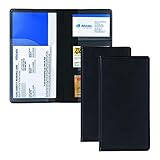
- Document Truck and Car Organization – This car document holder 2 pack includes 5 pockets to organize insurance cards, registration documents, AAA card, business cards, and emergency information
- Easy to Find & Read – Perfect size to identify in glovebox or console with clear inside pockets that make reading documents or insurance cards a breeze. Perfect for Uber, Lyft, or Taxi drivers
- Sleek & Professional Look – Vehicle document organizer is made from leather-like vinyl with decorative stitch design for nice look and added durability
- Lasting Protection – The durable construction and materials will help protect important documents for the life of the vehicle
- Compact Size Auto Organizer – The slim profile and lightweight design makes this car registration and insurance holder perfect for any glovebox or console - Dimensions: 4.9" x 9.25" x .4"
Get help with the applicable process
Your final denial notice should identify the relevant external-review contact. A state Consumer Assistance Program or Department of Insurance may also help with an internal appeal or external review. Ask the plan or your state insurance regulator which rules apply to your specific policy, especially if the notice is unclear about eligibility, deadlines, or where to submit the request.
Quick Recap
Product prices and availability are accurate as of the date/time indicated and are subject to change. Any price and availability information displayed on Amazon at the time of purchase will apply.

