Recommended Free Tools
When prices rise, rebuild the budget from your household’s latest income and transactions rather than applying the national inflation rate to every category. Gather recent pay records, bills, bank and card statements, and receipts; convert annual costs into monthly amounts; compare the total with take-home income; then make repeatable changes that protect essential needs and a sustainable savings contribution. Review the revised plan against actual spending every month.
Start with what your household actually earns and spends
A useful inflation reset begins with evidence, not a target percentage or an idealized spending plan. Collect several months of records so that an unusually cheap or expensive week does not define the whole budget.

As an Amazon Associate I earn from qualifying purchases.
- Recent pay statements, benefits, pension records and other take-home income.
- Bank and credit-card statements, bills, receipts and cash-spending notes.
- Debt payments, insurance, medical costs, school expenses, vehicle registration, maintenance and seasonal purchases.
- Regular savings, investment or other planned contributions.
The Consumer Financial Protection Bureau recommends checking account and card histories over several months, including miscellaneous and infrequent costs, and comparing the resulting budget with actual balances. Its guidance cautions: “Don’t edit your budget to reflect what you ‘could’ or ‘should’ be spending.” The page is written in a home-buying context, but the baseline method is broadly useful for a household reset: CFPB spending assessment.
Turn irregular bills into monthly amounts
Annual and quarterly bills can make an apparently balanced month fail when they arrive. Divide an annual insurance premium, school cost or vehicle registration by 12 and set that amount aside each month. For a bill paid every three months, divide by three. Add known maintenance and seasonal costs using a reasonable recent average. The money can sit in a separate savings space or a clearly labelled line in a spreadsheet; the important point is that the future obligation appears in the monthly plan.
#1 Best Overall

- Neatly Track & Organize Your Finances: The accounting ledger book is here for you to stay on top of your spendings & income! Clearly & neatly structured, it offers ample space for all crucial information about checks, savings, bills & other expenses or income
- Perfect For Small Business Owners: Keep it simple, yet super effective - the undated income and expense log book is an absolute must-have among small business supplies! Register your financial data and use your debit & credit records to compile a trial balance
- Premium Style With A Sturdy Cover: With the 120-page finance tracker, you can manage your finances conveniently in one place. A solid cover, thick paper and a reliable ring binding ensure maximum durability
- Beautiful Modern Minimalistic Design: A visual highlight just like you can expect from ZICOTO! The sage green cover of the ledger book, look stunning with a modern golden floral on the front - makes bookkeeping simply beautiful!
- Super Handy - Always At Hand: Thanks to its practical size, the 8.6x6.1” ledger book fits into any bag easily and is therefore always by your side. Whether used as a checkbook register or to track other financial flow, with the log book you’ve got it all sorted!
Check the budget’s remainder against the account
Subtract planned outgoings from take-home income, including debt payments and savings. Then compare the predicted remainder with what remains in the relevant account after the same period. A mismatch often reveals forgotten subscriptions, cash purchases, annual bills, overdraft charges or an income figure that is not actually available to spend.
Find where your personal prices are rising
Compare each current category with an earlier bill or a recent baseline. Begin with large recurring essentials that can quickly change the cash-flow picture:
- Housing payments and required fees.
- Electricity, gas, water, internet and other utilities.
- Groceries and household supplies.
- Fuel, public transport, vehicle costs and commuting.
- Insurance, childcare and medication where relevant.
Calculate the change in dollars, pounds or another local currency as well as the percentage. A 10-unit increase in a small subscription and a 10-unit increase in rent have the same arithmetic value but very different options for action.
Free tools Windows power users keep installed
One-click scans. No signup required.
Do not apply a headline inflation rate uniformly
A national inflation measure describes a defined average basket, not an individual household’s bill. Housing tenure, location, transport needs, diet, medical requirements and purchasing choices all change the result. The UK Office for National Statistics’ personal inflation calculator asks for spending across categories such as groceries, housing, transport and leisure. It can show which categories contribute most for the information entered, but it may use averages where details are missing and cannot predict future prices or capture every product-level change or behavior change: ONS personal inflation calculator.
Rank #2

- Effective Budget Planning - Take control of your finances with the budget account book. This comprehensive planner allows you to plan and track your income, expenses, savings, and financial goals in one convenient place. With its intuitive layout and easy-to-use sections, you can stay organized and make informed decisions to achieve financial success.
- User-Friendly Layout - The budget planner features a user-friendly layout designed for easy navigation and organization. Each month, you'll find dedicated budget pages where you can set financial goals, track your income, and plan your expenses. Additional sections include debt trackers, savings goals, bill payment trackers, and more, making it simple to stay on top of your finances.
- Undated Monthly Calendar & Bonus Stickers - Featuring undated calendar each month, you'll have ample space to mark paydays, bills due, appointments, and important dates. Say goodbye to difficult writing spaces. Plus, we've included 3 cute sticker sheets that allow you to personalize your financial organizer and make budgeting more fun. Dates are not pre-printed and are completed by the user.
- Reliable and Convenient Design - Our monthly budget planner is designed for your convenience and built to last. The elastic band keeps everything securely in place, and the dual-sided pocket provides extra storage. Experience a budget planner that combines practicality and durability.
- Master Budgeting with Ease - Our financial planner includes a complete guidebook that provides valuable insights and instructions for optimal usage. From setting financial goals to tracking expenses, this guidebook offers step-by-step guidance and practical tips. Whether you're new to budgeting or an experienced user, this resource will help you make the most of your budget planner, empowering you to achieve financial success.
For context, ONS reported that the UK Household Costs Index rose 2.8% in the year to June 2026. Private renters recorded 3.0% and outright owner-occupier households 2.6%. These were official statistics in development, published on August 28, 2026, and describe household groups rather than a prediction for any particular family: ONS Household Costs Indices.
Separate essential needs from flexible wants
Mark each line as essential, flexible or deferrable, but treat the labels as contextual rather than moral judgments. Transport may be essential for one worker and optional for another; a particular food, heating level or communication service may be tied to disability, health, childcare or safety. The Financial Consumer Agency of Canada explains that circumstances and access to alternatives affect whether an expense is a need or a want: FCAC budgeting guidance.
| Category type | Examples | Budget response |
|---|---|---|
| Essential and difficult to change quickly | Rent or mortgage, basic utilities, required medication, minimum debt payments, necessary childcare | Protect first; investigate provider, plan or assistance options rather than assuming a simple cut is safe. |
| Essential but adjustable | Groceries, energy use, fuel, insurance cover, mobile or internet plan | Compare like-for-like alternatives, usage, renewal terms and payment timing. |
| Flexible | Takeaway meals, entertainment, clothing beyond immediate need, convenience purchases | Set a realistic cap and choose reductions that can be repeated. |
| Deferrable or optional | Non-urgent upgrades, some subscriptions, discretionary travel and major purchases | Pause, delay or save toward the purchase instead of adding new debt. |
MoneySmart’s Australian guidance similarly emphasizes cuts that are realistic enough to maintain. A plan that eliminates every convenience for one month but is abandoned the next is less useful than a smaller, repeatable change.
Choose savings that protect the essentials
Work from the flexible and deferrable rows before reducing food, heating, transport or health spending. Audit recurring subscriptions, delivery fees, unused memberships, automatic upgrades and convenience purchases. For groceries, compare the total basket, use what is already at home, and substitute only where the lower-cost option meets the household’s dietary and practical needs. For transport, examine trip frequency, passes, car-sharing or route choices only when they are safe and workable.
Look for changes that recur every month: a lower plan at renewal, a service used less often, a fee-free payment method, or a spending limit that is easy to monitor. One-off austerity is less valuable than a permanent reduction that does not create a later repair bill or health cost.
Interpret survey behavior carefully
The U.S. Federal Reserve’s report on 2025 household experiences, published in 2026, found that 62% of adults said they switched to a cheaper product, 60% used less of or stopped using a product, 46% delayed a major purchase and 41% reduced savings. It also found 58% said price changes made their finances worse, including 14% who said much worse; 7% said better and 36% reported little to no effect. These figures describe U.S. respondents’ reported experiences, not advice and not a universal pattern for households in other countries: Federal Reserve household well-being report.
Reducing savings can provide immediate cash flow, but it weakens protection against a later repair, medical bill or income interruption. Treat it as a deliberate, temporary trade-off rather than an automatic first cut.
Rebalance the monthly plan
After identifying realistic reductions, allocate available take-home income in this order: priority bills, necessary flexible spending, required debt payments, irregular-expense set-asides and a savings amount the household can sustain. If income varies, build the core plan around a conservative dependable amount and assign unusually high income only after essentials are covered.
Rank #4

- PERFECT FOR RECORD KEEPING: The 2 Pack account ledger books are versatile and can be used to track finances, budgets, expenses, and other business or personal records. They are perfect for individuals, entrepreneurs, or small business owners who need a reliable and efficient way to keep track of their finances. With 100 pages, customers can record transactions over an extended period, making it a handy tool for financial planning and organization.
- COMPACT AND LIGHTWEIGHT: The account ledger books are compact and lightweight with each book weighing 7 ounces and measuring 8.5 x 6.25 inch, making them easy to carry around. You can take them with them in a bag or briefcase, making them ideal for on-the-go use. This feature ensures that you can access your records at any time, whether you are at work or on the move.
- DURABLE KRAFT COVER: The kraft cover is a distinguishing feature of these account ledger books. It provides a durable layer of protection that can withstand daily wear and tear, making it suitable for long-term use. Additionally, the classic, rustic appearance of the cover gives it a timeless and professional look that can fit in any setting.
- PREMIUM QUALITY: Elegant style with the words ''Account Tracker'' embossed in fancy Gold Foils. The gold coil ring binding is a practical design feature that enhances the functionality of the account ledger books. It allows pages to turn smoothly and easily, making it effortless to flip through the book while keeping pages in place. The ring binding also ensures that pages won't fall out, preventing the loss of vital information.
| Budget line | What to enter | Inflation adjustment question |
|---|---|---|
| Income | Net pay and dependable benefits or pensions | Has hours, pay, benefit eligibility or payment timing changed? |
| Priority bills | Housing, utilities, required insurance, medication, childcare and minimum debt payments | Is the higher amount recurring, and is there a safer provider or payment-plan option? |
| Flexible essentials | Food, transport, household supplies and variable utilities | What lower-cost substitute or usage change is practical? |
| Irregular set-asides | Annual, quarterly, seasonal and maintenance costs divided into monthly amounts | Has the expected annual cost changed, or was the latest bill unusual? |
| Savings and extra debt repayment | An amount that can continue after the revised essentials | Can the contribution continue without causing overdrafts or new debt? |
Smooth large bills when providers allow it
MoneySmart suggests asking utility providers whether a large bill can be paid in smaller instalments. Availability depends on the provider and local rules, and an instalment plan does not necessarily reduce the total cost. It can, however, make the monthly cash-flow requirement easier to match. Ask about fees, due dates, meter estimates, eligibility and what happens if an instalment is missed before agreeing.
Keep an emergency reserve in proportion to reality
FCAC describes three to six months of living expenses as a general Canadian emergency-fund goal and says people can begin with a small regular amount. This is consumer guidance, not an individualized requirement. During a severe squeeze, a smaller contribution may be the sustainable choice; record the change explicitly and restore or increase it when the budget allows.
Independent reader supportYour contribution helps us test, update, and keep practical guides available for everyone.Use a tracking method the household will maintain
The best method is the one that captures transactions consistently and respects the household’s privacy and routine. Statements and receipts are enough; no paid app is required.
What’s actually slowing this PC down?
Pick the symptom - the matching free tool is one click away.
- Notebook or paper planner: record the date, merchant, category and amount immediately or at a weekly review. This is useful when only one person handles cash spending or when keeping data offline matters.
- Spreadsheet: create columns for date, category, planned amount, actual amount and notes. Add formulas for category totals and a separate sheet for annual expenses divided by 12.
- Bank-export workflow: download transactions, remove duplicates, assign categories and reconcile the total with the statement balance. Check automatic categorization rather than trusting it blindly.
CFPB’s guidance mentions saving receipts, using a spending tracker or carrying a small notebook. An expense-tracking notebook or household budget planner can support the recording step, but free statements, receipts or a simple spreadsheet work just as well.
Best Value
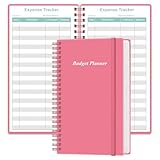
- MANAGE YOUR MONEY & ACHIEVE YOUR FINANCIAL GOALS - This budget tracker will help you keep your money organized, spend well, start saving, set and achieve financial goals. It can help you to manage all your personal finance, savings, debts, daily expense etc.
- UNIQUE DESIGN - This budget sheets expense tracker total 80 sheets/160 pages contains an annual overview (calendar from 2025-2026), yearly goals page, contact pages, important pages, and 10 pages (lined) for notes, lists, goals, etc, that help you manage your money efficiently and reach your finance goals perfectly.
- POCKET SIZE - This budget planner size of 3.75 x 6.75 inch, perfect size to fit in your bag, A6 envelopes pockets & wallet.
- SUPERIOR QUALITY - This expense budget sheets planner with 100gsm thick paper to reduce ink leakage, erase fraying and shade issues. Sturdy and flexible PP cover to protect the inner pages well. Strong metal and lay-flat twin-wire binding, Planner with inner pocket to store loose items, like tickets, cards etc and elastic closure to protect your finance planner.
- EASY TO USE - You can use this card to record your daily expenses. They can help you know where your every cent is going; Our expense tracker sheets can really help you keep track and stay on budget.
When the arithmetic is still negative
If income minus realistic spending remains below zero, do not force the plan to balance by deleting essential costs or inventing an arbitrary percentage cut. First verify that the deficit is not a one-off annual bill or duplicate transaction. Then identify the largest recurring gap and its deadline.
- Contact a utility, insurer, lender or other provider early to ask about hardship arrangements, payment timing or a safer plan.
- Check official local benefits, rebates and emergency assistance for which the household may qualify.
- Use a nonprofit or government-backed debt-advice service appropriate to the country and debt type.
- Prioritize housing, utilities, food, medication, safety and required payments while seeking advice; do not take high-cost new credit to hide a recurring shortfall.
Eligibility and consumer protections vary by location, income, household composition and debt type. The Canadian, Australian, UK and U.S. sources cited here do not establish an individual reader’s eligibility for any program.
Review actual spending every month
Set a fixed monthly review date after the main bills have cleared. Compare each category’s actual total with its revised amount, then investigate the largest recurring gap rather than reacting to every small variation.
Crashes, No Sound, or Screen Glitches?
Random freezes, missing sound and display glitches usually trace back to one bad driver. Find and replace yours safely.Free scan · under a minuteWindows Errors? Fix Them Before They Spread
Repair common Windows errors and clear accumulated junk for a smoother, more stable PC - no reinstall needed.Free scan · no reinstall- Reconcile bank and card transactions with receipts and cash notes.
- Mark each overage as a one-time event, a timing issue or a new recurring run rate.
- Update next month’s category amount when the higher cost is likely to continue.
- Move unused money from a flexible category only after checking that a later annual bill is not due.
- Recheck the predicted remainder against the account balance.
- Record any change in income, rent, utility pricing, debt payment or household circumstances.
FCAC advises comparing actual spending with the budget monthly and updating figures after changes such as a bill increase or pay rise. Its guidance states: “If your actual spending often varies from your budget, adjust your figures to make it more realistic.” MoneySmart also recommends comparing income and outgoings and adjusting the plan: MoneySmart budgeting guidance.
Decide whether a higher cost is temporary or permanent
A one-time repair, medical bill or annual renewal belongs in the irregular-expense review, not automatically in every future month. A new rent amount, insurance premium, debt payment or utility tariff is a changed run rate and should replace the old estimate. Write the reason beside the adjustment so that the next review does not undo a necessary change or preserve a cost that has ended.
Country and household differences matter
The process is transferable, but the evidence and assistance systems are not interchangeable:
- United States: CFPB spending guidance and Federal Reserve survey figures describe U.S. sources and should not be treated as statistics for other countries.
- United Kingdom: ONS household-cost and personal-inflation tools use UK measures; the June 2026 Household Costs Index figures are group averages and official statistics in development.
- Canada: FCAC’s three-to-six-month emergency-fund language is Canadian consumer guidance, not a universal rule.
- Australia: MoneySmart’s budgeting and bill-smoothing suggestions reflect Australian guidance; provider options and protections differ elsewhere.
Use local currency, tax treatment, benefits, utility rules and debt-advice channels when implementing the plan. The core test remains the same: does the revised monthly allocation match actual take-home income and the costs this household must pay?
Quick Recap
A practical inflation-reset checklist
- Gather several months of income, account, card, bill and receipt records.
- List annual, quarterly, seasonal, medical, school, registration and maintenance costs.
- Convert irregular costs to monthly set-asides.
- Compare current and previous amounts by category, starting with recurring essentials.
- Label needs, flexible spending and deferrable purchases according to the household’s circumstances.
- Choose repeatable savings before cutting health, safety or essential access.
- Set a sustainable savings contribution, even if it must temporarily be smaller.
- Ask providers about instalments or hardship options before a bill becomes overdue.
- Compare actual and planned spending at the same time each month.
- Change the budget when a recurring cost changes, but isolate one-off spending.
Product prices and availability are accurate as of the date/time indicated and are subject to change. Any price and availability information displayed on Amazon at the time of purchase will apply.

