Classic Outlook for Windows can use an SVG in a signature, but only through a client-specific file edit. Create the signature normally, open %appdata%MicrosoftSignatures, and replace the generated image reference in the signature’s HTML with the SVG filename. Keep a PNG copy for recipients and Outlook clients that do not render SVG.
That workaround should not be treated as a universal Outlook feature. A Microsoft 365 Message Center change reported on 5 October 2025 says inline SVG images are no longer displayed in Outlook on the web or the new Outlook for Windows; recipients see blank space instead. SVG files sent as ordinary attachments remain viewable in the attachment area. If your signature must work in web Outlook, new Outlook, Gmail, and mobile apps, use PNG or JPG, or use text only.
As an Amazon Associate I earn from qualifying purchases.
Which Outlook version are you using?
The correct method depends on where the message is composed. “Outlook” now refers to several clients with different signature engines and image-security rules.
Quick wins for a faster PC:
Repair Windows errors before they cause bigger problemsFix Now →Fix the driver behind crashes, sound loss and screen glitchesFind Drivers →| Outlook client | Inline SVG signature status | Recommended approach |
|---|---|---|
| Classic Outlook for Windows | A local HTML-file workaround can work in some versions. It is not a universal Microsoft-supported feature, and older recipient software may still fail to display the image. | Create the signature in Outlook, edit the generated HTML in %appdata%MicrosoftSignatures, and retain a PNG fallback. |
| Outlook on the web | Inline SVG is reported as disabled. A blank space can appear where the image should be. | Use PNG/JPG or a text-only signature. Recreate the signature in the web client rather than copying local desktop files. |
| New Outlook for Windows | Inline SVG is reported as disabled under the same security change affecting Outlook on the web. | Use PNG/JPG or text. An SVG can still be sent as a normal attachment. |
| Recipient’s Outlook, Gmail, or mobile app | Rendering varies by application, security policy, and message format. A vector file in the sender’s HTML does not guarantee vector rendering for the recipient. | Test with the actual clients used by your audience and keep a raster and text fallback. |
If you are unsure which Windows client you have, check whether the application is the traditional desktop program with the classic ribbon and local signature folder. The procedure below is specifically for that classic desktop client, not for Outlook on the web or the redesigned new Outlook.
#1 Best Overall
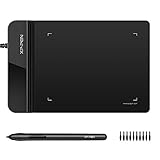
- Ultra thin tablet: Active Area 4 x 3 inches. Fully utilizing our 8192 levels of pen pressure sensitivity―Providing you with groundbreaking control and fluidity to expand your creative output. Please note: The 4 x 3 inches is very small, please confirm that it will meet your needs before you purchase it
- OSU game: Designed for OSU! gameplay, drawing, painting, sketching, E-signatures etc. No need to install drivers for OSU! It's also designed for both right and left hand users
- Accurate Pen Performance: StarG430S computer graphics tablet is the perfect replacement for a traditional mouse! The XPPen advanced Battery-free PN01 stylus does not require charging, allowing for constant uninterrupted Draw and Play, making lines flow quicker and smoother, enhancing overall performance
- Compact and Portable: The G430S art tablet is only 2 mm thick, it’s as slim as all primary level graphic tablets,Ultra-thin and portable, allowing you hold it in one hand and carry it on the go. This graphic drawing tablet supports Mac. However, since the product interface is micro USB to USB-A, if your computer is a Mac and does not have a USB-A port, you will need to purchase an OTG transfer adapter to ensure compatibility with your Mac. So please confirm your computer port before you purchase it
- PLEASE NOTE: The XPPen StarG 430 is compatible with the Windows system 11/10/8/7(32/64 bit), and the Mac OS X version 10.10 or later, but it is incompatible with iOS and iPad OS. If your computer is a Mac, you need to grant permission to the Mac preferences first. Please go to our official website, and according to the guide: XPPen>Support>FAQ, find out the Star G430 and click, then click the question according to your Mac system. There are detailed guidelines for installing the driver so your tablet will work correctly. It's possible incompatible with the customer's own EMR system or other signature system. Please feel free to contact us to confirm the compatibility before your purchase
How to add an SVG signature in classic Outlook for Windows
The process has two parts: first let Outlook build a normal signature and its supporting files, then change the image reference in the generated HTML. Do not start by manually creating a file in the signature folder; Outlook needs to create the signature structure and asset names first.
1. Prepare the SVG and a fallback image
- Save the logo or mark as an SVG with a simple, exact filename, such as
company-logo.svg. Avoid changing the name after you edit the HTML. - Export a PNG version at a suitable size for email. Keep this file even if you intend to display the SVG on your own computer.
- If the SVG contains external fonts, linked stylesheets, scripts, or remote images, convert the artwork to self-contained paths and shapes where possible. Email clients may block external resources, and SVG support differs between applications.
- For the historical Outlook workaround described here, use UTF-8 encoding. That detail is version-sensitive and should be treated as guidance for the cited Outlook builds, not a guarantee for every current release.
2. Build a normal signature in a message
- Open a new message in classic Outlook for Windows.
- On the message ribbon, choose Insert > Pictures and insert the image you want to use while laying out the signature. Outlook will normally create a PNG reference for the inserted picture.
- Add the name, job title, phone number, website, and any other text. Arrange the image and text exactly as you want them to appear.
- Select and copy the complete block that should become the signature.
This temporary message is only a way to create the formatting. The generated image name is the reference you will replace later.
3. Save the block as a signature
- From the message ribbon, open the signature controls and choose the option to create or manage signatures.
- Choose New, enter a signature name, and paste the block into the signature editor.
- Save the signature. If Outlook asks whether to save changes, confirm them.
- Close the message window after saving. The signature editor may create an HTML file plus an asset folder using the signature name.
4. Open Outlook’s signature folder
- Open Windows Explorer.
- Click the address bar, enter
%appdata%MicrosoftSignatures, and press Enter. - Locate the HTML file whose name matches the signature you just created. You may also see a folder containing the generated image and other supporting files.
- Make a backup copy of the entire signature HTML file and its related folder before editing. A backup lets you restore the original if the signature stops appearing.
The Microsoft Q&A workaround specifically directs users to this folder. Folder contents and naming can vary by Outlook version, so identify the file by opening it or checking its modified time rather than assuming a fixed asset name.
Rank #2

- Instant E-Signatures, One Click Away – Seamlessly send your handwritten signature to your computer with just one tap. Fully compatible with PDF, Word, Excel, JPG, PNG, and TIFF formats.
- Your Paperless Office Hero – Sign quotes, contracts, insurance forms, and internal approvals without ever printing a page. Complete documents quickly and securely—100% digitally.
- Built-in Timestamp & Printed Name – Every signature includes a timestamp and your printed name for enhanced credibility and traceability—ideal for business and legal use.
- Smart Sticky Notes, Digitally Delivered – Jot down memos and upload them instantly to your Outlook Calendar or desktop. Your personal assistant for smart, organized scheduling.
- Effortless Visual Collaboration – Sketch workflows, wireframes, or brainstorm ideas in real time. Perfect for teams that move fast and think visually.
5. Replace the generated image reference
- Open the signature’s HTML file in a plain-text editor such as Notepad. Do not use a word processor that may add formatting.
- Find the
<img>element that points to the generated PNG. The reference may contain the generated filename and a relative path into the signature’s asset folder. - Replace the generated image filename with the exact SVG filename, preserving the relative path and the rest of the HTML. If the workaround’s instructions call for a global replacement of the generated image name, replace every matching reference consistently.
- Save the file as UTF-8 if your Outlook version requires that encoding. Keep the original extension and do not let the editor add a second extension such as
.txt. - Leave the PNG file in the signature folder. It is useful as a fallback, and deleting files that Outlook still expects can cause a broken image or a missing signature.
A simplified reference might change from an Outlook-generated PNG name to an SVG name, while the surrounding HTML remains untouched:
<img src="Company Signature_files/image001.svg" alt="Company logo">The exact folder and generated filename in your installation will differ. The important points are the exact spelling, matching case where applicable, and the original relative path.
6. Restart and test the signature
- Close all Outlook windows and reopen classic Outlook so it reloads the edited signature file.
- Create a new message, open the signature menu, and insert the edited signature.
- Check the compose window for the logo, its size, alignment, and alternative text.
- Send a test message to yourself and to at least one other mailbox. Check both the received message and the message source or attachment area if the image is missing.
- Keep the PNG and text-only versions ready before assigning the SVG signature as your default.
If the logo appears in the compose window but not in the received message, the recipient client or a mail-security gateway may be stripping or refusing inline SVG. That is a compatibility issue, not necessarily a mistake in the local HTML edit.
Rank #3

- Battery-Free Pen: StarG640 drawing tablet is the perfect replacement for a traditional mouse! The XPPen advanced Battery-free PN01 stylus does not require charging, allowing for constant uninterrupted Draw and Play, making lines flow quicker and smoother, enhancing overall performance
- Ideal for Online Education: XPPen G640 graphics tablet is designed for digital drawing, painting, sketching, E-signatures, online teaching, remote work, photo editing, it's compatible with Microsoft Office apps like Word, PowerPoint, OneNote, Zoom, Xsplit etc. Works perfect than a mouse, visually present your handwritten notes, signatures precisely
- Compact and Portable: The G640 art tablet is only 2 mm thick, it's as slim as all primary level graphic tablets, allowing you to carry it with you on the go
- Chromebook Supported: XPPen G640 digital drawing tablet is ready to work seamlessly with Chromebook devices now, so you can create information-rich content and collaborate with teachers and classmates on Google Jamboard’s whiteboard; Take notes quickly and conveniently with Google Keep, and effortlessly sketch diagrams with the Google Canvas
- Multipurpose Use: Designed for playing OSU! Game, digital drawing, painting, sketch, sign documents digitally, this writing tablet also compatible with Microsoft Office programs like Word, PowerPoint, OneNote and more. Create mind-maps, draw diagrams or take notes as replacement for mouse
Why this method is not reliable in web Outlook or new Outlook
Microsoft’s ordinary signature workflow in web and desktop experiences is to open signature settings, create or select a signature, and use the image button to insert an image file. The interfaces can require separate signature setup, so a signature created in classic Outlook does not automatically become a working web signature.
More importantly, a Microsoft 365 Message Center change reported on 5 October 2025 says that inline SVG images will no longer be displayed in Outlook on the web or new Outlook for Windows. Users see blank spaces where the inline image would have appeared. The stated reason is mitigation of security risks such as cross-site scripting. The same notice says SVG images sent as classic attachments remain supported and viewable from the attachment area.
Microsoft reportedly measured fewer than 0.1% of images in Outlook using the inline-SVG method in 2025. That figure describes Outlook’s usage of the method, not a guarantee that any particular sender or recipient will be unaffected.
Rank #4

- Recommended uses for product: Business
- Style: Modern
- Hand orientation: Ambidextrous
- Compatible devices: PC
What to do in web or new Outlook
- Open the client’s signature settings and create a separate signature.
- Use the image button to insert a PNG or JPG rather than an SVG.
- Save the signature and send a test message to Outlook desktop, Outlook on the web, Gmail, and a mobile client used by your recipients.
- If you must preserve the original vector file, attach the SVG to the message separately. Do not rely on the attachment to appear as an inline signature image.
If an existing web signature shows a blank area, recreate it directly in the web client with a PNG/JPG or remove the image and use text. A support-thread workaround also suggests a hosted image where organizational policy permits it, but hosted images can be blocked by privacy settings, firewalls, or recipient clients and should be tested rather than assumed to work.
Choosing between SVG, PNG/JPG, and text
| Option | Strengths | Limitations | Best use |
|---|---|---|---|
| Inline SVG | Scales cleanly at different sizes and can preserve vector artwork. | Requires the classic Outlook file workaround and may be blocked or stripped by current web/new Outlook and recipient software. | Controlled environments where classic Outlook for Windows is used and the result has been tested. |
| PNG or JPG | Broadest practical compatibility and easy insertion through Outlook’s normal signature editor. | Raster image can look soft when enlarged; transparent PNGs may be handled differently by some clients. | Default choice for mixed Outlook, Gmail, and mobile audiences. |
| Text-only | Does not depend on image loading, inline-image security, or remote content. | No visual logo or brand mark. | High-compatibility, accessibility-focused, or restricted environments. |
| SVG attachment | Preserves the original vector file and remains viewable in the attachment area under the reported Outlook policy. | It is not an inline signature image and may be overlooked or blocked as an attachment. | When the recipient specifically needs the artwork file. |
For most organizations, the practical setup is three signatures: an SVG version for tested classic-Outlook users, a PNG/JPG version for web and new Outlook, and a text-only version for maximum compatibility.
Free tools Windows power users keep installed
One-click scans. No signup required.
Troubleshooting an SVG signature that is blank or missing
The image is blank in Outlook on the web or new Outlook
This is expected under the reported inline-SVG restriction. Replace the inline SVG with a PNG/JPG or remove the image. Sending the SVG as an attachment is a different workflow and will not make it appear inline.
Best Value

- 【Signature tool 1】: SMAJAYU electronic signature pad works with “SMAJAYU document(s) Signer” a Sign Tool for pdf,word,excel documents digital signature. Pdf,Excel,word documents will be save as pdf after signature on sign tool.
- 【Signature tool 2】: Second sign tool named “demo tool” which is for getting signature picture to past on excel,word.edited files.
- 【Signature tool 3】: 430S SDK is available to integrate with programmable flatform, like website, app. Contact SMAJAYU support team for support.
- 【Apply Windows OS】SMAJAYU Signature pad and Signer tool only compatible with Windows OS, Windows 7,8,10,11, don’t support apple PC.
- 【How to sign documents】Install “ SMAJAYU document(s) Signer” on computer, run this app and create certification for first installation which for signature encryption and safety. Then insert Signature pad by USB and open files to start sign.
The image works in the compose window but disappears after sending
Send the message to another account and check which client displays it. If only the sender sees it, the recipient client, a gateway, or a security policy is rejecting inline SVG. Use the PNG/JPG or text signature for that audience.
The signature itself is missing after the HTML edit
- Restore the backup HTML file and confirm that the file still has the original signature extension.
- Check that the editor did not save a second extension such as
.html.txt. - Confirm that the SVG filename and relative path exactly match the
srcvalue in the HTML. - Make sure the related asset folder and the PNG file still exist.
- Restart Outlook after saving; an already-open instance may still have the previous signature cached.
The SVG displays as a broken image
- Check for a spelling or case mismatch between the HTML reference and the actual filename.
- Verify that the SVG is a real image file, not an exported web page or a renamed PNG.
- Remove external font, stylesheet, script, or remote-image dependencies and test a self-contained SVG.
- Restore the PNG reference temporarily. If the PNG works, the file path is valid and the remaining problem is SVG rendering or policy.
The logo becomes an attachment
Some clients convert embedded images into attachments or strip the inline reference when a message is replied to or forwarded. Recreate the signature in the client where the message is composed, then test a new message and a reply. If the behavior persists, use PNG/JPG or text.
The logo is fuzzy or the wrong size
Use an appropriately sized PNG for raster compatibility, set explicit width and height in the signature layout, and test on both a high-density phone display and a standard desktop monitor. Do not enlarge a small PNG merely to imitate vector scaling.
Recommended Free Tools
A repeatable compatibility test
Before making any signature the default, send the same short test message from the client in which the signature was created. Record whether the logo is visible, whether it remains inline, and whether the fallback text is readable.
- Send from classic Outlook for Windows to another classic Outlook desktop mailbox.
- Send from classic Outlook to Outlook on the web and new Outlook for Windows.
- Send to Gmail or another non-Microsoft webmail client.
- Open the message in at least one iOS or Android mail app used by your audience.
- Reply to the message from each client and inspect whether the signature image remains inline or becomes an attachment.
- Repeat the test with the PNG/JPG and text-only signatures before choosing a default.
Keep the test messages and note the Outlook build, client type, and date. Rendering behavior can change with security updates, so a result that worked in an older build is not a permanent compatibility promise.
Maintenance and safe operating practices
- Keep a dated backup of the complete signature HTML and asset folder before every edit.
- Store the SVG, PNG/JPG, and text versions together so a client change does not leave you without a usable signature.
- Do not assume that copying the classic Outlook signature folder into web or new Outlook will transfer a working signature.
- When changing a logo filename, update every matching HTML reference and test a new message.
- Use alternative text for meaningful logos and include the company name in nearby text so the signature still communicates when images are blocked.
- Prefer the PNG/JPG or text version whenever recipients are outside your organization or their mail clients are unknown.
The classic Outlook SVG technique is therefore a narrow workaround for a specific desktop client. It can be useful when you control the composing environment, but the compatibility-first answer for current Outlook deployments is a PNG/JPG or text signature, with the SVG retained as a separately attached vector file when someone needs the original artwork.
Quick Recap
Product prices and availability are accurate as of the date/time indicated and are subject to change. Any price and availability information displayed on Amazon at the time of purchase will apply.
What’s actually slowing this PC down?
Pick the symptom - the matching free tool is one click away.

