Copper click chemistry usually means the copper(I)-catalyzed azide–alkyne cycloaddition (CuAAC). It joins an organic azide to an alkyne and selectively forms a 1,4-disubstituted 1,2,3-triazole. The most widely accepted productive pathway is dinuclear: two cooperating copper centers assemble a copper acetylide and an azide, guide the first carbon–nitrogen bond, pass through a six-membered metallacycle, and release the triazole.
That description is a mechanistic framework, not a claim that every flask contains one identical dicopper molecule. Copper(I) acetylides aggregate, and their nuclearity changes with the precursor, ligands, solvent, concentration and substrates. Understanding that distinction explains both the reliability of CuAAC and the occasions when changing a catalyst formulation changes the rate or outcome.
As an Amazon Associate I earn from qualifying purchases.
What CuAAC does
The bond-forming reaction
CuAAC connects two functionalized building blocks. One carries an organic azide (R–N3); the other normally carries a terminal alkyne (R′–C≡C–H). Copper catalysis converts them into a 1,2,3-triazole in which the azide-derived substituent and the alkyne-derived substituent occupy the 1 and 4 positions. The hydrogen at the terminal alkyne is ultimately replaced during turnover, so the net product is a stable five-membered heteroaromatic ring rather than an unreacted copper salt or a mixture of triazole regioisomers.
Recommended Free Tools
Why the copper-catalyzed version is distinctive
An azide and an alkyne can also undergo a thermal cycloaddition without copper. That uncatalyzed process follows a different energy landscape and commonly gives a less controlled mixture of 1,4- and 1,5-disubstituted triazoles. CuAAC is valued because copper changes the pathway and strongly favors the 1,4 isomer under appropriate conditions. The selectivity is why the reaction is used to connect molecules in organic synthesis, medicinal chemistry, polymer and surface chemistry, and bioconjugation.
#1 Best Overall
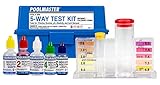
- 5-WAY WATER TESTING: Accurately tests chlorine, bromine, pH, acid demand, and total alkalinity to help maintain clean, balanced pool and spa water
- POOL & SPA CHEMICAL TEST KIT: Liquid reagent test kit supports routine swimming pool, hot tub, and spa water testing for better water care and maintenance
- EASY COLOR MATCHING: Clear-view comparator block with integrated color chips helps make pool water testing faster, easier, and more accurate
- COMPLETE LIQUID REAGENT KIT: Includes 1 oz. Solutions #1, #2, and #3, plus 1/2 oz. Solutions #4 and #5 for complete 5-way pool water testing
- 5-WAY PHENOL RED FORMULA: Solution #2 Phenol Red is formulated for 5-way test kits only and should not be substituted with 2-way or 3-way Phenol Red
The accepted CuAAC mechanism, stage by stage
1. Copper(I) activates the terminal alkyne
Copper(I) first coordinates the alkyne π system. That interaction makes loss of the terminal proton easier and produces copper(I) acetylide character. In a simplified drawing, the acetylide is often shown as R′–C≡C–Cu, but actual solutions can contain several copper acetylide aggregates. Bridging acetylide ligands can link two or more copper atoms, and ligands, counterions, solvent and concentration determine which aggregates are populated.
This speciation matters because “the copper catalyst” is not necessarily one molecular species. Copper(I), copper(II), metallic or nanoparticulate copper and supported copper systems have all been used as CuAAC precursors. Copper(II) and metallic forms can enter the catalytic pool after reduction or surface-mediated steps, while the productive bond-forming cycle is generally described with copper(I) centers. The precursor therefore tells you how catalysis starts, not necessarily the exact species that performs every turnover.
2. A second copper center creates the productive assembly
The broadly accepted model is dinuclear. A second copper atom binds the acetylide and helps organize the alkyne while an azide coordinates to the dicopper unit. The resulting ternary copper–alkyne–azide arrangement places the reacting atoms close enough and in the right orientation for controlled cycloaddition.
Free tools Windows power users keep installed
One-click scans. No signup required.
The second center is more than an extra spectator. One copper can bind the acetylide strongly, while the other helps bind and polarize the azide and stabilizes developing charge in the transition state. The exact division of labor can shift with ligands and substrate structure, but productive turnover requires cooperation between two copper sites in the commonly accepted pathway.
3. The first C–N bond forms
Once azide and dicopper acetylide are assembled, a carbon–nitrogen bond forms between the coordinated partners. In the dinuclear depiction, this event generates a six-membered metallacyclic intermediate containing both copper centers. The metallacycle is not an isolated bottleable compound in ordinary reaction mixtures; it is a mechanistic representation of the connected atoms and metals as the ring is being built.
Rank #2

- Includes 1 each of R-0001, R-0002, R-0004
- 2 oz. bottles
- Prevents corrosion
- Taylor brand
- Liquid volume: 2 Fluid Ounces
Drawing this step as a discrete first C–N bond avoids a misleading one-step “snap together” picture. Copper controls which alkyne carbon meets which azide nitrogen, accounting for the 1,4-regiochemistry. It also lowers the energetic cost of organizing the two reactants compared with the uncatalyzed thermal reaction.
4. Ring closure, proton transfer and catalyst regeneration
The metallacyclic intermediate closes to the triazole framework. Proton transfer, involving the proton originally attached to the terminal alkyne and proton donors available in the reaction medium, converts the copper-bound ring into the neutral 1,2,3-triazole. Copper species then dissociate, exchange ligands or combine with another acetylide so that the catalytic pool is regenerated.
The Tool Desk
Outbyte PC Repair FREEClear out junk files and repair common Windows errorsFree Scan →Outbyte Driver Updater FREEFix the driver behind crashes, sound loss and screen glitchesFind Drivers →A 2016 mechanistic review described the subsequent triazole ring-formation step as fast. In practical terms, once the properly organized copper–alkyne–azide complex has formed, the later ring-building events can be too rapid to determine the observed rate. This is why improving the early assembly often has a larger effect than trying to accelerate an already fast ring closure.
Why the reaction rate is often controlled before ring formation
Early complex formation as the bottleneck
The kinetic picture from the major mechanistic reviews places formation of the azide/copper(I) acetylide complex early in the cycle. If copper is tied up in unproductive aggregates, if the alkyne binds weakly, or if the azide cannot approach the dicopper unit, little material reaches the fast cyclization steps. The measured rate then reflects the population and lifetime of the productive ternary complex rather than the intrinsic speed of making the triazole ring.
Evidence from copper concentration
A 2016 kinetics study reported that the rate dependence on copper concentration can change as the concentration changes. At catalytic concentrations, an approximately second-order dependence on copper supports a rate-relevant intermediate containing two copper atoms, consistent with the dinuclear model. Such kinetic orders are conditional observations, not a universal law: aggregation, ligand binding, substrate depletion and changes in copper speciation can alter the apparent order in another formulation.
Rank #3

- Get the most accurate results possible
- Keep your pool water chemistry properly balanced
- It is recommended that you replace your reagents every year
Structural features that favor productive CuAAC
The alkyne
Terminal alkynes with relatively low pKa values can form copper acetylide character more readily. Their π systems also need to interact favorably with copper(I), including suitable π back-bonding. These are tendencies rather than pass–fail rules; a substrate with a less favorable acidity or electronic profile may still react when ligand, solvent, temperature and copper availability compensate.
The azide
Azides that contain an ancillary copper-binding group can help recruit the azide to the dicopper acetylide. That intramolecular assistance increases the chance that the three components meet in the orientation required for C–N bond formation. It can also change the distribution of copper aggregates, so the same azide may behave differently with a strongly coordinating ligand set.
The catalyst environment
A useful catalyst formulation must balance several properties:
- enough Lewis acidity and redox flexibility to activate the alkyne without destroying sensitive substrates;
- ligands that limit uncontrolled copper acetylide aggregation while still leaving two copper sites available for cooperation;
- solubility or surface access that lets copper reach both reaction partners;
- conditions that avoid excessive copper sequestration by solvent, counterion, product or additives.
No single ligand or precursor is established as universally best. The right choice depends on substrate compatibility, copper loading, oxygen and moisture exposure, medium, temperature and whether residual copper is acceptable in the final material.
Copper precursors and what they do—and do not—tell you
| Starting copper form | How it can enter CuAAC chemistry | What can vary in the active mixture |
|---|---|---|
| Cu(I) salts or complexes | Provide copper(I) directly for alkyne coordination and acetylide formation. | Ligand exchange, acetylide bridging and aggregation can produce several nuclearities. |
| Cu(II) salts or complexes | Can be reduced under reaction conditions or by additives to generate copper(I) species. | The reduction rate and resulting ligands or counterions affect the buildup of productive dicopper assemblies. |
| Metallic or nanoparticulate copper | Can release soluble copper or support surface-mediated activation. | Particle size, surface state, oxidation and mass transfer influence which copper species contact the substrates. |
| Supported copper systems | Immobilize copper on a solid while allowing azide and alkyne access at or near the surface. | Support binding, pore transport and copper leaching determine whether the observed chemistry is surface-bound, solution-phase or both. |
The table describes precursor categories surveyed in a 2015 review; it does not rank them or prove that one category gives the same active species as another. Mechanistic assignments should match the actual formulation and the evidence available for that experiment.
What’s actually slowing this PC down?
Pick the symptom - the matching free tool is one click away.
Rank #4
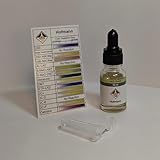
- Forensic Reagent Test Kit – Laboratory-grade chemical reagent designed to demonstrate color-change reactions for research, training, and harm-reduction education.
- Observe Clear Color Reactions – When you add the reagent to a sample, the liquid changes color.
- All-In-One Kit – Includes one dropper bottle of reagent, a reusable glass test tube, and a color reference chart for convenient, repeatable testing demonstrations.
- Safe & Responsible Use – Intended strictly for forensic, educational, and harm-reduction awareness purposes. Not for diagnostic or human consumption use.
- Made in Knoxville, Tennessee, USA – Proudly produced, bottled, and quality-checked by TN Scientific, a trusted harm-reduction laboratory supply company.
How CuAAC selectivity differs from thermal cycloaddition
In thermal azide–alkyne cycloaddition, the azide and alkyne approach without the organized dicopper assembly. The reaction may require more severe heating and can produce both principal regioisomers. In CuAAC, copper acetylide formation and azide coordination create a constrained pathway that favors 1,4 substitution. Calling both processes “click chemistry” without distinguishing them hides the reason the copper-catalyzed reaction is so useful.
The 1,4 preference is a statement about the usual copper-catalyzed terminal-alkyne pathway, not a guarantee that every substrate, catalyst or work-up will give a single analytical peak. Side reactions, copper oxidation, alkyne homocoupling, azide instability and incomplete conversion can still complicate a real reaction mixture.
Terminal alkynes are the best-established case
Most detailed mechanistic evidence concerns terminal alkynes, because copper acetylide formation and proton transfer are central to that cycle. Internal alkynes lack the terminal C–H bond and do not follow the same elementary sequence in an obvious way. The 2016 review notes that data for internal-alkyne CuAAC mechanisms are more limited. Conclusions established for terminal alkynes should therefore not be extended to internal alkynes without substrate-specific evidence.
Independent reader supportYour contribution helps us test, update, and keep practical guides available for everyone.Why this mechanism matters in applications
Modular synthesis
Because azide and alkyne groups can be installed in separate steps, CuAAC lets chemists assemble complex molecules late in a synthesis. The predictable 1,4-triazole linkage is chemically robust and can serve as a structural element, a spacer or a binding motif.
Bioconjugation and materials
In bioconjugation, the mechanism explains why copper loading, ligand choice and exposure time must be balanced against biomolecule sensitivity and the need to remove residual metal. In polymers and surfaces, aggregation and transport become especially important: copper may be concentrated at an interface or trapped in a network, so the local speciation can differ from that in a dilute homogeneous solution.
Best Value

- 3-WAY POOL & SPA WATER TESTING: Accurately test Total Chlorine, Total Bromine, and pH levels with one simple kit. Designed for residential swimming pools, hot tubs, and spas, this water testing kit works with both freshwater and saltwater systems to help maintain balanced, safe water.
- FAST & EASY TO USE: Get clear, reliable results in seconds. Simply collect a water sample using the included comparator, add the designated reagents, and match the color results. Use the step-by-step instructions with easy-to-follow diagrams to make testing simple.
- EXPERT-GRADE ACCURACY: Engineered to meet trusted industry standards for dependable results. Regular testing helps prevent cloudy water, skin irritation, and equipment damage by keeping your pool or spa chemistry properly balanced.
- COMPLETE TEST KIT INCLUDED: Each pool testing kit includes 1 x Heavy-duty plastic storage case, 1 x Instruction manual, 1 x Comparator, 1 x 0.67oz Orthotolidine reagent bottle & 1 x 0.67oz pH indicator solution bottle.
- DURABLE & LONG-LASTING: The East Bay Water Testing Kit offers enough materials for over 100 individual tests, providing enduring value and reliability for your water testing needs.
Interpreting a failed or slow reaction
A sluggish CuAAC reaction does not automatically mean that triazole ring closure is intrinsically difficult. Diagnose the earlier stages first:
- Check whether the copper source can generate accessible copper(I) under the chosen conditions.
- Consider whether ligands, solvent or the product are binding copper so strongly that acetylide formation is suppressed.
- Ask whether copper acetylides may be aggregating into unreactive clusters.
- Evaluate the alkyne acidity and electronic character and whether the azide has a way to approach the dicopper unit.
- Compare behavior at different copper concentrations cautiously, because changing concentration can change aggregation as well as the number of copper atoms available.
These checks identify mechanistic possibilities; they are not a universal laboratory recipe. Actual operating conditions and safety controls depend on the reagents, scale, solvent, atmosphere and equipment.
Common misconceptions corrected
“CuAAC uses one copper atom per reaction event”
The productive model requires cooperation between two copper centers, and kinetic evidence at catalytic concentrations is consistent with that requirement. A reaction mixture can still contain mononuclear complexes, higher aggregates and free copper alongside the reactive dicopper assembly.
Crashes, No Sound, or Screen Glitches?
Random freezes, missing sound and display glitches usually trace back to one bad driver. Find and replace yours safely.Free scan · under a minuteWindows Errors? Fix Them Before They Spread
Repair common Windows errors and clear accumulated junk for a smoother, more stable PC - no reinstall needed.Free scan · no reinstall“The bottle label names the catalyst molecule”
A label such as a copper(I) salt identifies the starting material. Ligand exchange, reduction, acetylide bridging and aggregation can transform it rapidly after mixing. Mechanistic claims should refer to the species supported by the conditions and measurements, not simply to the precursor name.
“The slow step is triazole ring closure”
Reviews place the major kinetic bottleneck in early formation of the productive copper–alkyne–azide complex, while later triazole formation can be fast. A different formulation can shift the observed bottleneck, so this is a dominant model rather than an immutable rule.
“Copper always gives the same outcome as a thermal click reaction”
Thermal and copper-catalyzed cycloadditions are mechanistically distinct. The copper pathway is the one associated with strong 1,4-regioselectivity for terminal alkynes.
Evidence behind the modern mechanism
Berg and Straub’s 2013 review described “the currently accepted dinuclear mechanism of CuAAC” while tracing how earlier proposals evolved. Zhu and co-workers’ 2016 review emphasized that the subsequent triazole ring-formation step is fast and focused attention on the preceding complex-forming events. A 2016 kinetics study supplied concentration-dependent support for dinuclear participation, and a recent article summary likewise described azide coordination to a dicopper acetylide.
Those sources support a coherent mechanistic picture while leaving room for formulation-dependent speciation. The scientifically careful statement is therefore: dinuclear cooperativity is the broadly accepted productive framework, whereas the exact copper aggregates present in a practical reaction depend on catalyst preparation and conditions.
Quick Recap
Product prices and availability are accurate as of the date/time indicated and are subject to change. Any price and availability information displayed on Amazon at the time of purchase will apply.

