Steam Frame has eye-tracking cameras built into the headset. Valve’s stated primary use is foveated streaming: the headset sends low-latency gaze information so the wireless stream can put more image quality and encoding data where you are looking and fewer bits around it. This reallocates transmission bandwidth; it does not reduce the work the host PC must do to render the game.
The Track Dominant Eye Only setting is a separate accessibility control. SteamOS notes say the eye you select determines which eye is used for spectator view and screenshots. Valve’s public notes do not say that the selected-eye preference makes foveated streaming use only that eye, changes calibration, or replaces the runtime’s normal gaze calculation.
As an Amazon Associate I earn from qualifying purchases.
What Steam Frame eye tracking does
Steam Frame’s eye-tracking cameras are inside the headset, so the cited Valve material does not indicate that you need a separate eye-tracking accessory. The cameras provide a live estimate of where the wearer is looking. Steam Frame’s software then uses that signal to steer the quality of the streamed image toward the current gaze point.
Free tools Windows power users keep installed
One-click scans. No signup required.
Valve describes this as foveated streaming. Instead of sending every part of the view at the same quality, the system gives the gaze-centered area more image detail and encoding resources while reducing the amount of data spent on the surrounding view. The goal is to use a wireless connection more efficiently while keeping the part of the scene you are examining sharp.
#1 Best Overall

- CARDBOARD MONKENAUT — Get our best Gorilla Tag bundle yet with this Amazon exclusive deal. Purchase Meta Quest 3 to get exclusive items, including the Gorilla Space Program Suit and Helmet, plus 2,000 SHINY ROCKS.
- NEARLY 30% LEAP IN RESOLUTION — Experience every thrill in breathtaking detail with sharp graphics and stunning 4K+ Infinite Display.
- NO WIRES, MORE FUN — Break free from cords. Game, play and explore in immersive worlds — untethered and without limits.
- 2X GRAPHICAL PROCESSING POWER — Enjoy lightning-fast load times and next-gen graphics for smooth gaming powered by the Snapdragon XR2 Gen 2 processor.
- EXPERIENCE VIRTUAL REALITY — Blend virtual objects with your physical space and experience two worlds at once in your VR headset.
Valve says the feature works across the user’s VR library. That statement describes the streaming feature, not a guarantee that every individual game reads eye-gaze data for its own gameplay or interface.
How foveated streaming allocates the image
The gaze signal drives a moving high-quality region
The headset continually reports the wearer’s gaze direction with low latency. The streaming system uses that direction to place its highest-quality image data over the area being viewed. As your eyes move, the priority region moves as well.
Valve’s product page summarizes the idea this way: “Behind the scenes, we’re using low-latency eye tracking data to steer the best quality pixels only to where you’re looking.” The important point is that eye tracking is controlling how image data is distributed over the link, rather than telling the game engine to draw fewer objects.
The reported four-view arrangement
In a November 12, 2025 PC Gamer interview and hands-on report, Valve engineer Jeremy Selan described a four-view stream. Two lower-resolution views cover the full field of view, while two higher-resolution fragments cover the area centered on the wearer’s gaze. The full-view layers maintain coverage of the scene; the gaze-centered fragments carry much more detail where the viewer is looking.
Selan explained the allocation in practical terms: “We can send a very, very high-fidelity representation of the source data for where you’re looking, and then spend far fewer bits on the surrounding area.” This is an implementation description from a Valve engineer quoted by PC Gamer, not an independently measured bandwidth guarantee for every network, headset configuration, or game.
Rank #2

- CARDBOARD MONKENAUT — Get our best Gorilla Tag bundle yet with this Amazon exclusive deal. Purchase Meta Quest 3S to get exclusive items, including the Gorilla Space Program Suit and Helmet, plus 2,000 SHINY ROCKS.
- NO WIRES, MORE FUN — Break free from cords. Game, play and explore immersive worlds — untethered and without limits.
- 2X GRAPHICAL PROCESSING POWER — Enjoy lightning-fast load times and next-gen graphics for smooth gaming powered by the Snapdragon XR2 Gen 2 processor.
- EXPERIENCE VIRTUAL REALITY — Take gaming to a new level and blend virtual objects with your physical space to experience two worlds at once in your VR headset.
- 2+ HOURS OF BATTERY LIFE — Charge less, play longer and stay in the action with an improved battery that keeps up. *Based on the graphic performance of the Qualcomm Snapdragon XR2 Gen 2 platform vs the Meta Quest 2 platform.
What Valve’s “over 10x” claim means
Valve’s Steam Frame product page says foveated streaming “typically” provides over a 10x improvement in image quality and effective bandwidth. That is a Valve product-page claim. The public material reviewed for this explanation does not state the test setup, baseline, resolution, network conditions, or measurement method, so the figure should not be treated as a universal benchmark.
Foveated streaming is not foveated rendering
These terms describe different parts of the pipeline. Streaming decides how the rendered image is encoded and transmitted. Rendering decides how much work the host computer performs to create that image in the first place.
PC Slower Than It Used to Be?
A free scan shows the junk files, broken settings and background clutter dragging Windows down - then fixes them in one click.Free scan · Windows 10 & 11Crashes, No Sound, or Screen Glitches?
Random freezes, missing sound and display glitches usually trace back to one bad driver. Find and replace yours safely.Free scan · under a minute| Aspect | Foveated streaming | Foveated rendering |
|---|---|---|
| Primary purpose | Allocate more transmitted image quality and bitrate to the area being viewed. | Allocate more rendering resources to the area being viewed. |
| Where the change occurs | In the wireless stream and its encoding strategy. | Inside the game or graphics runtime that renders the scene. |
| Effect on host-PC rendering work | It does not, by itself, lower the work required to render the game. | It can lower rendering work when the application and runtime support it. |
| Developer involvement for Steam Frame’s streaming feature | Valve engineer Jeremy Selan told PC Gamer that developers and Steam partners do not have to do work to take advantage of the streaming feature. | Support depends on the application and runtime implementing rendering-side foveation. |
A streamed game therefore still has to be rendered by the host PC. Steam Frame can spend fewer network bits on peripheral regions, but that does not mean the computer is drawing the game at a lower internal cost. The two techniques could coexist when a game or runtime supports foveated rendering, but they are not interchangeable features.
What “Track Dominant Eye Only” means
Where to find the setting
Valve’s SteamOS notes place the control at VR Settings → General → Track Dominant Eye Only. The notes say advanced settings must be enabled. SteamVR and SteamOS menus can move between beta releases, so the wording or location may differ in a later build.
The setting combines two related choices described in Valve’s accessibility notes:
Rank #3
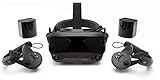
- Displays - Dual 1440 x 1600 LCDs, full RGB per pixel, ultra-low persistence global backlight illumination (0.330ms at 144Hz)
- Ergonomic Adjustments - Head size, eye relief (FOV), IPD, speaker positions. Rear cradle adapter included.
- Inter-pupillary Distance (IPD) - 58mm - 70mm range physical adjustment
- Optics - Double element, canted lens design
- NOTE - PC compatible with Valve Index is required
- You can limit eye tracking to one eye.
- You can specify which eye is your dominant eye.
What the selected eye controls
The release note explicitly says the selected dominant eye controls which eye is used for spectator view and screenshots. Those are the documented outcomes. If you record or display a spectator image, Steam uses the eye you selected for that output.
Recommended Free Tools
What the note does not establish
Valve’s public note does not say that selecting a dominant eye improves foveated streaming, changes optical calibration, or forces every gaze calculation to use only that eye. It also does not explain whether the preference changes the internal gaze estimate that places the high-quality streamed region.
The safest interpretation is therefore narrow: the control lets you restrict tracking to one eye and identifies the dominant eye for spectator view and screenshots. The relationship between that preference and Steam Frame’s streaming algorithm remains unspecified in the public release note.
Does choosing one eye change streaming quality?
There is no authoritative public statement in the cited material that it does. Foveated streaming is described as using low-latency eye-tracking information to center the high-quality region. The dominant-eye setting is documented for spectator output and screenshots. Those descriptions address different functions.
Do not assume that changing the toggle will increase resolution, reduce latency, alter lens calibration, or make the stream consume less bandwidth. If you are testing the option, judge the documented result—spectator view and screenshots—rather than treating it as a performance switch.
Rank #4

- All-In-One VR Solution: The VIVE Focus series offers standalone and PC VR experiences. Harness the power of virtual reality with high-resolution displays, versatile tracking features, and immersive applications. Base station-free.
- PC VR Gaming Headset: Immerse yourself in low-latency VIVEPORT and SteamVR gameplay. DisplayPort mode delivers lossless, high-fidelity visuals straight from your PC.(1) Connect your PC directly to your Wi-Fi router using an Ethernet cable for PC VR streaming.
- Make Interactions Real: Connect in VRChat like never before. With built-in eye tracking and low-light hand tracking; plus face and body tracker support, movement in VR is intuitive and lifelike.(2)(3)
- Immersive 5k Headset Display: The immersive display puts you right at the heart of the action with a 5K resolution of 2448 x 2448 pixels per eye, up to 120° field of view, and 90 Hz refresh rate.
- Personalize Your Fit: Auto-IPD adjustment aligns the XR headset's lenses with the centers of your pupils, giving your eyes the clearest, most comfortable viewing experience.(4)
Can Steam Frame games access eye-gaze data?
Valve documents application access through standard interfaces, but an interface does not mean every game uses it.
| Interface | What Valve documents | What it does not prove |
|---|---|---|
| OpenXR | Current eye-tracking support uses the XR_EXT_eye_gaze_interaction extension. |
That every OpenXR application reads gaze data or acts on it. |
| OpenVR | GetEyeTrackingDataRelativeToNow and GetEyeTrackingDataForNextFrame are documented for an action of type eyetracking. |
That every OpenVR title implements those calls. |
A compatible application can request gaze information through these documented routes, then decide what to do with it. Possible uses depend on the developer’s implementation and could include interface focus, accessibility behavior, or other gaze-driven interactions. The documentation supports availability of the data path; it does not establish broad game support.
Eye openness is a different signal
SteamVR release notes also report eye-openness information exposed through OSC when streaming from Steam Frame. Eye openness describes whether an eye is open or closed; it is not the same measurement as gaze direction.
The same notes described OpenVR SDK availability as forthcoming at that time. Treat this as an implementation and update note, not as proof that social applications, avatars, or every OpenVR title already support eye-openness data.
The Tool Desk
Outbyte PC Repair FREEClear out junk files and repair common Windows errorsFree Scan →Outbyte Driver Updater FREEScan for outdated or missing drivers - takes under a minuteDriver Scan →What is still not publicly specified
The cited Valve documentation explains the purpose and developer interfaces but does not provide a complete sensor specification or privacy description. Public material reviewed for this topic does not specify:
Best Value

- VISUALS: 2880 x 2880 per eye resolution and 16.6 million pixels, enjoy the pinnacle of clarity
- SCREEN TECHNOLOGY: QLED display, supporting local dimming and HDR, achieving high contrast and vivid colors
- LENS: Glass aspheric lens, providing edge-to-edge clarity and reducing distortion
- ULTRA-LOW LATENCY: Up to 120Hz, Experience minimal lag with high refresh rates, providing a fluid and responsive VR environment for immersive simulations
- COMPATIBILITY: Seamlessly integrate with your existing SteamVR setup, including compatibility with controllers like the Valve Index Knuckles or HTC VIVE
- Eye-camera resolution.
- Sampling or tracking rate.
- Tracking precision or accuracy.
- The calibration procedure.
- How raw eye data is retained, transmitted, or deleted.
- Exactly how the dominant-eye preference interacts with the gaze estimate used for foveated streaming.
Those omissions matter when comparing advertised behavior with hardware performance or privacy requirements. They should not be filled with assumptions from other headsets or from the presence of an OpenXR extension.
Practical interpretation for Steam Frame owners
If your question is “What is eye tracking mainly for?”
The documented headline use is gaze-directed foveated streaming. The wireless stream prioritizes the region you are looking at and reduces data spent on the surrounding view. The host PC still renders the game.
If your question is “What does the selected eye control?”
According to Valve’s SteamOS notes, it controls which eye supplies spectator view and screenshots, while the accessibility toggle can limit tracking to one eye.
What’s actually slowing this PC down?
Pick the symptom - the matching free tool is one click away.
If your question is “Will a game automatically use my gaze?”
Only if the application implements a supported interface. Valve documents OpenXR and OpenVR access, but application behavior remains the developer’s responsibility.
If your question is “Do I need another eye tracker?”
The cited product and interview material describe eye-tracking cameras built into Steam Frame and do not indicate that a separate tracker is required.
If your question is “Does eye tracking lower my PC’s GPU workload?”
Not through foveated streaming alone. Streaming changes the quality and bitrate of image data sent over the network. Rendering-side savings require foveated rendering support in the game or runtime.
The bottom line on the selected eye
Steam Frame uses live gaze data primarily to steer foveated streaming: high-quality pixels and more encoding bits follow your gaze, while peripheral areas receive fewer bits. Valve’s reported four-view design explains how the stream can preserve a detailed gaze region without sending the entire field of view at that quality.
Do these 3 things before closing this tab:
1Scan for outdated or missing drivers - takes under a minute2Repair Windows errors before they cause bigger problems3Fix the driver behind crashes, sound loss and screen glitches“Track Dominant Eye Only” should be understood separately. Valve explicitly documents the selected eye for spectator view and screenshots, plus a one-eye tracking option. Public notes do not establish that it selects the sole eye used by foveated streaming or changes the headset’s calibration. Applications can access gaze through documented OpenXR and OpenVR interfaces, but support remains app-dependent.
Quick Recap
Product prices and availability are accurate as of the date/time indicated and are subject to change. Any price and availability information displayed on Amazon at the time of purchase will apply.

