For India, a small event organizer should first establish whether its supplies and circumstances require GST registration (or whether it wants voluntary registration), then choose the correct registration route and configure invoices around the contract’s payment terms. A continuing business with a fixed establishment will usually examine the normal taxpayer process. An occasional supplier with no fixed place of business in the taxable territory may fit the GST Portal’s “casual taxable person” description, which requires an electronic application at least five days before business starts, estimated supplies and tax, and an advance deposit process.
After registration, issue the document that matches the transaction: generally a tax invoice for taxable supplies, or a bill of supply for exempt supplies or supplies made under the composition scheme. Invoice timing can depend on an ascertainable contractual due date, receipt of payment, or completion of the event. This guide covers India’s GST regime; other countries use different registration tests and invoice rules.
As an Amazon Associate I earn from qualifying purchases.
Start with the facts that determine your GST route
GST registration is not decided by the label “small event organizer” alone. The legal result depends on what you supply, where you operate, whether your activity is continuing or occasional, and the current provisions applicable to those supplies. The official material used for this guide does not establish one universal turnover threshold for every organizer, supply type and state, so do not rely on a single number without checking the current rule and your facts.
Confirm the country and taxable territory
This article uses India’s CGST framework and the Indian GST Portal. Registration thresholds, invoice fields and electronic-invoicing rules differ in Malaysia, Singapore, Australia and other GST jurisdictions. If the organizer is outside India or the supply is not in an Indian taxable territory, use the relevant local authority instead.
#1 Best Overall

- 【Fast Printing & Auto Cutter】The pos printer high efficiency with auto cutter and printing speed--250mm/sec. Easy for paper installation, easy maintenance, easy to use.Three Interface ports:USB+ LAN + SERIAL PORT.DO NOT-Wifi-Bluetooth.
- 【Wall Hanging Design】 Kitchen printer with two hanging holes on the bottom support wall mount hanging. Easy to use, save the place. With auto cutter and compatible with several operating systems. Print width:79.5±0.5mm; Paper Width:3 1/8" (80mm).
- 【Wide Compatibility&Reasonable Design】Desktop or wall-mounted type for option, lets you use every space more rationally. The humanized auto-cutter, the receipt will not fall to the ground after printing. One-button open cover and large paper warehouse design, easy to use & maintain. Work with MUNBYN 3 1/8 x 203ft thermal paper,MFLABEL thermal receipt paper.
- 【Most Cost-effective】Support cash drawer driving, compatible ESC/POS print commands.Do not need ribbon/ink cartridge, low operating cost. The printer has the function of overheating protection, long service life. Printing characters with high speed, reliable performance.It is an ideal choice for receipt printing in large shopping malls, supermarkets, retail, hotels, canteens, restaurants, etc.
- 【Buy with Confidence】 Rongta is a brand that is dedicated to offering the highest quality products and good shopping experience for the customer. Warm tips:The receipt printer is not compatible with Ubereats/Grubhub/Doordash/Lightspeed/Postmates/Square/Chromebook/Clover.
Map the organizer’s operating model
- Continuing business with a fixed establishment: examine the normal taxpayer registration route and the rules that apply to the actual supplies.
- Occasional taxable supplies with no fixed place of business in the taxable territory: the GST Portal describes this as a possible “casual taxable person” case. The description must match the facts; it is not a shortcut for every small or seasonal business.
- Already registered, exempt, or under composition: the status determines whether a tax invoice or a bill of supply is appropriate for a particular transaction.
Read the event contract before setting invoice dates
Identify deposits, milestone payments, a stated payment due date, payment linked to event completion, and any early termination clause. Section 31 of the Central Goods and Services Tax Act ties invoice timing to these circumstances. A venue, ticketing, catering, sponsorship or vendor-charge bundle may require separate analysis; do not assign a tax treatment to the entire package without reviewing the contract and current provisions.
Choose the appropriate registration process
Normal taxpayer application
The GST Portal’s “Apply for Registration Normal Taxpayer” guide divides the application into Part A and Part B. The initial information includes the state or Union territory, district, legal name as it appears on PAN, PAN, and the authorized signatory’s email address and mobile number. PAN is mandatory. A service supplier adds a service classification code in the services section.
- Open the GST Portal registration flow for a normal taxpayer and select the applicable state or Union territory and district.
- Enter the legal name exactly as recorded against the PAN, then provide the PAN and the authorized signatory’s email and mobile number.
- Complete the remaining Part A and Part B fields requested by the portal, including the business and promoter details applicable to the applicant.
- In the services section, select the service classification code that best describes the supplies actually made. Do not choose a code merely because it sounds broad or convenient.
- Review the application for spelling, PAN, contact details and state information before submission, and retain the acknowledgement and application records.
The portal guide explains the application sequence, but it does not by itself decide whether registration is legally compulsory. Make that determination from the organizer’s supplies, place of supply, registration status and current law.
PC Slower Than It Used to Be?
A free scan shows the junk files, broken settings and background clutter dragging Windows down - then fixes them in one click.Free scan · Windows 10 & 11Crashes, No Sound, or Screen Glitches?
Random freezes, missing sound and display glitches usually trace back to one bad driver. Find and replace yours safely.Free scan · under a minuteCasual taxable person route
The GST Portal describes a casual taxable person as an occasional supplier of taxable goods and/or services in a taxable territory where the supplier has no fixed place of business there. If that description fits, the guide says the electronic application must be submitted at least five days before the business starts.
Rank #2

- Compatibility Information: Please ensure that our receipt printer is compatible with your device.The Ethernet interface supports Windows, Mac OS, Linux, VirtualCom, Android, RaspberryPi and iOS. But the USB interface could only support Windows, Mac OS, Linux, VirtualCom and Android. Additionally, it does not support Ubereats, Grubhub, Doordash, Postmates, Clover, or Shopify for POS software.
- Fast Printing & Auto Cutter: This high-efficiency thermal receipt printer boasts a maximum printing speed of 260mm/s, ensuring quick and efficient printing without any paper jams. The automatic cutter is designed to handle heavy usage and can last up to 1.5 million cuts. With a one-button open cover and a spacious paper warehouse, this POS printer is easy to use and maintain. Additionally, the receipt printers utilizes direct thermal printing technology, eliminating the need for ribbons or ink.
- USB & Ethernet Interface: The receipt printer has USB and Ethernet interfaces, as well as cash drawer RJ11 ports. However, it does not support Bluetooth or WiFi printing. With a 203 dpi resolution, the Ethernet receipt printer produces high-quality prints that are sharp and clear. To develop custom applications on Ethernet-supported systems like iOS and Android, a software development kit (SDK) is necessary.
- Wall Mount Option: The kitchen printer has a wall mount option with two hanging holes at the bottom, allowing it to easily fit into any space. This USB receipt printer is an excellent choice for various establishments such as restaurants, kitchens, retail stores, grocery stores, clothing stores, supermarkets, cafes, ticket points, food trucks, banks, shopping malls, hotels, canteens, and more.
- Customer Service in the United States: Our team of customer support based in the United States is ready to help you with any problems you may have regarding the integration of the direct thermal printer. Whether you require assistance with setup, connection, compatibility, or any other issues related to the product, please don't hesitate to reach out to us. Additionally, all Volcora products are backed by a limited lifetime warranty, ensuring your peace of mind when making a purchase.
- Begin the application early enough to meet the stated five-day advance requirement.
- Provide the estimated value of supplies and estimated net tax liability requested in the casual-taxable-person flow.
- Use the provisional GSTIN described by the portal to enable the advance tax deposit process.
- Deposit the required advance amount following the portal’s instructions before commencing the taxable activity.
- Keep the estimates, deposit evidence, application acknowledgement and event contract together with the project records.
A continuing organizer that has a fixed establishment should not select this route simply because it runs only a few events each year. The “occasional” and “no fixed place” conditions both matter.
Prepare the information and controls before applying
Registration and invoicing become easier when the organizer creates a single master record for each event. At minimum, reconcile the following items before submitting the application or issuing an invoice:
- Legal name and PAN spelling, matching the registration application.
- State or Union territory, district and business-address information relevant to the chosen route.
- Authorized signatory email address and mobile number that will remain accessible during the event cycle.
- Service classification code for the services the organizer actually supplies.
- Contracted customer name, address, registration status and, where applicable, GSTIN or UIN.
- Event location and the information needed to determine place of supply for an inter-state transaction.
- Payment schedule showing advances, milestones, final balance and any completion-linked payment.
Keep a numbering register before the first invoice is issued. A tax-invoice serial number must be consecutive and unique for the financial year. Decide who can create, approve, cancel and correct an invoice, and preserve the underlying contract, purchase order, payment evidence and delivery or completion record.
When to issue an invoice for event-management services
Section 31 of the CGST Act requires a registered person supplying taxable services to issue a tax invoice within the prescribed period. For event work, the contract often determines which timing rule is relevant. The CBIC invoice-rules page also states that an invoice for taxable services is generally issued within 30 days from the date of supply, subject to specified exceptions. Treat the 30-day statement and the section 31 triggers as rules to be applied to the actual transaction, not as permission to ignore a contract-based date.
Rank #3

- Auto Cutter and High-Speed Printing: The thermal receipt printer features high efficiency with auto cutter and the fastest printing speed of 300mm/sec. Easy for paper installation, easy maintenance, and excellent structure. Plug and play USB PORT, easy to use. Three Interface ports: USB+ LAN + SERIAL PORT. Does NOT support Wifi or Bluetooth. Compatible with WIN2003/WINXP/WIN7/WIN8/WIN10/LINUX/Mac
- Wall Hanging Design: Kitchen printer with two hanging holes on the bottom support wall mount hanging. Easy to use, save the place. With auto cutter and compatible with several operating systems. Print width: 79.50.5mm; Paper Width: 3 1/8 inch (80mm)
- Wide Compatibility and Reasonable Design: Desktop or wall-mounted type for option, lets you use every space more rationally. The humanized auto-cutter ensures the receipt will not fall to the ground after printing. One-button open cover and large paper warehouse design, easy to use and maintain. Works with MUNBYN 3 1/8 x 203ft thermal paper and Gorilla 3 1/8 x 230 Thermal Paper Receipt Rolls
- Cost-Effective Operation: Supports cash drawer driving, compatible with ESC/POS print commands. The network receipt printer does not need ribbon or ink cartridge, resulting in low operating cost. The printer has the function of overheating protection for long service life. Printing characters with high speed and reliable performance for receipt printing in large shopping malls, supermarkets, retail, hotels, canteens, and restaurants
- Compatibility Notice: The receipt printer is not compatible with Grubhub, Doordash, Square, Chromebook, Uber, or Clover systems. Rongta is a brand dedicated to offering high quality products and good shopping experience for customers
| Contract or payment situation | Timing described in the official material | Practical control |
|---|---|---|
| Payment due date is ascertainable from the contract | Issue on or before that due date. | Store the signed contract and calendar the invoice date when the milestone becomes due. |
| No payment due date can be ascertained | Issue before or when payment is received. | Reconcile the invoice to the bank receipt or other payment record. |
| Payment is linked to completion of an event | Issue on or before the event-completion date. | Keep an event-completion record, such as the approved completion report or contractual sign-off. |
| Service contract ends before completion | Section 31 also addresses cessation before completion; apply the provision to the amount and point at which the service is treated as supplied. | Review the termination clause and obtain tax advice for the specific adjustment, credit or invoice treatment. |
The statute’s event-specific wording is: “where the payment is linked to the completion of an event, the invoice shall be issued on or before the date of completion of that event.” — Central Goods and Services Tax Act, section 31(5)(c), Government of India.
Advances and milestones need their own review
An advance, a production milestone and the final event completion can be different taxable events or accounting points depending on the applicable provisions and contract. Build an invoice calendar that lists each trigger separately instead of waiting until the entire event has ended. If the organizer changes the scope, cancels a service or refunds an advance, preserve the original invoice and transaction evidence and apply the current adjustment rules rather than overwriting the record.
Put every required field on the tax invoice
Rule 46 contains the core particulars for a tax invoice, along with qualifications and exceptions. The following checklist is a working control, not a replacement for the current text of the rule.
| Invoice area | Information to capture | Common event-organizer check |
|---|---|---|
| Supplier identity | Name, address and GSTIN. | Match the registered legal identity and the location used for the supply. |
| Invoice identity | Consecutive serial number unique for the financial year and issue date. | Do not reuse a number after cancellation; maintain an audit trail for corrections. |
| Recipient | Recipient name, address and GSTIN or UIN where the recipient is registered. | Confirm the customer’s details before issuing an advance or milestone invoice. |
| Unregistered-recipient details | For specified supplies to an unregistered recipient, recipient name and address, delivery address, state and state code as applicable. | Capture the event location and recipient details required by the rule for that transaction. |
| Service description | Accounting Code for services and a description of the services. | Describe the actual work: for example, planning, production, coordination or another contracted service, without mischaracterizing a bundled supply. |
| Value | Total value of supply and taxable value after discounts or abatement. | Show the contractual line items and any permitted discount or abatement transparently. |
| Tax | Applicable tax rate and tax amount. | Verify the rate and whether the transaction is intra-state or inter-state under current law. |
| Place of supply | Place of supply for inter-state supplies. | Do not infer this solely from the organizer’s office address; analyze the supply and contract. |
| Reverse charge | Whether tax is payable on a reverse-charge basis. | Mark the invoice correctly only after checking whether the transaction falls within a notified reverse-charge category. |
| Authentication | Supplier signature or authorized representative’s digital signature, subject to applicable provisions. | Use the approved signing process and retain the signed or digitally authenticated copy. |
Rule 46 includes further qualifications and recipient-specific requirements. Check the current CBIC invoice rules before finalizing a template, especially when the customer is unregistered, the supply is inter-state, or the transaction is electronically invoiced.
Rank #4

- High-speed printing of 43 receipts per minute (250mm/s) with easy to setup USB connection - just Plug and Print; USB serial number feature means the PC will detect the TSP143IIIU on its Windows platform using any USB port
- Compatible with iOS, Android, and Windows for a simple setup process
- The "Drop-In and Print" clamshell design allows for fast and easy paper loading; patented "De-Curl" function always delivers a flat receipt
- The TSP143IIIU USB model is certified with the following companies: Postmates, Square, Chromebook, and Clover
- The small footprint and embedded power supply saves precious counter space
Know when a bill of supply is required instead
CBIC’s GST Sectoral FAQs distinguish a bill of supply from a tax invoice. A supplier makes a bill of supply for exempt supplies and for supplies made under the composition scheme, rather than issuing a tax invoice that charges GST. The organizer’s registration status and the nature of the particular supply therefore belong in the pre-invoice review.
The same FAQ describes a narrow low-value exception: for a supply below ₹200 to an unregistered recipient, an invoice need not be issued when the recipient does not require one, subject to the conditions stated in the FAQ. If the recipient asks for an invoice, issue it as required. Do not turn this limited exception into a general rule for event contracts, deposits or bundled services.
Independent reader supportYour contribution helps us test, update, and keep practical guides available for everyone.Check whether electronic invoicing applies
Rule 48 includes an Invoice Reference Number process for classes of taxpayers and supplies notified by the Government. Electronic invoicing is therefore not automatically required or automatically irrelevant for every small organizer. Check the current notifications against the organizer’s registration, turnover or other notified criteria before relying on a paper workflow.
What’s actually slowing this PC down?
Pick the symptom - the matching free tool is one click away.
If the organizer is covered, the invoicing system must support the applicable electronic process and retain the returned reference information with the invoice record. If the organizer is not covered, paper or ordinary digital invoicing may still be used only if it contains the required particulars and follows the applicable record-keeping rules. A printed invoice book can help maintain sequence, but stationery itself does not establish compliance.
Best Value
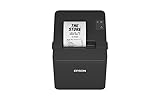
- ✅【High-Speed Thermal Printing Performance】– Print receipts lightning fast at up to 310 mm/s, delivering smoother transactions and shorter wait times for your customers. Perfect for retail stores, restaurants, cafés, and service businesses that need reliable, continuous printing.
- ✅【Triple Interface Connectivity】– Equipped with USB, Serial (RS-232), and Ethernet ports for versatile integration with any POS system. Includes an extra USB-A port for peripherals such as barcode scanners or customer displays — plug and print with total flexibility.
- ✅【Seamless Multi-Platform Compatibility】– Works with Windows, Android, and iOS devices through Epson ePOS technology, allowing direct printing from tablets, smartphones, and web-based POS apps. Ideal for modern mPOS and cloud-based retail environments.
- ✅【Smart Paper-Saving & Eco Design】– Reduce paper usage by up to 30% using intelligent margin and spacing controls. ENERGY STAR certified and RoHS compliant, this printer helps your business stay efficient and environmentally responsible.
- ✅【Compact, Durable & Easy to Install】– Sleek, space-saving design (5.5" × 7.8" × 5.7", only 1.7 kg) fits any countertop and supports horizontal, vertical, or wall-mounted installation. Built to last with 2 million auto-cuts and a 60 million line MCBF.
Handle bundled event services cautiously
Event projects commonly combine planning, venue access, ticketing, catering, sponsorship exposure, equipment, subcontractor charges and reimbursements. The available official material does not determine how every combination is classified or taxed. Separate the contractual promises and charges, identify who supplies each component, and check the current provisions governing classification, place of supply, valuation and tax rate.
Do not copy a venue’s tax treatment onto the organizer’s management fee, or treat a vendor’s charge as a pass-through without analyzing the contract. Where the invoice contains several components, use descriptions and values that reflect the agreed supplies and retain supporting vendor invoices and authorization for any recharge.
An end-to-end compliance workflow
- Define the scope: confirm India, the taxable territory, the organizer’s fixed place of business and whether supplies are continuing or occasional.
- Decide the registration question: determine whether registration is required or voluntary under the current rules for the actual supplies; do not apply an unqualified universal threshold.
- Select the route: use the normal taxpayer process for the applicable continuing business, or assess the casual taxable person route only when the portal’s conditions fit.
- Apply in time: complete the portal fields, add the service classification code, and, for a casual taxable person, submit at least five days before business begins and complete the estimate and advance-deposit steps.
- Build the contract calendar: mark due dates, payment receipts, milestones, event completion and any termination point that can trigger invoicing.
- Classify the document: issue a tax invoice for the taxable registered supply, or a bill of supply where the exemption or composition rules require it.
- Validate the fields: check supplier and recipient details, serial sequence, service code, description, values, tax, place of supply, reverse-charge marking and signature or digital signature.
- Check e-invoicing: compare the organizer with current Rule 48 notifications before choosing manual or ordinary digital invoicing.
- Archive evidence: retain the registration acknowledgement, contract, estimates, deposit proof, invoice, payment record, completion evidence, corrections and any electronic reference information.
Common errors and how to correct the workflow
- Using a turnover number without checking conditions: revisit the current rule, state, supply type and registration status instead of treating one threshold as universal.
- Calling every seasonal organizer a casual taxable person: verify both occasional activity and absence of a fixed place of business in the taxable territory.
- Invoicing only after the event: compare the invoice date with the contract’s due date, payment receipt and completion trigger.
- Reusing invoice numbers: lock the sequence for the financial year and preserve voided or cancelled numbers in the audit trail.
- Issuing a tax invoice for an exempt or composition supply: confirm whether a bill of supply is required.
- Ignoring the customer’s registration status: collect GSTIN or UIN where applicable and capture the additional details required for specified supplies to unregistered recipients.
- Assuming paper means compliant: test the organizer against current electronic-invoicing notifications and Rule 48 before committing to a manual process.
- Guessing the treatment of a bundle: break down the contract and obtain a current classification and tax analysis for venue, catering, ticketing, sponsorship and vendor charges.
Legislation, rules and notifications can change. Before acting on a registration, invoice date, tax rate or electronic-invoicing conclusion, check the current GST Portal guidance, the latest CBIC rules and the applicable CGST Act provisions for the organizer’s exact facts.
Quick Recap
Product prices and availability are accurate as of the date/time indicated and are subject to change. Any price and availability information displayed on Amazon at the time of purchase will apply.

