Yes—scientists have engineered lettuce to make an animal protein, but only in a laboratory study. Groff and colleagues reported stable production of porcine myoglobin in lettuce chloroplasts in Frontiers in Plant Science in 2026. The result shows that an edible plant host can manufacture this meat-associated protein; it does not show that engineered lettuce is approved, sold, or safe to eat.
What the lettuce experiment actually produced
The target was porcine myoglobin (Mb), an oxygen-binding muscle protein from pigs. Myoglobin is one reason meat develops a red color and contributes to the sensory profile that meat-alternative developers try to reproduce. The experiment did not turn lettuce into pork tissue, and it did not make a complete meat substitute. It made one purified animal protein inside plant cells.
As an Amazon Associate I earn from qualifying purchases.
The same 2026 study tested several biological hosts. Porcine myoglobin was produced in lettuce and tobacco, while a separate experiment expressed bovine myoglobin in the green alga Chlamydomonas reinhardtii. These are distinct experiments and proteins: the lettuce result concerns the porcine version.
The authors describe their work as the first report of stable myoglobin production in higher plants and its effect on photosynthesis and heme levels. Imperial College London, reporting on the study, quotes first author Dr Alexia Groff: “Here we show that plants can be engineered to produce the animal protein myoglobin (Mb) in their chloroplasts, the energy factories for photosynthesis.”
#1 Best Overall

- 4 Popular Heirloom Lettuce Varieties: Includes Red Romaine, Bibb Butterhead, Black Seeded Simpson, and Green Ice lettuce seeds to grow crisp, tender, and colorful salad greens with balanced flavor, texture, and visual appeal.
- Non-GMO Heirloom Seeds for Planting: Open-pollinated, non-GMO heirloom lettuce seeds grown without genetic modification, supporting traditional gardening, dependable germination, and naturally developed taste preferred by home growers.
- Easy to Grow: Made in USA lettuce seeds packaged in clearly labeled packets for easy planting and organization, ideal for home gardeners, gifting, survival gardens, and beginner-friendly vegetable growing projects.
- Suitable for Soil, Containers, Hydroponic:s Designed for raised beds, garden soil, pots, indoor grow systems, and hydroponic gardens, making this lettuce seed mix ideal for small spaces, countertops, greenhouses, and backyard gardens.
- Cut-and-Come-Again Harvesting: Loose leaf and butterhead varieties allow repeated harvesting throughout the season, providing continuous fresh greens for salads, sandwiches, and wraps while reducing waste and grocery trips.
How scientists put the myoglobin gene into lettuce
1. Selecting the chloroplast as the production compartment
Instead of placing the gene in the plant’s nuclear genome, the researchers inserted it into the chloroplast genome. Chloroplasts are the cellular structures that carry out photosynthesis. Using them as production compartments lets researchers concentrate expression in the organelles that already contain substantial protein-making machinery and heme-related metabolism.
That choice is a technical design decision, not a claim that chloroplast expression is automatically better for every animal protein. A protein must still fold correctly, acquire its chemical cofactor, remain stable, and be recoverable from the plant tissue.
2. Delivering DNA with a gene gun
Imperial’s account says the researchers used a gene gun to introduce DNA into plant cells. In this approach, microscopic particles coated with the desired genetic material are propelled into tissue. Some particles reach chloroplasts; cells in which the introduced DNA becomes incorporated can then be selected and regenerated into plants carrying the engineered chloroplast genome.
The study compared tobacco, a non-edible model plant, with lettuce as an edible higher-plant host. It also used a green alga as a separate expression system. The comparison helps show how host biology affects production, but it is not a finished-food evaluation.
3. Regenerating and measuring engineered plants
Researchers grew plants carrying the modified chloroplast DNA and measured myoglobin in the resulting tissue. The reported percentages are the share of total soluble protein (TSP) estimated by immunoblotting. TSP is not the same as the plant’s total fresh mass, nor does it tell you how much functional, heme-loaded protein could be recovered after processing.
Rank #2
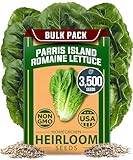
- HIGH GERMINATION RATE FOR RELIABLE GROWTH - Our Parris Island Romaine Lettuce Seeds boast an impressive germination rate. High quality and rapid sprouting heirloom lettuce seeds ensuring a bountiful harvest for your vegetable garden.
- DELICIOUS AND NUTRITIOUS - Enjoy the crisp, fresh taste of homegrown romaine lettuce. Our lettuce seeds for planting produce flavorful and visually appealing lettuce, perfect as a garnish or the main ingredient in your salads.
- EASY TO GROW, PERFECT FOR ALL GARDENERS - Whether you're a pro or a beginner, you'll find these lettuce seeds for planting simple to cultivate. The included planting information ensures a successful growing experience, even for those new to gardening
- VERSATILE USE IN VARIOUS GARDEN SETTINGS - Ideal for seeds for hydroponic garden indoor projects, tower gardens, and traditional soil gardening. These vegetable seeds are versatile and suitable for any gardening setup.
- GREAT VALUE WITH HIGH SEED COUNT - With a generous 3508 seed count per pack, our Parris Island Lettuce Seeds offer exceptional value. Customers have noted the affordability and quality, making this an excellent investment for your vegetable garden.
How much myoglobin did the hosts make?
The study provides both concentration and mass-yield measurements. They describe these laboratory systems only; they are not forecasts of commercial farm output.
| Host | Myoglobin target | Accumulation | Fresh-weight yield | Dry-weight yield |
|---|---|---|---|---|
| Lettuce | Porcine | 1.5% of TSP, estimated by immunoblotting | 48 ± 2.6 mg/kg | 810 ± 60 mg/kg |
| Tobacco | Porcine | 2.7% of TSP, estimated by immunoblotting | 94 ± 12 mg/kg | 800 ± 110 mg/kg |
| Chlamydomonas reinhardtii | Bovine | Below 0.25% of TSP | Not reported in the study summary | Not reported in the study summary |
Lettuce reached a lower percentage of soluble-protein accumulation than tobacco, yet its reported dry-weight yield was similar within the stated experimental variation. Fresh-weight numbers differ because leaves contain large amounts of water. Comparing platforms therefore requires using the same basis and reporting the same processing assumptions.
What’s actually slowing this PC down?
Pick the symptom - the matching free tool is one click away.
The key bottleneck: getting myoglobin to bind heme
Myoglobin is not fully functional just because its amino-acid chain is present. It normally carries a heme group, the iron-containing cofactor that binds oxygen and contributes to the protein’s color and behavior.
Purified porcine myoglobin made in tobacco showed approximately 35% heme binding. Myoglobin produced in Escherichia coli for comparison showed about 80% binding. The authors identify heme availability as a likely bottleneck. In other words, the engineered plant accumulated the protein, but a smaller fraction carried the cofactor under the tested conditions.
The plants themselves had higher total heme levels in myoglobin-producing mutants than in controls. That observation suggests the plants altered heme metabolism in response to the new protein. It does not prove that the extra heme was delivered efficiently into every myoglobin molecule, which is consistent with the lower binding measured after purification.
Rank #3

- Exceptional Germination Rates - Achieve a lush garden effortlessly with our Butter Crunch Lettuce seeds, boasting high germination rate. Ideal for both beginners and experienced gardeners, ensuring a successful harvest every time.
- Superior Quality & Flavor - Enjoy fresh, crisp, and flavorful lettuce with our non-GMO, heirloom seeds. Perfect for salads and garnishes, delivering farm-to-table quality in every bite. Lettuce seeds for planting never tasted this good.
- Hassle-Free Growth - Simplify your gardening experience with seeds that sprout quickly and grow vigorously. Detailed planting instructions included. Our vegetable seeds are perfect for any garden, ensuring healthy growth with minimal effort.
- Outstanding Value Pack - With 1975 seeds per pack, get more for your money. Perfect for home gardens, hydroponic systems, and emergency food supplies. These seeds for planting offer a bountiful harvest at an excellent price.
- Versatile Planting Options - Perfect for hydroponic projects, vegetable gardens, and emergency food supplies. Grow your own food and enjoy the satisfaction of home-grown produce. Ideal for seeds for hydroponic garden indoor setups.
For a food ingredient, this distinction matters. A manufacturer would need to control not only how many milligrams of protein are made, but also the proportion that is correctly folded, heme-loaded, stable during extraction, and functional in the final recipe.
The Tool Desk
Outbyte Driver Updater FREEFix the driver behind crashes, sound loss and screen glitchesFind Drivers →Outbyte PC Repair FREERepair Windows errors before they cause bigger problemsFix Now →Why use lettuce at all?
Lettuce is an edible, fast-growing leafy crop with established cultivation practices. An edible host could, in principle, reduce the need to produce a target protein in a separate microbial fermenter and then add it to a food. That possibility is why the authors describe their result as a foundation for future food applications.
However, “edible host” does not mean “ready-to-eat product.” The engineered plants in this study were research material. Turning them into an ingredient would require validated containment and cultivation, harvesting, extraction, purification, quality control, toxicology, allergen assessment, and regulatory review. None of those steps is established by the reported lettuce experiment.
Is engineered myoglobin lettuce safe to eat?
The available report does not establish that it is safe or approved as food. The sources do not document a regulatory authorization, a food-safety assessment, a consumer product, or a commercial launch for this lettuce. They also do not show that study plants were evaluated as a finished food.
Safety questions would extend beyond the myoglobin sequence itself. Assessors would need to examine the engineered plant, the intended growing and processing conditions, possible unintended changes in plant composition, residual plant material after purification, exposure levels, allergenicity, and nutritional effects. The study’s measurements of protein accumulation and heme binding do not answer those questions.
Do these 3 things before closing this tab:
1Scan for outdated or missing drivers - takes under a minute2Repair Windows errors before they cause bigger problems3Fix the driver behind crashes, sound loss and screen glitchesRank #4

- USDA Certified Organic by Oregon Tilth
- 10 varieties of leafy salad greens seeds packed fresh for the current and following year
- Green Towers Romaine (Lactuca sativa), Winter Density (Lactuca sativa), Dark Lolla Rossa (Lactuca sativa), Black Seeded Simpson (Lactuca sativa), Pirat (Lactuca sativa), Rainbow Chard (Beta vulgaris), Butterflay Spinach (Spinacia oleracea), Lacinato Kale (Brassica oleracea), Arugula (Eruca sativa), & Sandy Lettuce (Lactuca sativa)
- 100%: non-GMO, open pollinated, trusted varieties
- Easy grow guide included, with tips printed on the back of each packet
Until a competent regulator reviews a specific product and use, the responsible description is “experimental lettuce producing porcine myoglobin,” not “safe myoglobin lettuce” or a food now available to consumers.
Could this replace microbial or animal production?
Not on the evidence currently reported. The study demonstrates expression in a plant host; it does not provide a complete comparison with microbial fermentation, extraction from animals, or other production systems.
A fair comparison would need the following measurements under matched conditions:
- Target-protein yield: mass per kilogram of fresh or dry biomass, with the same definition of recoverable protein.
- Heme loading and function: the fraction carrying heme and tests showing that the protein performs as intended after purification and food processing.
- Downstream processing: harvest, cell disruption, extraction, purification, waste treatment, and storage requirements.
- Scale and cost: facility size, crop cycles, labor, inputs, equipment, and consistency between batches.
- Regulatory status: approvals for the host, genetic construct, production method, and final ingredient in each target market.
- Lifecycle impacts: measured water, energy, land, emissions, and waste data rather than assumptions based on the host crop.
The reviewed study supplies only part of that picture. It does not establish lower cost, lower emissions, lower water use, or lower land use for lettuce-produced myoglobin.
What the numbers mean for future development
Expression level is only the first milestone
Lettuce reached 1.5% of TSP, and tobacco reached 2.7%. Those values show that chloroplast engineering can produce a detectable share of a soluble animal protein in higher plants. They do not reveal how much protein remains after harvesting, drying, extraction, purification, or formulation.
Best Value

- COMPLETE VARIETY PACK: Eight popular lettuce seeds including Buttercrunch, Romaine, Iceberg, Bibb, Red Oakleaf, Prizehead, plus Kale and Spinach; Perfect lettuce seeds for planting outdoors or in hydroponic systems
- PREMIUM USA-SOURCED SEEDS: 9000+ non-GMO, heirloom lettuce seeds with high germination rates; Includes organic lettuce seeds for planting fresh salad greens year-round; Butter lettuce, leaf lettuce, and romaine lettuce seeds
- EASY GROWING GUIDE: Detailed planting instructions for all lettuce varieties; Plant these salad seeds in garden beds or containers; Green leaf lettuce seeds and red leaf lettuce seeds thrive in most growing conditions
- INDOOR AND OUTDOOR VERSATILITY: Perfect for hydroponic gardens, raised beds, or containers; Grow butterhead lettuce seeds, romaine lettuce seeds for planting, or iceberg lettuce seeds in any season; Ideal for fresh salads
- GIFT-READY PACKAGING: Waterproof resealable mylar pouches preserve seed freshness; Includes plant markers; Great gift for gardeners, chefs, and survivalists; Complete your greens seeds for planting collection
Fresh and dry yields answer different questions
The lettuce fresh-weight result was 48 ± 2.6 mg/kg, while the dry-weight result was 810 ± 60 mg/kg. The corresponding tobacco values were 94 ± 12 mg/kg fresh weight and 800 ± 110 mg/kg dry weight. Fresh-weight figures are useful for estimating what a crop contains as harvested; dry-weight figures are more informative when water content varies. Neither number is a cost estimate.
Protein quality must rise with quantity
The approximately 35% heme-binding result in tobacco-produced myoglobin shows why yield alone is insufficient. Future work would need to improve heme supply or incorporation, verify molecular quality, and demonstrate that the purified ingredient behaves consistently in the intended food application.
How this fits into molecular farming
The lettuce work belongs to the broader field of plant molecular farming, in which plants are engineered to make molecules normally obtained from animals, microbes, or chemical synthesis. Research and development in this field spans many hosts and protein targets. A 2024 review and an overview from the Good Food Institute describe that wider landscape.
Those examples provide context for why researchers are testing plants, algae, and other biological factories. They should not be read as evidence that this particular myoglobin-producing lettuce has reached the market. The 2026 study remains a proof of production in an experimental host.
What would have to happen before a food product existed?
- Improve the biological system. Researchers would need reproducible expression, higher functional heme loading, and stable performance across plant generations and growing conditions.
- Define the ingredient. Developers would need a specification covering purity, identity, heme content, contaminants, residual host material, and batch-to-batch limits.
- Develop processing. A practical method would have to recover the protein from leaves at scale while preserving its desired properties and managing plant waste.
- Run safety studies. The complete production organism and purified ingredient would need the toxicology, allergenicity, nutrition, and exposure evaluations required by the relevant authorities.
- Seek regulatory clearance. Approval would depend on the jurisdiction, the genetic construct, the production method, and whether the ingredient is sold as a purified additive or as part of a whole-plant food.
- Demonstrate manufacturing economics and impacts. Independent data would be needed on cost, capacity, energy, water, land, emissions, and reliability compared with existing sources.
The practical answer for readers
Scientists have shown that chloroplast-engineered lettuce can produce porcine myoglobin, reaching 1.5% of soluble protein and a reported 48 ± 2.6 mg per kilogram of fresh lettuce in the study system. That is an important laboratory demonstration because it proves an edible plant host can make an animal muscle protein.
It is not evidence that people can buy or safely eat the engineered lettuce, that the ingredient has regulatory approval, or that plant production beats microbial or animal routes. The next scientific hurdles are functional heme loading, recovery and purification, reproducible scale-up, safety evaluation, and a measured comparison with other production platforms.
Quick Recap
Product prices and availability are accurate as of the date/time indicated and are subject to change. Any price and availability information displayed on Amazon at the time of purchase will apply.
Free tools Windows power users keep installed
One-click scans. No signup required.

