Crashes, No Sound, or Screen Glitches?
Random freezes, missing sound and display glitches usually trace back to one bad driver. Find and replace yours safely.Free scan · under a minutePC Slower Than It Used to Be?
A free scan shows the junk files, broken settings and background clutter dragging Windows down - then fixes them in one click.Free scan · Windows 10 & 11Electron microscopy showed why a ruthenium catalyst became more active while it was operating: irregular ruthenium clusters deposited on graphitic nanofibers reorganized into ordered, stepped, truncated nano-pyramids. Those edges provided a higher density of sites associated with the rate-limiting chemistry of ammonia decomposition, even as particle growth reduced the percentage of ruthenium atoms exposed at the surface.
The result comes from a laboratory study of one specific material—ruthenium on graphitic nanofibers (Ru/GNF)—not a universal specification for every ruthenium catalyst or a demonstration of commercial ammonia cracking.
As an Amazon Associate I earn from qualifying purchases.
What the researchers actually watched
Ammonia decomposition, sometimes called ammonia cracking, splits ammonia into nitrogen and hydrogen:
Do these 3 things before closing this tab:
1Scan for outdated or missing drivers - takes under a minute2Clear out junk files and repair common Windows errors3Fix the driver behind crashes, sound loss and screen glitches2 NH3 → N2 + 3 H2
In the study by Yifan Chen and colleagues, ruthenium atoms were deposited directly onto graphitic nanofibers. The as-prepared metal formed clusters with an approximately 1 nm² footprint and irregular, disordered arrangements of atoms. Instead of examining a fresh catalyst before a test and a second sample afterward, the team returned to the same places on the support and followed individual clusters during activation and reaction.
#1 Best Overall
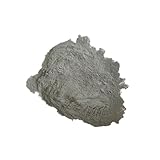
- Material: Metallic ruthenium
- Purity: 99.95%
- Weight: 1g
- Appearance: light gray powder
- Element symbol: Ru
The paper, “Evolution of amorphous ruthenium nanoclusters into stepped truncated nano-pyramids on graphitic surfaces boosts hydrogen production from ammonia,” appeared in Chemical Science 16(6), pages 2648–2660 (2025), DOI 10.1039/D4SC06382A. It was first published online on 9 January 2025.
Why identical-location STEM matters
The central technique was identical-location aberration-corrected scanning transmission electron microscopy (IL-AC-STEM). Aberration correction lets the microscope resolve the positions and edges of atoms in very small clusters. The “identical-location” part is equally important: the researchers marked locations, subjected the material to a treatment or reaction interval, and imaged those same locations again.
That approach distinguishes a genuine transformation of a particular cluster from an apparent difference caused by comparing unrelated particles. It also makes it possible to quantify changes in footprint, ordering and edge geometry over time. Conventional before-and-after microscopy can show that a population changed; IL-AC-STEM can show how the same nanocluster changed.
Quick wins for a faster PC:
Scan for outdated or missing drivers - takes under a minuteDriver Scan →Repair Windows errors before they cause bigger problemsFix Now →Fix the driver behind crashes, sound loss and screen glitchesFind Drivers →Andrei Khlobystov of the University of Nottingham described the observation this way in a Chemistry World report published on 3 February 2025: “Each nanocluster undergoes internal changes, transitioning from amorphous shapes to crystalline nanoscale pyramids.” The quote is a description of the study’s finding in that secondary report, not a substitute for the measurements in the primary paper.
The structural sequence, from deposition to reaction
1. Disordered Ru/GNF clusters
Direct deposition produced small ruthenium islands on the graphitic nanofibers. Their atoms did not initially form a well-defined crystal shape. The starting state matters because a catalyst’s chemical behavior depends on which atoms are exposed, how they are coordinated to neighbors and where steps, corners and defects occur.
Rank #2
- Material: Metallic ruthenium
- Purity: 99.95%
- Weight: 3g
- Appearance: light gray powder
- Element symbol: Ru
2. Hydrogen activation at 450 °C
Before and during the early part of testing, the material was activated in hydrogen at 450 °C. Imaging showed ruthenium atoms becoming more ordered inside the clusters. The researchers also saw dispersed single ruthenium atoms on the graphitic support during activation.
Those isolated atoms were not considered the explanation for the later rise in activity. According to the authors’ interpretation, they appeared only during the initial part of the reaction, whereas the activity continued to increase as the clusters themselves evolved.
What’s actually slowing this PC down?
Pick the symptom - the matching free tool is one click away.
3. Coalescence and ripening
Clusters grew by two processes. Coalescence joined neighboring particles, while Ostwald ripening involved material moving from smaller clusters toward larger ones. Both processes were observed during activation. Under the ammonia-decomposition reaction conditions, coalescence became the dominant growth mechanism identified by the study.
4. Stepped, truncated nano-pyramids
As operation continued, the clusters moved toward more ordered, stepped and truncated pyramidal forms. These are not perfect mathematical pyramids: they have flat, truncated tops and terraces or steps along their sides. The ordered edges create specific atomic arrangements that are different from the irregular edges of the as-deposited clusters.
How the shape change can raise activity
The important point is not simply that the ruthenium particles became larger. Growth normally lowers the fraction of atoms at a particle’s surface, because more atoms are buried in the interior. The study observed that effect, yet the measured Ru/GNF activity increased over 20 hours of ammonia decomposition.
Rank #3

- Material: Metallic ruthenium
- Purity: 99.95%
- Weight: 0.1g
- Appearance: light gray powder
- Element symbol: Ru
Chen and colleagues connect the increase to edge structure. Stepped edges supply a greater density of the active sites associated with the rate-determining step of ammonia decomposition. In other words, the chemical quality and arrangement of exposed atoms can compensate for a lower overall surface-atom fraction.
The authors reported the highest concentration of sites relevant to that rate-determining step for pyramids with a footprint of about 2–3 nm² and a thickness of roughly 3–5 atomic layers. Pyramids continued to grow, but their typical upper footprint remained approximately 4 nm² even after 12 hours of reaction. These dimensions are observations for this Ru/GNF system, not universal targets that every catalyst will reproduce.
| Stage or feature | What the study reports | Why it matters |
|---|---|---|
| As-prepared clusters | Irregular, disordered ruthenium clusters with an approximately 1 nm² footprint | Provides the low-order starting structure used for the particle-by-particle comparison |
| Activation | Hydrogen at 450 °C induced internal ordering; dispersed single Ru atoms were also observed | Shows that atomic rearrangement starts before the later activity increase |
| Most favorable nano-pyramid range | About 2–3 nm² footprint and 3–5 atomic layers thick | Associated with the maximum concentration of active sites for the studied rate-determining step |
| Later growth | Typical footprint up to approximately 4 nm² after 12 hours of reaction | Demonstrates continued growth without reducing the measured activity trend in this test |
| Time-on-stream behavior | Ru/GNF activity increased over 20 hours of ammonia decomposition | Links the evolving structure to a changing catalytic performance rather than a static pre-treatment effect |
What the 20-hour activity result does—and does not—say
Under the conditions compared in the paper, the Ru/GNF catalyst became more active during 20 hours of ammonia decomposition. Ruthenium on metal-oxide supports used for comparison declined in performance over the corresponding testing period. That is a meaningful contrast in stability behavior for the experiments reported, but it is not a ranking of all ruthenium catalysts.
The comparison does not establish that Ru/GNF will outperform every oxide-supported catalyst in every reactor, temperature, pressure, gas composition or space velocity. The paper’s result is tied to its own sample preparation, support, particle distribution, activation procedure and reaction protocol. A fair cross-catalyst comparison would require harmonized measurements of conversion, hydrogen-production rate, feed composition, residence time and time on stream.
Why the support is part of the explanation
Graphitic nanofibers are not just an inert platform in this experiment. Their graphitic surfaces provide locations where ruthenium atoms can diffuse, anchor and interact with neighboring clusters. The balance among atom-movement barriers, temperature, defect density and metal loading determines which structures are reachable.
Rank #4
- Material: Metallic ruthenium
- Purity: 99.95%
- Weight: 0.5g
- Appearance: light gray powder
- Element symbol: Ru
Jesum Alves Fernandes of the University of Nottingham summarized the design idea in Chemistry World: “We realised that if we can manage the surface diffusion of metal atoms by controlling the barriers to atom movement, as well as factors like temperature, density and the nature of surface defects, we can design catalytic centres of desired size and shape.” This is a proposed strategy for controlling nanocatalyst structure, not evidence that the study already provides a manufacturing recipe for any desired shape.
What the microscope adds to catalyst science
Catalyst studies often infer structural changes from bulk measurements such as spectroscopy, diffraction or the average particle size before and after a run. Those methods remain valuable, but an average can hide several populations: some particles may coalesce, others may dissolve, and still others may become more ordered.
IL-AC-STEM supplies a direct particle-level complement. The same-location images let the researchers associate a cluster’s changing morphology with the time-dependent behavior of the catalyst. They could identify ordering within individual particles, count or characterize stepped edges and observe coalescence as it happened rather than treating growth as an unexplained end point.
Khlobystov also told Chemistry World that the imaging “requires no extra specialist equipment other than the transmission electron microscope, which most institutes have.” That statement refers to the equipment needed for the imaging approach; it does not mean that every transmission electron microscope can automatically deliver aberration-corrected, identical-location measurements without suitable holders, stability, detectors and expertise.
Important limits on the interpretation
- One material system: The evidence concerns ruthenium deposited on graphitic nanofibers. It cannot be generalized automatically to ruthenium on alumina, silica, carbon black or other supports.
- Laboratory conditions: The reported activity trend was measured in an ammonia-decomposition experiment. The paper does not establish performance in a commercial reactor or at industrial scale.
- Mechanistic attribution: The authors propose that ordered stepped edges increase the relevant active-site density. The observation of shape evolution and the activity trend support that interpretation, but they do not mean that every edge atom has identical activity or that no other surface process contributes.
- Particle growth is not the same as “bigger is better”: Growth reduced the fraction of surface ruthenium atoms. The proposed benefit comes from the resulting atomic ordering and edge geometry, not from size alone.
- Single atoms are not the late-stage explanation: Dispersed Ru atoms were seen during activation, but the authors judged them unlikely to account for the continuing activity increase because they were present only initially.
- No climate or cost conclusion: The study does not calculate lifecycle greenhouse-gas emissions, prove that ammonia is carbon-free, establish cost competitiveness or report a commercial supply chain.
How to read the catalyst comparison
For this result, the most informative comparison axes are structural and operational rather than a single headline number:
Best Value
- Material: Metallic ruthenium
- Purity: 99.95%
- Weight: 5g
- Appearance: light gray powder
- Element symbol: Ru
- Support: graphitic nanofiber versus the metal-oxide supports used as comparators.
- Activation and reaction conditions: temperature, gas composition, pressure and flow or residence time.
- Time on stream: whether activity rises, falls or remains steady during the same interval.
- Performance basis: ammonia conversion, hydrogen-production rate or another explicitly defined metric.
- Structural evidence: whether atomic ordering and edge geometry were directly observed or inferred from an average measurement.
The available report does not provide a harmonized dataset that would support a broad numerical ranking across unrelated catalysts. Treating the 20-hour Ru/GNF trend as a universal benchmark would overstate the evidence.
What this means for future catalyst design
The study suggests a design principle: a catalyst can improve during use when operating conditions drive atoms toward a more favorable arrangement. Instead of viewing activation only as a way to remove contaminants or reduce an oxide, researchers can ask whether temperature and gas chemistry are reshaping the active metal into a better configuration.
For ruthenium on graphitic surfaces, the controllable variables include how strongly atoms bind to the support, how easily they diffuse, the density of defects and the initial spacing of deposited clusters. A useful design target would therefore specify an edge structure and atomic thickness, not merely an average particle diameter.
That principle still needs testing across different loadings, supports, reactor conditions and longer operating periods. The present work establishes a detailed structure–activity relationship for one laboratory catalyst and demonstrates a way to observe it directly.
Bottom line
Identical-location aberration-corrected STEM captured ruthenium clusters changing from amorphous, disordered islands into stepped, truncated nano-pyramids on graphitic nanofibers. During the same 20-hour ammonia-decomposition test, Ru/GNF activity increased, even though particle growth lowered the fraction of surface ruthenium atoms. The study’s explanation is that ordering creates more of the specific stepped-edge sites involved in the rate-determining chemistry. It is a microscopy-backed laboratory result about a defined Ru/GNF material—not proof of universal catalyst superiority, commercial deployment or net-zero hydrogen production.
Quick Recap
Product prices and availability are accurate as of the date/time indicated and are subject to change. Any price and availability information displayed on Amazon at the time of purchase will apply.

