Photochemistry turns a programmed light pattern into a material change. In vat photopolymerization, light converts liquid resin into a solid polymer network, defining the object’s geometry. Newer research separates that forming step from a second, local modification step: visible light can build the structure while 365-nanometre ultraviolet light changes its colour, or a different photochemical reaction can add conductivity, sensing or motion. The result is not one universal printer capability, but a family of methods whose performance depends on wavelength, exposure dose, optical pattern, resin chemistry and the thickness light must travel through.
What photochemistry contributes to 3D printing
Photochemistry is the use of light to initiate or control chemical reactions. In light-based additive manufacturing, photons activate a photoinitiator or another light-sensitive component. The resulting reactive species link small resin molecules into a cross-linked polymer network. Wherever the delivered dose passes the resin’s curing threshold, liquid becomes solid; areas receiving less effective dose remain unpolymerized.
| # | Preview | Product | Price | |
|---|---|---|---|---|
| 1 |
|
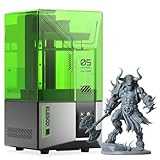
ELEGOO Mars 5 Resin 3D Printer | $199.99 | Buy on Amazon |
| 2 |

|
ELEGOO Mars 5 Ultra 7" 9K MSLA Resin 3D Printer | $299.99 | Buy on Amazon |
| 3 |

|
ELEGOO Mars 5 Ultra 9K MSLA Resin 3D Printer, Smart Mechanical Sensor | $299.98 | Buy on Amazon |
| 4 |

|
ANYCUBIC Resin 3D Printer, Photon Mono M7 MAX 13.6-inch 7K Mono LCD | $649.99 | Buy on Amazon |
| 5 |

|
ELEGOO Jupiter 2 Large 16K Resin 3D Printer | $949.00 | Buy on Amazon |
As an Amazon Associate I earn from qualifying purchases.
A 2025 review of light-based polymer printing describes vat photopolymerization as one member of a broader field. The methods differ in wavelength, projection or scanning strategy, resin formulation and the chemical reaction used to create the material. That distinction matters because “light-based 3D printing” does not specify a single machine, resolution, speed or material.
Recommended Free Tools
The variables that set the result
- Wavelength: The resin’s photoinitiator and any secondary photoactive molecules must absorb the selected light. A wavelength that cures one formulation may do little to another.
- Exposure pattern: A projected image, scanned beam or other patterned source determines which pixels or paths receive light.
- Dose: Intensity and exposure time together determine how much photochemical reaction occurs. The same pattern at a different dose can produce incomplete curing, excess growth or a different property.
- Resin chemistry: Monomers, initiators, dyes, inhibitors and additives control viscosity, curing response, colour and mechanical behaviour.
- Optical path: Absorption and scattering limit how far light penetrates. A recipe that works in a thin feature may not work through a thick wall.
How a vat process builds a 3D object
1. Light-sensitive liquid is prepared
A vat contains a liquid photopolymer resin. Its formulation is designed so that selected wavelengths trigger polymerization while unexposed regions remain processable. The resin may include a photoinitiator, monomers or oligomers, optical absorbers and functional additives. Compatibility is a chemical requirement, not a label that can be inferred from the printer’s appearance or from a resin’s colour.
#1 Best Overall
- 【Effortless Magic with One-Click Automatic Leveling】Effortless precision is just a click away. ELEGOO Mars 5 resin 3D printer offers advanced automatic leveling function with a simple click, allowing all skill levels to dive straight into the creative process. Say goodbye to tedious calibrations - simply unbox, power on, and print.
- 【Print Smarter, Print Worry-Free】With a smart mechanical sensor, ELEGOO Mars 5 resin printer supports residue detection to prevent damage to the LCD screen. Plus, timely alarms for resin shortages and leveling failures minimize waste and ensure uninterrupted efficiency. Stay worry-free and enjoy high-quality prints every time.
- 【One-Click Self-Check, Ensuring Reliable Prints】Tired of setup hassles and unexpected errors ruining your printing projects? With just a simple click, ELEGOO Mars 5 3D resin printer performs a quick self-check and verifies the optimal functionality of its components before each print. Say goodbye to wasted time and materials due to faulty components.
- 【4K Mono LCD for Stunning Details】Featuring a 4K mono LCD with advanced COB light source, ELEGOO Mars 5 impresora 3D de resina faithfully reproduces intricate details with stunning fidelity and textures, bringing your ideas to life with flawless precision.
- 【Advanced Overheat Protection, Cool and Safe】No more overheating worries. The advanced overheat protection automatically halts printing and triggers an alarm if the LED temperature exceeds 80℃. Enhanced by an efficient cooling system, the ELEGOO Mars 5 impresora 3D resina printer ensures safety, extended lifespan, and optimal performance.
2. A layer pattern is delivered
The printer either projects a complete image onto the vat or scans a beam along the intended geometry. The illuminated pattern defines the cross-section being formed. As layers are exposed and the object is repositioned relative to the resin surface, successive regions join into a three-dimensional architecture.
3. Reaction depth is controlled
Exposure must be sufficient to create a continuous polymer network but constrained enough to preserve the intended boundaries. Optical absorption means that light intensity changes with depth, so feature size and wall thickness are linked to the resin’s optical response. The 2025 review groups these optical and chemical choices as central design variables rather than incidental machine settings.
4. Geometry and function can be separated
The most important conceptual extension is to distinguish forming the object from modifying a property inside it. A first photochemical reaction can establish the shape, while another wavelength or reaction changes colour, conductivity or mechanical response after or during formation. This separation allows one vat or one printed body to carry more than a single uniform function, but only when the chemistry is deliberately designed for orthogonal responses.
How one resin produced multicolour structures
Chin, Ovsepyan and Boydston reported a dual-wavelength vat photopolymerization method in Nature Communications in 2024. Their demonstration used visible light to cure the resin and 365-nanometre ultraviolet exposure to control colour locally. The approach did not require a separate coloured resin for every region.
Rank #2
- 9K High Resolution】ELEGOO Mars 5 Ultra Resin 3D Printer is equipped with a 7-inch monochrome LCD screen with ultra-high resolution of 8520 × 4320. The 18 × 18 μm XY resolution ensures that 3D printing can restore the most realistic details and higher texture clarity, better presenting your three-dimensional visual design in reality.
- 【True High-Speed Printing】Mars 5 Ultra use the innovative tilting release technology to achieve true high-speed printing at up to 150 mm/h. This technology enables quick separation of models from the release film, while allowing seamless switching between fast and slow printing modes—drastically improving printing efficiency. All this is achieved without the need for high-speed resin or ACF release films.
- 【Bult in AI Camera】It is difficult to notice the warping of the model during 3d printing, but this is not a problem for Mars 5 Ultra. The 3D resin printer quipped with an AI smart camera, you can monitor the printing process at any time, notice errors in time and correct them immediately to ensure smooth printing. You can also enable time-lapse recording — it's a great way to monitor your prints or share the journey with others.
- 【One-Button Self-Check & Automatic Leveling】Repeated manual leveling is annoying, and It's so frustrating when you print fails due to the 3D printer accessory failure. Don't worry! With this 3D printer, you can use the self-check function before starting to print. Once it detects no faults, you can start to print with confidence. And you no longer need to deal with repeated leveling work. ELEGOO Mars 5 Ultra supports automatic leveling, which can easily solve your problem.
- 【Intelligent Mechanical Sensor】The ELEGOO Resin 3D Printer has a built-in intelligent mechanical sensor and supports Foreign Object Detection. it can avoid damage to the LCD screen. At the same time, it can alert you in time to issues like insufficient resin, excessive resin, leveling failure, etc., further ensuring the smooth progress of printing and preventing problems at the source.
- Build the architecture with visible light. The visible exposure polymerized the resin and set the object’s three-dimensional form.
- Generate local acidity with ultraviolet light. The 365-nanometre exposure activated a photoacid generator in selected regions.
- Change the response of pH-sensitive dyes. The generated acidity shifted the dyes’ colour state, allowing patterns to be written into the already formed material.
- Repeat the spatial pattern as needed. By controlling where the ultraviolet dose was delivered, the authors produced multicolour patterns and structures from a single resin vat.
This is a demonstration of chemical addressability, not proof that ordinary consumer printers can print in this way. The visible and ultraviolet steps perform different jobs, and both the resin formulation and the optical system must support them. A printer lacking the required wavelength, dose control or photoacid-and-dye chemistry cannot reproduce the result merely by changing a slicer setting.
Why thickness limits the colour effect
The same study found that colour change in thicker samples was limited by light penetration. Ultraviolet light is absorbed as it travels through the material, so the delivered dose falls with depth. A surface pattern may therefore be vivid while a deeper region changes less or not at all. Any design that relies on internal colour must account for optical path length, absorption and the orientation of the feature relative to the ultraviolet source.
Other photochemical routes under investigation
Green-light upconversion curing
A 2024 ACS Central Science paper reported a triplet-triplet-annihilation upconversion system for Type I photocuring. In that chemistry, absorbed lower-energy photons are converted into higher-energy excitation capable of initiating the curing reaction. The authors demonstrated digital light processing with green light at a power density below 10 mW/cm² and in ambient oxygen.
Free tools Windows power users keep installed
One-click scans. No signup required.
Those conditions are notable because oxygen can interfere with some radical curing reactions, while low-power operation can ease optical and thermal demands. The result remains specific to the reported upconversion formulation and exposure setup. It should not be read as a field-wide guarantee that every green-light printer cures resin below 10 mW/cm² or operates unchanged in air.
Rank #3
- 【Ultra-Fast Printing】ELEGOO Mars 5 Ultra features Tilt Release Innovation for quicker model separation, reducing Z-axis movement time. With a printing speed of up to 150mm/h, it offers both fast and slow modes for high-quality results. Resin calibration ensures optimal printing parameters
- 【Intelligent Mechanical Sensor】Mars 5 Ultra Printer features a built-in smart mechanical sensor and spring for one-click calibration. It detects printing issues like low resin, foreign objects, or high light board temperature, with alerts. The printing process resumes after an interruption
- 【Built-in AI Camera】ELEGOO Mars 5 Ultra MSLA printer uses an AI camera to detect issues like empty build plates and model warping, offering real-time monitoring. Time-lapse photography lets you record, share, and compare prints, making 3D printing more enjoyable and easier
- 【WiFi Cluster Printing】ELEGOO Mars 5 Ultra supports file transfer without a USB, with speeds of 6-10Mbps, compatible with 2.4G and 5G networks. Multiple printers can print simultaneously on the same LAN, enabling remote control and secure, fast data transfer. OTA firmware upgrades are available for convenience
- 【7-inch Monochrome 9K LCD Screen】ELEGOO Mars 5 Ultra features a 9K LCD screen (85204320px) with 1818μm XY resolution. The 9H tempered glass protects the screen, while the internal COB light source ensures 92% light uniformity for high-precision printing and detailed, lifelike models
Extrusion printing of conductive hydrogels
A 2021 Nature Communications study used orthogonal photochemistry-assisted extrusion printing rather than a resin vat. The process printed tough conductive hydrogels and demonstrated structures used in pressure sensors and a temperature-responsive actuator. The authors reported a gelation time of approximately 30 seconds for their specific strategy.
Here, extrusion places the material mechanically and photochemistry locks or modifies it without relying on the same layer-by-layer vat exposure used for photopolymer resin. “Orthogonal” means the chemical steps are selected to proceed without undesired interference between the reactions. The reported sensors and actuator show how photochemistry can target function, not just shape, but they do not establish that all extruded hydrogels will be conductive, tough or fast-gelling.
Research areas identified by the 2025 review
The 2025 review highlights healthcare, sustainability and 4D fabrication as active areas for light-based polymer printing. In healthcare, researchers may seek structures with controlled geometry or biological function. Sustainability work examines material choices, energy use and routes that reduce waste. Four-dimensional fabrication adds a planned change over time, such as movement or reshaping after printing. These are research directions; a review’s identification of an area does not certify a particular resin or printer for clinical, environmental or commercial use.
Windows Errors? Fix Them Before They Spread
Repair common Windows errors and clear accumulated junk for a smoother, more stable PC - no reinstall needed.Free scan · no reinstallOutdated Drivers Are Slowing You Down
One free scan finds every outdated or missing driver and matches the right update for your exact hardware.Free scan · exact hardware matchHow the demonstrated approaches differ
| Approach | Printing setup | Light and chemistry | Function demonstrated | Reported quantitative detail | Important constraint |
|---|---|---|---|---|---|
| Dual-wavelength vat photopolymerization (2024) | Vat process with patterned exposure | Visible light cures; 365-nm ultraviolet light activates a photoacid generator | Multicolour patterns in objects made from one resin vat | Wavelength specified as 365 nm; other performance values not stated | Colour modulation in thicker samples was limited by ultraviolet penetration |
| Triplet-triplet-annihilation upconversion DLP (2024) | Digital light processing | Green-light upconversion enables Type I photocuring | Photocuring at low power in ambient oxygen | Below 10 mW/cm² in the reported study | Result applies to that upconversion formulation and optical setup |
| Orthogonal photochemistry-assisted extrusion (2021) | Material extrusion followed by photochemical processing | Orthogonal reactions in a hydrogel system | Tough conductive hydrogels, pressure sensors and a temperature-responsive actuator | Approximately 30-second gelation time for the authors’ strategy | Not a vat-printing result; properties depend on the specific hydrogel chemistry |
| Light-based polymer printing surveyed in 2025 | Multiple projected, scanned and other light-based modalities | Different wavelengths, projection methods and resin chemistries | Research spanning healthcare, sustainability and 4D fabrication | No field-wide speed, resolution or cost ranking stated | Suitability must be judged method by method |
A decision framework for evaluating a photochemical printer
When a paper, prototype or product claims a light-enabled capability, evaluate the complete chain from photons to the intended use.
Rank #4
- 【13.6'' 7K High Resolution】With a 7K (6480*3600px) high-resolution screen and an XY-axis pixel size of only 46*46μm, the Photon Mono M7 Max ensures that printed models have an outstandingly detailed texture. Anti-aliasing and high-precision positioning spools for fewer layer lines and higher reproduction.
- 【Ultra-Large Build Volume】 ANYCUBIC Photon M7 Max Resin Printer has a Amazing print size of 298mm × 164mm × 300mm. The large print volume allows you to print large-sized models in one go without the hassle of splitting and splicing, and also allows to realize batch printing to improve efficiency. And the flip-top design makes it easy to access the model
- 【Faster Printing Speed】Thanks to the new technologies such as Intelligent Release 2.0 and dynamic Light-off Compensation, the Photon Mono M7 MAX prints at speeds of up to 60mm/h, 200% faster than the Photon M3 Max
- 【Intelligent Resin Management】Resin Vat with Temperature Control improves the resin quality and printing success rate. The automatic material management system monitors the resin level and adds resin as required, minimizing waste.
- 【Optimized Features】Suspension Drip setting allows the print platform to be suspended at an angle after printing, and the resin can flow back into the resin tank to reduce loss. The capacity of the resin tank increased to 1300ml for large printing needs
- Identify the deposition or curing arrangement. Is material held in a vat, exposed as a projected image, scanned with a beam or extruded through a nozzle? A method’s constraints follow from this setup.
- List every required wavelength. Record which wavelength forms the object and which, if any, controls a secondary property. A nominal “UV” or “green” label is insufficient without the actual band and the chemistry’s absorption requirements.
- Separate shape from property. Determine whether the experiment demonstrates geometry only or also colour, conductivity, sensing, actuation or another response. Do not treat a functional additive as proof of a functional finished part.
- Check dose and atmosphere. Note intensity, exposure time, power density and whether the experiment used ambient oxygen, an inert atmosphere or another controlled condition. The green-light study’s below-10-mW/cm² figure belongs to its stated conditions.
- Map the optical path. Ask how far the controlling light must travel and whether absorption, scattering or shadowing will reduce the reaction. The dual-wavelength colour study provides a direct example of thickness limiting the result.
- Verify the evidence level. Distinguish a peer-reviewed demonstration from a general capability claim. A result shown with one resin, one geometry or one laboratory optical system needs separate validation before transfer to another printer or application.
Common failure modes and how to reason about them
The part forms, but the secondary property does not
This can happen when the wavelength that cures the resin does not deliver enough dose for the second reaction, or when the additive concentration and absorption are mismatched. Diagnose the forming and modifying steps independently: first confirm that the architecture cures, then measure the response to the secondary exposure in a thin test feature before attempting a thick object.
The effect fades with depth
Depth-dependent loss is an optical problem as much as a chemical one. Reduce the distance the controlling light must penetrate, expose from another direction where the setup permits, or redesign the feature so the target property is near an accessible surface. Do not assume that increasing exposure indefinitely will restore a uniform internal response; excess dose can alter boundaries or the base material.
A published power figure is treated as a universal specification
Power density is meaningful only with the wavelength, resin, exposure geometry and atmosphere that produced it. The upconversion paper’s value below 10 mW/cm² is a reported experimental condition, not a minimum requirement or guaranteed operating point for unrelated formulations.
The Tool Desk
Outbyte Driver Updater FREEScan for outdated or missing drivers - takes under a minuteDriver Scan →Outbyte PC Repair FREERepair Windows errors before they cause bigger problemsFix Now →A research material is mistaken for a consumer-compatible resin
Photoacid generators, pH-responsive dyes, upconversion molecules and conductive hydrogel components change the chemistry of the feedstock. They may affect viscosity, storage stability, optics, curing depth or waste handling. Compatibility must be established by the printer and material documentation, not inferred from the fact that both are described as photopolymers.
Best Value
- 【Big Builds, Big Ideas】With an impressive build volume of 302.4 × 161.98 × 300 mm, Jupiter 2 enables the printing of bigger objects or multiple smaller objects in a single print job. 2.5× larger build volume compared to Saturn 4 Resin 3D Printer.
- 【Stunning 16K, True to Life】15120 × 6230 resolution. 20 × 26 μm XY resolution. The fully enclosed light source eliminates light leaks, ensuring uniform exposure and flawless results every time.
- 【Smart from the Start】Multi-point auto leveling system. Smart tank heating with quick preheat maintains a precise 30 °C. The automated resin system ensures you never run out mid-print.
- 【Intuitive Design Built for You】Double-door design. Transparent viewing window. User-friendly laser-engraved build plate with quick-release. Resin drip tray provides reliable protection against resin spills. 4.0-Inch Touch Screen has an intuitive interface. Compatible with Elegoo Marsmate air purifier.
- 【Simplified Setup and Maintenance】Intuitive Manual Leveling with real-time data feedback. Quick-Swap Release Film enables you hassle-free, tool-free swaps in seconds.
What this means for readers choosing materials
Liquid UV-curable photoresin is the relevant category for vat photopolymerization, including the kind of resin used in the dual-wavelength colour demonstration. A category search does not identify a particular formulation, prove that it works in a given printer or establish suitability for medical, biological or other specialized applications.
- Check the printer manufacturer’s supported wavelength and exposure system.
- Read the resin manufacturer’s instructions for curing, handling, storage and post-processing.
- Confirm that the formulation is intended for the printer’s vat, optics and motion profile.
- Do not use a research formulation containing photoacids, dyes, upconversion compounds or conductive components for a specialized application without appropriate validation.
Safety and responsible handling
Uncured photopolymer resin and photoactive additives require controlled handling. Follow the resin’s safety data sheet, use suitable gloves and eye protection, prevent skin contact, and provide the ventilation specified for the material. Keep active light sources shielded from eyes and skin. Collect contaminated wipes and liquid waste according to local rules; curing waste does not automatically make every additive harmless. For research mixtures, document the identity and concentration of each photoactive component before disposal or scale-up.
What the evidence supports—and what it does not
Taken together, these studies establish that photochemistry can do more than harden a shape. It can assign colour after forming, enable low-power green-light curing in a particular upconversion system, and create conductive or responsive hydrogel structures through extrusion. They also establish why claims must remain conditional: each result depends on a defined wavelength, chemistry, optical geometry and processing route.
What’s actually slowing this PC down?
Pick the symptom - the matching free tool is one click away.
The available studies do not provide a balanced, field-wide ranking of printing speed, resolution, cost or application suitability. No single example should be used to rank vat, projected, scanned or extrusion approaches for every user. The reliable comparison is the one that matches the intended property and the documented chemistry to the actual optical and manufacturing constraints.
Quick Recap
Product prices and availability are accurate as of the date/time indicated and are subject to change. Any price and availability information displayed on Amazon at the time of purchase will apply.

