A school-university partnership is worth it if it has a clear purpose, reaches the students it is meant to serve, delivers what it promises, benefits both partners, and produces evidence that changes what the partners do next. A campus visit or a logo on the school website shows none of that. This guide gives you six tests and a question list to take to the school. Nobody can judge a specific local partnership without its plan and results, so your first job is to ask for both.
The six tests of a worthwhile partnership
1. Is the purpose clear?
Ask the school and university to name the shared problem or opportunity. Then ask which students and subjects are involved, what activities are planned, and what outcomes they expect in the short, intermediate and long term. England’s Department for Education guidance on school-university partnerships says partners should be clear about what they hope to achieve and by when, and it recommends agreeing the scope and an evaluation plan at the start. A partnership that cannot state its goals in a sentence or two is hard to evaluate at all.
As an Amazon Associate I earn from qualifying purchases.
2. Who gets in, and does the offer fit them?
Find out how students are invited or selected, which year groups take part, and whether participation is sustained or a one-off. The Australian Government’s framework for school-university partnerships calls for partnerships that respond to student and family aspirations, with co-designed goals, family consultation and real participation. The England guidance adds that results can be examined across pupil characteristics such as disadvantage, ethnicity, disability, parental education and location. If only the most confident or best-connected pupils take part, the partnership may be widening gaps, not closing them.
The Tool Desk
Outbyte Driver Updater FREEFix the driver behind crashes, sound loss and screen glitchesFind Drivers →Outbyte PC Repair FREEClear out junk files and repair common Windows errorsFree Scan →3. Does the evidence show outcomes, or only activity?
A campus visit, mentoring session, research project or teacher-development workshop is an activity. It does not prove lasting benefit. Ask what changed for the participating students or teachers, and how it was measured. The DfE guidance gives two kinds of example:
#1 Best Overall

- Develop math, reading, writing, coding, problem-solving and creativity skills with more than 20 educator-approved learning apps that grow with kids
- Find hundreds more games, videos, music and eBooks (sold separately) by going to the LeapFrog App Center and expand the learning experience
- Includes a three-month trial of LeapFrog Academy; subscribe to send kids on learning adventures filled with more than 2,000 engaging games, activities, eBooks, videos, songs and more
- Learning tablet includes a stylus, tough bumper with kickstand and a 7" shatter-safe screen; set time limits, manage apps and explore kid-friendly web content with parent controls
- Intended for ages 3-8 years; rechargeable lithium-ion battery included
- Quantitative: attainment, or rates of applying to higher education.
- Qualitative: subject interest, or confidence about applying to university.
The strongest reporting uses both, and shows attendance and participation figures next to them.
4. Does both sides contribute and gain?
A worthwhile partnership is reciprocal, not a one-way offer where the university visits and leaves. The Australian framework lists trust, respect, shared responsibility and adequate resources among its principles. New South Wales case-study reporting on external partnerships identifies five features of success: leadership support, reciprocal trust and mutual benefit, enabling structures, a focus on student learning, and adequate resourcing. Ask what each partner contributes (staff time, expertise, facilities, funding, training, research access), what each learns, who leads decisions, and how the work connects to what happens in classrooms.
Rank #2

- 【Screen-Free Learning Toy】: The learning tablet engages kids through audio for an experience that reinforces learning. Includes 156 pages of talking flash cards made from FSC-certified paper, covering letters, short vowels, math, words, songs, expanding vocabulary, and mastering phonics rules in an engaging way. This press-to-learn tablet allows your kids to dive into hours of educational play – all screen-free, without visual stress
- 【Endless Exploration & Learning】: The educational toys tablet offers a rich variety of activities and games. Kids start with letter sounds, advance to short vowels and word building, then reinforce learning through fun and interactive games. Fun self-directed learning activities keeps learning effective and entertaining
- 【Build Essential Skills】: From ABCs to 123s, this hands-on tablet turns play into progress! Interactive learning cards play boosts creativity, focus, logical thinking, fine motor skills, and hand-eye coordination. Rich in content, this educational tablet toy supports comprehensive skill development for preschool learning activities
- 【Touch, Play, and Learn】: Just insert the card into the learning pad’s slot and tap the red circle on the card to hear the words pronounced with a standard American accent. The Screenless Educational Tablet teaches and quizzes kids on reading and phonics knowledge through playful challenges they'll love
- 【Perfect Educational Gift】: Gift the joy of endless exploration! JoyCat educational toy makes a great gift for birthdays, Christmas, Halloween, Easter, and back to school day. Designed for ages 2-5, this tablet sparks a lifelong love of learning through joyful discovery
5. Do findings change decisions?
Evaluation matters only if someone acts on it. The DfE guidance ties monitoring to short-term adjustments of resources and to longer-term investment and strategy. Ask when the partners review progress, who sees the findings, and what they would change if results were weak. A partnership that has never altered anything in response to its own data is probably not looking.
Quick wins for a faster PC:
Fix the driver behind crashes, sound loss and screen glitchesFind Drivers →Clear out junk files and repair common Windows errorsFree Scan →6. Are the claims fair given how they were measured?
Ask whether results have a baseline or comparison group, who was included, how long students were followed, and what else could explain the change. The DfE guidance says strong evaluation tries to separate an intervention’s effect from other influences, such as a strong cohort or a new teacher. A 2023 systematic review of partnership evaluations found they were mainly qualitative, usually carried out during implementation, seldom used validated instruments, and rarely combined qualitative and quantitative methods. That is a reason to inspect methods and be cautious about claims of cause. It is not a reason to dismiss student and teacher testimony, which captures things test scores miss.
Rank #3

- Comprehensive Early Learning: This upgraded toddler music learning tablet includes 90+ fun modules covering animals, shapes, musical instruments, vehicles, letters, numbers, and colors. Available in English, French, Spanish, German, and Italian, it supports early language skills and builds essential preschool concepts for children ages 1-3
- 4 Playful Learning Modes: This toddler activity tablet offers Learning Mode to teach basic concepts, Quiz Mode to build problem-solving skills, Music Mode to spark creativity, and Pretend Play Mode with fun icons like a phone and camera. Supports fine motor development, memory, and communication through interactive, sensory-rich play
- Screen-Free Multilingual Learning: This no-screen toddler tablet supports English, Spanish, and French with just one press. With 39 interactive icons, it reads out words and plays sounds to boost vocabulary, pronunciation, and listening skills for toddlers ages 1-3
- Physical & Motor Skill Development: The tablet's responsive touch controls help toddlers develop fine and gross motor skills while improving hand-eye coordination. Encourages active, hands-on exploration for toddlers ages 1-3
- Durable, Portable and Safe: Crafted from non-toxic, BPA-free ABS plastic, this toddler tablet is designed to withstand bumps, drops, and everyday play. Its compact, lightweight design makes it easy to carry whether at home or on the go
Questions to take to the school
- What shared goals did the school and university agree, and by when should each be reached?
- Which students, year groups, subjects and teachers are included? How are students invited or selected?
- What has actually happened so far, how often, and with what level of participation?
- What does each partner contribute, and what does each gain?
- What evidence is collected? Does it cover both outcomes (attainment, applications) and perspectives (interest, confidence, teaching practice)?
- Is progress examined for relevant pupil groups, and is the data complete enough to support that?
- What was the baseline or comparison, how long was follow-up, and what else might explain the result?
- How are consent, privacy, data access and reporting handled? The DfE guidance asks partners to consider ethics, permissions, consent, data use and a data-management plan.
- How often are results reviewed, and what has changed as a result?
- Where can families read a summary of findings, including limitations and next steps?
What to request, and what no one can tell you in advance
Ask for the partnership plan or agreement and the latest evaluation summary. A formal agreement helps clarify expectations, but its existence does not prove impact. The sources used here do not establish a universal effect size for school-university partnerships, and the 2023 review points to wide variation in how partnerships are built and evaluated. Be wary of anyone who quotes one headline number as the expected result for every child. Any local statistic should come with its publisher, year, population, measure and study design, and should not be read as causal unless the evaluation design supports it.
Comparing two partnerships or offers
If you are choosing between schools, or between programs, score each on the same axes:
Rank #4
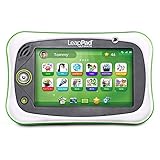
- Includes $100 worth of school readiness apps, plus apps featuring reading, music, problem solving and creativity for a total value of $195+
- Features a 7" shatter-safe screen, multi-touch capacitive screen and a built-in bumper for durability
- Access to a library of content including award-winning apps and cartridges featuring kids’ favorite characters
- Exclusive Just-for-Me learning technology built into many of the learning games adapts the curriculum to keep kids engaged and motivated
- Kid-friendly web browser that provides access to pre-selected websites all approved by learning experts. For ages 3-6
| Axis | What a strong answer looks like |
|---|---|
| Goals | Specific, relevant to students, with timeframes |
| Access | Broad, fair selection; family consultation; sustained participation |
| Delivery | Activities actually run, with participation figures |
| Outcomes | Student and teacher evidence, quantitative and qualitative |
| Reciprocity | Both sides contribute and benefit; focus on student learning |
| Resources and continuity | Staffing and funding that outlast a single event or champion |
| Evaluation quality | Baseline or comparison, transparent methods, summary shared with families |
| Improvement | Documented changes made in response to findings |
These axes come from the English, Australian, New South Wales and systematic-review sources above. None of them offers a scoring formula, so treat the table as a structured way to compare answers, not a calculator.
Outreach programs that may sit alongside the partnership
Some families can also reach university-linked outreach through wider schemes. In England, the Office for Students publishes evaluation materials for Uni Connect, its outreach programme. That does not mean your school takes part or that you are eligible, so check local availability and current eligibility with the school or the program directly.
Quick Recap
Best Value

- Your new pal, Mr. Pencil shows kids how to write uppercase and lowercase letters step-by-step, then transforms the letters into animated animals and more
- Trace numbers by following the dotted lines, then watch them transform into objects you can count
- Customize by entering a child’s first, middle and last name so they can practice writing it
- Sound out new words by sliding Mr. Pencil across the screen and the sound-it-out bar lights up to follow along
- Intended for ages 3+ years; requires 3 AA batteries; batteries included for demo purposes only; new batteries recommended for regular use
Product prices and availability are accurate as of the date/time indicated and are subject to change. Any price and availability information displayed on Amazon at the time of purchase will apply.

