Free tools Windows power users keep installed
One-click scans. No signup required.
Plants cannot absorb atmospheric nitrogen gas (N₂) and use it directly. Nitrogen-fixing microorganisms solve that problem by using the enzyme nitrogenase to convert N₂ into ammonia, a reduced form of nitrogen that can enter plant and soil nutrient pathways.
In the best-known example, rhizobia live in nodules on legume roots. The plant supplies carbon and energy; the bacteria supply fixed nitrogen. The partnership works only when the bacterial strain, host crop, soil and growing conditions are suitable.
As an Amazon Associate I earn from qualifying purchases.
What nitrogen fixation actually changes
Earth’s atmosphere contains abundant nitrogen, but most of it is present as N₂. The two nitrogen atoms are joined by a very stable chemical bond, so ordinary plant roots cannot split the molecule and use its nitrogen as they would use a nutrient dissolved in soil.
The Tool Desk
Outbyte PC Repair FREERepair Windows errors before they cause bigger problemsFix Now →Outbyte Driver Updater FREEScan for outdated or missing drivers - takes under a minuteDriver Scan →Biological nitrogen fixation is the biological conversion of atmospheric nitrogen into a chemically reactive, reduced form. As the Food and Agriculture Organization of the United Nations puts it, “Biological nitrogen fixation is the process of capturing atmospheric nitrogen by biological processes.” The key product is ammonia. From there, nitrogen can enter plant tissues or be transformed through later soil processes. Those later transformations are not the same thing as fixation: fixation changes N₂, while soil and plant metabolism distribute, release or recycle the resulting nitrogen compounds.
#1 Best Overall

- Inoculant attaches to the roots to produce Free Nitrogen for the Plant
- Covers up to 8 lbs of pea or bean seed.
- NON-GMO
- Made in the USA
| Form | Where it is found | What it means for plants |
|---|---|---|
| Atmospheric N₂ | Air | Abundant but not directly usable by plant roots |
| Ammonia and related reduced nitrogen | Inside fixing cells, nodules, plant material and soil | Can enter biological nutrient pathways |
| Nitrogen in plant biomass | Leaves, stems, roots, seeds and nodules | Becomes available to another crop only as biomass is consumed, decomposed or otherwise managed |
That distinction prevents a common misunderstanding: legumes do not “pull nitrogen from the air” into a crop in a form that plants immediately absorb through their leaves. Microbes perform the chemical conversion first.
The nitrogenase reaction: energy, electrons and oxygen control
Nitrogen-fixing organisms use nitrogenase, an enzyme complex that reduces N₂ to ammonia. Reduction requires both a supply of electrons and chemical energy in the form of ATP. In practical terms, the microorganism must spend energy to break apart an exceptionally stable atmospheric molecule and transfer hydrogen and electrons to the resulting nitrogen.
Oxygen creates a major engineering problem. Nitrogenase is oxygen-sensitive, so an active fixer must protect the enzyme while still obtaining enough oxygen for its own energy metabolism. Different organisms solve that problem in different ways:
- Legume nodules: the plant and bacteria create a controlled environment. Leghemoglobin helps regulate oxygen around the bacteria, keeping conditions suitable for nitrogenase while supporting respiration.
- Cyanobacteria: some separate nitrogen fixation into specialized cells called heterocysts, which provide a lower-oxygen setting for nitrogenase.
- Free-living bacteria: some rely on rapid or otherwise carefully regulated respiration to limit oxygen exposure near the enzyme.
These safeguards explain why nitrogen fixation is not simply a passive reaction that occurs whenever bacteria and air are present. The organism must obtain energy, deliver electrons and maintain a workable oxygen environment at the same time.
How a legume–rhizobium partnership forms
For peas, beans, clovers and other compatible legumes, fixation usually begins in the soil rather than inside a mature nodule. A sequence of recognition and infection events determines whether the partnership succeeds.
Rank #2

- EASY TO USE 🌱 Just coat your seeds and plant!
- POWERFUL MICROBIAL COMBINATION 🌱 Our Micronoc Seed Inoculant contains a carefully curated blend of nitrogen-fixing bacteria, phosphate solubilizers, and beneficial fungi. This dynamic combination creates a balanced and thriving soil ecosystem, giving your crops the perfect foundation for growth.
- ENHANCED NUTRIENT AVAILABILITY 🌱 By introducing nitrogen-fixing bacteria to your seeds, Micronoc Seed Inoculant unlocks a sustainable source of plant-usable nitrogen. This promotes robust root development, lush foliage, and overall plant vigor.
- Benefits for Seedlings 🌱 Enhances root development and nutrient uptake, boosts seedling vigor and resilience against stress.
- MICRONOC SEED INOCULANT 🌱 Is the perfect choice for all your planting seeds, from house plants to home gardens to field crops; it is compatible with all types of planting seeds.
- Root signals attract compatible bacteria. A growing legume releases chemical signals from its roots. Rhizobial bacteria respond only when they can recognize the host’s signals and establish a compatible interaction.
- Bacteria enter root hairs. After recognition, the bacteria infect developing root hairs through a specialized infection process. A strain that is effective on one crop may be poorly matched to another.
- The root develops a nodule. Signals from the infection trigger plant-cell changes and the formation of a nodule, a specialized partnership site rather than an ordinary root swelling.
- The plant supplies carbon and energy. Photosynthesis-derived carbon compounds move to the nodule. The bacteria use that plant-provided energy to fuel respiration and nitrogenase activity.
- The bacteria fix nitrogen. Protected inside the nodule, the rhizobia reduce atmospheric N₂ to ammonia.
- Fixed nitrogen enters the host’s nutrition. The resulting nitrogen is incorporated into compounds the plant can use for growth. The exact movement and chemical form can vary with the host and its metabolism.
This is a mutual exchange, but it is not an unlimited supply contract. The plant pays an energy cost, and the bacteria can deliver useful nitrogen only when the host, strain and environment support active fixation.
Why a visible nodule does not guarantee effective fixation
A nodule is evidence of a plant–microbe interaction, not proof that nitrogenase is currently fixing nitrogen at a high rate. Nodules can differ in age, activity and bacterial effectiveness. A plant may also form nodules with a strain that is present but poorly suited to that crop.
Crashes, No Sound, or Screen Glitches?
Random freezes, missing sound and display glitches usually trace back to one bad driver. Find and replace yours safely.Free scan · under a minutePC Slower Than It Used to Be?
A free scan shows the junk files, broken settings and background clutter dragging Windows down - then fixes them in one click.Free scan · Windows 10 & 11Compatibility is crop-specific. Rhizobia selected for one legume should not be assumed to work equally well on another. This is why inoculant labels and local extension recommendations identify a host crop rather than offering one universal bacterial product for every legume.
Field conditions matter as well. Soil nitrogen status, moisture, temperature and other local growing conditions influence how much fixation occurs. When readily available soil nitrogen is plentiful, a legume may rely more on that nitrogen and invest less in the energetically expensive partnership. Conversely, stress can limit plant growth, carbon supply or bacterial activity even when compatible rhizobia are present.
Fixation outside legume nodules
Legume nodules are the most familiar example, but they are not the only setting in which biological nitrogen fixation occurs. Some bacteria fix nitrogen while free-living in soil or water. Other nitrogen-fixing microbes form associations with plants that do not involve the classic legume nodule.
Rank #3
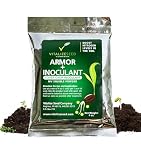
- 🌱ALL-NATURAL SEED INOCULANT: Seed Armor+ provides comprehensive, broad-spectrum coverage for all legumes, ensuring optimal nitrogen fixation and nutrient uptake. This all-natural inoculant eliminates the need for multiple products, making it easier to manage your crops. A single bag treats 1 acre of seed.
- 🌱 ENHANCED GERMINATION & ROOT DEVELOPMENT: Seed Armor+ is formulated with a humic-based addition that promotes faster seed germination and stronger root establishment. This powerful blend helps plants get a head start in any soil condition, ensuring they thrive from the beginning.
- 🌱 SOIL CONDITIONING FOR SEEDLINGS: The humic base of Seed Armor+ improves soil structure around young plants, holding essential nutrients close to the roots. This ensures your seedlings have the best possible environment to grow strong and healthy.
- 🌱 UNIVERSAL COMPATIABILITY: Seed Armor+ can be used with any seed on the market, making it a versatile solution for all your planting needs. Whether you are growing legumes or cover crops, this product provides the protection and nutrient support your seeds need to succeed.
- 🌱 NATURE'S INSURANCE POLICY: Acting as an insurance policy, Seed Armor+ ensures the right microbial activity in the soil, maximizing plant health and productivity. It helps protect your seeds from unfavorable conditions while promoting vigorous growth and development.
These examples do not mean that all bacteria fix nitrogen or that every plant species receives nitrogen from bacterial partners. Nitrogen fixation is a specialized capability. The organism must possess the relevant biological machinery, and its habitat must provide enough energy and an appropriate oxygen environment for that machinery to operate.
What happens to fixed nitrogen in a crop system
During an active legume partnership, fixed nitrogen is incorporated into the plant as the crop grows. It is distributed through roots, stems, leaves, seeds and nodules rather than being stored only in the nodules.
If the legume is harvested for grain or forage, much of that nitrogen leaves the field with the harvested material. If the crop is terminated as a cover crop or green manure, nitrogen-rich roots and shoots remain available to the soil system. Decomposition then releases nitrogen compounds that a following crop may access. The amount returned depends on how much biomass remains, how nitrogen-rich that biomass is and how it is managed.
Consequently, a legume can improve the nitrogen supply for a subsequent crop without eliminating every fertilizer requirement. A field receives no automatic credit for nitrogen that was fixed but removed in harvested grain, lost from the system or left unavailable during the next crop’s critical growth period.
Choosing whether inoculation is useful
Inoculation means applying a crop-appropriate rhizobial preparation to seed or soil so that compatible bacteria are available when roots develop. It is a management decision, not a guaranteed yield treatment.
Quick wins for a faster PC:
Repair Windows errors before they cause bigger problemsFix Now →Scan for outdated or missing drivers - takes under a minuteDriver Scan →Rank #4

- Natural Nitrogen Boost: Nature’s Aid introduces live nitrogen-fixing bacteria directly into your soil, enhancing its ability to support robust plant growth. By improving the nitrogen cycle naturally, this inoculant reduces the need for synthetic fertilizers while promoting healthy root development and vigorous foliage.
- Ideal for Legume Crops: Specially formulated for beans (excluding soybeans), peas, lima beans, and vetch, this soil inoculant creates an optimal environment for legumes to thrive. The inclusion of bradyrhizobium sp., rhizobium leguminosarum, and R. phaseoli supports efficient nutrient uptake and higher yields.
- Granular Format for Easy Application: No need for messy liquid fertilizers—Nature’s Aid comes in a convenient, dry granular form that’s easy to apply. Simply sprinkle it directly into the soil during sowing to activate its soil-enhancing benefits right from the start of the growing season.
- Improves Soil Health Over Time: Unlike liquid feeds that nourish only the plant, Nature’s Aid enhances long-term soil quality. It fosters a thriving microbiome beneath the surface, which continues to support plant health and fertility well beyond a single growing cycle.
- High Coverage, Cost-Effective Solution: Each 8.7 oz can treats up to 150 feet of row, providing excellent value for home gardeners with small to mid-sized plots. With minimal effort and no need for repeated applications, it’s an efficient way to build a healthier, more productive vegetable garden.
| Question | If the answer is favorable | If the answer is uncertain or unfavorable |
|---|---|---|
| Is the inoculant matched to the exact legume crop? | Use the product only according to its crop label. | Do not assume a preparation for another legume will substitute. |
| Are effective compatible rhizobia already established in the field? | Additional inoculation may offer less benefit, depending on local guidance and field history. | Inoculation may be more relevant, especially for a new legume or a field with little history of that crop. |
| Are soil and weather conditions suitable for vigorous growth? | The plant can supply more carbon to support fixation. | Stress may limit fixation even when bacteria are present. |
| What is the crop’s purpose? | Forage, grain, cover crop and green manure require different expectations for where the fixed nitrogen ends up. | Do not estimate nitrogen benefit without accounting for harvest and residue management. |
Follow the product label and local extension advice for storage, seed treatment compatibility and application timing. A crop-specific inoculant is a practical option when the recommended bacteria may be absent or ineffective, but no inoculant can overcome a host mismatch or severe environmental stress.
Independent reader supportYour contribution helps us test, update, and keep practical guides available for everyone.How to judge nitrogen contribution without overpromising
There is no single fixation number that applies to every legume, field or season. Any reported rate is tied to a crop, location, soil nitrogen status, climate, measurement method and management system. Extension estimates should therefore be treated as situation-specific ranges, not universal guarantees.
For a useful on-farm assessment, consider four linked quantities:
- Total legume biomass: more growth generally means more plant nitrogen, but only the biomass that remains in the system can support a later crop.
- Nitrogen concentration: young, leafy material and mature, stemmy material do not contain the same proportion of nitrogen.
- Harvest removal: grain or forage exports nitrogen that cannot benefit the next crop unless residues or manure return it.
- Release timing: residue decomposition controls when nitrogen moves from plant material into forms a following crop can encounter.
Use these factors to set a realistic rotation plan. A green-manure legume incorporated into soil has a different nitrogen outcome from a legume harvested repeatedly for hay.
What’s actually slowing this PC down?
Pick the symptom - the matching free tool is one click away.
Common misconceptions and their corrections
“Plants absorb nitrogen gas through their leaves.”
Most crop plants cannot use atmospheric N₂ directly. Nitrogen-fixing microorganisms must first convert it into ammonia and related reduced compounds.
Best Value
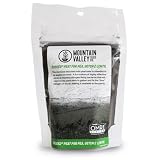
- 🌱 ORGANIC LEGUME INOCULANT – OMRI Certified Organic Exceed inoculant for peas, vetch, lentils, fava beans, broad beans, and compatible legume seeds.
- 🧬 RHIZOBIUM FORMULATION – Contains Rhizobium leguminosarum associated with root nodule formation in compatible pea, vetch, and lentil legumes.
- ⚖️ TREATS UP TO 20 LB OF SEED – The 1 oz package treats approximately 20 lb of seed at the recommended application rate of 0.05 oz per pound.
- 🌿 BIOLOGICAL NITROGEN FIXATION – Supports the establishment of compatible rhizobia associated with root nodulation and biological nitrogen fixation.
- 💧 EASY SEED APPLICATION – Lightly moisten seeds and mix thoroughly with inoculant, or apply dry by evenly coating the seeds. Plant treated seeds within 12 hours.
“Every legume fixes nitrogen automatically.”
Legume species need compatible rhizobia, and fixation varies with strain, soil conditions and plant health. A legume growing in a field without an effective partner may obtain much of its nitrogen from soil instead.
“Any root nodule is proof of a large nitrogen supply.”
Nodules differ in activity and effectiveness. Their presence alone does not quantify fixation or predict how much nitrogen will remain for a later crop.
“All fixed nitrogen stays in the root nodules.”
The fixed nitrogen is incorporated into plant biomass throughout the crop. Nodule material is only one part of the total nitrogen pool.
“A nitrogen-fixing cover crop removes the need for all fertilizer.”
The result depends on biomass, soil nitrogen, environmental conditions, harvest or termination and residue management. A following crop receives only the portion that remains and is released in time for uptake.
A practical decision checklist
- Identify the exact legume species and the intended use: grain, forage, cover crop or green manure.
- Check whether the field has a history of that legume and whether effective compatible rhizobia are likely to be present.
- Choose only an inoculant labeled for the host crop, and follow local extension recommendations.
- Plan for the crop’s carbon and nitrogen balance: fixation requires plant energy, and stressed plants may fix less.
- At termination or harvest, account for how much nitrogen-rich biomass remains in the field.
- Set expectations for the next crop based on residue amount and release timing rather than on a generic fixation figure.
The central mechanism is simple to state but conditional in practice: nitrogenase-powered microbes spend ATP and electrons to convert stable atmospheric N₂ into ammonia, while the host or microbial habitat protects nitrogenase from oxygen. In legumes, a compatible rhizobium receives plant carbon in a controlled root nodule and returns fixed nitrogen to the plant. The eventual benefit to a crop rotation depends on the compatibility of the partners and on what happens to the nitrogen-containing biomass afterward.
Quick Recap
Product prices and availability are accurate as of the date/time indicated and are subject to change. Any price and availability information displayed on Amazon at the time of purchase will apply.

