New buckwheat foods can create demand for the crop, but that demand reaches farms only when food brands, processors, and growers can connect supply to a buyer. A buckwheat milk and ingredient powder developed by Paige Hansen with New Barn Organics show how a new product can pull more of the crop into the food market; the example also illustrates why planting for grain usually calls for a buyer relationship first.
How a new buckwheat product can create demand
Paige Hansen began developing buckwheat milk after dealing with a dairy allergy. According to the Associated Press, she spent about two years traveling between California and Cornell University’s Food Venture Center in Geneva, New York, working on the product. She later partnered with New Barn Organics on buckwheat milk and a buckwheat powder intended for use in confectionery, snacks, crackers, and other foods. Hansen said the partnership tripled the amount of buckwheat she was buying from farmers. The AP report said the milk was launching in Whole Foods Markets across the country in October 2026; that dated launch report does not establish current store inventory.
As an Amazon Associate I earn from qualifying purchases.
The significance is not just that a new food can introduce buckwheat to consumers. A brand needs ingredients in usable quantities, and that creates a role for processors and buyers who can source, handle, and prepare the crop. Hansen told AP the partnership expanded her purchases, a concrete example of product development linking to farm demand.
Do these 3 things before closing this tab:
1Clear out junk files and repair common Windows errors2Scan for outdated or missing drivers - takes under a minute3Repair Windows errors before they cause bigger problemsWhy growers need a buyer before planting for grain
Buckwheat is a pseudocereal: its seeds are used much like grain, although the plant is not a true cereal grass. Farmers may grow it for food grain, as a cover crop, or for pollinator seed. A harvested crop becomes an additional source of income only if there is a buyer for it.
#1 Best Overall

- USDA Certified Organic Buckwheat Flour
- Batch Tested and Verified Gluten Free
- Non-GMO, Vegan, Gluten Free
- Grown & Packed in the USA
- Plant Based Gluten Free Flour Alternative
For food-grain growers, the practical first step is to contact a prospective buyer before buying seed or planting. University of Missouri Extension identifies The Birkett Mills in New York and Minn-Dak Growers in North Dakota as major U.S. buyers, and says large buyers generally source within a few hundred miles of their facilities. Buyers may also require particular varieties or set other contract and quality expectations. Transport costs can substantially affect whether a market is workable, so a buyer’s location matters as much as the existence of a buyer.
AP describes The Birkett Mills selling seed to local farmers and buying back the harvested crop at a fixed price. Company president Kyle Gifford said of that arrangement, “There’s also a home for it when they’re done with it,” describing the security a buyback relationship can offer. It is an example, not a guarantee that every grower can obtain a contract on the same terms.
Rank #2

- Buckwheat flour is an excellent source of dietary fiber and contains essential amino acids.
- Unlike light buckwheat flour, our flour contains little black specks that come from the ground seed hull.
- Buckwheat flour is a must-have for making traditional Russian blini or buckwheat crepes. It has a unique, assertive flavor that is especially great in both quick and yeast breads.
- IT STARTS WITH GOOD INGREDIENTS: A leader in natural foods since 1978, Bob’s Red Mill is committed to good ingredients made with the passion and expertise of our founder, Bob Moore; proudly 100% employee owned
Where buckwheat fits—and what harvest requires
Its short growing cycle can make buckwheat useful between other crops. AP describes a seed-production cycle of roughly 10 to 12 weeks and reports that some growers use the crop between plantings, for weed suppression, or as part of efforts to rebuild soil. A New York farmer profiled by AP uses buckwheat as a cover crop and also sells the harvested seed. These are potential uses, not assured outcomes in every field.
Missouri Extension discusses buckwheat as a possible second crop after wheat in some regional rotations, but its guidance is specific to Missouri conditions rather than a nationwide planting prescription. It cautions that the crop is not reliably drought-tolerant in Missouri, can be sensitive to carryover from certain herbicides, and may not be an economically attractive single summer crop in many situations. Rotation timing, weather, field history, and local economics all matter.
Rank #3

- Excellent for Pancakes, Dutch Babies, Injera, Breads, and more
- Our buckwheat flour is packaged in a vacuum sealed bag to prevent impurities
- Certified Organic
- Product of India
- Net Weight: 2 LB (908g)
Harvesting also takes planning. Buckwheat does not ripen uniformly, so the process may involve cutting the plants, allowing them to dry in the field, then threshing and hulling the seed. A grower considering food grain needs to account for the availability of suitable equipment and handling, as well as buyer requirements. Cover-crop or pollinator seed is a different market from contracted food grain; seed selected for one purpose should not be assumed to meet another buyer’s specifications.
Which buckwheat markets are possible?
Documented food uses include flour, whole groats, kasha, soba noodles, snacks, baked goods, and newer products such as milk and ingredient powder. The Agricultural Marketing Resource Center also lists beer, ice cream, livestock feed, and uses for buckwheat hulls. These are examples of value chains, not evidence that every use has a buyer near every farm.
Rank #4

- PURE BUCKWHEAT FLOUR: New Hope Mills delivers 100% pure, fresh ground whole buckwheat flour with a rich, nutty flavor perfect for pancakes, baking, and traditional recipes
- QUALITY SINCE 1823: Trusted brand with over 200 years of milling expertise, producing premium quality flour from USA-grown, Non-GMO buckwheat for authentic taste and nutrition
- VERSATILE BAKING INGREDIENT: Ideal for making fluffy pancakes, hearty breads, and noodles, recipes with distinctive earthy flavor and wholesome nutritional benefits
- CONVENIENT 5-POUND BAG: Generously sized 5 LB package provides ample supply for multiple batches of your favorite recipes, with resealable packaging to maintain freshness
Before choosing a route, growers can weigh the following factors:
- Intended market: food grain, cover-crop seed, and pollinator seed have different buyers and specifications.
- Buyer access: identify a real buyer and estimate the cost of getting the crop to its facility.
- Variety and quality: confirm seed, quality, and contract requirements before planting.
- Field fit: check the planting window, rotation, local climate, and herbicide history.
- Harvest and handling: plan for uneven maturity and the cutting, drying, threshing, hulling, or cleaning needs of the intended market.
- Economics: compare expected yield and contract terms with costs; historical prices are not a substitute for a current local offer.
Research may widen options, but it has not settled the risks
Seed availability and variety performance are part of the market challenge. A USDA National Agricultural Library project overview for 2024–2028 describes work to expand the choice of common and Tartary buckwheat seed and develop varieties and practices suited to different climates, farming needs, and food uses. The project sets out research aims; it is not proof that new varieties or practices have already delivered particular results.
Best Value
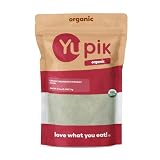
- A good source of fiber
- Use as an alternative to wheat flour or to thicken soups, stews, casseroles
- Non-gmo, Gluten-free, sulfite-free, Vegetarian, Vegan and all-natural
- Certified: organic and Kosher
- Keep cool and dry
Global production figures also need context. The AP report, citing the Food and Agriculture Organization of the United Nations, put worldwide buckwheat production at about 2 million tons in 2024—roughly half the level two decades earlier. It compared that with about 1.2 billion tons of global corn production in 2024, up about 53% over the same period. Those are global figures and do not establish current U.S. buckwheat acreage or a national farm-gate price.
The market opportunity is therefore conditional: a food product can create a reason to buy more buckwheat, but that demand becomes a viable crop option only when supply, processing, buyer specifications, and farm operations line up. As organic farmer Klaas Martens put it to AP, “If we can grow a valuable crop it’s a lot more likely to become part of the system than if we’re growing it because there’s a subsidy payment,”
Quick Recap
Product prices and availability are accurate as of the date/time indicated and are subject to change. Any price and availability information displayed on Amazon at the time of purchase will apply.
Quick wins for a faster PC:
Repair Windows errors before they cause bigger problemsFix Now →Scan for outdated or missing drivers - takes under a minuteDriver Scan →Clear out junk files and repair common Windows errorsFree Scan →
