Plan on roughly 600 MB per hour for CD-quality lossless audio and as much as 2.4 GB per hour for 24-bit/192 kHz hi-res lossless at TIDAL’s published ceilings. Those are planning figures, not a guarantee for every service or session: codecs, the recording, selected resolution and app buffering all change the total. The same higher-resolution setting that consumes more mobile data also makes offline downloads substantially larger.
The short answer in numbers
TIDAL’s support guidance, updated January 9, 2026, gives a useful upper-bound range: High quality uses up to 10 MB per minute, while Max quality uses up to 40 MB per minute. Multiplying by 60 produces approximately 600 MB per hour and 2,400 MB (2.4 GB in decimal units) per hour.
As an Amazon Associate I earn from qualifying purchases.
| Listening time | TIDAL High ceiling (10 MB/min) | TIDAL Max ceiling (40 MB/min) |
|---|---|---|
| 10 minutes | 100 MB | 400 MB |
| 30 minutes | 300 MB | 1.2 GB |
| 1 hour | 600 MB | 2.4 GB |
| 2 hours | 1.2 GB | 4.8 GB |
| 10 hours | 6 GB | 24 GB |
| 20 hours | 12 GB | 48 GB |
These calculations use decimal units (1 GB = 1,000 MB). A phone may display storage using binary units, so its reported figure can look slightly different. TIDAL says the values vary with the exact sample rate, and real traffic can be lower or higher because the service, album and app behave differently.
What “lossless” changes
Lossless audio preserves the encoded samples rather than discarding information to reduce size. It is still compressed: Apple uses ALAC, while TIDAL and Spotify use FLAC for their lossless offerings. Compression removes redundancy without intentionally throwing away audio data, but the resulting file size depends on the recording. A quiet, simple track may compress more than a dense orchestral passage, so there is no universal MB-per-song value.
#1 Best Overall

- Bass Sound: Enjoy clear sound and superior comfort with the OneOdio Studio Monitor Headphones. Equipped with large 50mm speaker drivers and neodymium magnets, pro-10 deliver powerful bass, clear vocals, and crisp highs for a balanced stereo sound.
- Built for Comfort: The soft, padded ear cushions are designed to provide long-lasting comfort and effective noise isolation. The adjustable, stretchable headband allows you to easily find the perfect fit and angle for your listening pleasure.
- Single-side Monitoring: The 90° swiveling ear cups allow for single-ear monitoring, making it ideal for DJing or mixing. The self-adjusting and flexible headband ensures a fatigue-free listening experience, even during extended sessions, making these headphones perfect for mastering and mixing.
- Compatibility: Pro-10 wired headphones work exclusively in wired mode and are compatible with a wide range of devices, including smartphones, laptops, tablets, desktop computers, audio interfaces, DJ mixers, amplifiers, and any device that features either a 3.5mm or 6.35mm audio jack.
- Share Audio Port: With a shared audio port, easily connect another pair to share music or videos—no splitters or special cables needed.
Resolution has two important parts. Bit depth describes the number of bits used for each sample, and sample rate describes how many samples are captured each second. A 24-bit/192 kHz stream carries far more raw sample information than 16-bit/44.1 kHz CD quality. Lossless compression reduces that raw stream, but it does not erase the fundamental difference; higher-resolution material normally requires more network traffic and storage.
How the major services label their highest tiers
| Service | Lossless format and published range | What that means for planning |
|---|---|---|
| Apple Music | ALAC from 16-bit/44.1 kHz through 24-bit/192 kHz | Choose a lower resolution when conserving data or space; the highest settings require considerably more. |
| TIDAL | 16-bit/44.1 kHz FLAC is labeled High; up to 24-bit/192 kHz HiRes FLAC is labeled Max | TIDAL’s published ceilings are the source of the 600 MB/hour and 2.4 GB/hour planning figures. |
| Spotify | Lossless FLAC up to 24-bit/44.1 kHz | Its maximum resolution is below 192 kHz, but lossless still uses more data and download space than a lossy setting. |
The available resolution can depend on the album, device and subscription tier. A service may offer a lossless switch while a particular release is available only at a lower resolution.
How much of a mobile data plan can it consume?
Start with the service’s per-minute estimate, multiply by the minutes you actually listen, and then reserve some allowance for buffering and normal app traffic. At TIDAL’s stated ceilings, a daily one-hour commute would total about 18 GB over a 30-day month on High (600 MB × 30) or about 72 GB on Max (2.4 GB × 30). Those are arithmetic planning scenarios, not measurements of every commute.
The Tool Desk
Outbyte Driver Updater FREEScan for outdated or missing drivers - takes under a minuteDriver Scan →Outbyte PC Repair FREEClear out junk files and repair common Windows errorsFree Scan →Rank #2

- 🎧 High-Resolution Sound Quality: The studio headphones boast large 50mm unit drivers that produce dynamic bass, balanced mids, and precise treble, delivering powerful bass, clear vocals, and immersive stereo sound.
- 🌀 With a frequency range of 20Hz to 20kHz, these monitor headphones provide an exceptional listening experience for DJs, mixers, music enthusiasts, and recording artists, enhancing enjoyment during DJ sessions, mixing, monitoring, or music listening, while also enabling better self-monitoring of your voice during recording
- 👯 Podcast Duos, Ditch the Splitter! Tired of tangled adapter cables? Share Port links 2 headphones instantly - like giving your co-host a wireless monitor (but zero latency!) "Our podcast production time dropped 40%" - SoundBite Studios
- 🤸Why can I mix painlessly for 6 hours with a stiff headband strapped to my skull? The 4D floating headband distributes weight like memory foam (270 grams = lighter than cellphone).
- 🛡24/7 Support Foldable wired headphones (fits palm-sized) with 4D headband. 99% of other brands in the leading industry come with a one-year warranty and a lifetime warranty. Customer service support is available 24/7
| Listening pattern | High ceiling | Max ceiling |
|---|---|---|
| 30 minutes per day for 30 days | 9 GB/month | 36 GB/month |
| 1 hour per day for 30 days | 18 GB/month | 72 GB/month |
| 2 hours per day for 30 days | 36 GB/month | 144 GB/month |
Wi-Fi does not count against a cellular allowance, although it still transfers the data through your broadband connection. If your plan has a 10 GB cap, even the High ceiling could use most of it in a month with regular listening. A 100 GB plan gives substantially more headroom for Max, but video, photo backup and other apps compete for the same allowance.
Why the meter may not match the audio duration
- Buffering: An app can fetch audio ahead of playback so a brief signal loss does not stop the song. The supplied service documentation establishes the quality-to-data relationship but does not publish one universal buffering overhead.
- Codec and track characteristics: ALAC and FLAC compress each recording differently. A single fixed rate cannot represent every album.
- Resolution changes: An album offered at 24-bit/192 kHz can consume several times the data of its 16-bit/44.1 kHz version.
- Other app traffic: Artwork, metadata, recommendations, account syncing and operating-system activity can appear in the same network total.
- Playback interruptions: Seeking, restarting and switching devices may cause portions to be downloaded again.
How to reduce cellular use without giving up lossless listening
- Use Wi-Fi for streaming whenever practical. In the music app, set cellular streaming to a lower quality or disable lossless over mobile data. The exact label differs by service and app version, so verify the setting on your device before leaving Wi-Fi.
- Download albums and playlists on Wi-Fi. Offline playback avoids repeatedly fetching the same tracks over cellular. Start downloads while connected to a reliable, unmetered network and confirm they have finished before travelling.
- Select a sensible resolution. CD-quality 16-bit/44.1 kHz is lossless and generally far less demanding than 24-bit/192 kHz. Use hi-res only when your equipment and listening situation justify the extra transfer and storage.
- Check the app’s mobile-data indicator and the phone’s system meter. Compare a known listening session with the service’s estimate. A large discrepancy can reveal that video previews, automatic downloads or another app is responsible.
- Prevent unintended re-downloads. Keep offline albums available, avoid clearing their cache immediately, and check that the app is not set to remove downloads when storage is low.
Do not assume that a “lossless” toggle alone controls every path. Some apps have separate settings for Wi-Fi streaming, cellular streaming and downloads, and a download-quality choice can be independent of playback quality.
Does Bluetooth remain lossless?
The file can be lossless when it leaves the streaming service, yet the final wireless link can still change it. Apple states that Bluetooth connections are not lossless. Spotify recommends Wi-Fi and wired headphones or speakers on a non-Bluetooth connection, such as Spotify Connect, for the smoothest lossless experience.
Rank #3

- 【PLEASE NOTE】🚫The in-line volume control button is not supported on desktop and some laptops. Please adjust audio volume directly via your device. The device without a 3.5mm headphone jack needs a 3.5mm conversion adapter
- 【Hands‑Free Calls & In‑line Control】These wired headphones with Mic feature a built-in mic and in-line controls for clear, hands-free calls, easy volume adjustment, and music playback. Perfect for online learning, meetings, and everyday listening. Ideal for busy professionals and students. ⚠️ Note: The multi-function button (MFB) and volume control are compatible with phones and tablets only
- 【Lightweight Design for Easy Travel】Lightweight and foldable, these portable headphones wired are easy to carry anywhere. Simply fold them up and store them in your bag or suitcase, making them a great choice for travel, commuting, school, or on‑the‑go use
- 【Tangle‑Free 4.9ft Cord with 120° Curved Plug】Featuring a 4.9ft high‑quality nylon braided cord, these corded headphones resist tangling and allow smooth, hassle‑free movement. The 120° curved plug design adds durability while providing comfort and flexibility during use
- 【Comfortable & Adjustable Fit】Designed for long listening sessions, over ear headphones wired feature an adjustable headband and 90° rotating ear cups that provide a snug, personalized fit for various head sizes, making wire headphones suitable for adults and kids. Soft memory protein ear cushions and pads ensure comfort throughout the day and can hang around your neck when not in use
That does not make Bluetooth unusable: it can sound good and is convenient. It means the signal is normally re-encoded for the Bluetooth connection, so the listener is not receiving an end-to-end lossless path. If preserving the lossless signal is the priority, use a wired connection or a non-Bluetooth network playback route supported by your equipment.
How much storage do downloaded lossless songs need?
Downloaded lossless audio uses significantly more device space than a service’s compressed or standard-quality option. Apple explicitly warns that lossless downloads take significantly more space and that higher resolutions take more space still. The exact size depends on:
- track duration and the number of tracks;
- ALAC or FLAC compression efficiency for that recording;
- sample rate and bit depth;
- stereo or multichannel channel layout;
- artwork, metadata and the app’s local database; and
- temporary cache and partially completed downloads.
Because those variables differ, do not plan a library from one assumed “average song size.” Use the download estimate shown by your service when it provides one. If no estimate is shown, download a representative album, check the device’s free-space change, and use that observed average for planning; the result will be specific to your catalog and settings.
Rank #4
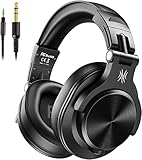
- Hi-Res Sound Quality: Equipped with 40mm drivers, these wired over-ear headphones deliver exceptional sound clarity and depth, making them perfect for studio monitoring, mixing, and DJing. The high-resolution audio ensures every detail and nuance in your music is captured and reproduced with precision.
- Built to Stay Comfortable: The soft padded ear cushions are specifically designed for monitor headphones comfort and noise isolation. The headband is adjustable and stretchable for you to find the desired angle you like to fit in.
- No More Adapter: A long-style 6.6-9.8 ft coiled cord and standard-sized 6.35mm plug and a 3.5mm plug are included. These headphones can be easily connected to a variety of devices including AMPs, computers, keyboards, guitars, and laptops.
- Single-sided Monitoring: 90° swiveling earcups for single-ear monitoring anytime, keep one ear free for conversations with single-sided monitoring.
- Share Audio Port: With a shared audio port, easily connect another pair to share music or videos—no splitters or special cables needed.
A practical storage formula
- Estimate the average downloaded size per track from the app’s own figure or a small sample of your intended library.
- Multiply that average by the number of tracks you want offline.
- Add headroom for artwork, metadata, cache, operating-system updates and future additions.
- Recheck the total after downloading a few albums, because a high-resolution release may be much larger than a CD-quality release.
For a rough upper-bound illustration, applying TIDAL’s streaming ceilings to one hour of listening gives 600 MB at High or 2.4 GB at Max. A downloaded file is not required to equal the streaming transfer exactly, so treat those values as scale indicators rather than guaranteed download sizes.
Phone, tablet and external-drive planning
Streaming itself does not require an external drive. A portable SSD becomes useful when a large offline library competes with photos, video and applications on the device. Keep the active downloads on storage that your music app officially supports, and maintain a backup if the offline collection would be difficult to rebuild. Removing downloads frees space but does not remove your playlists or cloud catalog.
Choosing a quality setting
| Your priority | Recommended approach | Trade-off |
|---|---|---|
| Small cellular allowance | Stream lossless on Wi-Fi; use a standard or CD-quality option on cellular; download over Wi-Fi | Less mobile-data use, with lower resolution while travelling. |
| Best balance of fidelity and practicality | 16-bit/44.1 kHz lossless for most listening and offline albums | Uses more data and storage than lossy audio but much less than the highest hi-res tiers. |
| Maximum supported resolution | 24-bit hi-res where the album, subscription and equipment support it | Greatest data and storage demand; audible benefit depends on the recording and playback chain. |
| Convenient wireless listening | Bluetooth is acceptable for convenience; use wired or non-Bluetooth network playback for an end-to-end lossless path | Bluetooth may re-encode the signal even when the source is lossless. |
Resolution is not the only consideration. Check whether your phone, computer, DAC, receiver or headphones support the chosen sample rate, and remember that some hardware or operating-system mixers resample audio before it reaches the output.
Best Value

- INCREDIBLE SOUND: Custom acoustic platform delivers rich, balanced audio for music, calls and everyday listening.
- LOSSLESS AUDIO SUPPORT: USB-C lossless audio and sound profiles optimize music quality across devices and environments. Additional option to use the 3.5 mm cable for a standard analog experience.
- ACTIVE NOISE CANCELLING (ANC): block distractions at work, on flights or during your daily commute. Or use Transparency mode to let the sounds of your environment mix in with your music.
- SEAMLESS WIRELESS CONNECTIVITY: One-touch pairing with Apple & Android for easy switching across devices.
- SPATIAL AUDIO IMMERSION: Personalized dynamic head tracking, 360-degree sound for movies, music and immersive everyday listening.
Common mistakes and fixes
Assuming every lossless song uses the same amount
There is no universal MB-per-song number. Use the service’s estimate, account for track length and leave headroom.
Confusing megabits with megabytes
Services may describe network rates in different units. TIDAL’s figures are stated as megabytes per minute. Do not divide or multiply them as though they were megabits; convert units before comparing a provider’s specification.
Calculating only the music and ignoring buffering
The 600 MB/hour and 2.4 GB/hour figures are planning ceilings derived from published per-minute values. Allow extra capacity for buffering and ordinary app traffic rather than treating them as an exact bill.
Downloading hi-res albums on a nearly full phone
Check the app’s predicted download size first, keep free space for the operating system and cache, and use an external SSD only when your device and workflow support it.
Expecting Bluetooth to preserve losslessness
Use a wired output or a supported non-Bluetooth network path when an end-to-end lossless signal matters. Bluetooth remains a valid convenience option, but it is a different technical path.
Bottom line for planning
For a realistic budget, reserve about 600 MB per hour for CD-quality lossless and up to 2.4 GB per hour for 24-bit/192 kHz at TIDAL’s published ceilings. Multiply by your actual listening time, add room for buffering, and protect a cellular allowance by downloading on Wi-Fi. For offline libraries, rely on the music app’s download estimate rather than a universal song-size rule, because codec compression, resolution, duration and metadata all change the result.
Quick Recap
Product prices and availability are accurate as of the date/time indicated and are subject to change. Any price and availability information displayed on Amazon at the time of purchase will apply.
Do these 3 things before closing this tab:
1Repair Windows errors before they cause bigger problems2Fix the driver behind crashes, sound loss and screen glitches3Clear out junk files and repair common Windows errors
