The Tool Desk
Outbyte PC Repair FREERepair Windows errors before they cause bigger problemsFix Now →Outbyte Driver Updater FREEScan for outdated or missing drivers - takes under a minuteDriver Scan →Short answer: Eligible cards in a new main Standard set become legal in Standard when that set releases. The release does not automatically make every card sold with the set legal. Scheduled rotation removes the oldest Standard sets, and bans can remove individual cards earlier. Standard now uses a three-year set window, has no scheduled rotation during 2026, and is due to rotate again with the first calendar-year set released in 2027.
To check one card, identify its set code and product, then verify the current format list for the exact date and platform you will use. Tabletop Standard, MTG Arena Standard, Alchemy, Pioneer, Historic, Timeless and Commander do not share one legality list.
As an Amazon Associate I earn from qualifying purchases.
What changes when a new MTG set releases?
A normal, mainline Standard set enters the format at its release point. Cards printed in that set can be used in Standard immediately under the applicable tabletop or Arena event rules. The important qualifier is eligible: a release can contain cards from several products, and those products do not all feed into Standard.
Do these 3 things before closing this tab:
1Clear out junk files and repair common Windows errors2Scan for outdated or missing drivers - takes under a minute3Repair Windows errors before they cause bigger problemsFor example, a card with the FRA set code in Reality Fracture is permitted in Standard, Pioneer and Modern according to that set’s release notes. New Commander cards carrying the FRC code are permitted in Commander, Legacy and Vintage instead; they do not become Standard cards merely because they were packaged alongside a Standard-era release. Special Guests use a different rule: they are legal only in formats where that card name is already permitted.
#1 Best Overall

- FACE YOUR GREATEST TEST YET—The hallowed halls of Strixhaven welcome you back to school! Choose your college of magical study and expand your education in the greater world of Arcavios as you stand against mysterious threats plaguing the plane
- BEST BOOSTERS FOR PLAYING WITH FRIENDS—Play Boosters are the best way to discover what Magic: The Gathering has to offer; they're perfect for building decks, playing Limited games with friends, and are tons of fun to open
- MYSTICAL ARCHIVE CARD IN EVERY PACK!—Strixhaven University’s famous library houses spells from throughout the ages; check out 1 Instant or Sorcery spell with striking new art and a showcase frame with every Play Booster
- RARE AND FOIL IN EVERY PACK—Each booster contains 1–5 cards of rarity Rare or higher and at least 1 shining Traditional Foil card of any rarity; in 20% of packs you’ll also find a Traditional Foil Land card
- PLAY BOOSTER BOX CONTENTS—30 Secrets of Strixhaven Play Boosters, each containing 14 MTG cards
A card’s legality is therefore a combination of its printing, product, format, date and any ban announcement. The card name alone is not enough.
How the three-year Standard window works
Wizards of the Coast changed Standard from a two-year lifecycle to a three-year lifecycle. A set normally remains in Standard through three years of releases, after which the scheduled rotation removes the oldest group. This gives decks more time to be played, but it also means a rotation can remove several older sets at once.
“This means that with the release of Wilds of Eldraine, there will be no Standard rotation for this year only. The following year in 2024, Innistrad: Crimson Vow, Innistrad: Midnight Hunt, Kamigawa: Neon Dynasty, and Streets of New Capenna will rotate out of Standard.” — Wizards of the Coast, “Revitalizing Standard”
Free tools Windows power users keep installed
One-click scans. No signup required.
Special offer. See more information about Outbyte and uninstall instructions. Please review EULA and Privacy policy.
The policy has since been adjusted again to make the annual change easier to understand. There is no Standard rotation in 2026 while Wizards moves the schedule to the calendar year. The next scheduled rotation is in early 2027, when the first Standard set released in that calendar year arrives. Standard will still contain approximately three years of sets after the transition.
| Period | What happened | What it means for players |
|---|---|---|
| 2023 | Wilds of Eldraine released with no rotation that year | Older sets stayed legal longer than the former two-year model suggested |
| 2024 | Innistrad: Crimson Vow, Innistrad: Midnight Hunt, Kamigawa: Neon Dynasty and Streets of New Capenna rotated | The three-year lifecycle began removing the oldest block of Standard sets |
| 2025 | Rotation occurred with the release of Edge of Eternities | Five sets left Standard and a new post-rotation pool began |
| 2026 | No scheduled Standard rotation | The current pool remains legal unless a ban or another format rule changes a card |
| Early 2027 | Rotation moves to the first calendar-year set | The oldest sets in the three-year window will leave when that set releases |
The 2025 Edge of Eternities rotation example
When Edge of Eternities arrived on MTG Arena, Wizards identified five sets rotating out of Standard: Dominaria United, The Brothers’ War, Phyrexia: All Will Be One, March of the Machine and March of the Machine: The Aftermath. The post-rotation Standard pool listed the following sets:
Rank #2

- Includes a mix of AT LEAST 25 Rares/Uncommons which is half of the cards.
- Absolutely NO... Basic lands, Foreign, or silver/gold bordered cards.
- Some may contain Foils or Mythics but not all.
- Sets can range from Beta to the current Magic the Gathering set.
- Mint/Excellent condition only.
- Wilds of Eldraine
- The Lost Caverns of Ixalan
- Murders at Karlov Manor
- Outlaws of Thunder Junction
- Bloomburrow
- Duskmourn: House of Horror
- Magic: The Gathering Foundations
- Aetherdrift
- Tarkir: Dragonstorm
- Magic: The Gathering—FINAL FANTASY
- Edge of Eternities
This example shows why rotation is not simply “one set leaves whenever one set arrives.” The release of one new set can coincide with the removal of the oldest sets, changing the legal card pool and the metagame at the same time.
Why 2026 has no rotation and what changes in 2027
Wizards announced a transition to calendar-year rotation: the next Standard rotation occurs with the first set of 2027 rather than during 2026. The 2026 Arena format update also identifies early 2027 as the next rotation point. Consequently, a deck that would otherwise have been close to rotation remains Standard-legal throughout 2026 unless a specific card is banned or the card’s own legality is governed by a different product rule.
The 2027 change affects timing, not the intended length of Standard. After the first 2027 set releases, Standard is still expected to contain three years of sets. The practical difference is that players can use the calendar year as a clearer planning marker: expect the annual rotation with the first Standard release of each year, subject to any future policy announcement.
Release products that do and do not add cards to Standard
Main Standard set
Cards in the eligible main set enter Standard at release. The set’s official release notes identify the set code and the formats that accept those cards. Use those notes when a card appears in a product with several insert types or unusual bonus sheets.
Supplemental and Commander cards
Commander decks and other supplemental products can be released at the same time as a Standard set without becoming Standard-legal. The FRC Commander cards in Reality Fracture illustrate this distinction: they are listed for Commander, Legacy and Vintage, not Standard. A product’s marketing relationship to a Standard release does not determine legality.
Rank #3

- 14 Cards Per Pack
Special Guests and bonus-sheet cards
Special Guests are legal wherever their card names are already legal. They do not create a blanket Standard exception. Check the individual card’s entry on the official format legality list instead of assuming that inclusion in a booster makes it legal.
Reprints
A later reprint can make a card legal again in a format, even if an older printing rotated. Legality follows the card’s currently permitted printing and the format’s rules. When building a deck, record the set code of the copy you are using; two identical card names can have different legality histories because they were printed in different sets.
Rotation is specific to the format
When a set rotates out of Standard, it does not disappear from Magic. Nonrotating formats can continue to allow those cards, and each format maintains its own card pool.
| Format | How a Standard rotation affects it | What to verify |
|---|---|---|
| Tabletop Standard | Rotated Standard sets are no longer legal unless a permitted reprint or special rule applies | The current tabletop Standard list and the event date |
| MTG Arena Standard | Uses Arena’s Standard pool and the rotation timing announced for Arena | The in-client format selector and current Arena legality page |
| Alchemy | A card can rotate out of Alchemy while remaining Standard-legal, or remain legal under a different Alchemy rule | The separate Alchemy card list |
| Explorer/Pioneer | Generally nonrotating; Standard rotation does not automatically remove cards | The format’s banned list and set legality rules |
| Historic and Timeless | Standard rotation does not automatically remove cards from these Arena formats | The current format-specific restrictions and bans |
| Commander | Standard rotation is irrelevant to Commander legality | The Commander ban list and the card’s product rules |
A card can therefore be legal in Pioneer after leaving Standard, illegal in Standard but legal in Historic, or legal in Commander despite never having been Standard-legal.
Bans can override the scheduled timetable
Rotation is a calendar event; bans are an emergency or policy intervention. Wizards has said its normal Standard approach is to leave the format unchanged between rotations unless a serious problem emerges, with a more nuanced review once a year shortly before rotation. That policy is not a guarantee that every card survives until its scheduled date.
Rank #4

- RETURN TO THE LAND OF LIGHT AND SHADOW—Lorwyn returns, not as it once was, but a world split in two. Explore this dual-aspect plane filled with enchanting creatures and embrace the powers of order and chaos.
- PLAY BOOSTERS—The best way to open and explore Lorwyn Eclipsed. Balanced for Limited play, filled with creature synergies, and a guaranteed foil in every pack for your collection.
- FIND HARMONY IN LORWYN—Cross the boundry into the eternal day of Lorwyn, where the many creatures live in order and harmony under the watchful eye of their sun god Eirdu—while the twilight god Isilu resides across the border where day becomes night.
- EMBRACE CHAOS IN SHADOWMOOR—Brave the twisted landscape and wild Magic of Shadowmoor, a world cast in forever night and filled with creatures of a more chaotic ilk. Discover your true self under the perpetual moonlight of this dual-aspect plane.
- CONTENTS—30 Play Boosters
In June 2025, Wizards said that the next rotation would not occur until early 2027 and that it would hold two early-rotation Standard banning windows before then. A banned-and-restricted announcement can therefore remove an individual card while its set remains in Standard. Before entering an event, check both the rotation schedule and the latest ban announcement.
How to check whether a card is Standard-legal
- Identify the exact printing. Read the three-letter set code and collector information on the card, or open the card’s details in MTG Arena. Do not rely only on the card name.
- Classify the product. Decide whether the card came from the main set, a Commander or other supplemental product, a Special Guests slot, or a reprint. Product classification often determines the initial format list.
- Check the release notes. The set’s official release notes state which codes and card groups are permitted in each format at release.
- Check the current format list. Use the official Standard legality page for the date and platform of play. This is the final authority when a card has multiple printings or an unusual insert.
- Check rotation timing. Confirm whether the set is inside the current three-year Standard window. For 2026, remember that no scheduled rotation occurs; for 2027, expect the change with the first calendar-year set.
- Check bans and restrictions. Search the latest banned-and-restricted announcement. A card can be inside the Standard window and still be prohibited.
- Confirm event rules. A store event, digital queue or tournament may use a dated format announcement. Use the legality list that applies to that event, not an old deck-building website snapshot.
How to compare a new release with an older set
When deciding whether a new set is useful for a Standard deck, compare more than the release date. These factors answer different questions:
| Comparison axis | Question to ask | Why it matters |
|---|---|---|
| Legality window | How much of the three-year Standard period remains? | A newly released set generally offers the longest remaining window; an older set may rotate in early 2027 |
| Format | Is the deck for tabletop Standard, Arena Standard, Alchemy or another format? | The same card can be legal in one format and absent from another |
| Card source | Is it a main-set card, Commander card, Special Guest or reprint? | Supplemental cards do not automatically enter Standard |
| Rotation and ban risk | When is the next scheduled rotation, and has a ban window been announced? | Shorter legality can make a purchase or deck investment less durable |
| Acquisition method | Do you need random cards from boosters or specific cards for one deck? | Sealed product is aimed at opening cards; singles or a deck-building product can be more efficient for a targeted list |
Buying cards for a Standard season
A Standard-legal booster pack from a set that is legal on the publication or purchase date is the most direct physical product match for someone who wants to open cards from the current pool. The set name and format should be stated clearly on the listing or packaging. Because legality and availability change by date and region, confirm both before buying.
Boosters are not always the efficient choice for a finished deck. If you already know the deck list, buying individual cards or a Standard deck-building product can reduce duplicates and supply cards that are difficult to open randomly. A reprint may also let you buy a card with a newer, longer legality window than an older copy, but verify that the specific reprint is recognized in the format you plan to play.
No universal price or availability claim applies to every region, store or date. Treat a product as a purchase for a particular Standard season, and recheck legality if you intend to keep using the deck into 2027.
Best Value
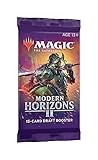
- Reprints, fun sketch cards, fetch lands and much more!
- 15 cards per pack.
Common mistakes and how to fix them
Assuming every card in a release bundle is legal
Symptom: A Commander insert or bonus card appears in a Standard-focused product but is rejected by deck construction. Fix: Check the set code and release notes; use the format legality page for that exact card.
Confusing rotation with a ban
Symptom: A card disappears before its set’s expected rotation. Fix: Read the latest banned-and-restricted announcement. Rotation removes a set on schedule; a ban removes a card by name or printing before that date.
Using an old 2025 rotation list in 2026
Symptom: A deck builder marks cards as rotating even though they are still accepted in 2026 Standard. Fix: Update the database and remember that 2026 has no scheduled Standard rotation.
Quick wins for a faster PC:
Fix the driver behind crashes, sound loss and screen glitchesFind Drivers →Clear out junk files and repair common Windows errorsFree Scan →Applying tabletop rules to Arena, or vice versa
Symptom: A paper deck is legal at a local event but a digital queue rejects it, or the reverse. Fix: Select the exact Arena or tabletop format and date before checking legality.
Believing an older printing is permanently illegal
Symptom: You discard a card because its original set rotated. Fix: Look for a later permitted reprint and confirm the card’s current entry on the format list.
Planning for 2027
For a deck intended to last through the 2026 season, record the sets that supply its key cards and mark the first Standard set of 2027 as the next major review point. Cards from the oldest part of the three-year window may leave then, while cards in newer sets should remain. Recheck the complete list after Wizards publishes the 2027 rotation announcement rather than inferring exact dates from a previous year.
The reliable rule is simple but specific: a new eligible main-set card starts its Standard life at release; the oldest sets leave at scheduled rotation; supplemental products follow their own format permissions; reprints can restore legality; and bans can intervene at any time. The official release notes, current format list and latest banned-and-restricted announcement together provide the final answer for any card.
Quick Recap
Product prices and availability are accurate as of the date/time indicated and are subject to change. Any price and availability information displayed on Amazon at the time of purchase will apply.

