A standard Game Boy cartridge supplies the game’s program and sound data; the Game Boy itself produces the ordinary music and sound. As the game runs, its sound software configures the console’s four-channel Audio Processing Unit (APU), whose output is mixed and sent to the speaker or headphones. An uncommon exception is VIN, an input that lets external cartridge hardware feed an analog audio signal into the console.
What the cartridge does—and what the console does
The Game Boy starts by executing the game program stored in cartridge ROM. The cartridge header includes an entry point and metadata such as the game type and ROM size; that metadata describes the software and hardware expectations, not a separate sound chip that replaces the console’s audio system. See Pan Docs’ Cartridge Header reference.
As an Amazon Associate I earn from qualifying purchases.
The game’s sound engine keeps track of musical events, then writes control values to memory-mapped APU registers. In effect, the program decides what notes or sounds to play and when; the APU turns those instructions into electrical audio signals. The register reference is documented in Pan Docs’ Audio Registers.
How the APU creates the sound
Pan Docs identifies the APU as the Game Boy’s sound chip. It has four channels, each suited to a different kind of signal:
#1 Best Overall

- Superior Stability: Provides stable and secure storage of your valuable game data, no need to worry about data loss, giving you a professional and user experience.
- Custom Function: Customize A B functions. Supports a return to menu, easily return to the main menu with a single press, enhancing user convenience. The burning card adopts the technology to extend battery life for longer gaming experience.
- Automatic Backup: Simply drag and drop file management, easily transfer files via USB connection to your computer. Automatically backup game files to memory card, no manual working needed. Game files will be saved to the storage card when changing games.
- Powerful Performance: Unlock the full potential of your for Gameboy with our game cartridge. This multifunctional burning card allows you to store and play multiple games on a single cassettes, ideal for retro game lovers. Enjoy your favorite classic games easily and conveniently.
- High Compatibility: Supports for Gameboy and for Color games up to 64Mbit, with support for various for MAPPER including for MBC1, for MBC2, for MBC3, for MBC5, and more.
- Two pulse channels: Generate pulse waves with selectable duty patterns. Game code can set parameters such as frequency period and volume envelope.
- Wave channel: Plays a programmable waveform supplied by the game.
- Noise channel: Produces a pseudo-random signal useful for sounds such as percussion or effects.
Across these channels, software-controlled settings determine qualities such as waveform or noise type, pitch-related frequency, volume, duration, and when a sound begins. The APU generates the signals; the game’s code sequences and configures them to form music and effects. The channel overview and output behavior are described in Pan Docs’ Audio reference.
How the sound reaches the speaker or headphones
The console routes the channel signals into left and right audio mixes, amplifies them, and sends the result to the audio output. Headphones can reproduce the separate left and right paths; the built-in speaker merges the channels to mono. The cartridge ordinarily does not have to generate or transmit the music for this to happen: the console’s APU and audio path handle playback.
Rank #2

- Piano Solo
- Pages: 104
- Instrumentation: Piano/Keyboard
The exception: cartridge audio through VIN
The cartridge connector includes VIN, an analog audio input. In principle, external hardware in a cartridge can feed a signal through VIN so it joins the console’s internal audio path. This is an additional capability, not the normal way Game Boy games play music; Pan Docs says no licensed games used it. Cartridge types may contain other electronics, but their presence alone does not mean they replace the APU for ordinary game audio.
What “8-bit sound” does—and does not—mean
“8-bit” is a broad label for the console era and its capabilities, not a precise statement of the bit depth of every sound the Game Boy generates. The actual playback depends on the APU’s channels and the settings the game writes to them. Pan Docs cautions against treating “8-bit” as a literal description of every generated sound.
Quick Recap
Best Value
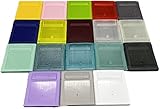
- Model for gameboy color; for gameboy classic GB
- Game Card Replacement Shell
- Made of new upgraded mold, high quality plastic
- Only guaranteed compatibility with original game cards
- package:1PCS
Rank #4

- Powerful Performance: Unlock the full potential of your for Gameboy with our game cartridge. This multifunctional burning card allows you to store and play multiple games on a single cassettes, ideal for retro game lovers. Enjoy your favorite classic games easily and conveniently.
- High Compatibility: Supports for Gameboy and for Color games up to 64Mbit, with support for various for MAPPER including for MBC1, for MBC2, for MBC3, for MBC5, and more.
- Automatic Backup: Simply drag and drop file management, easily transfer files via USB connection to your computer. Automatically backup game files to memory card, no manual working needed. Game files will be saved to the storage card when changing games.
- Custom Function: Customize A B functions. Supports a return to menu, easily return to the main menu with a single press, enhancing user convenience. The burning card adopts the energy saving technology to extend battery life for longer gaming experience.
- Superior Stability: Provides stable and secure storage of your valuable game data, no need to worry about data loss, giving you a professional and user experience.
Rank #3
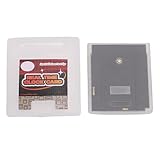
- Save & Load Game Progress Effortlessly: This rewritable flash cartridge features 8MB of storage capacity, allowing you to save your progress in classic titles. No more starting from scratch—simply load your game data onto the cartridge and pick up right where you left off, perfect for reliving your favorite retro adventures.
- Play on Multiple Handheld Consoles: Designed with broad compatibility in mind, this game cartridge works seamlessly with , Game Boy Advance, and DS systems. Whether you are using a GBC or a GBA SP, you can enjoy your game collection across different devices without needing separate cartridges for each console.
- Reliable Data Storage for Retro Gaming: The 1Mbit flash technology ensures stable and durable data retention, so your saved games and custom content remain intact even after extended periods of use. This reliable storage solution is ideal for retro gaming enthusiasts who want a dependable way to preserve their progress.
- Easy Rewriting for Multiple Games: Unlike traditional cartridges, this flash cart allows you to rewrite its contents multiple times. Simply use a compatible writer to replace the game files, enabling you to switch between different titles on a single cartridge. This flexibility saves space and cost, making it a smart choice for collectors and players.
- Compact Design & Retro Gamer Ready: The lightweight, slim cartridge body fits snugly into your handheld console without sticking out, maintaining a genuine retro feel. Ideal for gamers who enjoy playing on the go, this flash cart is a perfect addition for those nostalgic for the golden age of handheld gaming.
Ordinary playback compared with VIN
| Case | Sound source | How sound is generated | Output |
|---|---|---|---|
| Ordinary Game Boy game | Program and sound data in cartridge ROM | The game controls the console’s four-channel APU | Console audio output to speaker or headphones |
| Optional VIN hardware | Analog signal from external cartridge hardware | The signal enters the console audio path alongside the internal channels | Console audio output |
Product prices and availability are accurate as of the date/time indicated and are subject to change. Any price and availability information displayed on Amazon at the time of purchase will apply.

