AI is entering hospitals not only as a diagnostic aid, but also through patient communication, clinical documentation, research, and health-system operations. Whether it improves care depends on what a tool is designed to do, how well it works for the people and settings where it is used, and whether people can recognize and address its failures. “Ethical AI” is not a guarantee that a system is safe or fair; it describes the principles and oversight that should shape its design and use.
How is AI being used in hospitals?
Applications range from established areas of health research to newer uses of generative AI. The World Health Organization (WHO) describes these as areas of potential application, not evidence that every use is clinically validated or widely adopted.

As an Amazon Associate I earn from qualifying purchases.
Clinical support and patient communication
AI can support diagnosis and screening, or help clinicians interpret information during care. Generative systems may respond to written patient questions and help people explore symptoms or treatment options. Those responses can be inaccurate or incomplete, so patient-facing outputs should not be mistaken for a diagnosis or individualized medical advice unless the system has been designed and validated for that purpose.
Documentation and administrative work
Generative AI may assist with clerical tasks such as drafting visit notes and summarizing encounters for electronic health records. These uses can affect the clinical record even when the system is not making a treatment recommendation. A clinician or other accountable staff member still needs a practical way to review and correct generated content before it is relied on.
#1 Best Overall

- MULTIPURPOSE OVERBED TABLE - Helps disabled and handicapped individuals and anyone with physical limitations or injuries perform their daily tasks (e.g. eating, reading, working) without having to get out of bed. Highly recommended by physicians as the top selling overbed table in hospitals and clinics.
- ONE-HANDED INFINITE HEIGHT ADJUSTMENT- Its counterbalanced hydraulic mechanism allows users to smoothly raise or lower the table to the desired height between 29.5” – 40.5” using just one hand.
- HYGIENE & DURABILITY – Heavy-gauge, CHROME-plated (not silver-plated) welded tubular STEEL construction for enhanced stability and inhibit bacterial growth, making sanitation fast & efficient. The H-style base is also designed to slide easily under most beds, sofas or wheelchairs.
- SPILL-PROTECTED, EASY-CLEAN TOP - Beautiful mystic black-colored laminated top with raised perimeter lip to effectively contain liquid spills to help protect medical equipment and bed linens. DIMENSIONS – 30”(L) x 15”(W) x 29.5”-40.5” (H); Base Dimensions : 26.5” (L) x 15.5” (W); Tabletop Dimensions : 30” (L) x 15” (W) x 0.8” (H)
- STABLE & SMOOTH MOBILITY: Equipped with smooth-rolling, dual-wheel swivel casters for effortless maneuvering across various floor types. Its integrated locking mechanisms provide stability and prevent sliding during critical patient care. This product requires simple 4-step assembly.
Research, education, and health-system operations
WHO identifies health research, drug development, medical and nursing education, disease surveillance, outbreak response, and health-systems management as other areas where AI may be used. WHO also notes that technology could support patient agency and access in rural or resource-poor communities. That possibility is not a substitute for investment in essential health services, infrastructure, and trained staff.
What makes hospital AI ethical?
WHO’s 2021 guidance sets out six principles for ethics and governance of AI for health. They provide a global public-health frame, not a hospital-specific law or a certification that a particular product is ethical.
Rank #2
- Protect human autonomy: people should retain meaningful control over health decisions, with appropriate human oversight.
- Promote well-being, safety, and the public interest: systems should be designed to benefit people and avoid preventable harm.
- Ensure transparency, explainability, and intelligibility: users need information they can understand well enough to make informed decisions and identify problems.
- Assign responsibility and accountability: people and organizations—not a model alone—must be responsible for decisions about design, deployment, and oversight.
- Support inclusiveness and equity: benefits and risks should be considered across affected populations, not only for groups well represented in the development data.
- Make systems responsive and sustainable: tools should be able to respond to changing needs and be used in ways that support sustainable health systems.
These principles shift the question from “AI versus doctors” to a more useful set of questions: What is this tool meant to do? What information does a clinician or patient need to interpret its output? Who can intervene, and how will the organization know if performance changes?
The Tool Desk
Outbyte PC Repair FREERepair Windows errors before they cause bigger problemsFix Now →Outbyte Driver Updater FREEScan for outdated or missing drivers - takes under a minuteDriver Scan →What can go wrong, and who may be affected?
WHO warns that health AI can produce inaccurate, false, biased, or incomplete outputs that may distort decisions. A confident-sounding result is not proof that it is correct.
Rank #3

- MULTIPURPOSE OVERBED TABLE - Helps disabled and handicapped individuals and anyone with physical limitations or injuries perform their daily tasks (e.g. eating, reading, working) without having to get out of bed. Highly recommended by physicians as the top selling overbed table in hospitals and clinics.
- ONE-HANDED INFINITE HEIGHT ADJUSTMENT- Its counterbalanced hydraulic mechanism allows users to smoothly raise or lower the table to the desired height between 29.5” – 40.5” using just one hand.
- HYGIENE & DURABILITY – Heavy-gauge, CHROME-plated (not silver-plated) welded tubular STEEL construction for enhanced stability and inhibit bacterial growth, making sanitation fast & efficient. The H-style base is also designed to slide easily under most beds, sofas or wheelchairs.
- SPILL-PROTECTED, EASY-CLEAN TOP - Beautiful walnut wood-grained laminated top with raised perimeter lip to effectively contain liquid spills to help protect medical equipment and bed linens. DIMENSIONS – 30”(L) x 15”(W) x 29.5”-40.5” (H); Base Dimensions : 26.5” (L) x 15.5” (W); Tabletop Dimensions : 30” (L) x 15” (W) x 0.8” (H)
- STABLE & SMOOTH MOBILITY: Equipped with smooth-rolling, dual-wheel swivel casters for effortless maneuvering across various floor types. Its integrated locking mechanisms provide stability and prevent sliding during critical patient care. This product requires simple 4-step assembly.
- Bias and gaps in representation: data may encode disparities associated with race, ethnicity, sex, gender identity, or age. Models trained mainly on data from high-income countries may also perform less well in other settings.
- Automation bias: clinicians or patients may give an output too much weight, overlook a mistake, or defer a difficult decision to the system.
- Privacy and cybersecurity: systems that handle sensitive health information can introduce data-protection and security risks.
- Unequal access: affordability, infrastructure, or availability may mean that some communities benefit less—or face different risks—than others.
- Workflow and record errors: generated notes or summaries can contain omissions or mistakes that persist if nobody has time and responsibility to check them.
These risks do not fall on a model in isolation. Governments, developers, healthcare organizations, clinicians, and other stakeholders each have roles in setting expectations, building safeguards, deciding where tools are appropriate, and responding when they fail. A hospital should identify who owns each of those responsibilities before deployment.
How can a hospital judge whether an AI tool is appropriate?
Start with the tool’s intended use, not its general claims about capability. The relevant evidence is whether it can perform the defined task, for the intended users and population, in the actual care setting and workflow.
Rank #4
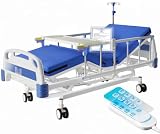
- Adjustable backrest, legrest, bed height & tilt - Three models of nursing beds are available for selection.4 Functions can be raised or lowered independently to suit personal comfort, 5 Functions and 5 Functions Pro also supports both Trendelenburg and Reverse-Trendelenburg positions, promoting better circulation, breathing, and overall patient care.
- Reliable comfort & full features — four quiet, smooth-running motors allow for effortless adjustments. 4 Functions comes with a detachable dining table for everyday convenience. 5 Functions includes lockable casters, 5 Functions Pro comes with integrated central locking and a breathable high-density foam mattress for enhanced comfort and secure care.
- Strong steel frame and adjustable IV pole — made from high-grade steel for lasting stability and strength, supporting up to 600 lb, and featuring an IV pole with adjustable height to accommodate medical needs.
- Easy assembly & simple operation — arriving about 95% pre-assembled, the bed can be set up in just minutes. Clear, step-by-step instructions make installation quick and stress-free.
- Versatile for multiple settings — perfect for home care, hospitals, nursing homes, rehabilitation centers, assisted-living, or any care environment. It provides adjustable support for recovery, elderly care, or anyone needing customizable rest.
- Define the task and boundary: state what the AI is intended to do, what it is not intended to do, and whether its output informs or changes professional judgment.
- Check population fit: examine what is known about performance for the patients the organization serves, and identify important data or evidence gaps.
- Understand inputs and outputs: establish what information enters the system, what it returns, and what a user needs to know to interpret that result.
- Assess failure modes: ask about known limitations, possible bias, reliability, and how errors or unexpected outputs can be reported and investigated.
- Review privacy and security: understand how health information is handled and what protections apply in the intended use.
- Fit the workflow around people: make time and responsibility for review clear, and ensure users can question, correct, or disregard an output when appropriate.
- Evaluate locally and monitor over time: check performance in the organization’s setting before relying on the tool, then watch for problems or degradation after deployment.
FDA transparency principles for machine-learning-enabled medical devices offer a more specific reference for what information users may need: medical purpose, intended users and populations, workflow fit, inputs and outputs, performance, benefits and risks, known biases or failure modes, data-characterization gaps, and lifecycle activities such as site-specific validation and ongoing monitoring. These principles concern medical devices and related transparency practices; they are not a universal checklist of legal requirements for every hospital AI application.
PC Slower Than It Used to Be?
A free scan shows the junk files, broken settings and background clutter dragging Windows down - then fixes them in one click.Free scan · Windows 10 & 11Outdated Drivers Are Slowing You Down
One free scan finds every outdated or missing driver and matches the right update for your exact hardware.Free scan · exact hardware matchWhat do the main governance frameworks cover?
| Reference | Scope | How to use it |
|---|---|---|
| WHO ethics and governance guidance (2021) | Global principles for AI in health | Use its six principles to frame human rights, safety, accountability, equity, and sustainability. |
| WHO guidance on large multimodal models (2024) | Generative AI and models that can process multiple kinds of information in health | Use its more than 40 recommendations to consider stakeholder participation, well-defined tasks, necessary accuracy and reliability, and possible secondary effects. |
| FDA transparency principles | Machine-learning-enabled medical devices and related transparency practices | Consider what risk- and outcome-relevant information should reach people interacting with a device. |
| NIST AI Risk Management Framework | General AI risk management, not healthcare regulation | Use it as a broad framework for organizing risk-management work. NIST released AI RMF 1.0 on January 26, 2023, and a Generative AI Profile on July 26, 2024; its page says AI RMF 1.0 is being revised. |
| Joint Commission and Coalition for Health AI initial guidance (September 17, 2025) | Responsible AI use in U.S. health systems | Consider organizational policy, local validation, monitoring, and implementation suited to the organization. The announcement described playbooks and voluntary certification as future work; it does not establish their later availability. |
The frameworks differ in authority and purpose. WHO provides global normative guidance; FDA’s principles relate to medical devices; NIST offers a general risk-management resource; and the Joint Commission/Coalition for Health AI announcement addresses U.S. health-system implementation. None should be described as a single rule governing every AI tool used in every hospital.
Best Value

- 【225lb Capacity】This medical cart supports up to 225 pounds, securely holding heavy medical equipment like monitors and infusion devices. It remains stable even when multiple items are placed simultaneously, meeting daily high-frequency storage demands
- 【Generous Storage Capacity】This beauty mobile trolley Featuring an open storage tray and dual-layer independent drawers, this cart keeps frequently used instruments within easy reach while organizing medications, supplies, and small items in separate compartments. This compartmentalized design prevents clutter and ensures ample space for diverse medical supplies
- 【Silent Swivel Casters】 This cart for clinic utilizes high-resilience swivel casters that not only pivot 360° for agile maneuvering in tight spaces but also incorporate a silent mechanism. They operate virtually noise-free during movement, ensuring patients remain undisturbed and clinical environments stay undisturbed
- 【ABS Material】This Salon mobile cart from medical-grade ABS plastic, the smooth surface facilitates easy wiping and disinfection. The lightweight material resists deformation and damage, balancing hygiene requirements in medical settings with long-term durability
- 【Multi-Scene Applications】This utility cart is suitable for a wide range of scenarios. Hospitals can use it to store medical instruments and transport medications; beauty salons can utilize it for organizing beauty equipment and care supplies; salons can employ it as a storage platform for hairdressing tools; laboratories can store experimental instruments and reagents. It flexibly meets the item carrying and circulation needs of different scenarios
What does responsible oversight look like after launch?
Approval to begin using a tool is not the end of governance. WHO’s 2024 recommendations call for participation by healthcare providers, patients, researchers, governments, technology companies, and civil society from early design through deployment and oversight. They also call for clearly defined tasks with necessary accuracy and reliability, and for developers to anticipate secondary outcomes.
For a hospital, that translates into an operating plan: name the people accountable for use and review; make limitations and escalation routes understandable to staff and patients; assess the tool in the local setting; and keep monitoring its performance and effects. Reassess the use if the patient population, workflow, system, or evidence changes. Monitoring should look beyond whether the technology runs as intended to whether its use introduces errors, inequities, or unintended changes to care.
In remarks on March 5, 2024, FDA Commissioner Robert Califf described a risk-based approach for medical devices under FDA authority, with attention to intended use, patient impact, lifecycle safety monitoring, fairness, reliability, data sharing, and cybersecurity. Those remarks outline agency thinking; they are not a binding rule for all hospital AI. Likewise, the Joint Commission and Coalition for Health AI’s September 2025 announcement described initial guidance and planned subsequent work, rather than proving that a particular hospital has implemented or certified an AI program.
Do these 3 things before closing this tab:
1Clear out junk files and repair common Windows errors2Scan for outdated or missing drivers - takes under a minute3Repair Windows errors before they cause bigger problemsThere is no outcome statistic in the cited material establishing that ethical AI has already improved hospital care by a measurable amount. The defensible claim is narrower: AI has potential uses across hospital work, while its safe and equitable contribution depends on careful selection, transparent information, human-centered workflows, and continuing oversight.
Quick Recap
Product prices and availability are accurate as of the date/time indicated and are subject to change. Any price and availability information displayed on Amazon at the time of purchase will apply.

