If Windows volume controls feel scattered or difficult to reach, EarTrumpet is a software utility designed to put them in one place. The project lists a standalone volume mixer, per-app movement between playback devices, default playback-device management, configurable hotkeys, themes, modern context menus and multi-channel-aware audio peaking. Those are capabilities documented by the EarTrumpet project; they are not a guarantee that every audio problem or every Windows configuration will be fixed.
EarTrumpet is software for Windows, not a required physical knob, audio interface or replacement part. Its purpose is discoverability: instead of hunting through separate Windows controls, you can open a dedicated mixer from the system tray and work with the apps and devices that matter to you.
As an Amazon Associate I earn from qualifying purchases.
What EarTrumpet changes about Windows audio
Windows audio becomes confusing when several applications are playing at once, when headphones and speakers are both connected, or when an application chooses a different output than the one you expect. EarTrumpet addresses that access problem with a separate mixer rather than asking you to rely only on the controls exposed by your particular Windows build.
The Tool Desk
Outbyte PC Repair FREEClear out junk files and repair common Windows errorsFree Scan →Outbyte Driver Updater FREEScan for outdated or missing drivers - takes under a minuteDriver Scan →The project describes EarTrumpet as a volume-control utility and lists these core functions on its official GitHub project page:
#1 Best Overall

- Rotary Knob for Precise Volume Control – Turn clockwise to increase volume, counterclockwise to decrease. Unlike keyboard buttons or software sliders, this analog-style knob gives you smooth, step-less control over your PC, laptop, or Android device audio.
- Instant Mute with a Gentle Press – Lightly press the knob to instantly mute your computer or Android device audio. Press again to restore the previous volume level. Perfect for sudden phone calls, meetings, or quiet moments.
- USB-C with Included Cable – No Driver Needed – Works with Windows, macOS, Linux, and Android phones/tablets. Simply plug it into any USB-C port (cable included). No software or driver installation required – works immediately.
- Built-in Magnetic Bottom + Non-Slip Ring – The strong magnetic base securely attaches to any metal surface: PC case, monitor stand, desk leg, or fridge. Measuring just 3.5cm × 4cm, the non-slip rubber ring also keeps it steady when placed freely on your desk.
- Ideal for Streamers, Gamers, and Mobile Users – Great for PC gaming, music production, remote work, and even controlling volume on USB-C Android tablets/phones. The magnetic base keeps it within easy reach without taking up desk space.
- A standalone volume mixer for adjusting application audio.
- Moving individual apps between playback devices.
- Managing the default playback device.
- Audio peaking that is aware of multiple channels.
- Configurable hotkeys.
- Themes and modern context menus.
- Automatic updates when the Microsoft Store distribution is used.
The practical distinction is that each app can be treated as its own audio source. A browser can remain on speakers while a game is sent to a headset, for example, provided both devices are available to Windows and the application is producing audio. EarTrumpet’s project documentation explicitly uses the phrase “Move apps between playback devices.”
What you can do with the mixer
Adjust one app without changing everything else
Open EarTrumpet from its tray access point to reach the standalone mixer. The mixer presents application audio separately, so lowering a communication app does not have to lower music or game audio at the same time. Which applications appear depends on whether they are currently creating an audio stream; an idle application may not be listed until it plays sound.
Use the per-application controls for relative volume changes, then use the device controls when you need to change the overall output. Keeping those two actions separate is the main reason to use a dedicated mixer: you can correct an individual app without repeatedly changing Windows’ master level.
Send an app to another playback device
When more than one playback device is connected, use the app-specific device action to move a running application from one output to another. This is useful for separating a meeting from music, sending a game to a headset while system sounds remain on speakers, or moving a media player to an external display’s audio output.
Rank #2

- 【One-touch mute & precise volume control】Instantly mute audio with a single press or smoothly adjust system volume by rotating the knob. Whether you're joining online meetings, taking calls, streaming content, or gaming, this multimedia controller provides quick access to essential audio controls without interrupting your workflow.
- 【360° rotating knob for smooth operation】Featuring a durable 360-degree rotating spindle, this audio volume control knob delivers smooth and responsive adjustments during extended use. The ergonomic design makes it easy to control volume levels accurately while reducing wear from frequent operation.
- 【Plug and play with type-c connection】No drivers required for basic volume control. Simply connect the Type-C volume controller to your compatible device and start using it immediately. Designed for convenience, it helps keep your desktop setup clean while providing quick access to multimedia controls.
- 【RGB light for desktop enhancement】Featuring built-in RGB lighting, this audio volume controller adds a modern touch to your workspace or gaming setup. The illumination helps improve desktop aesthetics while making the controller easy to locate and use in low-light environments.
- 【Wide compatibility with multiple devices】Compatible with and Android systems, this USB volume control knob works with desktop computers, laptops, tablets, and supported mobile devices. A practical desktop accessory for home offices, gaming stations, streaming setups, and everyday computer use.
Device routing is dependent on Windows detecting both the application stream and the target device. If an app is not playing audio yet, start playback first. If a device is disconnected, asleep or disabled in Windows, it cannot be selected until the operating system makes it available again.
Set or change the default playback device
EarTrumpet also lists default playback-device management. Use that control when you want newly started applications and general system audio to prefer a particular output. Per-app routing remains useful when one application should deliberately stay on a different device.
Use hotkeys, themes and context menus
Configurable hotkeys provide keyboard access to volume actions instead of requiring a pointer. Themes change the utility’s appearance, while modern context menus provide additional commands from the relevant device or application control. The exact options exposed can vary with the Windows release and the EarTrumpet build.
Free tools Windows power users keep installed
One-click scans. No signup required.
Read multi-channel-aware audio levels
The project lists multi-channel-aware audio peaking. That matters when an output has more than a simple left/right pair: the level display is intended to account for the available channels rather than treating every setup as identical stereo. It is a monitoring aid, not a promise that clipping, distortion or a faulty driver will be corrected.
Rank #3

- 【Plug and play】There is no need to install any driver or software on your PC, you can manipulate the Windows volume once connected.
- 【One-Touch Mute/One-Touch Pause】Press the button to mute or pause. (Press and hold the button for 8s to switch the button function).
- 【Metal Shell】The case is made of metal with a superior texture and a silky feel. Comes with a blue LED indicator.
- 【Compatibility】Not Compatible with Batocera OS, Chrome OS. Supports Windows, Mac, iOS, Android, Linux.
Install EarTrumpet through an available route
The project lists three installation routes. Choose the one that fits how you manage Windows software; the documentation does not establish that one route is universally safer or more reliable than the others.
| Route | How to start | Documented detail |
|---|---|---|
| Microsoft Store | Open the EarTrumpet listing in the Microsoft Store and install it. | The project says this distribution supports automatic updates. |
| WinGet | winget install File-New-Project.EarTrumpet |
Run the command in a Windows terminal with WinGet available. |
| Chocolatey | choco install eartrumpet |
Run the command in a terminal where Chocolatey is installed. |
| Development channel | Use the project’s dev-channel distribution when you deliberately want development builds. | The project describes this channel as experimental; builds are generated from commits to the dev branch. |
For the Store route, search for EarTrumpet under the project name and verify that the listing is the one maintained by the EarTrumpet project before installing. For command-line routes, paste the command exactly as shown and let the package manager report whether installation completed. The official documentation does not establish Microsoft Store availability in every region, so a missing listing may be a regional or account issue rather than proof that the software is unsupported.
Set up a useful per-app audio workflow
- Install and launch the utility. Use one of the documented routes, then start EarTrumpet from the Windows Start menu. Allow it to run so its tray access remains available.
- Connect and enable your playback devices. Plug in or pair the speakers, headset, display or other outputs you intend to use. Confirm that Windows recognizes them before trying to route an application.
- Start the applications you want to control. Play a sound in each app. Applications generally become actionable in a mixer when they have an active audio stream.
- Open the standalone mixer from the tray. Identify the application sliders and the output-device controls. Lower or raise one app while another continues playing to verify that you are changing the intended stream.
- Move an app to a different output. Use that app’s playback-device action and choose the connected target device. If the app continues using the previous output, stop and restart its playback; some applications cache their audio endpoint until a new stream is created.
- Choose the default device. Set the playback device you want Windows to prefer for general audio, then keep explicit per-app assignments for exceptions such as a headset-only game or a communications app.
- Personalize access. Configure hotkeys if keyboard control is faster for you, select a theme, and use the available context-menu commands for device or application actions.
These steps describe the workflow implied by the project’s listed capabilities. Menu names and placement can change between Windows releases and EarTrumpet builds, so follow the labels displayed in your installation rather than relying on a screenshot from another version.
Windows versions listed by the project
EarTrumpet’s supported-operating-system documentation names specific Windows releases. The list below is a report of that project documentation, not an independent compatibility test. It should not be expanded to include every historical build or future release.
Rank #4
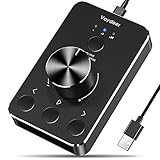
- Wonderful usage experience:Rotate the Multimedia knob to adjust the volume.With one key mute function, just press the knob when you are listening to music, the music will be stopped and start playing if pressing the knob again.Ideal gift for festivals, music fans, geek and Youtubers.
- Sturdy and durable:The USB volume control knob is made of high quality metal shell and equipped with solid rotary shaft and removable USB cable, which makes this audio adjuster not only durable but also user friendly.
- Driver Free:This volume control knob supports Win10/8/7/Mac, once you insert it to your computer, it will begin to work. Plug and play, no driver required, you can directly adjust the volume by rotating the knob.
- Delicate and convenient:Easy to carry and use thanks to its mini exquisite design. Combined with aluminum alloy and awesome black appearance, the whole USB volume control knob looks more atmospheric and fashionable.
- Non-slip design:With heavy metal blocks placed inside the base as well as 4 anti-slip mats stick to the bottom , this volume controller is pretty steady. Not easy to move.
| Windows release | Release label in project documentation |
|---|---|
| Windows 10 1803 | April 2018 Update |
| Windows 10 1809 | October 2018 Update |
| Windows 10 1903 | May 2019 Update |
| Windows 10 1909 | November 2019 Update |
| Windows 10 2004 | May 2020 Update |
| Windows 10 20H2 | October 2020 Update |
| Windows 10 21H1 | May 2021 Update |
| Windows 10 21H2 | November 2021 Update |
| Windows 10 22H2 | October 2022 Update |
| Windows 11 | Windows 11 (the project does not narrow this row to a particular feature update) |
Check your Windows version in Settings before installing if you are using an older or unusual build. The inspected project pages do not establish support beyond the entries above, and they do not provide a region-by-region Store availability list.
EarTrumpet versus Windows’ built-in controls
The useful comparison is not whether one mixer can replace every Windows audio function. It is where you want to reach the controls and how much per-app handling you need.
| Decision axis | EarTrumpet | Windows controls |
|---|---|---|
| Access point | Dedicated tray utility and standalone mixer. | Windows settings and quick-control surfaces, which can differ by Windows release. |
| Per-app output routing | The project lists moving apps between playback devices. | Available controls and their presentation depend on the Windows version; current details are not established by the project material. |
| Customization | Project-listed hotkeys, themes and modern context menus. | Customization varies with the Windows build and its native controls. |
| Update behavior | Microsoft Store distribution is documented as supporting automatic updates. | Managed through Windows’ own update and settings mechanisms. |
Choose EarTrumpet when a tray-based mixer and explicit app-to-device actions are the priority. Stay with native controls when you prefer not to add a utility or your needs are limited to occasional master-volume changes. Installing EarTrumpet does not remove Windows’ audio settings, so the two approaches can coexist.
Troubleshoot the common failure points
An application does not appear
- Start playback in the application; a program with no active audio stream may not be exposed to a per-app mixer.
- Check that the app is not muted inside its own settings and that Windows recognizes its audio output.
- Close and reopen the app after changing devices. Some programs create their audio endpoint only when they start.
The target device is missing
- Reconnect the headset, speakers or display and confirm that Windows lists it as an enabled playback device.
- Set or verify a default playback device, then reopen the mixer.
- Remember that EarTrumpet cannot route audio to hardware or a driver that Windows has not made available.
A hotkey affects more than expected
The changelog records a historical fix for hotkeys affecting multiple devices, along with fixes involving scrolling volume changes, flyout behavior, touch context menus and device-name or action edge cases. Those entries show ongoing maintenance, but they do not prove that a particular current issue is resolved in the latest build. Review your hotkey assignments, test with one device enabled, and consult the project’s current issue tracker or release information if the behavior persists.
Best Value

- 【Programmable for PC】 Please see the video to learn more. Open a blank txt file, then short press the knob and connect to the USB port. Enter the Windows/Mac mode to programme key combination for this controller.
- Strong Construction: the USB volume control is made of metal shell and ALPS rotary shaft, equipped with breathing light and come with USB cable. With 1 key mute function, when you are listening to music, just press the knob, it will stop at once and back to music when you press again.
- This volume control knob supports Win10/8/7/Vista/XP/Mac, once you insert it to your computer, it can start to work; with OTG cable, it can also work for phone.(Note: some phones can't work, for replacing Android native sound control program , such as Samsung.)
- A great volume control tool for watching videos, playing games, even will be the best volume controller for activities, wedding, meeting, celebration and so on.
- Simple Operation: rotating the usb volume knob to turn up and down volume, press the knob to make it mute, press down the knob and turning to adjust volume more quickly; keep pressing the knob for 8s, it will enter night mode, breathing light will stay on.
The flyout or context menu looks different
Historical changelog entries mention flyout appearance and animation on Windows 10 and Windows 11, as well as touch context-menu behavior. Visual differences can therefore reflect the Windows release or a later build. Use the controls currently shown in your installation rather than assuming an older guide’s layout still applies.
You need a version number before deploying
The inspected official pages do not establish the current stable version number. Obtain that number from the live project release information or Store listing immediately before a managed rollout. Do not infer it from an old changelog entry.
Languages, maintenance and recognition
The EarTrumpet repository says its translators support more than 20 languages. The statement is undated, so it should be read as the project’s language-count claim rather than a dated measurement or a guarantee that every screen is equally translated.
Recommended Free Tools
The project README also records a 2022 Microsoft Store Community Choice Award in the Open Platform category. That recognition indicates that the project was included in that award program; it is not a performance benchmark or proof that the utility will resolve a particular computer’s audio fault.
When EarTrumpet is the right fit
- You regularly switch between speakers, headsets, displays or other playback devices.
- You need separate volume levels for several applications.
- You want a tray-based entry point instead of navigating through multiple Windows surfaces.
- You value keyboard shortcuts, appearance options or channel-aware level information.
It may be unnecessary if you change only the master volume and never use more than one output. It also cannot repair a failed audio driver, a disconnected device, application-level muting or hardware damage. In those cases, diagnose Windows and the device first; EarTrumpet can organize available controls, but it does not create an audio endpoint that the operating system cannot see.
Source and version caveats
Feature descriptions, installation commands, language count, award information and the Windows support list come from the EarTrumpet project documentation at github.com/File-New-Project/EarTrumpet. Historical maintenance examples are recorded in the project’s CHANGELOG.md. Because the stable version number and Store availability by region were not established on those inspected pages, verify both details on the live official listing if they affect your decision.
Quick Recap
Product prices and availability are accurate as of the date/time indicated and are subject to change. Any price and availability information displayed on Amazon at the time of purchase will apply.
What’s actually slowing this PC down?
Pick the symptom - the matching free tool is one click away.

