Deep-sea species survive not through one universal adaptation, but through different combinations of sensory strategies, energy-saving behavior, and pressure tolerance. Many live in cold, dark water; some make their own light or detect faint signals, while vent communities draw energy from chemicals rather than sunlight. The conditions vary by depth and habitat, so no single description fits all deep-sea life.
What makes the deep sea a difficult place to live?
The deep sea is not one uniform environment. Light, temperature, pressure, and food supply change with depth, and hydrothermal vents create local conditions unlike the surrounding cold water.




As an Amazon Associate I earn from qualifying purchases.
- Light: Sunlight fades with depth. Below the twilight zone it is too weak to support photosynthesis, and the deep ocean is effectively dark.
- Temperature: NOAA reports that below about 200 meters (656 feet), ocean water averages 4°C (39°F). This is an average, not a rule for every habitat; water near hydrothermal vents can be much warmer. NOAA explains deep-ocean conditions.
- Pressure: Pressure rises by about one atmosphere (14 pounds per square inch) for every 10 meters of depth. The estimate is approximate; whether a figure includes surface air pressure can affect the total stated. At 100 meters, for example, NOAA gives an approximate total of 11 atmospheres in one explanation.
- Food: With little or no photosynthesis at depth, many food webs rely on organic material that sinks from above. Vents and cold seeps are important exceptions because chemical energy can support life there.
These challenges connect: finding food in darkness can take energy, while sparse food rewards animals that conserve energy or use efficient ways to locate prey.
Recommended Free Tools
How do deep-sea animals navigate darkness?
Darkness does not mean every deep-sea animal is blind. Some animals have large eyes suited to detecting faint light; others rely more on smell and touch. Fish such as whalefishes and swallowers can use lateral-line and related sensory systems to detect movement, prey, or predators in the water. The sensory approach depends on the species and its surroundings. Smithsonian Ocean describes the range of deep-sea senses, and NOAA discusses midnight-zone fish in its feature on fishes of the midnight zone.
#1 Best Overall
Bioluminescence makes light, but its uses vary
Bioluminescence is light produced by a chemical reaction in an organism. Blue light is common because it travels well through water, although the colors produced vary. Depending on the species, light may help lure prey, attract mates, provide camouflage through counterillumination, or deter predators. NOAA reports that 80 percent of animals living between 200 and 1,000 meters (656 and 3,280 feet) are bioluminescent; that figure applies to that depth range, not to every deep-sea animal. NOAA explains bioluminescence and its possible functions.
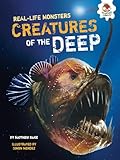
In many deep-sea anglerfish, females carry a luminous lure called an esca on a modified dorsal-fin ray. The lure contains a single species of bioluminescent bacteria. Another example is the cookie-cutter shark, whose glowing underside may attract larger prey. The exact functions of bioluminescence and how it evolved remain incompletely understood, so a proposed purpose should not be treated as settled for every species.
How do animals cope with extreme pressure?
Deep-sea animals are not all protected by hard shells. NOAA notes that pressure has less impact on organisms without gas-filled spaces such as lungs or swim bladders: much of their bodies is water, which is incompressible. That does not mean pressure disappears inside them. It still affects biological processes, including the rates of chemical reactions.
Windows Errors? Fix Them Before They Spread
Repair common Windows errors and clear accumulated junk for a smoother, more stable PC - no reinstall needed.Free scan · no reinstallCrashes, No Sound, or Screen Glitches?
Random freezes, missing sound and display glitches usually trace back to one bad driver. Find and replace yours safely.Free scan · under a minuteAnimals adapted to deep water can also face metabolic difficulties when brought to the surface, where pressure is much lower. This helps explain why surface conditions are not a neutral substitute for the habitat where they live. For more on the mechanics, see NOAA’s pressure explainer.
How do deep-sea species find food and conserve energy?
Food is scarce across much of the deep ocean, so strategies differ rather than forming one shared adaptation.
- Use a lure: Some bathypelagic predators, including anglerfish, can attract prey instead of spending energy searching over a wide area.
- Eat material from above: Marine snow—sinking organic particles and remains—provides food for deep-water and seafloor organisms.
- Move between feeding grounds: Some fish and zooplankton undertake diel vertical migration, feeding nearer the surface at night and retreating deeper during daylight.
These examples describe different species’ strategies and ecological processes, not traits shared by all deep-sea life.
Independent reader supportYour contribution helps us test, update, and keep practical guides available for everyone.How do vent communities live without sunlight?
Most deep-sea food webs ultimately depend on photosynthetic production near the surface. Hydrothermal vents and cold seeps are exceptions: chemosynthetic microbes use energy from chemical reactions, including reactions involving minerals, to support animal communities.
What’s actually slowing this PC down?
Pick the symptom - the matching free tool is one click away.
Riftia tubeworms illustrate this partnership. They host symbiotic microbes, and their blood hemoglobin binds oxygen and hydrogen sulfide. This helps isolate the normally poisonous sulfide from the rest of the animal. The tubeworm does not photosynthesize; the community is supported by chemical energy. Smithsonian Ocean outlines this contrast in its deep-sea overview.
Best Value
Why is there no single deep-sea adaptation?
A fish in the twilight zone, a predator in the midnight zone, and an animal living beside a vent face different combinations of light, food, temperature, and depth. Some rely on sight, others on touch or smell; some produce light, while others do not. Pressure tolerance, energy use, and feeding behavior likewise vary. Adaptation is best understood as a fit between a species and its particular habitat—not as a single set of traits all deep-sea animals share.
Quick Recap
Product prices and availability are accurate as of the date/time indicated and are subject to change. Any price and availability information displayed on Amazon at the time of purchase will apply.

